
She had autism.
He had confessed to
four murders.
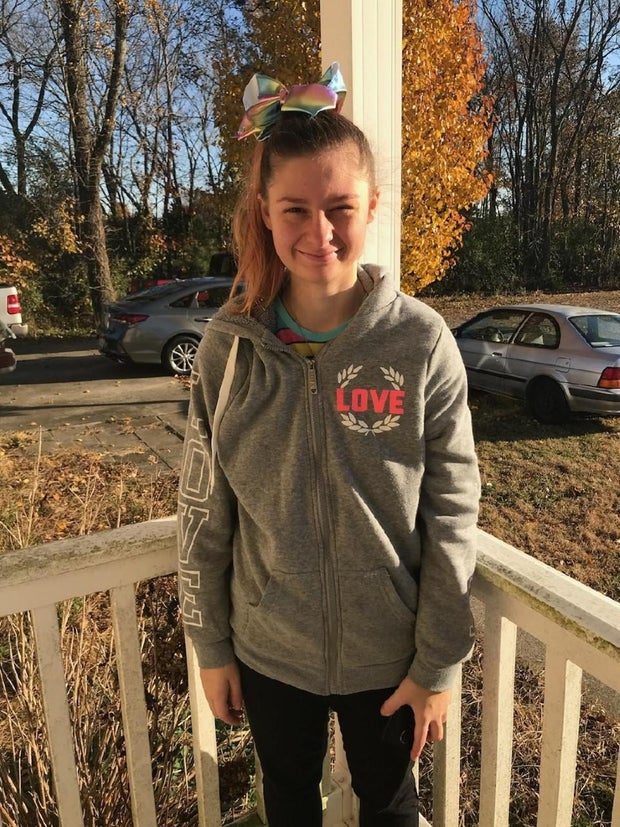
Kayla Hamilton, 20, a young woman with autism spectrum disorder, was bound, sexually assaulted, and strangled in Aberdeen, Maryland in July 2022. Her killer — Santos Chirino, an illegal immigrant who entered as an “unaccompanied minor” — had confessed to four murders in El Salvador before crossing the border. HHS placed him with a sponsor family in Maryland. HHS never requested his criminal history. The House Judiciary Committee documented every step. Congress introduced the Kayla Hamilton Act in her memory.
She was twenty. And she had her whole life ahead.
Kayla Hamilton was 20 years old. She had autism spectrum disorder. She was a young woman navigating the world with the additional vulnerabilities that come with that diagnosis — a young woman whose family trusted the community around her to be safe. That community included a man the federal government had brought in from El Salvador and placed with a sponsor family a few miles away.
Santos Chirino had entered the United States as an “unaccompanied alien child.” Before crossing the border, he had confessed to killing four people in El Salvador. That record existed. The Department of Health and Human Services never asked for it. They placed him in Maryland without checking. Kayla Hamilton paid for that omission with her life.
HHS had a program. No background check required.
The HHS Office of Refugee Resettlement (ORR) runs the Unaccompanied Alien Children program — a congressionally created system that places migrants who cross the border as minors with sponsors in the United States while their immigration cases proceed. The program processes tens of thousands of children annually.
The program had a documented structural flaw: HHS did not routinely request foreign criminal history from the countries of origin for UAC applicants. For someone with no prior U.S. record — but a foreign criminal record — the background check would come back clean. A confessed murderer would look the same as a child with no criminal history, because the agency was not asking the question.
- →Processed Chirino as an unaccompanied minor
- →Ran a domestic background check — no U.S. criminal record found
- →Identified a sponsor family in Maryland
- →Placed Chirino with the sponsor family
- →Closed the placement file
- →Request Chirino's criminal record from El Salvador
- →Check Chirino's name against Salvadoran law enforcement databases
- →Inquire about any prior criminal confessions or convictions abroad
- →Establish any foreign criminal history verification protocol
- →Flag him for enhanced vetting despite documented risk factors
The House Judiciary Committee documented this failure in a formal case study. The omission was not an accident or a clerical error by a single case worker. It reflected the absence of a programmatic requirement — a policy gap at the department level that Secretary Xavier Becerra (D) oversaw during this period.
Every step was documented. Every step was preventable.
The program had a secretary. The department had a name.
Becerra (D) served as Secretary of Health and Human Services from March 2021 through the Biden administration. HHS, under his leadership, administered the UAC program during the period when Chirino was processed, placed, and committed the murder of Kayla Hamilton. The House Judiciary Committee's case study documented the absence of foreign criminal history verification as a systemic program failure on his watch.
Moore (D) took office in January 2023 — after Kayla's murder in July 2022. His predecessor, Larry Hogan (R), was governor at the time of the murder. The failure here is predominantly federal: HHS placed Chirino in Maryland. Maryland state government was not a party to the placement decision.
ORR, under Biden administration leadership, administered the day-to-day UAC placement program. The Judiciary Committee's investigation found that ORR's vetting protocols did not include a standard foreign criminal history inquiry — the specific gap that allowed Chirino's four-murder confession to go undetected.
“HHS placed a self-confessed murderer in a Maryland home and never once asked El Salvador if this person had a criminal history. Kayla Hamilton's death is a direct consequence of that omission.”
House Judiciary Committee — Case Study, UAC Program Failures, 2022–2023
Congress named a bill after her. Because a basic background check didn’t exist.
The Kayla Hamilton Act was introduced in Congress following the House Judiciary Committee’s investigation. Its core requirement: before HHS places an unaccompanied alien child with a sponsor, the department must obtain criminal background check information — including foreign criminal history — from the child’s country of origin.
The fact that this bill needed to be written reveals the scale of the original omission. For years, the UAC program was placing individuals in American homes with no foreign criminal history verification whatsoever. A domestic background check — which shows only U.S. records — would find nothing on someone who had committed crimes exclusively abroad. Kayla Hamilton’s murder exposed that gap.
- →HHS must request foreign criminal history before any UAC sponsor placement
- →Coordination with country-of-origin law enforcement agencies
- →Enhanced vetting for UAC applicants with documented risk indicators
- →Mandatory reporting to Congress on UAC vetting protocols and outcomes
- →Named in memory of Kayla Hamilton — because the law that should have protected her did not exist