
He let them walk.
They killed again.
SF recalled him anyway.
Chesa Boudin (D) was elected San Francisco District Attorney in 2019 with a mandate to remake prosecution in America’s most progressive city. He eliminated cash bail requests, stopped charging drug offenses, and declined to prosecute defendants who went on to kill. The San Francisco Chronicle documented the body count. On June 7, 2022, San Francisco voters recalled him 55 to 45 — one of the most decisive repudiations of progressive prosecution in American history.
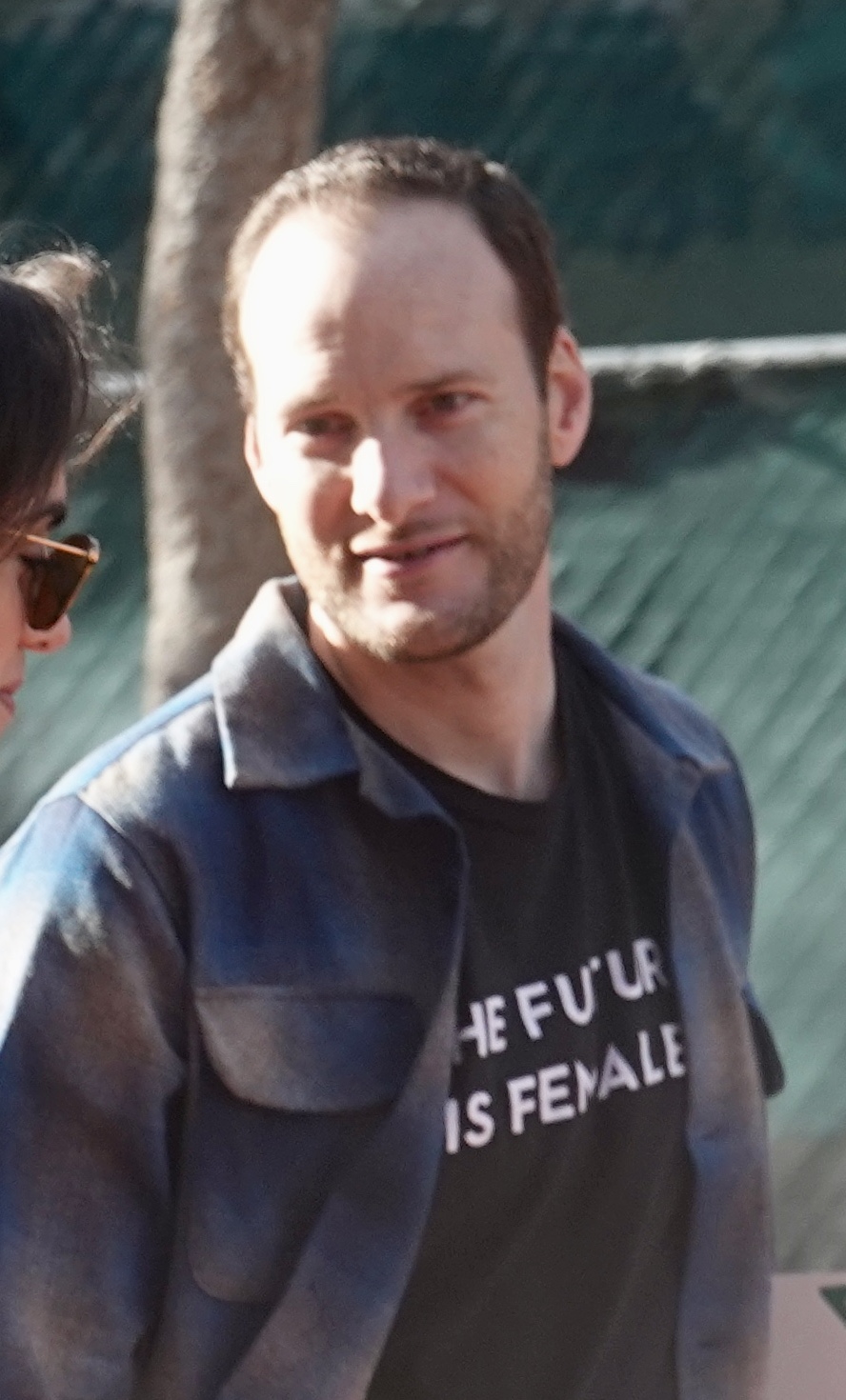
Son of two convicted murderers. Elected to enforce the law.
Chesa Boudin was born in 1980. His parents — Kathy Boudin and David Gilbert — were members of the Weather Underground, a domestic terrorist organization. In October 1981, when Chesa was fourteen months old, his parents participated in an armed robbery of a Brink’s armored car in Nanuet, New York. Two police officers and a Brink’s guard were killed. Kathy Boudin pleaded guilty to murder and robbery; she served 22 years. David Gilbert was convicted of murder and sentenced to 75 years to life; New York Governor Andrew Cuomo (D) commuted his sentence in 2021.
Boudin was raised by Weather Underground leaders Bill Ayers and Bernardine Dohrn — themselves subjects of federal terrorism investigations — after his parents’ imprisonment. He attended Yale Law School, worked as a public defender, and won the San Francisco DA race in November 2019 with 50.8% of the vote after four rounds of ranked-choice counting. He ran explicitly on a platform of not prosecuting what he called “poverty crimes” and transforming the DA’s office from a prosecution machine into a social services hub.
- →End cash bail requests — Boudin directed prosecutors not to seek cash bail in the vast majority of cases
- →No prosecution of quality-of-life offenses as stand-alone crimes — trespassing, public intoxication, resisting arrest
- →Sharply reduce drug prosecution — particularly for street-level narcotics offenses
- →End gang and gun enhancements — reduce sentence add-ons that he argued fell disproportionately on communities of color
- →Decline to seek the death penalty in any case
- →Limit cooperation with federal immigration enforcement (ICE holds)
He declined to charge them. Then they killed.
The San Francisco Chronicle’s investigative team systematically documented cases in which Boudin’s office declined to prosecute defendants who subsequently committed additional serious offenses — including homicides. These were not theoretical arguments about criminal justice philosophy. They were specific defendants, specific declination decisions, and specific subsequent crimes, documented through court records and case files.
Among the cases documented by the Chronicle: a defendant with a prior robbery record whom Boudin’s office declined to charge in an earlier offense who later committed a killing; a car theft suspect whom the office declined to prosecute who went on to kill two people in a drunk-driving crash. The Chronicle’s reporting identified the pattern, named the cases, and showed court documents. Boudin’s office disputed framing but did not successfully rebut the underlying facts.
“The question isn't whether the progressive theory is appealing. The question is what happened to the people who trusted the city to protect them when it chose not to.”
San Francisco Chronicle editorial board · 2022
Boudin’s response to the Chronicle investigation was to accuse the paper of being driven by political motives — the same newspaper that had endorsed his predecessor and given him extensive coverage throughout his term. Voters were watching. San Francisco’s overall crime statistics during his tenure showed mixed results: property crime remained elevated even as some categories fell. But the specific recidivism cases were concrete and documented, and they became the backbone of the recall campaign.
2019 to 2022. Start to recall.
One city. Every office. One party.
Elected November 2019. Took office January 2020. Implemented no-cash-bail directives, ended prosecution of quality-of-life offenses, declined drug charges. SF Chronicle documented defendants he declined to charge who later killed. Recalled June 7, 2022 by 55.1% of San Francisco voters. Now a UC Berkeley law professor.
Appointed by Governor Gavin Newsom (D) immediately after the recall. Jenkins had resigned from Boudin's office in protest over his charging policies before the recall. She subsequently won election to a full term as San Francisco DA in November 2022.
San Francisco Mayor throughout Boudin's tenure. Breed endorsed the recall, breaking with progressive allies. She called for stricter enforcement of drug laws and publicly argued that Boudin's approach was making the city less safe. She lost her re-election bid in November 2024.
Signed AB 109 prison realignment (2011 as Lt. Gov. under Brown), championed statewide bail reform, and presided over the progressive criminal justice framework under which Boudin operated. After the recall, Newsom appointed Brooke Jenkins — who had publicly opposed Boudin's policies — as interim DA.
He got a professorship. His victims got nothing.
After his recall, Boudin did not return to public defense work or step back from public life. He joined the faculty of UC Berkeley School of Law, where he directs the California Policy Lab’s Criminal Law and Justice Center. He continued writing and speaking about criminal justice reform, framing his recall as a backlash driven by fear and conservative spending — despite the recall being organized and funded largely by Democrats and victims’ families, not by Republican operatives.
Two years later, Alameda County District Attorney Pamela Price (D) was recalled by a 53-47 margin — the second California DA recall in two years, following the same template: progressive election with outside funding, systematic charge reductions, documented downstream harm, victims’ families organizing the response. The Boudin recall did not end the experiment. It was repeated. The voters corrected it again.
- →Recall driven by "right-wing dark money" and fear
- →His policies reduced incarceration without increasing crime
- →The Chronicle's coverage was politically motivated
- →He was a victim of a national backlash against reform
- →Progressive prosecution needs more time to work
- →Recall organized by Democrats, not Republicans
- →SF Chronicle documented specific defendants who killed after declinations
- →80,000+ signatures — far above the qualifying threshold
- →55.1% YES in an 85%+ Democratic city
- →Pamela Price (D) recalled in Alameda County 2 years later