One Snapped Power Line Knocked 3.1 Gigawatts of Data Centers Offline in 30 Seconds. It Took 11 Minutes to Recover.
On Wednesday, July 22, 2026, a transmission line fault in Ashburn, Virginia — the world’s densest concentration of data centers, known as “Data Center Alley” — tripped protective systems at nearby hyperscale facilities. More than 3 gigawatts of data center load, about 3% of the entire PJM grid’s demand at that moment, disconnected within roughly 30 seconds.
Normal grid disturbances self-correct in milliseconds to a few seconds. This one took roughly 11 minutes to stabilize — long enough that a residential sensor network felt the ripple from Washington, D.C. to Chicago. No blackout occurred. But the event is now a live case study for the regulators racing to write rules before the next one is bigger.
- 3.1 GWof data center loadself-disconnected in about 30 seconds when the Ashburn transmission fault occurred — Reuters, PJM
- ~11 min.to restabilizeversus the seconds a typical grid disturbance takes to self-correct — Dominion Energy, Data Center Knowledge
- 2xlarger than the 2024 precedenta nearly identical July 2024 Fairfax fault dropped about 1.5 GW — this one dropped more than double that
The fault itself was a routine equipment failure on a Dominion Energy high-voltage transmission line in Loudoun County, Virginia — home to the single densest cluster of data centers on Earth. What made it newsworthy was the response. Hyperscale data center campuses near the fault run automated protection systems that sense voltage fluctuation and transfer to backup power the instant they detect trouble. When the line went out of service, those systems triggered in an unsynchronized cascade: more than 3.1 gigawatts of load — roughly 3% of everything PJM Interconnection, the regional grid operator serving 67 million people, was carrying at that moment — came off the grid within about 30 seconds.
Dominion Energy spokesperson Jeremy Slayton was careful about the framing: “No load was shed and Dominion Energy did not disconnect area data centers… the data centers’ own control systems transferred them to backup power for a very short period of time,” he said, adding the utility’s operations team stabilized the system “within minutes.” PJM said the event caused “a measurable frequency change but no reliability impacts” to the bulk power system, and declined to name the affected customers. No blackout occurred anywhere.

This was not the first time. On July 10, 2024, an arrestor failure on a 230kV line near Fairfax, Virginia triggered the same mechanism — roughly 60 data centers self-disconnecting, dropping about 1.5 gigawatts, and prompting NERC to form a task force that is still working the problem two years later. The July 22 event was more than double that, in the same corridor, using the same failure mode.
John Moura, NERC’s Director of Reliability Assessment and Performance Analysis, described the underlying issue plainly: as data center campuses have grown, the grid’s physical design has not caught up. “As these data centers get bigger and consume more energy, the grid is not designed to withstand the loss of 1,500MW data centers,” he said. The reporting does not cleanly separate AI-specific compute load from general cloud and colocation load in this event — Northern Virginia’s data centers are a mix of both — but PJM’s own forecasts attribute the large majority of the region’s load growth to the AI buildout, which is why a decades-old grid-engineering failure mode has suddenly become an urgent policy problem.
PJM, the largest U.S. power grid serving 67M people across the Mid-Atlantic, South, and D.C., just hit emergency mode during this heat wave. They're activating load reductions on big customers (including some data centers with backup generators) while generator outages and...
Regulators had already flagged this exact failure mode before the Ashburn fault happened. On May 4, 2026, NERC issued a Level 3 Essential Action Alert — its highest-urgency tier — specifically citing data center load losses, with compliance responses due August 3, 2026. FERC Chairman Laura Swett has directed NERC to file mandatory computational-load reliability standards by December 31, 2026: “This schedule NERC has proposed is not optional… we must ensure that the critical work of winning the AI race does not threaten reliability in our country.”
Texas has moved fastest. On June 18, 2026, the Texas Public Utility Commission approved ERCOT’s NOGRR282 rule requiring large loads, including data centers, to “ride through” brief grid disturbances rather than automatically switching to backup power — the precise behavior that caused both the 2024 and 2026 Virginia events. PJM does not yet have an equivalent mandatory rule, though the Ashburn event has intensified pressure to adopt one.
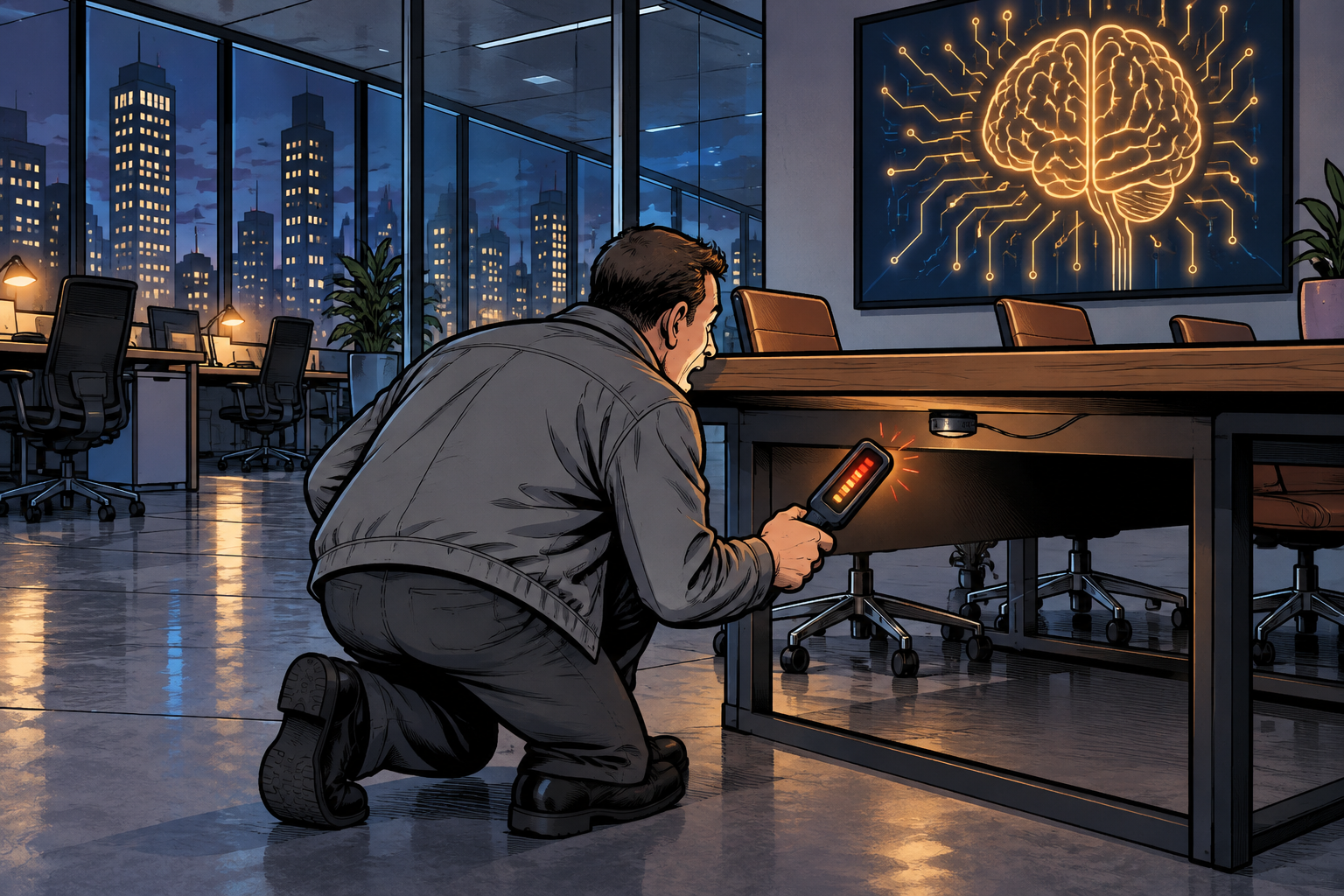
One proposed engineering fix effectively buffers a data center from the grid’s point of view. ON.energy, whose co-founder and CTO Ricardo de Azevedo called the Ashburn event “the canary in the coal mine,” builds medium-voltage battery-and-power-conversion systems that sit between a data center’s load and the grid connection — absorbing sudden swings so the grid always sees one stable draw instead of a hyperscale facility’s raw spikes. A related approach is already online at commercial scale: Prospect Power, a 150-megawatt, 600-megawatt-hour battery facility in Rockingham County, Virginia — the largest standalone battery storage project in PJM — began operating in mid-2026, positioned explicitly to help absorb this kind of demand volatility.
“We need to figure a way for these loads that are located next to each other to sequentially either disconnect or reconnect.”
Ali Zain Banatwala · Senior Market Models Specialist, Independent Electricity System Operator
Ting Labs CEO Bob Marshall, whose residential sensor network first quantified how far the disturbance traveled, put the stakes in blunter terms: “The data centers are such a big load on the grid that they can have detrimental impact on the surrounding grid… one of these events could cause the grid to become unstable, and it does not come back to normal in a few minutes.” This time, it took about 11. Engineers working the problem say there is no guarantee the next one resolves as quickly.
The grid-reliability fix and the rate fight are running on parallel tracks. Virginia’s State Corporation Commission approved Dominion Energy rate increases of $565.7 million for 2026 and $209.9 million for 2027 — less than the utility’s full request — while creating a new rate class specifically for large data center customers. Dominion’s own five-year capital spending plan has grown to $50.1 billion, up from a prior $43.2 billion estimate, against roughly 70 gigawatts of data center demand sitting in its interconnection queue. Virginia’s new data center electricity consumption tax, which took effect July 1, 2026, is projected to raise roughly $600 million a year at $0.011 per kilowatt-hour.
Locally, the reaction has hardened. On the same day as the fault, the Loudoun County Board of Supervisors voted to begin pausing new data center applications. Juli Briskman, the supervisor who led the vote, said “Loudoun became the data center capital of the world because data center development occurred with little oversight… Loudouners are tired of the visual and noise impacts, the costs to our electrical grid and wallets, and the harm to the very air we breathe.”
Nothing about the Ashburn fault itself was novel — the same mechanism disconnected data centers in the same corridor in 2024. What changed is scale: this event was more than double the size, and it is arriving as PJM’s interconnection queue holds roughly 70 gigawatts more data center demand still waiting to connect. The regulatory response — Texas’s ride-through rule, NERC’s Level 3 alert, FERC’s December 2026 standards deadline — is racing to catch up to a buildout that is not slowing down.
A single transmission-line fault in Ashburn, Virginia knocked 3.1 gigawatts of data center load offline in 30 seconds and took roughly 11 minutes to stabilize — more than double the size of a nearly identical 2024 event in the same corridor. No blackout occurred, but the pattern is repeating at a larger scale each time, and the AI buildout driving it shows no sign of slowing: Dominion Energy alone has roughly 70 gigawatts of data center demand waiting in its interconnection queue. Regulators are racing to write mandatory rules — Texas already has one, PJM does not yet — while battery-buffering technology offers an engineering fix that isn’t deployed at scale. Until one of those catches up, the grid keeps finding out how big the next disconnection can get one fault at a time.