
$233–$521 Billion in Federal Fraud. Every Year. Documented.
The GAO estimates the federal government loses between $233 billion and $521 billion annually to fraud — driven primarily by large healthcare and unemployment programs. This section documents the specific programs, officials, and schemes behind those numbers, sourced exclusively to primary government audits, OIG reports, DOJ charging documents, and congressional investigations. Every dollar figure traces to a named source.

Vance Brings Twenty Lawmakers to the White House Over Medicare Fraud
GAO booked $186 billion in government-wide improper payments in FY2025. CMS puts Medicare and Medicaid alone at $94.12 billion — and Medicare Advantage is the one major line still moving the wrong way.

Appeals Court Affirms 5-Year Sentence for Trump Tax-Return Leaker
Charles Littlejohn's leak of Trump's returns to the NYT and thousands of taxpayers' data to ProPublica cost the IRS its Booz Allen contracts. A unanimous D.C. Circuit panel just upheld his max sentence.

DOT Headquarters Is 34% Full — GAO Says Fixing That Saves $370 Million a Year
Sens. Cruz and Ernst requested the audit. A year into consolidating FAA into DOT HQ, there's still no relocation plan for 950 employees.

Login.gov Verified These Accounts. GSA's Own Fraud Team Later Called Them Fake.
GAO testimony discloses accounts that cleared the government's own identity-verification standard were later found fraudulent. One of four recommendations remains open.

$12 Billion for Assisted Living — and No One Can Say Who's Covered
GAO's own audit found the same oversight gap it flagged eight years ago, now at triple the dollar volume, with the incident-reporting fix not binding until 2027.

571,000 Federal Employees Owe $6.3 Billion in Back Taxes
TIGTA found federal-workforce tax debt up 32% since FY2021 — and a legal loophole means the IRS can't tell most agencies which of their own employees are delinquent. Comer's investigation deadline just passed.

$79 Billion Walked Out the Door on Stolen Social Security Numbers
PRAC matched 67.5M pandemic relief applications against SSA records: 1.4M stolen or invalid SSNs behind a projected $79B in PPP, EIDL, and unemployment payouts — including $38M confirmed paid to 305 dead people. Recovery so far: single-digit cents on the dollar.

Nine Years, $14 Billion, Nine Finished Projects: Washington's Puerto Rico Grid Failure
GAO's audit finds ~75 cents of every federal grid-recovery dollar still stuck in the pipeline a decade after Maria — 9 of 258 FEMA projects done, 1 of 32 substations, blame documented across Trump I HUD/OMB holds, Biden's four slow years, and Trump II's DOGE cuts and $100K sign-off rule, while residents average 27 hours of outages a year on bills ~46% above the mainland.

VA's AI Push Cut Claim Times 43% — Its Own IG Found a 98% Error Rate
GAO flags 27 unimplemented VA AI/IT recommendations. A VA OIG audit found errors in 8,000 of 8,100 automated survivor-benefit decisions, $2.7M+ in confirmed overpayments.

DEI Language in NSF Grants Just Fell to Its Lowest Share Since 2001
Free Beacon data: DEI-coded language in NSF grants fell from 34% (2022) to 9% (2025) — the lowest since 2001 — after a $2B Senate database, 1,574 terminated grants, a director's resignation, and NSF's entire governing board removed.

The CIA's Real Recruiting Pitch Isn't a Suitcase of Cash
Declassified files and former case officers describe a patient, individualized craft — medical care, tuition, visas, and in one 2008 case, four Viagra pills. The diamond imagery belongs to a different story: an American traitor paid by Moscow.

Washington Redefined What Counts as Discrimination
DOJ, HUD, and the EEOC each stopped enforcing 'disparate impact' in 2025-2026 — the federal government's enforcement priority shifted, but Griggs v. Duke Power and the underlying statutes did not.

Insurers Collected $462 Million for Strokes a Federal Audit Couldn't Confirm.
HHS-OIG sampled 97 Medicare Advantage acute stroke diagnoses. All 97 lacked medical-record support — a gap the same office first flagged back in 2020.

GAO: IRS Still Has 26 Unimplemented Priority Fixes
One recommendation open since 2020 carries a potential benefit GAO estimates at 'a billion or more dollars' — while the agency has burned through 7 commissioners since early 2025.

Democrats Move To Revive Carter's Failed Oil Tax
A windfall profits tax on crude (S.4111 / H.R.7960) revives a 1980 policy the CRS found raised ~$40B against a $175B projection, cut domestic production, and was repealed by 1988.

A Million Obamacare Enrollees With No Social Security Number
RFK Jr. and Dr. Oz say the ACA marketplace is 'plagued by fraud.' CMS removed ~2.9M improper enrollments; GAO found $21B in unreconciled 2023 subsidies.

The Food-Stamp Loophole the USDA Says Costs $10 Billion a Year
A decades-old SNAP rule lets 40+ states pay benefits above the federal income and asset limits. The USDA wants it closed — and the data audit splits along party lines.

SF Steered $120M to 'Black Youth' — Then Charged Its Own Dream Keeper Chief
Prosecutors say HRC director Sheryl Davis routed $4.5M in Dream Keeper youth grants to Collective Impact, a nonprofit she founded and shared a home, car, and bank account with its director. A city audit flagged luxury hotels, 500+ Giants tickets, and her son's tuition. 17 felonies; not-guilty plea.

ICE Bought Meals for 5,000 at a Camp That Was Empty
GAO found ICE's largest detention facility wasted up to $11.5M before any detainee arrived, then ~$7.1M more on meals it did not need — billed for 5,000 while ~1,600 were held under a rushed, non-competitive $1.3B contract.

GAO Keeps Telling Three Agencies How to Stop Losing Money
The SEC's blockchain-risk gap, HUD's open disaster-fraud and housing recs, and the SBA's unclosed pandemic fraud-control fixes — after an estimated $200 billion-plus lost.

The $2 Trillion F-35 That Can Fly Every Mission Only 1 Day in 4
GAO found the F-35's full-mission-capable rate fell to about 24.6% in FY2025 while lifetime costs topped $2 trillion — and the Pentagon paid Lockheed readiness bonuses as readiness declined.

The Government Can't Cross-Check Who's Eligible
A new GAO report ties an estimated $186 billion in annual improper payments to federal data systems that can't talk to each other — and tells Congress to give Treasury the authority to fix it.

GAO Puts a Number on the DOGE Cuts: ~378,000 Separations
The government's own auditor settled the arithmetic of the downsizing — a net 11%+ workforce decline, driven by the 'Fork in the Road' buyout, with reductions-in-force under 1%.

$1 Billion to Counter China, No Results Assessed
A new GAO report found State and USAID funded ~470 projects worth nearly $1.2 billion to counter Chinese influence — then never assessed whether the portfolio worked, and couldn't even produce complete spending data.

GAO: The Nation's Finances Are on an Unsustainable Path
The government's own auditor says debt breaks its 1946 record within a few years, interest already rivals defense, and the Social Security and Medicare trust funds run dry within the decade.

Waste of the Day: A NM Village Audit Finds a 'Sustained Breakdown' in Accounting for Public Funds
A New Mexico State Auditor special audit of the Village of Cuba (pop. ~700) found a sustained breakdown in accountability over public money — in a town whose mayor had already settled an ethics finding tied to his own gas station.
One Bus Stop. One Million Dollars. And It Still Lets the Rain In.
Arlington, VA spent ~$1M (audited $881,933) on a single 'Super Stop' bus shelter that still let the rain blow in. An ordinary Metro stop across the street cost $30,000.

The Supreme Court Reopened the Fight Over Biden's Gas-Furnace Rule.
On June 8, 2026, the U.S. Supreme Court vacated a D.C. Circuit ruling that upheld the Biden DOE's efficiency standard for gas furnaces and commercial water heaters — a rule that would phase out the ~55% of furnaces that are non-condensing. It's a grant-vacate-remand, not a merits repeal; the Trump DOE switched sides in the case.

Ohio Built a $146M Medicaid Fraud Detector. Then Quietly Turned Off the GPS.
Ohio spent $146M on Electronic Visit Verification to stop home-care Medicaid fraud, then under Gov. Mike DeWine (R) made the GPS optional. The Auditor of State (R) found 56% of home-care services — about $1.1 billion in claims — skipped verification entirely, with up to $4.4 billion in unsupported claims.

The GAO Handed the VA 30 Priority Fixes. Veterans Pay for the Ones It Ignores.
The GAO's 2026 priority-recommendations letter lists 30 open fixes for the VA — up from 29, with only two closed in a year. The costliest is the Oracle-Cerner electronic health record: a $10 billion contract now estimated at ~$37 billion, tied to four veteran deaths — and the VA is accelerating its rollout anyway.
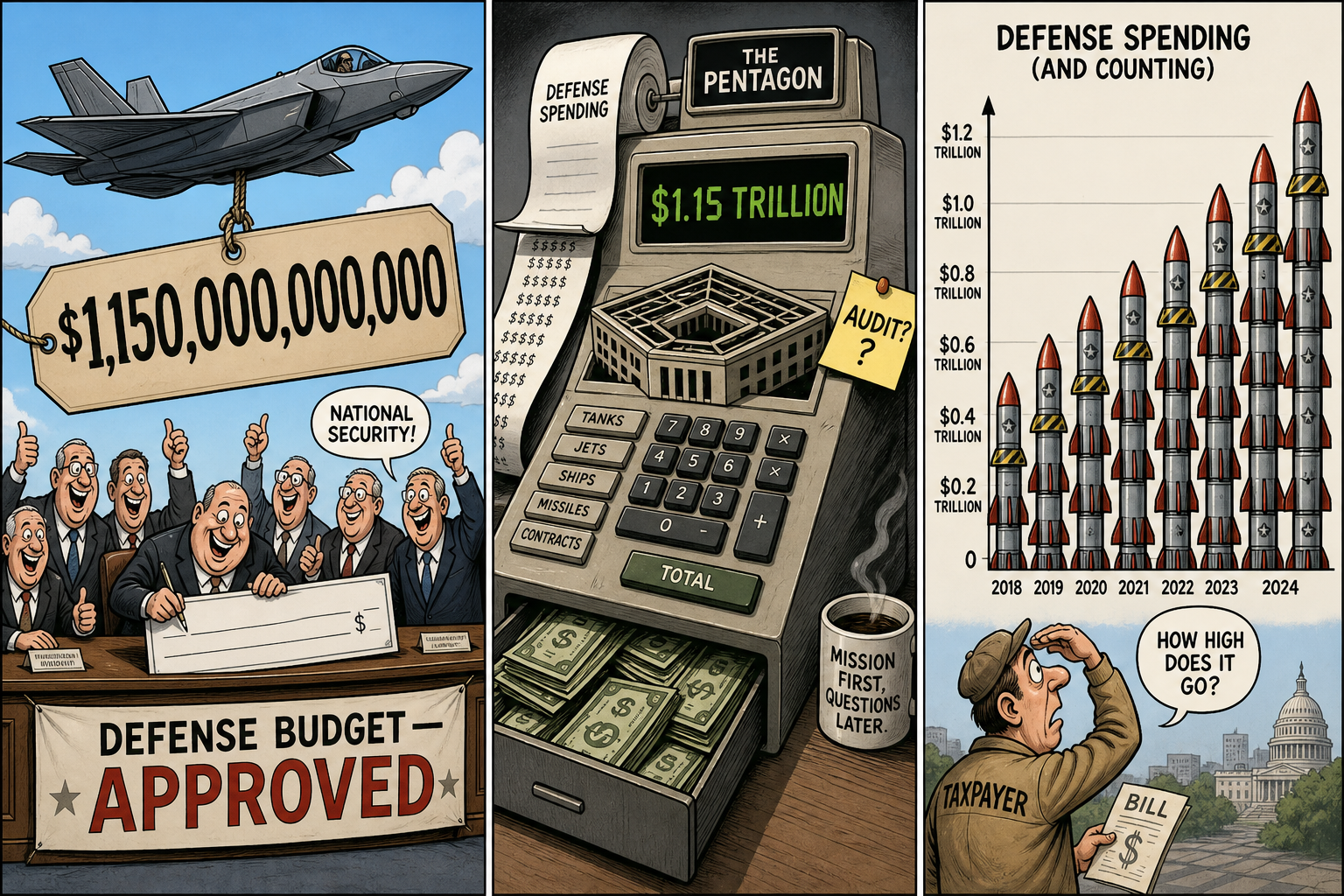
Congress Approved $1.15 Trillion for a Pentagon That Can't Pass an Audit
The House Armed Services Committee approved a record $1.15T FY2027 NDAA 44-12 — six months after the Pentagon failed its eighth straight financial audit.
California Is Billing Medicaid $826/Day for Shamanic Drum Circles.
Under CalAIM — CMS-approved October 2024 — California bills Medicaid $826/day for residential shamanic programs, $185/session for sweat lodge ceremonies, and $112/session for group drum circles. Higher than standard psychiatric inpatient rates. VP Vance froze $1.3B pending audit on June 4. Sen. Kennedy questioned DHCS Director Baass under oath: she had no data on whether participants were actually Native American.
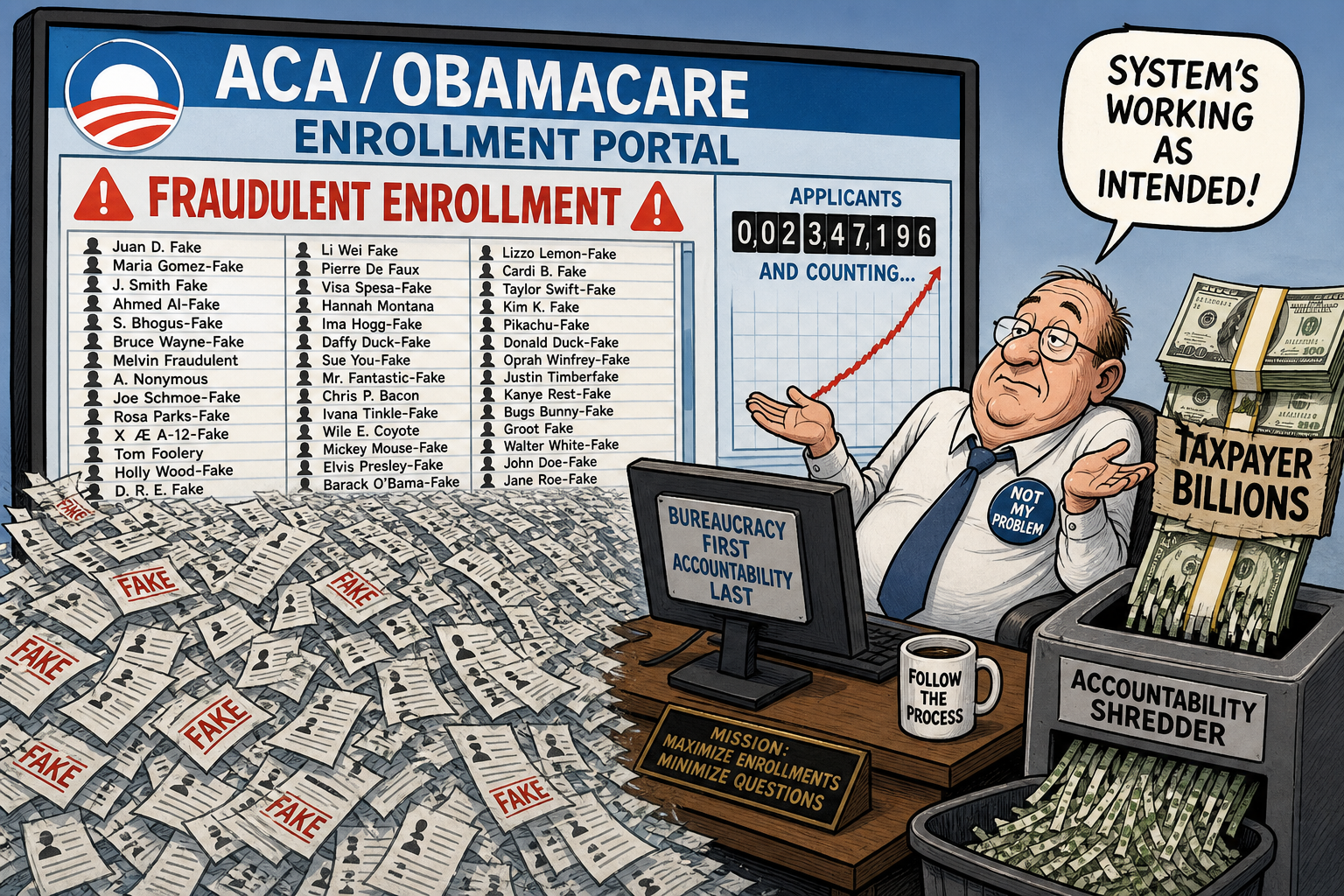
6.4 Million People Are Getting Obamacare Subsidies They Don't Qualify For. It Costs Taxpayers $27 Billion a Year.
A May 2026 GAO report (GAO-26-108742) found CMS lacks basic verification controls to confirm ACA enrollees are actually eligible. Result: 6.4M ineligible recipients, $27B/year in improper payments. Florida: 2.46M ineligible. Broker duo Lloyd and Strong sentenced May 2026 for stealing $180M. CMS has ignored the same three control failures GAO flagged since 2014.

Bernie Sanders Wants the Government to Own Half of Every Large AI Company. He'd Take It in Stock.
Sen. Bernie Sanders (I-VT) unveiled the American A.I. Sovereign Wealth Fund Act — a one-time 50% tax, paid in stock, that would give Washington a 50% stake plus board seats at OpenAI, Anthropic, and xAI. By the firms' own private valuations, that's roughly $1.03 trillion of equity under federal control. We quote him accurately, then document the takings and nationalization critique.
Waste of the Day: $153,000 for a Maine Dam That Was Never Built.
Franklin County committed public money in 2020 to a Sugarloaf snowmaking dam on the Carrabassett River. The dam was never built; the project died by 2023. The county invoiced ~$222,000, recovered ~$69,000, and is clawing back the remaining ~$153,000.

Ohio's Medicaid Billing Loophole: $1 Billion a Year, 288 Shell Companies, and the Whistleblower Nobody Listened To
Ohio spent $146M building an electronic visit verification system — then made GPS optional in March 2023. Ohio Auditor Faber's 2024 audit: $1.1B of $2B in HCBS claims had zero verification. Daily Wire/Rosiak found 288 home health companies sharing 7 Columbus buildings, billing $250M since 2018. Auditor Faber testified $9B total improper payments (May 27, 2026). Whistleblower Mehek Cooke warned Ohio officials December 2025 — ignored for 5 months. VP Vance directed Fraud Task Force May 4, 2026. Gov. DeWine (R-OH) signed an executive order only after national coverage broke.

The Lead Defendant Jumped Off a Fourth-Floor Balcony to Escape Arrest. Minnesota's Somali Medicaid Fraud Just Hit $90 Million.
Muhammad Abdulqadir Omar, 32, the lead defendant in a $90M+ Minnesota Medicaid fraud ring, jumped from a four-floor balcony in Minneapolis during a federal arrest operation and survived. He and 14 co-defendants are charged with billing the state's Medicaid program across seven disability and autism service lines for services never rendered — the largest EIDBI (autism) fraud ever prosecuted by the DOJ, at $46.6M from that program alone. Acting U.S. Attorney Joe Thompson and DOJ AAG Colin McDonald announced the charges May 22, 2026. The arrests come one day after Aimee Bock's 41-year FOF sentence — the same day DOJ noted this cluster shares defendants with the Feeding Our Future network. MN AG Keith Ellison (D-MN) confirmed awareness but has yet to file parallel state charges.

Maricopa County Sheriff Penzone Misspent $163 Million of the $226 Million Civil Rights Settlement. On Overhead. A Golf Cart. Car Washes.
Maricopa County Sheriff Paul Penzone (D), who served 2017–2024, diverted 72% of the $226 million Melendres v. Arpaio consent-decree fund — $163 million earmarked specifically for constitutional policing reform — to general department operations, $144M in personnel costs, an $11,805 golf cart, $3,259 in car washes, and other overhead. ProPublica Arizona and the Arizona Republic documented the diversion through court filings and Maricopa County financial records. The $226M fund came from a civil-rights settlement over former Sheriff Arpaio's racial profiling; the Monitor overseeing compliance formally objected to the spending pattern. Penzone's department also exceeded Arizona's constitutional spending limit by $13M+ in FY 2022.

Feeding Our Future Scandal Widens: Shakopee Couple Gets 97 Months for $8.8M Fraud.
UPDATE, Sept. 10, 2026: Mekfira Hussein (57 months) and Abduljabar Hussein (40 months) — combined 97 months — sentenced Sept. 8, 2026 for running $8.8M of fraud through nonprofit Shamsia Hopes and vendor Oromia Feeds LLC, part of the same scheme. U.S. Attorney Daniel N. Rosen: 'The Husseins stole money that was meant for vulnerable children.' The 28th and 29th sentences in a case with ~80 charged, ~69 convicted. Originally: U.S. District Judge Nancy E. Brasel (D. Minn., Trump 1st-term 2020) sentenced Aimee Marie Bock, 45, founder of Minneapolis nonprofit Feeding Our Future, to 500 months federal prison (41 yrs 8 mo) + $243M restitution. Convicted at trial March 19, 2025 on all 7 counts. $250M USDA pandemic child-nutrition fraud — 91M meals claimed on paper, ~zero served. MN Legislative Auditor (Judy Randall, June 13 2024, 120 pages, nonpartisan): MDE under Gov. Tim Walz (D-MN) ignored 30+ complaints 2018-2021 and voluntarily resumed payments April 2021 AFTER notifying FBI — paid out $17.8M between April-July 2021. Brasel from the bench: 'a vortex of fraud, and you were its epicenter.'

A Convicted Felon Collected $12 Million From the FCC. Including $859,393 While He Was in Federal Prison.
Roger Shoffstall, 75, runs Summit Telephone in Fairbanks, Alaska. ~120 internet customers. FCC pays him $1.5M/year (~$10K per customer) for 25-Mbps DSL. Federal jury convicted him of tax evasion in 2010 (3-year prison sentence). Re-incarcerated December 2013 for probation violation — his company collected $859,393 in USF subsidies that year. Total decade subsidies: $12M+. FCC never opened an enforcement proceeding. The structural rules, designed under political pressure from the late Sen. Ted Stevens (R-AK), pay for what gets BUILT, not what gets USED.

LA Promised Affordable Housing. RAND Says the Mansion Tax Killed Apartment Construction Instead.
RAND EP-70917 (Ward & Phillips, April 2025): Measure ULA cut LA multifamily housing production by ~1,910 units/year, an 18% drop from the 2020-2022 baseline. High-redevelopment-potential parcel sales down 50%. Revenue 55% below projection: $270M actual vs $604M FY23-24 budgeted. Harvard/UC analysis (per City Journal Feb 2026): 63-138% of ULA revenue offset by foregone property taxes. LA Controller Kenneth Mejia (D) documents $473M FY25 homelessness underspend. 795 affordable units 'advanced' vs 1,910 lost/yr. Howard Jarvis on Nov 2026 statewide ballot.

$873.7 Billion in Tax-Exempt Endowments. Harvard Still Took $4.4 Billion in Federal Money.
NACUBO FY24: $873.7B across 658 American university endowments. Harvard alone $56.9B. Yet 2017-2025 Harvard pulled $4.4B in federal funds. RCI: 5 public flagships took $25.1B in federal research grants with $8.6B overhead. Trump-McMahon $2.2B Harvard freeze, Columbia $221M settlement, Cotton WEST Act, OBBBA tiered 1.4/4/8% endowment tax. Burroughs ruling reversed the freeze.

$24 Billion Spent. 64% of LA's Homeless Came From Somewhere Else.
City Journal (May 19): RAND survey shows 64% of LA street homeless not last housed in LA; 39% from other states. $24B+ spent since 2018. $608K-$837K per-unit Prop HHH cost. $2.4B unaccounted (Alvarez & Marsal audit). LA County Supervisors 4-0 defunded LAHSA April 2025. CEO Va Lecia Adams Kellum resigned. Bass dismissed magnet effect as 'a popular myth.' Judge Carter: 'I am your worst nightmare.'

Hospitals Promised Cheaper Care After Merging. Prices Are Up 300%.
Hospital prices rose 300% in two decades — fastest of any U.S. sector. NBER 32613: FTC challenged only 13 of 1,164 mergers 2000-2020. HHS Jan 2025 RFI documents 6-65% price hikes in concentrated markets. Bipartisan Senate (Warren D-MA + Hawley R-MO) calls it 'borderline extortion.' RFK Jr. + Oz price-transparency rule projects $80B in consumer savings. CA AG Becerra $575M, Bonta $430M — state AGs filled the federal vacuum.

The FCC Just Sent Three Letters of Inquiry to Minnesota Schools. Walz's $9 Billion Fraud Pattern Is Now a K-12 Broadband Story.
FCC Chair Brendan Carr (R) announced May 15 that the Enforcement Bureau opened a fraud investigation into the federal E-Rate educational-broadband program in Minnesota — three Letters of Inquiry, three unnamed school institutions, one governor whose state already sits at the center of a federal $9 billion fraud landscape.

There Is a Real Maine Medicaid Fraud Case. The Vice President Just Got the Facts Wrong About It.
Federal indictment in D. Maine. $15.58M MaineCare to Bright Future Healthier You over 5 years. Mohamed pleaded guilty to tax fraud (US citizen). The case is real; Vance's framing isn't.
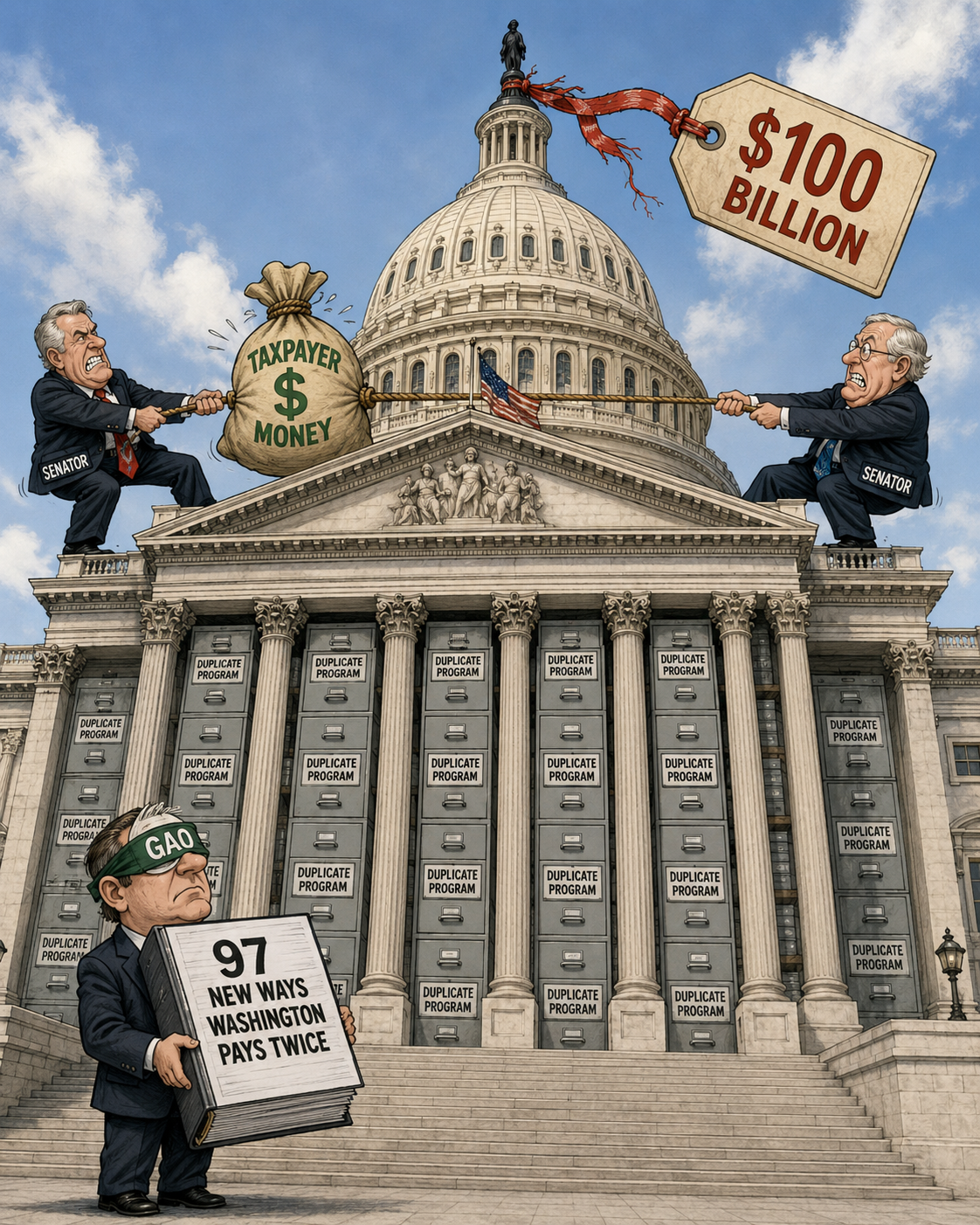
97 New Ways Washington Pays Twice. $100 Billion Sitting on the Table.
GAO released GAO-26-108505 on May 12, 2026 — its 16th annual duplication, overlap, and fragmentation report. 97 new matters for Congress and agencies. ~$100B+ in additional savings available if open recommendations are implemented. $774.3B in cumulative realized benefits since 2011. 1,662 of 2,148 matters fully or partially addressed (77%). Acting Comptroller General Orice Williams Brown signed it.
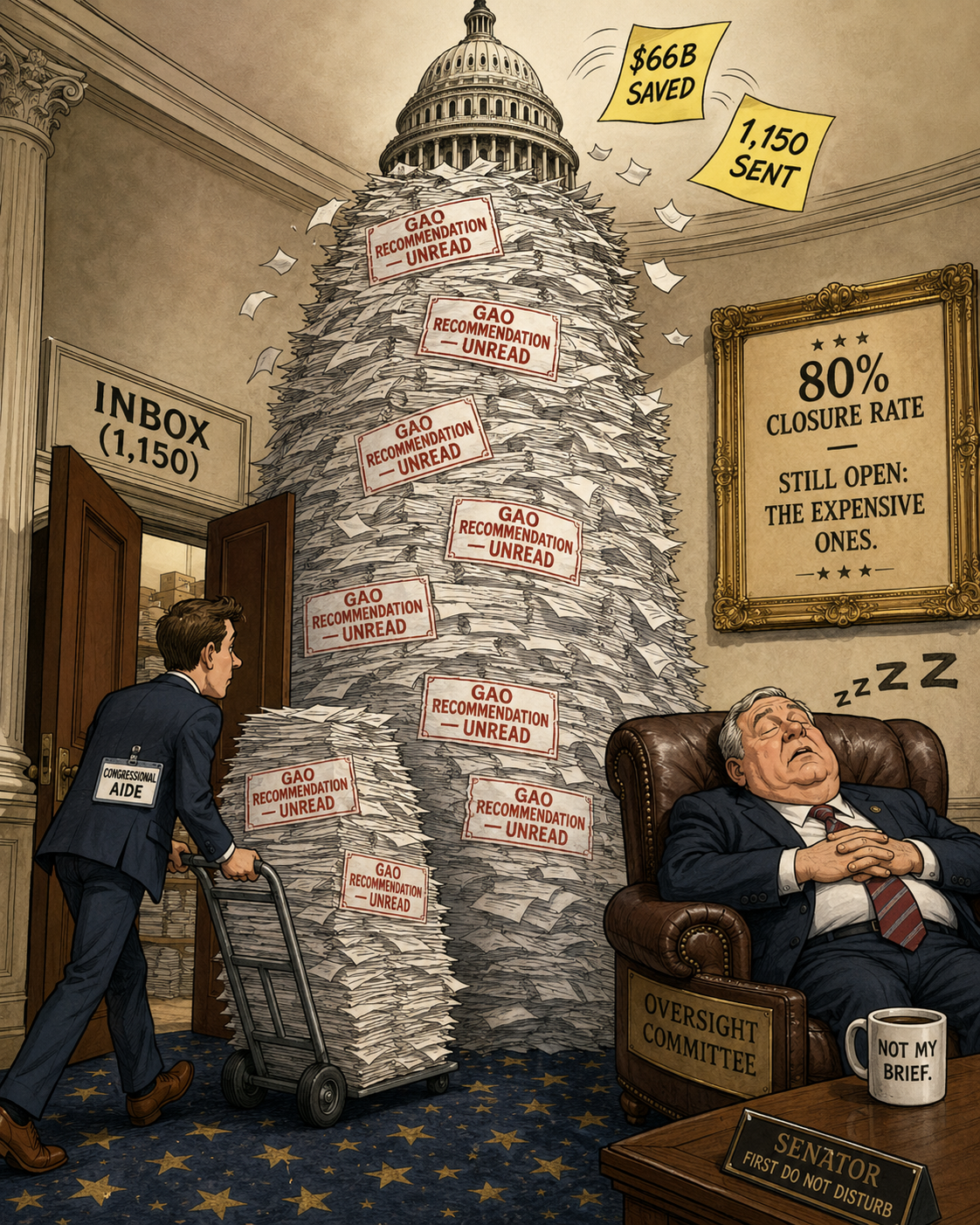
2,148 Recommendations. $774 Billion Saved. Congress Just Has to Read the Memo.
Since 2011, GAO has issued 2,148 matters and recommendations to Congress and federal agencies; 1,662 (77%) are fully or partially addressed, with ~$774.3B in cumulative financial benefits. Another $132–$251B sits in the open file — including a single Medicare outpatient-payment equalization worth ~$157B over a decade. Meanwhile FY 2025 improper federal payments hit $186B. The watchdog did its job. The floor vote is the missing piece.
Newsom's Free Diaper Program Sends $20 Million to a Group Co-Led by His Wife's Associate — No Competitive Bid
California's Golden State Start (May 8, 2026) gives 400 diapers to every newborn — $20M ($7.4M + $12.5M) to Baby2Baby. Its co-CEO Norah Weinstein sits on the board of Jennifer Siebel Newsom's California Partners Project. No competitive bid process disclosed. Meanwhile California carries a $57B budget deficit.
Congress Has a 'Quick Fix' for Gas Prices. Energy Analysts Say It Could Make Things Worse.
Two competing bills: E15 year-round (strips Small Refinery Exemptions → could close refineries → higher prices) and the Gas Prices Relief Act (S.4032/H.R.7919, suspends 18.4¢/gal federal gas tax through Oct. 1, 2026). Nick Loris (Daily Caller): the E15 mechanism that makes the deal viable for the ethanol lobby may raise prices for everyone else.
$100 Billion a Year on Federal IT. 80% Goes to Systems That Predate the Moon Landing.
The federal government spends $100B+ annually on IT. GAO finds roughly 80% goes to maintaining legacy systems — some over 50 years old — including COBOL at Social Security and the IRS. 80 cents of every IT dollar keeps 1960s code alive. New development gets the other 20.
The Federal Government Processes Retirement Claims in a Limestone Mine. 230 Feet Underground. By Hand.
OPM processes civilian retirement claims from a converted Cold War-era limestone mine in Boyers, PA — 230 feet underground, ~700 workers, paper files. Three IT modernization attempts failed since 2003. GAO High Risk. New retirees wait 60–90+ days for their first pension check.
$229,000 for Shea Butter Cooperatives in Burkina Faso. Russia Expelled France. Russia Is Now There.
USADF funded $229K in shea butter cooperatives in Burkina Faso — which has since expelled French forces and invited Wagner Group. The strategic cost of terminating American development relationships in a country that pivoted to Russia was not evaluated by DOGE.
$239,000 for Pineapple Cooperatives in Benin. Next Door to Nigeria. China Is Expanding There.
USADF awarded $239K to pineapple cooperatives in Benin — a small West African country bordering Nigeria, where China has been expanding infrastructure investment. Another small-scale American grassroots economic relationship terminated without strategic review.
$246,000 for Mango Drying in Côte d'Ivoire. West Africa Is Where China Is Competing for Influence.
USADF awarded $246K for mango drying facilities in Côte d'Ivoire — a French-speaking hub where China is aggressively expanding infrastructure and soft power. $246K is part of accumulated grassroots presence that takes decades to build and months to lose.
$483,000 for Artisanal Salt Cooperatives in Ecuador. Traditional Livelihoods. Strategic Ambiguity.
The IAF funded $483K for artisanal salt production cooperatives in Ecuador's coastal regions. Traditional coastal livelihood. Cooperative market access. U.S. strategic interest in Ecuadorian salt: not obvious. The kind of program that illustrates why IAF is a perennial DOGE target.
$677,000 for Fruit and Jam Sales in Rural Honduras. Another Northern Triangle. Another Cut.
The IAF awarded $677K for fruit processing and cooperative market access in rural Honduras — a Northern Triangle country with documented out-migration driven by lack of rural economic opportunity. Same logic as Guatemala mushrooms. Same termination under EO 14169.
$731,000 for Mushroom Farming in Guatemala. DOGE Missed the Root-Causes Point — But Didn't Have to Make It.
The IAF funded $731K for mushroom cultivation and cooperative market access in rural Guatemala — a Northern Triangle country where out-migration is driven by lack of rural income. The root-causes-of-migration argument has merit. DOGE terminated without distinction.
$900,000 for Alpaca Cooperatives in Peru. Peru Controls 80% of World Alpaca Fiber.
The Inter-American Foundation awarded $900K to Andean alpaca herding cooperatives in Peru — the country that produces 80% of world alpaca fiber. Access to international textile markets at fair prices is a genuine development challenge. Whether this was the right tool is the actual question.
$4.7 Million for Ecuador Labor Standards. The ILO Has an Ecuador Country Office.
DOL funded $4.7M for labor standards enforcement in Ecuador. The ILO has an established country program in Ecuador, is funded by 187 member nations, and is already doing this work. The duplication was not evaluated before termination under EO 14169.
$12.2 Million for 'Worker Empowerment' Across South America. The ILO Already Has Country Programs for All of These.
DOL funded worker empowerment and labor rights programs across multiple South American countries — framed with Biden progressive labor ideology. The ILO has existing country programs in every targeted nation. The overlap went unexamined. Terminated January 2025.
$229,000 for a Gender Consultant on USDA's Brazil Forest Program. Norway Spent $1.3 Billion on the Same Forest.
USDA's international forest program in Brazil included a $229K gender equity consultant. Norway's Amazon Fund committed $1.3 billion to the same forest. America's gender-equity overlay is a rounding error Norway outspent 5,600x.
$298,000: USDA Applied Biden's Equity Overlay to International Agricultural Development.
USDA's Foreign Agricultural Service attached equity criteria — targeting 'underrepresented communities' and 'marginalized populations' — to standard agricultural development grants. The development work was defensible; the Biden equity framing guaranteed it was a DOGE target.
$374,000 for a USDA DEI Onboarding Specialist. Hired Under Biden EO 13985. Terminated Under Trump EO 14173.
USDA hired a full-time DEI Onboarding Specialist in 2022 under EO 13985 to ensure all new USDA employees were introduced to equity principles. EO 14173 abolished all federal DEI positions in January 2025. The position lasted three years.
$600,000 from the Agriculture Department for Menstrual Cycle Research in Transgender Men.
USDA — the Department of Agriculture — co-funded a $600K study on menstrual cycle characteristics in transgender men. Agriculture agencies oversee farming, food safety, and rural development. Reproductive health research has a home. It is called the National Institutes of Health.
$7.5 Billion for EV Charging. Three Years Later: 7 Stations. Tesla Has 50,000.
The Bipartisan Infrastructure Law allocated $7.5B for a National EV Charging Network. By early 2025, fewer than 10 stations had opened. Tesla built 50,000 Superchargers with private capital. The federal government is not a good EV charging company.
$325,000: HHS Adapted Pregnancy Prevention for Transgender Boys. Higher Teen Pregnancy Rates. Bipartisan Goal. Terminated.
HHS OASH grant adapting evidence-based pregnancy prevention for transgender boys — documented to have higher unintended pregnancy rates than cisgender teenage girls (Pediatrics, 2019). Pregnancy prevention is bipartisan. The population designation triggered a categorical EO termination.
$599,000: NIH Studied Breast Cancer Risk in Transgender Men. Cancer Is Not Ideology. DOGE Terminated It.
NCI-funded research on breast cancer screening in transgender men — a population with retained breast tissue and no established screening guidelines. Late-stage diagnoses documented due to absent guidelines. Research that would have produced those guidelines: terminated under EO 14168.
$755,000: NIH Studied Puberty Blocker Effects on Bone. Both Sides Claim to Want Safety Data. DOGE Terminated the Study.
NIAMS-funded longitudinal bone density research in transgender adolescents on puberty suppression. Puberty blockers are the most contested element of transgender youth medicine. This study was generating the long-term safety data that would resolve the evidence debate. Terminated before conclusion.
$910,000: NIH Studied How Gender-Affirming Hormones Affect Immune Function. Sex Hormones and Immunity Is Basic Science.
NIAID-funded research on exogenous sex hormone effects on immune function in transgender patients. Relevant to autoimmune risk and vaccine response. The basic science of sex hormones and immunity is not controversial; the patient population triggered EO 14168.
$1.6 Million: NIH Funded Transgender Reproductive Health — Including Fertility Preservation Before Hormone Therapy.
NICHD-funded research on fertility outcomes in transgender patients considering hormone therapy. ASRM cited need for this long-term data. Hormone therapy affects fertility; clinicians currently lack outcomes data to counsel patients. Terminated EO 14168.
$2.5 Million: NIH Studied Racism and Health of Older Black Gay Men. Caught in Two Executive Orders Simultaneously.
NIA-funded gerontology research on cumulative racism and sexual minority stress on aging outcomes. Terminated under both EO 14168 and EO 14173. Research community: basic social determinants of health science. DOGE: the term 'structural racism' disqualifies any research containing it, regardless of context.
$2.9 Million: NIH HIV Prevention for Transgender Women. CDC Documents 49% Prevalence. Contradicts Trump's Own EHE Initiative.
NIAID-funded PrEP uptake and HIV prevention research in transgender women — CDC documents 49% HIV prevalence in some cohorts. Trump's own 'Ending the HIV Epidemic' initiative targets 90% incidence reduction by 2030. You can't end the HIV epidemic while refusing to study the highest-burden population.
$5.1 Million: NIH Studied How Cross-Sex Hormones Affect ~300,000 Americans Who Take Them. DOGE Terminated the Safety Research.
NHLBI-funded cardiovascular safety research on cross-sex hormone therapy — prescribed to ~300,000 Americans. Terminating the research doesn't stop the prescribing. It stops the monitoring. The Endocrine Society has published guidelines since 2009; the long-term outcomes data they need was being generated here.
$5.9 Million: NIH Funded TransHealthGUIDE — a Healthcare Navigation Tool for Gender-Diverse Young Adults. Terminated.
Five-year NIMHD R01 studying healthcare access barriers and navigation for transgender youth. Preliminary findings published in peer-reviewed pediatrics journals. Terminated February 2025 under NIH Notice NOT-OD-25-097 without review of scientific merit. Federal courts reviewing termination authority.
$6.2 Million: NIH Funded a Transgender Asthma Study. 25 Million Americans Have Asthma. The Population Framing Is the Question.
NHLBI-funded R01 on asthma outcomes in transgender individuals. Published literature documents higher asthma rates in this population. Whether $6.2M of NHLBI discretionary funding is best allocated here vs. research affecting 25 million asthma patients is a priorities question DOGE answered categorically.
$312 Million: The SBA Approved Business Loans for Children Under 11. No Age Check. $390 Billion Program.
EIDL applications using SSNs belonging to children under 11 approved and disbursed — no minimum age check on a $390B program. SBA OIG documented the failure in 2022. DOJ has charged 1,000+ fraud defendants. Less than 1% of fraudulent EIDL disbursements have been recovered.
$382 Million in Unemployment Benefits Paid to Infants, Toddlers, and People Born 115+ Years Ago.
The pandemic UI system had no age filter. Identity thieves used children's SSNs to claim benefits. A one-line database check would have caught it. $382M approved and disbursed before DOL OIG documented the fraud in 2022. Less than 2% of total UI fraud ever recovered.
$59 Million: FEMA — a Disaster Agency — Funded Housing and Services for Illegal Immigrants in New York City.
Mayor Adams (D) declared a sanctuary city emergency and demanded federal disaster funds to house migrants in hotels at $400/night. FEMA obliged. NYC's total migrant bill: $1.4B+ in FY2024 alone. DOGE flagged FEMA's disaster mission being repurposed to cover sanctuary city costs.
$22.6 Billion: Biden's HHS Spent Taxpayer Money on Illegal Migrant Resettlement, Home Purchases, and Loans.
Biden's ORR was designed for legal refugees. It was repurposed at scale for 300,000+ illegal border crossers. Services included vehicle loans, housing assistance, home purchase help, and legal representation for immigration proceedings. GAO found thousands of children unaccounted for post-placement.
$6 Million from the Defense Department to University of Montana to 'Bridge Political Divides.' NSF Exists for This.
DOD's Minerva Initiative — designed for foreign social science research with national security relevance — funded domestic political polarization and democratic resilience research at the University of Montana. Wrong agency. Wrong budget.
$6 Million to Decarbonize Navy Ship Emissions. Real Fuel Resilience Problem. Climate Framing Invited the Cut.
ONR funded research on alternative propulsion for Navy ships — a legitimate logistics vulnerability problem — framed as emissions reduction. Reducing dependence on heavy fuel oil has real Pacific theater supply chain rationale. The climate language guaranteed DOGE termination.
$5.2 Million to Diversify the Navy. Equal Opportunity Since 1972. Biden Added DEI Ideology. DOGE Cut Both.
Navy diversity programs included both the legitimate 1970s-era equal opportunity enforcement mission and Biden-era DEI ideology and mandatory training. The Senate Armed Services Committee questioned whether DEI training was displacing readiness time in a service already short of pilots.
$3.5 Million for the DEI Bureaucracy Inside the Defense Department's Human Resources Office.
DHRA funded dedicated DEI offices, contractor training, culture-change programs, and the Chief Diversity Officer support function across all military services. The entire apparatus was shut down by EO 14173. Non-discrimination monitoring and ideological advocacy were terminated together.
87,000 Hours on Union Work. Zero Hours of Patient Care. $3.3 Million from Taxpayers. $0 from the Union.
Federal law authorizes 'official time' — Defense Health Agency employees spending their government workday on union activities at full federal pay. 87,000 hours in one fiscal year. Private-sector unions pay for this themselves. Federal unions use your tax dollars.
$1.9 Million for Air Force DEI Transformation Training. Mandatory. For All Personnel. While Facing a Pilot Shortage.
Secretary of the Air Force's DEI Strategic Plan: mandatory transformation training for all Air Force personnel. $1.9M direct contractor cost understates the real cost — it doesn't count the tens of thousands of personnel training hours diverted from readiness in a service short on pilots.
$1.6 Million for Sahel Security Research. Five Coups Since 2021. DOGE Called It a 'Climate Study.'
DOD Minerva-funded research on Sahel social and climate hazard vulnerability — in a region with five military coups since 2021, expanding Wagner presence, and contracting AFRICOM footprint. The security research question was legitimate. The climate framing was the problem.
$7 Billion in Solar for All Grants. Congress Passed It. Biden Signed It. Trump Froze It. Courts Decide.
Section 60103 of the IRA appropriated $7B for EPA's Solar for All program — 60 recipients across all 50 states awarded before January 20, 2025. Frozen by executive order. Impoundment Control Act dispute active in federal court.
$20 Billion Rushed Into Citibank Accounts Before January 20. Trump Froze It. Green Banks Sue.
The Biden EPA transferred IRA Greenhouse Gas Reduction Fund grants to NGO-controlled accounts at Citibank before inauguration day, deliberately insulating funds from the incoming administration. Trump directed Citibank to freeze. Grant recipients filed suit.
$2 Billion to Decarbonize American Housing. Weatherization. Heat Pumps. Community Solar. Frozen.
IRA Environmental and Climate Justice Block Grants funded weatherization upgrades, heat pump installation, and community solar in low-income communities. Some reduce energy costs. Others accelerate transitions that raise them in high-electricity markets. Frozen January 2025.
$8M for Environmental Justice. Clinton Started It in 1994. Biden Tripled It. DOGE Cut All of It.
EPA's Office of Environmental Justice was founded by EO 12898 in 1994 based on documented enforcement inequality. Biden expanded it under IRA with climate justice and energy justice framing. DOGE cut the expansion — and the original enforcement monitoring mission along with it.
$4 Million for a One-Room Museum Inside the EPA. Not Open to the Public. Smithsonian Is Free.
The EPA built a one-room environmental museum inside its own headquarters — accessible primarily to employees and agency visitors. In a city with the Smithsonian Natural History Museum, free of charge. Among the most straightforwardly indefensible items in the DOGE sweep.
$46.5 Million for Greenhouse Gas Reduction in Brazil. Norway Has Already Spent $1.3 Billion on the Same Forest.
State Department climate programs targeting Amazon deforestation and low-carbon agriculture in Brazil — the world's largest terrestrial carbon sink. Norway's Amazon Fund: $1.3B. Germany: hundreds of millions more. Whether American State Dept funding was the marginal dollar is the question DOGE didn't ask.
$5.7 Million for LGBTQ+ Programs Across Latin America. Argentina Has Marriage Equality. Honduras Has Violence.
State Department DRL programs across 18+ Latin American and Caribbean countries — ranging from violence documentation in Honduras to corporate DEI training in Argentina. DOGE terminated all without distinguishing between them. The most defensible programs and the least went together.
$400,000 to Train Nigerian Police to Be 'Sensitive' to Gay People. The Law They Enforce Carries the Death Penalty.
LGBTQ+ sensitivity training for Nigerian police forces — who enforce a 2013 law carrying 14 years imprisonment in southern states and death under sharia in 12 northern states. The structural constraint is the law, not the training.
$300,000 to Promote LGBTQ+ Acceptance in Botswana. Their Own Court Already Did It in 2019.
Botswana's High Court decriminalized homosexuality through its own independent judiciary in 2019 — upheld on appeal in 2021 — without American pressure. The State Department then funded follow-on social acceptance programming in a country that had already made its own legal decision.
$11 Million for Arabic Sesame Street in Iraq. DOGE Flagged It. The Evidence Backed It.
Ahlan Simsim provided trauma-informed education programming for 3.4 million ISIS-displaced children in Iraq. DOGE flagged it as foreign aid fluff. The Lancet validated its outcomes in peer review. Evidence-based. Terminated anyway.
$10.3 Million for HIV Prevention in Mozambique. 13.9% Infection Rate. DOGE Grouped It With DEI.
Voluntary male medical circumcision programs in Mozambique, where 2.4 million people live with HIV. Three randomized controlled trials. WHO recommendation since 2007. 60% risk reduction. CDC estimates 11,000–68,000 infections averted. Terminated alongside DEI curricula.
$9 Million in U.S. Aid Was Stolen by Al-Qaeda Terrorists in Yemen. The OIG Documented It.
USAID's own Inspector General documented that $9 million in humanitarian aid to Yemen was diverted to AQAP — Al-Qaeda in the Arabian Peninsula — through extortion at checkpoints, warehouse theft, and beneficiary list manipulation. The program continued.
$8.3 Million to Export Biden's 'Worker Power for Equity and Justice' Agenda Overseas.
USAID rebranded standard ILO core labor standards programs with Biden-era progressive framing — 'worker power for equity and justice' — and embedded American labor ideology into foreign development aid without congressional authorization for the ideology.
$8.3 Million to Export American DEI Curriculum to Foreign Schools.
USAID conflated evidence-based girl-child education access programs with American DEI curriculum reform under the same budget line. The legitimate development goal — getting girls into school — was packaged with the ideological one and suspended together.
$4.9 Million: Evidence-Based Public Health + Biden Gender Ideology. Packaged Together. Cut Together.
USAID funded adolescent reproductive health programs in developing countries — addressing real public health crises — bundled with Biden-era gender identity frameworks. The public health core had decades of evidence behind it. The ideology overlay had none. Both suspended January 2025.
$2.5 Million for Green Energy Businesses in Vietnam. GDP: $430 Billion. World Bank Access: Yes.
USAID funded small business development for Vietnamese clean energy entrepreneurs — solar installers, energy efficiency consultants — in a middle-income economy with full access to World Bank and ADB capital. Development-aid approach to a commercial-engagement problem.
$2 Million for LGBTQ+ Advocacy in Guatemala. 72% of Guatemalans Oppose It. No Evidence It Helped.
Gender-affirming healthcare and LGBTQ+ advocacy in Guatemala — 72% of the population considers homosexuality unacceptable (Pew), the legislature has repeatedly opposed foreign LGBTQ+ funding, and the effectiveness of American advocacy in this environment is undemonstrated.
$1.5 Million for DEI and LGBTQ+ Entrepreneurship in Serbia. The EU Already Requires Anti-Discrimination.
DEI business training and LGBTQ+ entrepreneurship support in Serbia — an EU accession candidate already bound by EU anti-discrimination directives. American ideology layered on top of existing EU compliance requirements. $1.5M is a rounding error. The principle is not.
$323,000 for Venezuelan Refugees in Brazil. Maduro's Victims. DOGE's Smallest Item.
The Inter-American Foundation awarded $323,000 for cultural integration support for Venezuelan migrants in Brazil — 7.7 million people displaced by Maduro's socialist dictatorship, resettled in an American strategic partner. DOGE's smallest flagged item. The hardest to justify cutting.
The Same Medicaid Patient. Two States. Two Checks. $4.3 Billion.
327,497 beneficiaries were simultaneously enrolled in Medicaid in two different states. Both states billed the federal government. The fix — a mandatory cross-check database — was recommended by HHS auditors and rejected by CMS.
$50 Billion. One Year. And CMS Knew Every Dollar Was Wrong.
CMS’s own PERM audit found $50.3B in improper Medicaid payments in FY2023 — an 8.6% error rate, nearly three times the statutory target. On GAO’s High-Risk List since 2003. The structural incentive is inverted: states bear the cost of fixing it while the federal government pays the bill.
$43 Million to Export American DEI to Egypt.
USAID ran inclusive workforce training, equity frameworks for NGOs, and civil society capacity-building programs in Egypt — an authoritarian state that jails NGO workers under Law 70 of 2017. All suspended January 20, 2025.
$35.9 Million for ‘Positive Youth Experiences’ in a Territory Controlled by Hamas.
USAID’s Palestinian Youth Empowerment Program ran a five-year contract in Gaza, where Hamas has exercised governmental control since 2007. In-person oversight was acknowledged as below agency standards. Terminated 2025.
$31 Million to Fund European Clean Energy While American Energy Bills Climb.
USAID spent $31M on clean energy programs in Eastern Europe and Eurasia — including EU members and EU candidate states with access to the EU’s €300 billion REPowerEU fund. Some programs had genuine strategic rationale; all were terminated in January 2025.
$26 Million to Reform Universities in a Country That Jails Professors.
USAID university partnerships, equity scholarships, and STEM labs in Egypt — Freedom House score 9/100. The Egyptian government controls curricula, jails NGO workers, and prosecutes critics. All suspended January 2025.
$24 Million for 'Resilient Livelihoods' in Gaza. Hamas Still Controls the Economy.
Agriculture, microenterprise, and job training in a territory where Hamas controls business licensing and taxes all economic activity. GAO found oversight insufficient. Program ran through October 7 and into 2025.
$17.5 Million for Circumcision and Condom Programs Overseas.
Three randomized controlled trials. WHO recommendation. 60% HIV risk reduction. Among the most cost-effective programs in the USAID portfolio. DOGE flagged them alongside DEI curricula and terminated them.
$17.3 Million in DEI Scholarships in Burma — Then the Military Staged a Coup.
Scholarships for ethnic minority students in Myanmar. Launched 2019. Military coup February 2021. Program continued under modified oversight. Students targeted by the coup are the same communities the scholarships served.
$13.2 Million to Protect Liberian Forests While American Infrastructure Crumbles.
Forest rangers, protected area governance, and biodiversity monitoring in Liberia — one of Earth's 36 recognized biodiversity hotspots. DOGE grouped it with climate ideology and terminated it without distinguishing conservation science from green policy advocacy.

He Billed Medicaid $650M for Addiction Treatment That Never Happened — Then Bought a Dubai Golf Estate.
The 2025 DOJ National Healthcare Fraud Takedown: 324 defendants, $14.6B in schemes, a $10.6B Russian catheter empire, a 29-year-old with zero medical training who built a $1B Medicare machine, and AI-generated fake patient consent recordings.
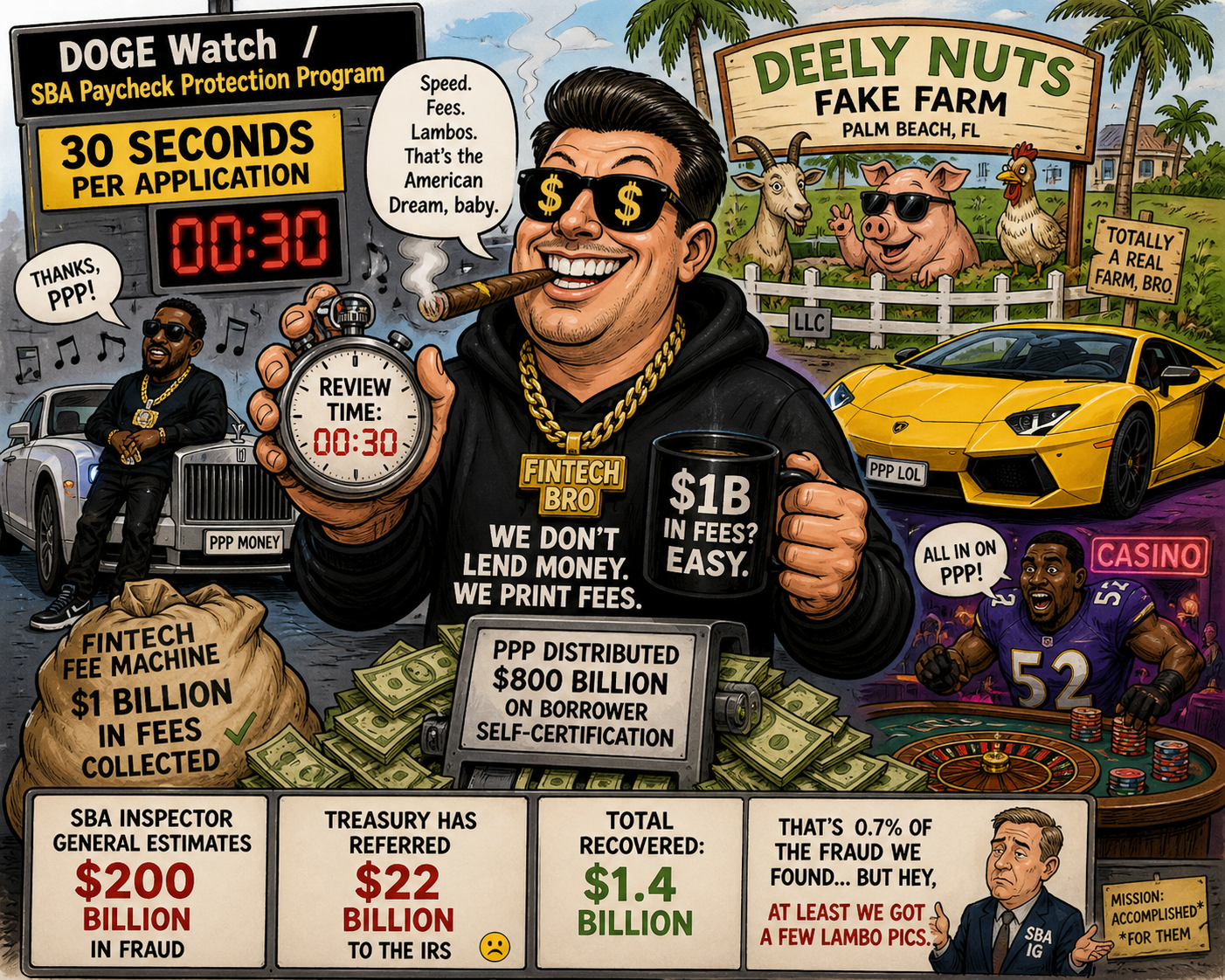
The Lamborghini, the Fake Farm in Palm Beach, and 30 Seconds Per Application.
The PPP program distributed $800B on borrower self-certification. A fintech company charged $1B in fees and gave reviewers 30 seconds per application. Fake farms named ‘Deely Nuts.’ A rapper bought a Rolls-Royce. An NFL player went to a casino.
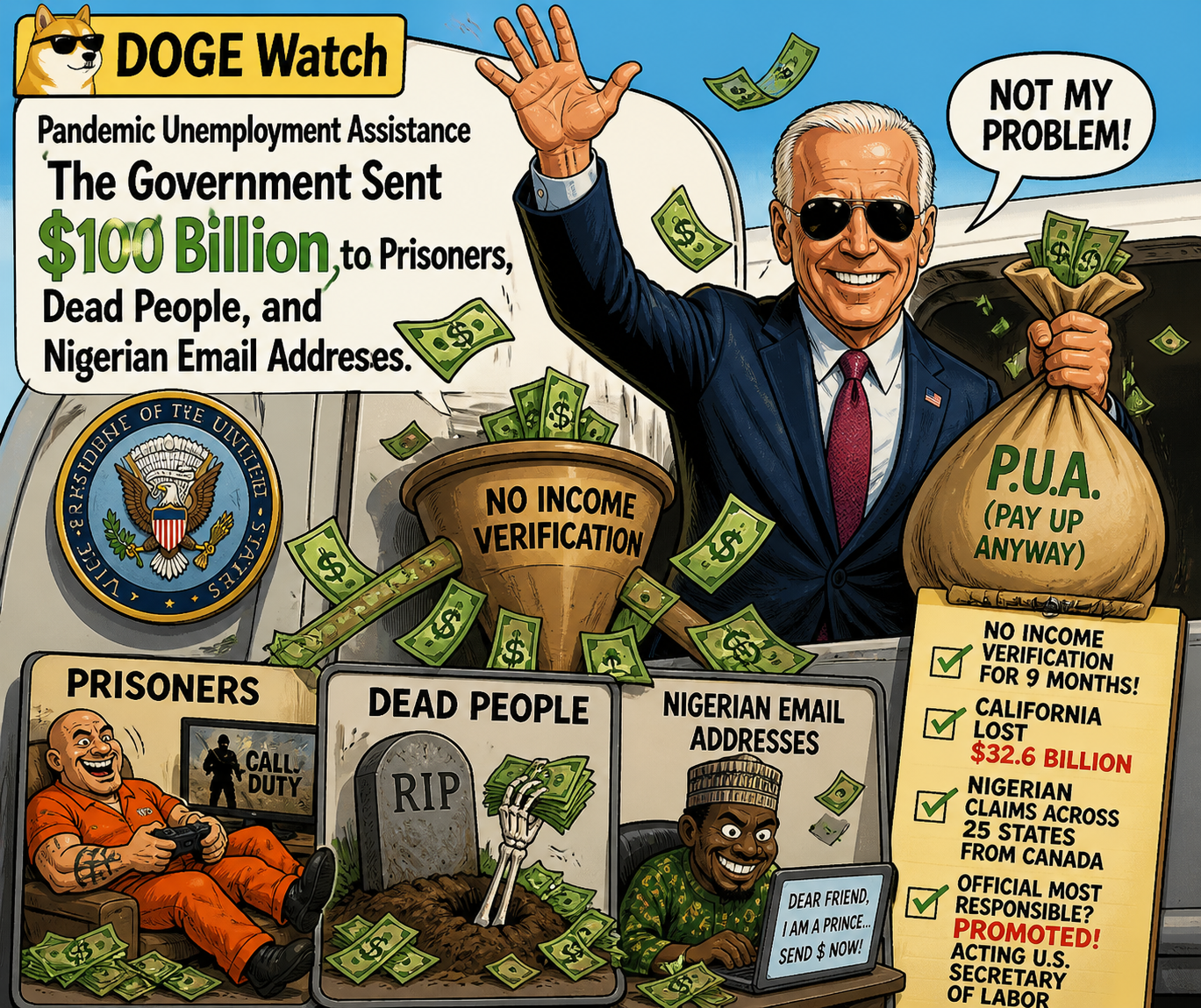
The Government Sent $100 Billion to Prisoners, Dead People, and Nigerian Email Addresses.
The PUA program had no income verification for its first nine months. California lost $32.6B. Nigerian nationals filed across 25 states from Canada. The official responsible was promoted to Acting U.S. Secretary of Labor.
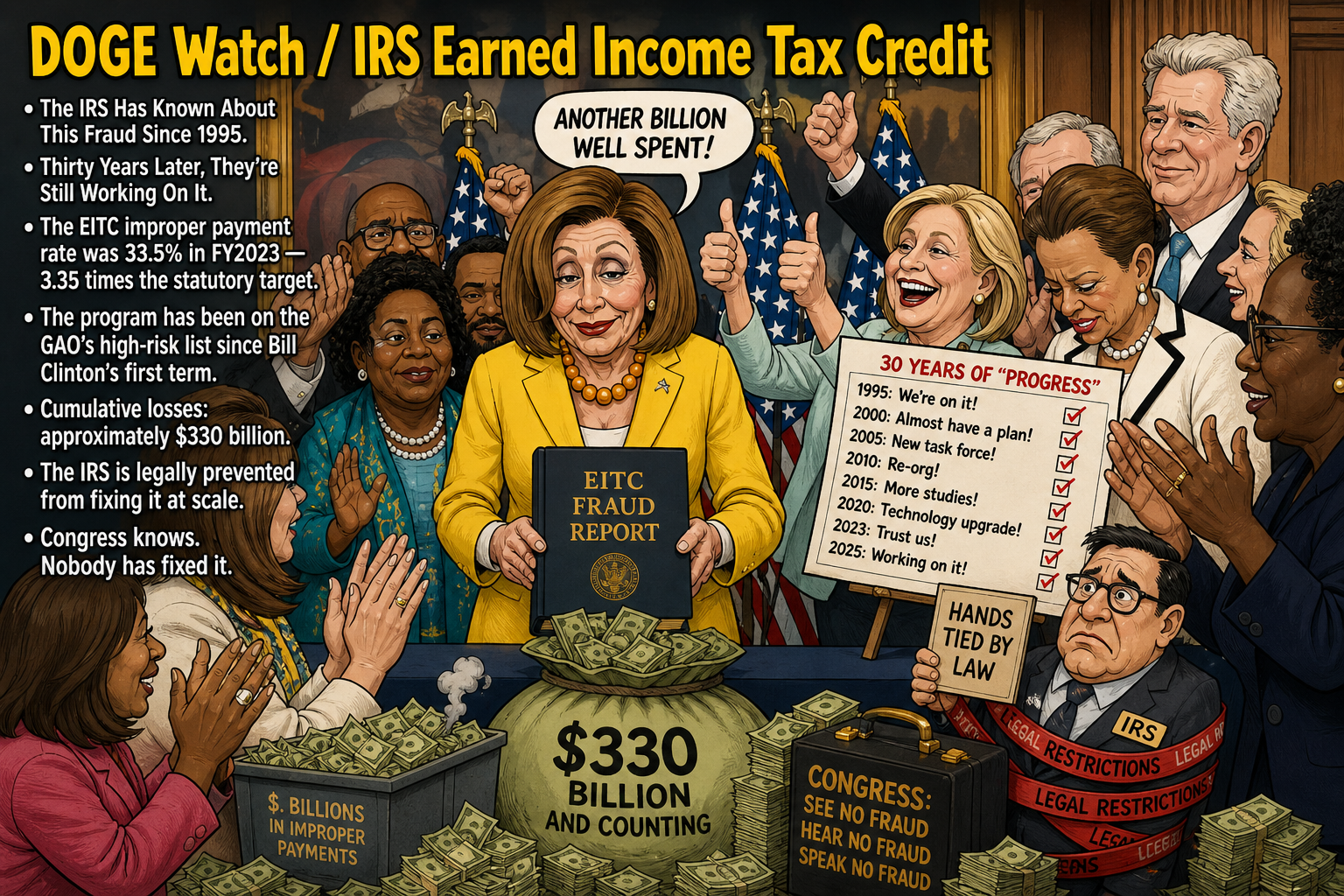
The IRS Has Known About This Fraud Since 1995. Thirty Years Later, They’re Still Working On It.
The EITC improper payment rate was 33.5% in FY2023 — 3.35× the statutory target. The program has been on GAO’s high-risk list since Bill Clinton’s first term. Cumulative losses: ~$330B. The IRS is legally prevented from fixing it.
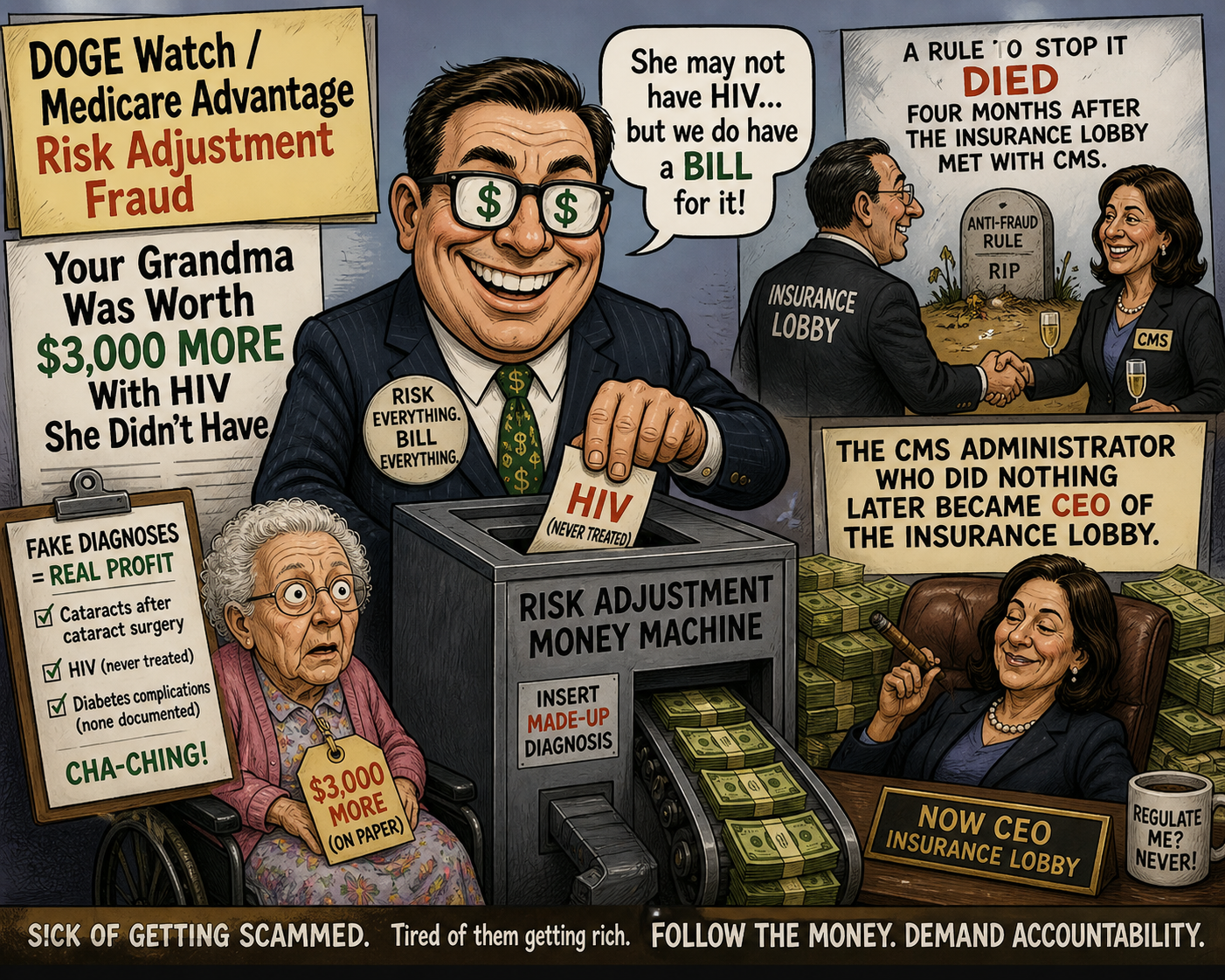
Your Grandma Was Worth $3,000 More With HIV She Didn’t Have.
Medicare Advantage insurers fabricated $50B in diagnoses — cataracts after cataract surgery, HIV patients who never received HIV treatment. A rule to stop it died four months after the insurance lobby met with CMS. The CMS administrator later became CEO of the insurance lobby.