OpenAI and Foxconn Say They’ll Reindustrialize America. The Deal Has No Dollar Figure Attached.
On November 20, 2025, OpenAI and Foxconn — formally Hon Hai Technology Group, the Taiwanese contract manufacturer best known for assembling the iPhone — announced a collaboration to co-design and manufacture AI data center hardware in the United States. The scope: co-designing multiple generations of AI server racks in parallel, manufacturing cabling, networking, cooling, and power systems at Foxconn’s existing U.S. facilities, and broadening the supplier base so the architecture can be built across more American plants. The work spans Foxconn sites in Wisconsin, Ohio, Texas, Virginia, and Indiana.
What the agreement does not include is a dollar figure. Both companies stated explicitly that the initial deal carries no purchase commitments and no financial obligations — OpenAI gets early access to evaluate what Foxconn builds, plus an option, not an obligation, to buy it. OpenAI CEO Sam Altman called the partnership “a generational opportunity to reindustrialize America,” and said it was “a step toward ensuring the core technologies of the AI era are built here.” Eight months later, the single most concrete number attached to the arrangement isn’t in either company’s books — it’s a state economic-development filing in Wisconsin.
- 1,000 → 2,000/wk — Foxconn's current AI server-rack manufacturing pace, and the level Chairman Young Liu says the company expects to reach in 2026 — CNBC, TrendForce
- $569 million — Wisconsin's WEDC-approved Foxconn expansion tied to the OpenAI collaboration, creating 1,374 jobs through 2029 — WEDC
- $0 — purchase commitments or financial obligations disclosed in the OpenAI-Foxconn agreement itself — OpenAI, Foxconn official announcements
- 5 states — Wisconsin, Ohio, Texas, Virginia, and Indiana — the Foxconn facilities named in the partnership — CNBC
The mechanics, per both companies’ announcements, are straightforward: OpenAI shares its own experience running AI infrastructure at scale — what breaks, what overheats, what needs replacing — and Foxconn uses that insight to engineer server racks built for cooling and power demands most existing data centers weren’t designed to carry. Foxconn Chairman Young Liu framed the logic bluntly at Hon Hai Tech Day, the company’s annual event in Taiwan: “No matter what [AI] models or [AI] model players will win, they all need hardware,” he told CNBC, adding that “it makes perfect sense for OpenAI to work with Foxconn” because Foxconn is “probably the strongest partner that OpenAI can find.”
Liu’s confidence rests on scale. Foxconn told CNBC and TrendForce it can currently assemble roughly 1,000 specialized AI server racks a week across its operations, and Liu said he expects that pace to reach around 2,000 racks weekly sometime in 2026 — a doubling of throughput inside twelve months. Bloomberg Intelligence analyst Steven Tseng called the OpenAI tie-up “a strong validation that Foxconn is now firmly among the leaders in AI infrastructure build-out,” an assessment echoed across the trade press that covered the announcement.
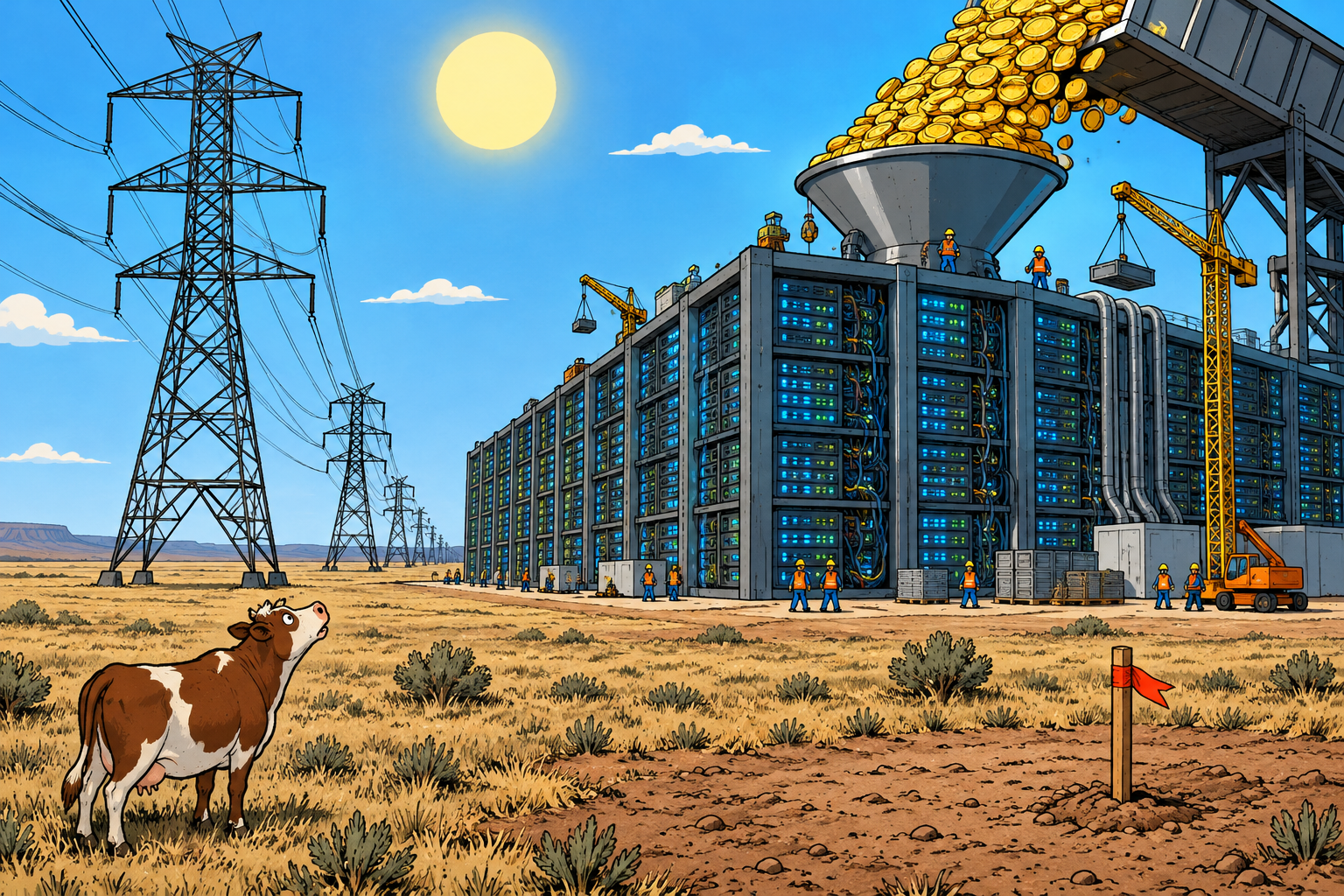
The partnership names five states where Foxconn already operates U.S. facilities. Two sites carry the clearest paper trail. In Ohio, Foxconn operates a former General Motors plant in Lordstown that it sold to SoftBank in 2025 to help stand up the Stargate project, the OpenAI-Oracle-SoftBank data center initiative; Foxconn continues to run AI server production there on SoftBank’s behalf. In Wisconsin, Foxconn’s Mount Pleasant campus — the same site Foxconn broke ground on in 2018 as a $10 billion, 13,000-job flat-panel display factory before opening a scaled-down version in 2021 — is now being retooled to add AI server liquid-cooling testing capacity.
Five days after the OpenAI announcement, on November 25, 2025, Wisconsin’s Economic Development Corporation approved a new $569 million Foxconn investment in Mount Pleasant, tied explicitly to the OpenAI collaboration: 1,374 new jobs over four years, plus up to $16 million in additional performance-based tax credits, bringing Foxconn’s total incentive eligibility at the site to $96 million through 2029. “Wisconsin accounts for close to a fourth of our workforce in America, and this second-stage project will double that presence in the state by the end of this decade,” said Jerry Hsiao, Foxconn’s chief product officer. Texas, Virginia, and Indiana were named in the partnership announcement without comparable state-level dollar figures attached.
Sam Altman travels to Taiwan to meet TSMC and Foxconn, discussing chip production and the multi-site Stargate data center project, according to media reports.
OpenAI and Foxconn jointly announce a collaboration to co-design AI server racks and manufacture cabling, networking, cooling, and power systems at Foxconn's U.S. facilities. No purchase commitments disclosed.
The Wisconsin Economic Development Corporation approves a $569 million Foxconn expansion in Mount Pleasant, tied explicitly to the OpenAI collaboration — 1,374 new jobs through 2029.
Protests in seven Wisconsin cities and nearly 3,000 petition signatures greet the expansion; members of Wisconsin's congressional delegation press Foxconn and utilities on who pays for power and water.
Foxconn reports AI-server rack output climbing toward its 2026 target. Neither company has disclosed a dollar figure for the OpenAI agreement itself.
OpenAI is partnering with Foxconn to design and manufacture hardware for data centers, the latest move by the ChatGPT maker to meet its surging need for infrastructure to support AI systems
Mount Pleasant is worth dwelling on, because Foxconn has made a version of this promise before. In 2017, Foxconn pledged $10 billion and 13,000 jobs for a Wisconsin LCD-panel factory, hailed at the time as the “eighth wonder of the world.” The factory opened in May 2021 after a renegotiated deal cut the commitment to $672 million and 1,454 jobs; by the end of 2024, Foxconn had invested $717 million and created 1,242 jobs — and Microsoft, not Foxconn, now runs a data center on part of the original site. The new $569 million AI pledge is a fresh number attached to an old address.
That history is part of why Wisconsin’s own congressional delegation has pressed for answers even as the jobs land in their state. Sen. Tammy Baldwin told NOTUS she wants “constituents to get their questions answered before these projects move ahead,” and that developers need “commitments to the local community” on energy and water costs. Sen. Ron Johnson called the concerns “very real,” while Rep. Mark Pocan argued the episode is “all the more reason Congress should get its act together” on AI regulation. Wisconsin Watch reported that two AI-scale data centers proposed for the state — one of them Microsoft’s, in the same wave of projects that includes the Foxconn expansion — would together draw power equivalent to 4.3 million homes, in a state with 2.8 million homes total; nearly 3,000 residents signed petitions opposing new approvals, and protests were held in seven Wisconsin cities in early December 2025.
“The average Wisconsinite should not have to subsidize the power or water for a commercial entity.”
Rep. Derrick Van Orden, Wisconsin — Wisconsin Watch, December 2025
OpenAI CEO Sam Altman secretly visited chip giant TSMC and AI server maker Foxconn on Tuesday to discuss chip production and the massive 5-data center Stargate project, media report, noting Foxconn is Oracle's biggest AI server supplier.

Confirmed: The November 20-21, 2025 joint announcement and its three-part scope (co-design, U.S. manufacturing, supply-chain broadening); the explicit absence of purchase commitments or financial obligations in the agreement itself; the $569 million Wisconsin expansion approved by WEDC; Foxconn’s 1,000-to-2,000-racks-per-week capacity figures.
Separate, often conflated: Foxconn’s own broader plan, reported by Bloomberg, to spend $1 billion to $5 billion expanding its total U.S. manufacturing footprint — a figure that serves Nvidia and other AI customers alongside OpenAI, not an OpenAI-specific commitment.
Not disclosed: Any dollar figure attached to the OpenAI-Foxconn agreement itself, or a value for what OpenAI might eventually purchase under its early-access option.
The urgency behind all of it is a hardware bottleneck the whole industry is racing to solve. Hardware and equipment — power, cooling, storage, and networking gear, as distinct from chips — will account for roughly a third of an estimated $582 billion in global data center spending in 2026, according to Deloitte; chips make up the other two-thirds. Semiconductor lead times reached roughly 40 weeks in early 2026, and industry estimates suggest 30 to 50 percent of the AI data center capacity planned for 2026 could slip to 2028 because of power-grid interconnection queues and construction bottlenecks. Against that backdrop, a manufacturing partner that can already ship 1,000 racks a week — with no money down — is a bet on speed, not a bet on price.
OpenAI and Foxconn did announce something real: co-designed AI server racks, U.S.-manufactured cabling and cooling systems, and a Wisconsin expansion the state has already put its name and tax credits behind. What they didn’t announce is a dollar figure for any of it — no purchase commitment, no contract value, nothing beyond an option to buy. Eight months on, the clearest evidence of “reindustrializing America” is 1,374 jobs at a site that has broken a bigger promise before.