
Five Justices Saved Birthright Citizenship. Conservatives Are Calling the Defeat a Win.
On June 30, 2026, the Supreme Court struck down Executive Order 14160 and held squarely, for the first time since 1898, that the U.S.-born children of illegal and temporary migrants are citizens at birth under the Fourteenth Amendment. On paper it was a 6–3 defeat for President Trump (R).
But underneath the 6–3 judgment sat a 5–4 split on the constitutional question, and Justice Brett Kavanaugh handed Congress a roadmap. Within seventy-two hours, the conservative legal movement had reframed the loss as an opening — treating Trump v. Barbara the way it once treated Roe: as a detour waiting to be corrected.
This is a law explainer. We lay out two separate things and never blur them: what the Court actually held (the binding law), and what conservative critics argue the Court got wrong (analysis). Both belong on the page. Neither is the other.
- 6–3judgmentthe Court struck down EO 14160 — but only 5–4 on the constitutional holding, the split now driving the entire fight. — SCOTUS slip op., No. 25-365
- ~255,000births/yrU.S.-born children who would have been denied citizenship under the order. — Migration Policy Institute; Pew Research (~260,000)
- No. 25-365docketTrump v. Barbara, 609 U.S. ___ — argued April 1, 2026; decided June 30, 2026. — supremecourt.gov
- 128 yrssettledsince United States v. Wong Kim Ark (1898) fixed the Citizenship Clause reading Roberts relied on. — majority opinion
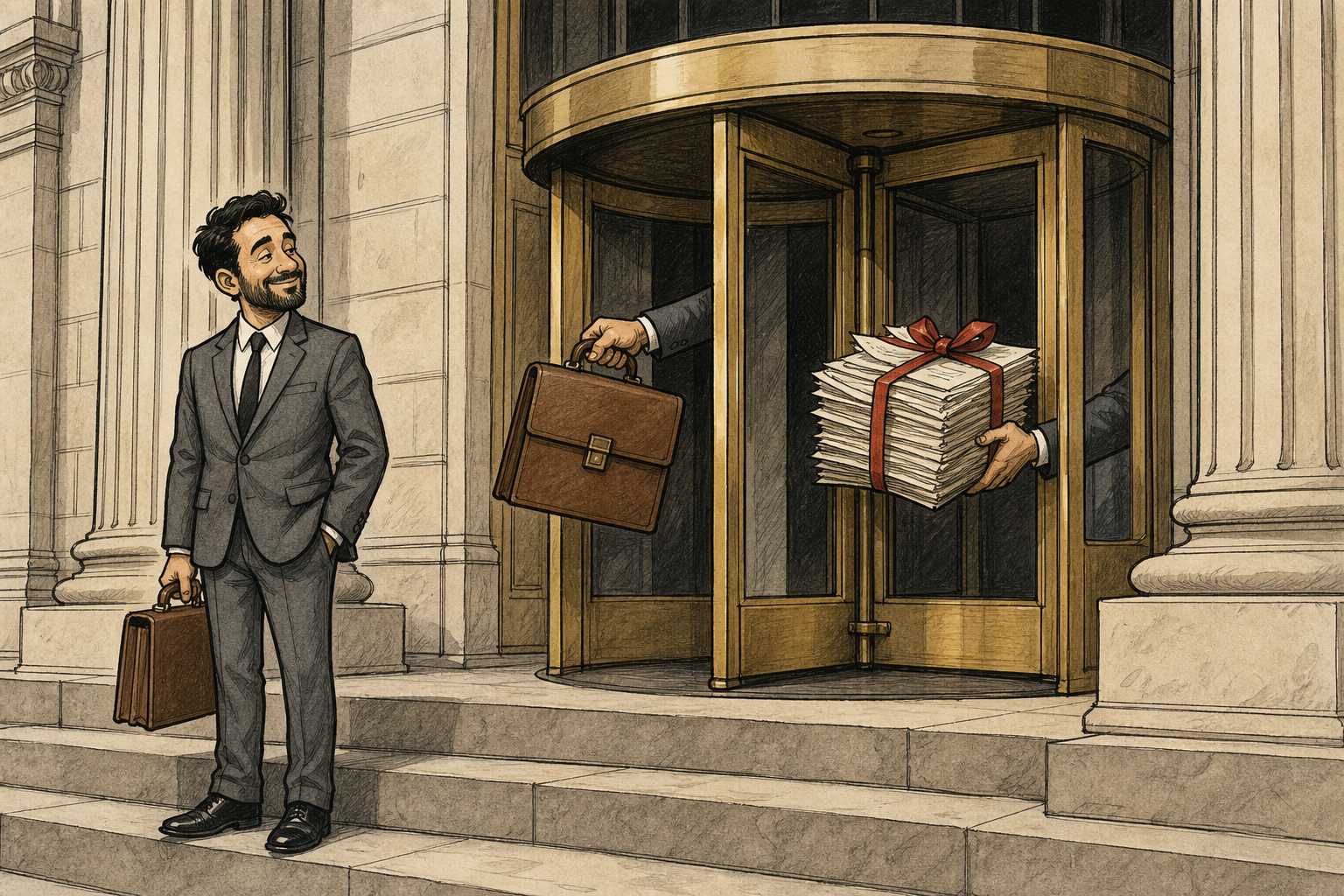
Start with the binding law, because it is not in doubt. In Trump v. Barbara, the Court held that children born in the United States to parents who are here unlawfully or only temporarily are “subject to the jurisdiction” of the United States and are therefore citizens at birth under the Citizenship Clause of the Fourteenth Amendment. Chief Justice John Roberts wrote the opinion, joined by Justices Sotomayor, Kagan, Barrett, and Jackson.
Roberts traced a straight line: English common-law birthright, then the Amendment’s deliberate repudiation of Dred Scott, then United States v. Wong Kim Ark (1898), which held that the U.S.-born son of Chinese nationals was a citizen at birth. That reading, Roberts wrote, had been settled law for 128 years. He rejected the government’s competing theory — that citizenship requires the parents’ permanent domicile and full allegiance — as a “dramatically revisionist view” supported by “scant evidence.”
The vote: 6–3 on the judgment (the order is unlawful); 5–4 on the constitutional holding (why).
The rule: U.S.-born children of parents unlawfully or temporarily present are “subject to the jurisdiction” of the United States and are citizens at birth under the Fourteenth Amendment.
The precedent: Roberts grounded the result in Wong Kim Ark (1898) and 128 years of unbroken practice; he called the government’s domicile-and-allegiance theory a “dramatically revisionist view” with “scant evidence.”
The effect: EO 14160 is a dead letter. The classwide injunction is affirmed; there is nothing to remand on the merits.
“The Framers of the Fourteenth Amendment extended that promise to 'every free-born person in this land.' We keep that promise today.”
Chief Justice John Roberts · majority opinion · Trump v. Barbara (June 30, 2026)
The order the Court struck down was President Trump (R)’s first-day-back action. Executive Order 14160, “Protecting the Meaning and Value of American Citizenship,” signed January 20, 2025, directed federal agencies to stop recognizing U.S. citizenship for a child born here if the mother was unlawfully present or on a temporary visa and the father was neither a citizen nor a lawful permanent resident. It was written to apply to births after February 19, 2025.
It never took effect. Federal judges — including Judge John Coughenour in Washington State, who called the order “blatantly unconstitutional” — blocked it before its effective date, and it was enjoined continuously afterward. By the time the Supreme Court ruled, EO 14160 had been in force zero days. The stakes, however, were real: the Migration Policy Institute and Penn State’s Population Research Institute estimated roughly 255,000 babies a year would have been born without U.S. citizenship under the order — a figure cross-referenced by Pew Research at about 260,000. Those are the consequences the case was fought over.
We are the only country in the world stupid enough to allow 'birthright' citizenship — and it has to end.
Paraphrased commentary · not a verbatim post
Truth Social · paraphrase of a post reported by CNBC on April 1, 2026, after Trump attended oral argument; no post ID independently located.

Here is the detail that turned a lopsided-looking loss into a rallying point. Six justices agreed on the judgment — that the order was unlawful. But only five signed the constitutional holding. The sixth vote belonged to Justice Brett Kavanaugh, who concurred in the judgment on narrower ground: the order conflicts with a statute, 8 U.S.C. § 1401(a), the 1952 law that codified Wong Kim Ark. Kavanaugh expressly declined to reach the Fourteenth Amendment question at all.
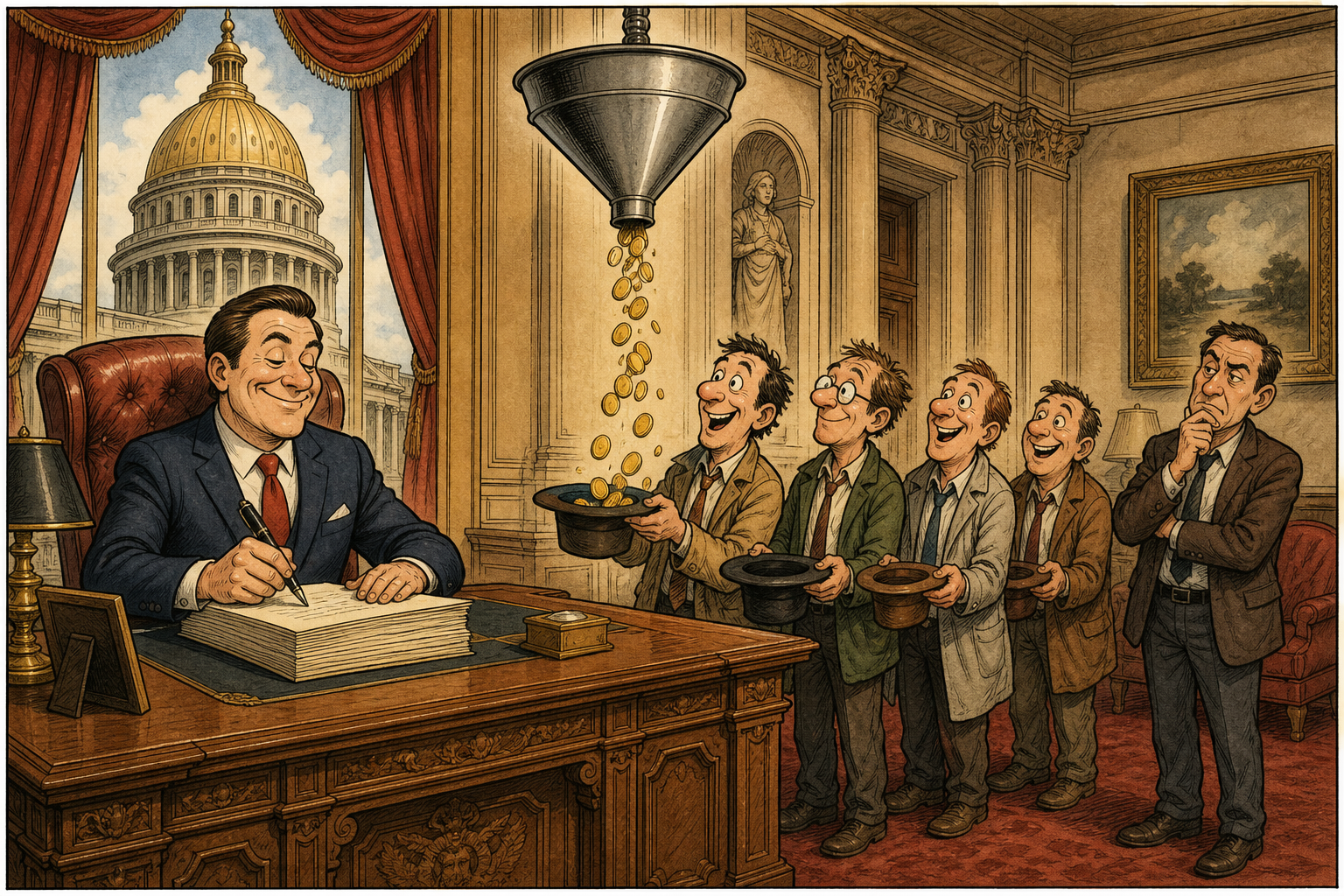
That distinction is the whole story of the fallout. Because Kavanaugh rested on the statute, he wrote that Congress could “amend § 1401(a) or otherwise enact new legislation establishing exceptions to birthright citizenship for children born to foreign citizens unlawfully or temporarily in the country.” Fox News promptly called it a “roadmap” from the president’s “hero” justice, and Sen. Tom Cotton (R-AR), Sen. Lindsey Graham, and their allies in the House began pointing at it as the path forward. Speaker Mike Johnson (R-LA) called himself “very disappointed” but read the majority as a “textualist, originalist view.”
Speaker Johnson on the Supreme Court birthright citizenship decision: 'I need to read the opinion. You could say that's a textualist, originalist view. This has been grossly abused in recent years… I'm very disappointed in that outcome.'
“Congress may amend §1401(a) or otherwise enact new legislation establishing exceptions to birthright citizenship for children born to foreign citizens unlawfully or temporarily in the country.”
Justice Brett Kavanaugh · concurring in the judgment · Trump v. Barbara
Three justices would have gone the other way, and their argument is worth stating on its own terms — as the dissents’ reading, not as the law. In a 91-page lead dissent, Justice Clarence Thomas, joined by Justice Gorsuch, argued that “subject to the jurisdiction” was always meant to require domicile and allegiance — not mere physical presence — and that the majority’s reading “devalues” American citizenship. The dissents pointed to Senator Trumbull’s 1866 floor statements, to Elk v. Wilkins, and to the fact that Wong Kim Ark’s parents were lawfully domiciled in the United States.
Justice Samuel Alito wrote separately to call the case “one of the most important decisions in the history of the Court” and “a serious mistake,” arguing that citizenship requires sole allegiance to the United States. Justice Neil Gorsuch added a solo dissent that would have rejected the facial challenge, reasoning that the order was lawful at least as applied to the children of temporary visitors. It is important to be precise: these are the losing arguments. They are the intellectual engine of everything that follows in the conservative critique — but they did not command five votes, and so they are not the law.
“A serious mistake… one of the most important decisions in the history of the Court.”
Justice Samuel Alito · dissenting · Trump v. Barbara
Outside the Court, the critique sharpened fast — and it is commentary, clearly attributed, not a competing statement of the holding. Writing in the Washington Examiner, former Indiana Attorney General Curtis Hill (R) argued the majority missed the Fourteenth Amendment’s purpose: it was written to guarantee citizenship to freed slaves and repair Dred Scott, Hill wrote, not to function “as a weekend pass or an overnight guarantee” for the children of anyone who happens to be on U.S. soil at the moment of birth. In The Federalist, Hans Mahncke went further, casting the decision as a Roe-style overreach that put “birth tourism beyond the reach of democracy.”
Curtis Hill (R), Washington Examiner: the Citizenship Clause was a Dred Scott repair for freed slaves, not a “weekend pass” citizenship for anyone born on U.S. soil.
Hans Mahncke, The Federalist: a Roe-style judicial overreach — Trump v. Barbara is “another constitutional detour waiting to be corrected.”
Our note: this is argument, not holding. On birth-tourism scale, the documented number is small — the Migration Policy Institute estimates on the order of tens of thousands of births a year — while Mahncke’s “well over a million” is a cumulative claim we attribute to him, not adopt.
One of the most destructive and outrageous decisions in the long history of the Supreme Court. American citizenship is not the birthright of the world. It belongs only and solely to Americans. No provision of the Constitution can be read to require our national self-obliteration.
“Trump v. Barbara may ultimately come to be remembered not as the final word on birthplace citizenship but as another constitutional detour waiting to be corrected.”
Hans Mahncke · The Federalist · July 3, 2026 (analysis)
The chorus only grew louder through the following week. Heritage Foundation president Kevin Roberts called the ruling “a tremendous betrayal of the republic” that “cheapened the sacred value of American citizenship,” and urged a constitutional amendment. Writing for Fox News, Mike Davis revived the dissents’ comparison to Elk v. Wilkins (1884) — if tribal allegiance once barred automatic citizenship for reservation-born Native Americans, he argued, the same logic should bar it for children of illegal entrants; he called the ruling “this ultimate betrayal.” In The Federalist, Joy Pullmann put the majority’s reasoning “on the legal level of Dred Scott and Roe v. Wade,” writing bluntly that “the child of a Chinese spy born in the states is not an American.” And on RealClearPolitics, Mollie Hemingway called it “apocalyptically and indefensibly bad” — “on the level of Dred Scott or Roe v. Wade.”
On Jesse Watters Primetime, Miller went further, calling birth tourism and the “anchor baby machine” a “ticking time bomb” for national security — the closest any commentator came to the practical worry animating this whole critique: that birth tourism lets nationals of adversary countries, not just tourists in general, buy citizenship for their children by the accident of a delivery room. Writing at The American Mind, legal scholar Edward J. Erler pressed the same originalist point from a different angle, arguing Judge Ho’s “obedience, not allegiance” reading renders the Jurisdiction Clause superfluous and abandons the framers’ social-compact view of citizenship as something requiring the consent of the governed, not mere presence.
The critique above is a chorus, not a consensus. In National Affairs, conservative scholars John Yoo and Robert Delahunty argue the majority’s reading — not the dissents’ — is actually the more faithful originalist one, grounded in the Citizenship Clause’s plain text and the framers’ own debates.
“Originalist” is doing a lot of work in this fight, on both sides of it. We name the disagreement rather than pretend the right answer is obvious.
The phrase that captured the mood came from the Washington Examiner’s Supreme Court reporter Jack Birle: the defeat, he said, is “a win even if it’s not an actual win.” His logic is the 5–4 plus the Kavanaugh roadmap — a margin “a lot tighter than we expected,” and a concurrence that all but invites legislation. Vice President JD Vance (R) called the ruling “atrocious” and said birthright citizenship is now “hanging by a thread.” Sen. Rand Paul (R-KY) renewed his push for a constitutional amendment; Sen. Tom Cotton (R-AR) pointed to his Constitutional Citizenship Clarification Act.
The Supreme Court upheld birthright citizenship, which is too bad for our country — but we can easily make it up in Congress through legislation. No long and unwieldy constitutional amendment is necessary. Congress should start today. They will have my complete and total support.
Paraphrased commentary · not a verbatim post
Truth Social · paraphrase of Trump’s post via the trumpstruth.org mirror, June 30, 2026.
Here the explainer has to draw a hard line the president’s post glides past. Trump argued Congress can “make it up” with an ordinary statute. FactCheck.org and most constitutional scholars flag that as dubious: five justices grounded the result in the Constitution, and an ordinary statute cannot override a constitutional holding. A bill along Cotton’s lines would face immediate challenge under the very holding just handed down. The only durable routes are a constitutional amendment — which needs two-thirds of both chambers plus 38 states, a path with no realistic majority — or a future Court willing to revisit Wong Kim Ark. That last possibility is exactly what the “detour waiting to be corrected” framing is betting on.
Months before the Supreme Court ever ruled, I had a feeling exactly this would happen. An executive order was never going to be strong enough to permanently fix birthright citizenship, no matter how good the intentions behind it were. That's why I filed a constitutional amendment.
In the meantime, the administration is doing what it can inside the ruling. The Justice Department — under Acting Attorney General Todd Blanche, after Trump fired Attorney General Pam Bondi on April 2, 2026 — issued a memo directing federal prosecutors to prioritize birth-tourism fraud cases. On the other side, New Jersey Attorney General Jennifer Davenport (D), who led a 25-jurisdiction coalition against the order, said the ruling confirmed that “the president has no power to rewrite our nation’s citizenship rules with the stroke of a pen.” The companion state suits fall away with the order.
The law is settled for now: U.S.-born children of illegal and temporary migrants are citizens at birth, and Executive Order 14160 is dead. That is the holding, and it commanded five votes on the Constitution and six on the result.
But five is one shy of a comfortable margin, Kavanaugh’s statutory concurrence hands Congress a place to start, and the conservative legal movement is openly treating the case the way it treated Roe before Dobbs: as reversible.
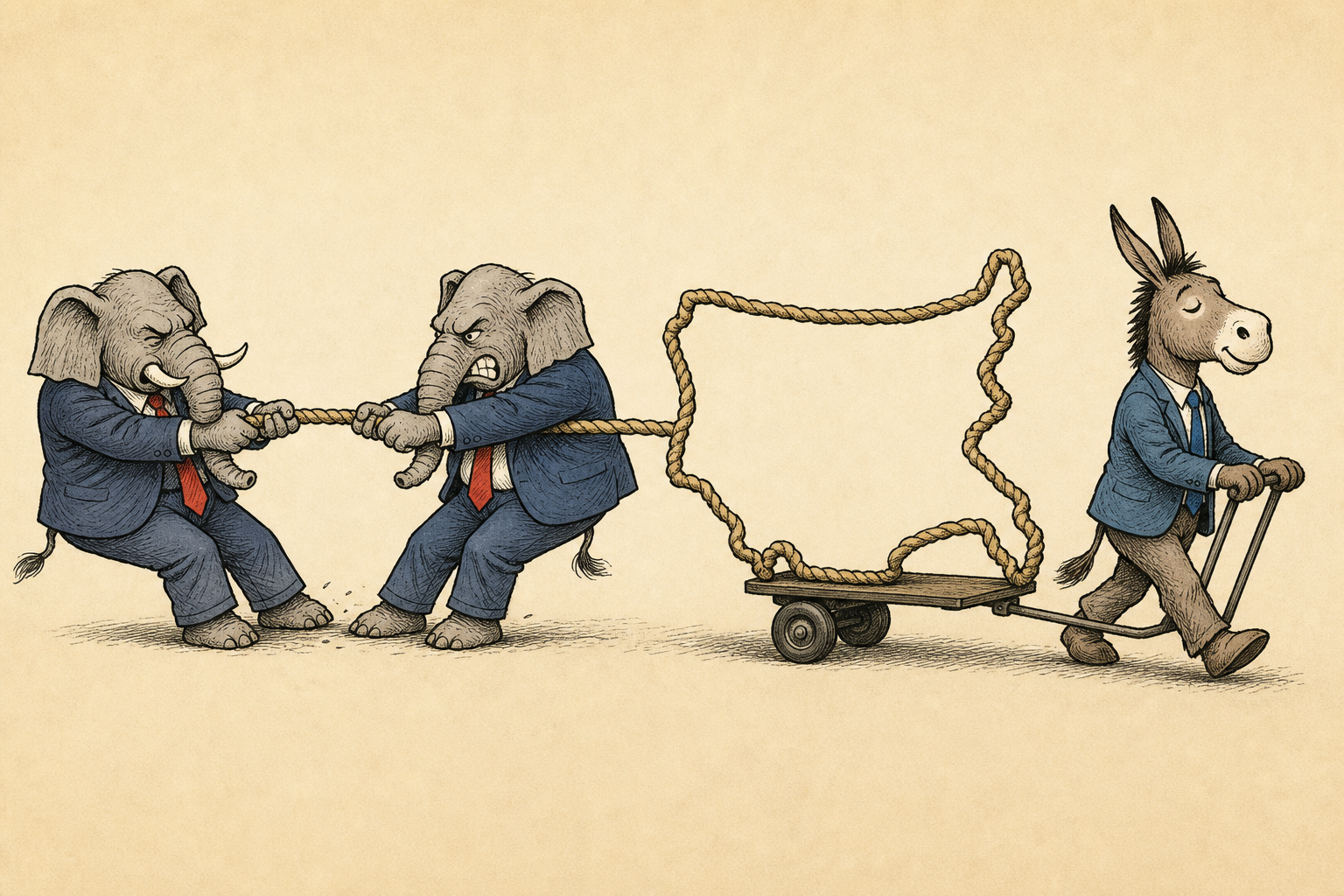
So both things are true. Birthright citizenship survived — and the fight over it just moved from the executive branch to Congress and, eventually, back to a Court that split 5–4.
Update, July 5, 2026: expanded the conservative-critique section (§05) with additional attributed opinion voices — Kevin Roberts, Mike Davis, Joy Pullmann, Mollie Hemingway, and Edward J. Erler — plus a fairness counterpoint from originalist scholars John Yoo and Robert Delahunty, who conclude the majority’s reading is the more faithful one. Two new video embeds were added (Stephen Miller and Jesse Watters, Fox News). This update folds in a Washington Examiner opinion piece assigned separately (“Supreme Court cheapens citizenship”) that was found to substantially overlap this page’s existing coverage rather than warrant a fourth standalone page on the same ruling.