The Supreme Court Just Defined an “Arm.” California’s Glock Ban Brief Barely Mentions It.
Seven days after the Supreme Court decided a major Second Amendment case, California’s Department of Justice filed a brief defending its new handgun-sale ban — and, according to gun-rights litigators reviewing the filing, cited that decision exactly once, in passing, without engaging the part of it that undercuts California’s own argument.
The case is Wolford v. Lopez. It was not about California, and it was not about Glocks — it was about carrying a gun onto private property in Hawaii. But the Court’s reasoning on what counts as a constitutionally protected “arm” landed squarely on top of California’s central claim in a separate, newly filed lawsuit: that Glock-style pistols are not “arms” the Second Amendment protects at all.
The U.S. Department of Justice sued Gov. Gavin Newsom’s (D-CA) state on July 1, 2026, over what its own text defines broadly enough to capture nearly every modern striker-fired pistol. California’s Attorney General has vowed to fight it. Here is what the state’s defense says — and what recently settled law it goes out of its way not to discuss.
- 6–3rulingthe Supreme Court's margin in Wolford v. Lopez, decided June 25, 2026 — Alito writing for the majority, Kagan and Jackson dissenting — SCOTUSblog
- July 12026the date California Penal Code § 27595(a) — AB 1127's dealer-sale ban — took effect, the same day DOJ filed suit — Cal. Legislative Information
- 3lawsuitsseparate, concurrent cases now testing California's handgun laws: U.S. v. California, Jaymes v. Bonta, and Renna v. Bonta — court filings
- 1sentencethe Supreme Court's working definition of a protected “arm”: “any weapon customarily used for offensive or defensive purposes” — Wolford majority opinion
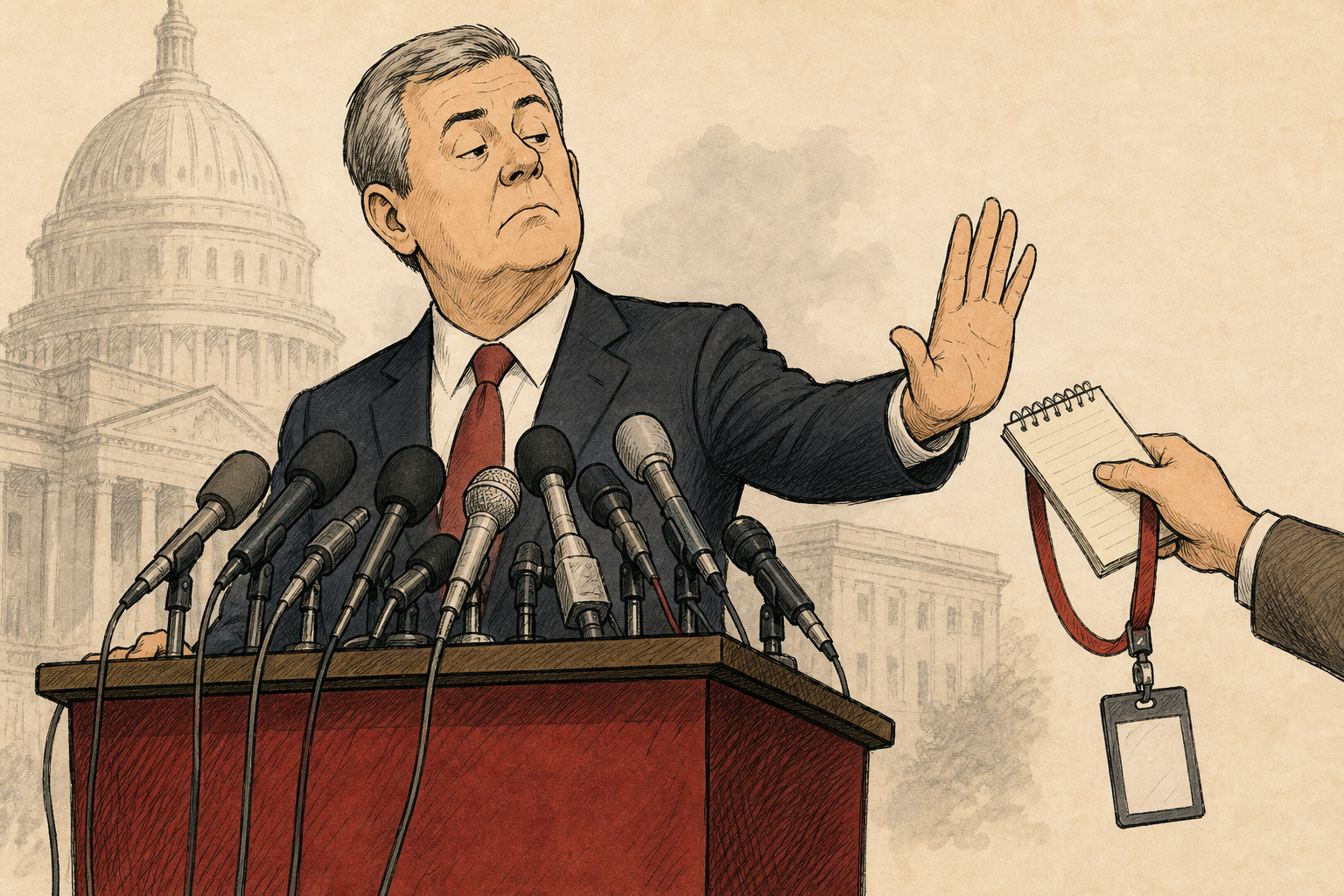
- 1citationthe number of times Bonta's July 2 opposition brief reportedly cites Wolford, without engaging its “what is an arm” reasoning — SAF's Kostas Moros

Wolford v. Lopez, No. 24-1046, was argued January 20, 2026, and decided June 25, 2026, by a 6–3 vote. Justice Alito wrote the majority opinion, joined by Chief Justice Roberts and Justices Thomas, Gorsuch, Kavanaugh, and Barrett. Justice Kagan dissented separately; Justice Jackson dissented in an opinion joined by Justice Sotomayor. The holding: Hawaii’s 2023 “vampire rule,” which barred licensed concealed-carry permit holders from bringing a firearm onto privately owned property open to the public without the owner’s express permission, violates the Second and Fourteenth Amendments. That is settled law as of this writing — not a prediction, not a pending question.
Wolford is not, on its face, a case about California, handgun rosters, or Glocks. It is about where a licensed carrier may bring a gun in Hawaii. But buried inside the majority’s reasoning is a sentence gun-rights litigators say reaches far beyond Hawaii’s property-access rule. The Court described a Second Amendment “arm” as “any weapon customarily used for offensive or defensive purposes,” and it rejected the idea that courts could “smuggle” extra restrictions into that threshold question of what counts as a protected weapon in the first place.
“Any weapon customarily used for offensive or defensive purposes.”
Justice Samuel Alito, majority opinion, Wolford v. Lopez, 609 U.S. ___ (2026)
That sentence matters far beyond Hawaii because California is, at this very moment, telling a federal court the opposite: that a Glock-style pistol is not even a constitutionally protected “arm” to begin with. Gun-rights advocates say the timing could not be worse for the state’s legal team — the Supreme Court answered the “what is an arm” question three months before California needed to argue its opposite.
The law at the center of the fight is Penal Code § 27595(a), enacted through AB 1127, which Gov. Gavin Newsom (D-CA) signed on October 10, 2025, and which took effect July 1, 2026. It bars licensed dealers from selling or transferring any “semiautomatic machinegun-convertible pistol” — defined by a cruciform trigger bar that can be “readily converted by hand or with common household tools” into a machine gun using an illegal “switch” conversion device. Because that definition describes the striker-fired, cruciform-trigger design shared by nearly every Glock and Glock-pattern handgun, the practical effect is a near-total ban on new retail sales of the country’s best-selling pistol line.
A nuance matters here and gets lost in shorthand: the law does not ban possession of a Glock already owned, and it does not ban private-party resale between individuals. It bans new sale or transfer by a licensed dealer going forward. Anyone who already owns a Gen 4 or Gen 5 Glock keeps it. What ends, as of July 1, 2026, is a Californian walking into a gun store and legally buying a new one.
AB 1127 is not the only mechanism blocking new Glocks in California. The state’s pre-existing Unsafe Handgun Act requires a loaded-chamber indicator, a magazine disconnect, and microstamping capability before a new semi-auto pistol model can join California’s roster of legal-to-sell handguns.
No major manufacturer — including Glock — has implemented microstamping, so virtually no new semi-auto pistol design has been added to the roster since roughly 2013. Under the roster’s own mechanics, for every new model added, three existing models must be removed — a shrinking list, per litigation filed by the NRA. Newer Gen 4 and Gen 5 Glocks are blocked outright; older Gen 3 models remain grandfathered and roster-legal.
The bill’s author, Assemblymember Jesse Gabriel (D-Encino), framed the law as a response to a genuine problem: illegal switch devices that convert semi-automatic pistols into fully automatic weapons have shown up at crime scenes and mass-shooting investigations nationwide. His office has said the goal is closing a conversion loophole, not banning the underlying handgun. Gabriel put the political stakes bluntly when the DOJ suit landed.
“California won't back down in the face of threats from Donald Trump and the NRA.”
Assemblymember Jesse Gabriel (D-Encino), AB 1127 author

United States v. California and Robert Bonta was filed July 1, 2026, in the U.S. District Court for the Central District of California — the day AB 1127 took effect. It targets both legal schemes at once: the new dealer-sale ban under Penal Code § 27595(a) and the older Unsafe Handgun Act roster system. The Justice Department’s legal theory rests on District of Columbia v. Heller: a state cannot ban a weapon “in common use” for lawful self-defense, and DOJ contends Glocks are among the most popular self-defense handguns in America — not rare, not unusual, not the sort of “dangerous and unusual” weapon Heller exempted from protection.
The suit did not arrive without warning. Assistant Attorney General Harmeet Dhillon, who leads the DOJ Civil Rights Division, sent California a pre-suit letter on June 24, 2026, giving the state until June 30 to reach a settlement. Attorney General Rob Bonta (D-CA) rejected it in writing on the June 30 deadline itself.
“The California Department of Justice will not agree to these conditions... My office will continue to vigorously defend the Unsafe Handgun Act and Penal Code section 27595.”
Attorney General Rob Bonta (D-CA), letter rejecting DOJ's settlement demand, June 30, 2026
DOJ filed the next day and sought an ex parte temporary restraining order. California filed its opposition July 2–3, 2026. No hearing date has been confirmed as of this writing. Dhillon framed the filing as a defense of ordinary gun owners rather than an attack on the state.
Sent California formal notice: repeal your Glock ban or face a federal lawsuit. The Second Amendment doesn't stop at the state line.
The DOJ suit is the newest and highest-profile case, but it is not the only one testing these California laws, and conflating them muddies what is actually happening in court. Three separate, concurrent pieces of litigation are now live.
United States v. California and Robert Bonta (C.D. Cal., filed July 1, 2026) — the Justice Department’s suit, this story’s news hook, seeking to strike down both the AB 1127 sale ban and the Unsafe Handgun Act roster.
Jaymes v. Bonta (S.D. Cal., 3:25-cv-02711, filed Oct. 13, 2025) — a private suit filed months earlier, in a different district, by the NRA, Firearms Policy Coalition, Second Amendment Foundation, a licensed retailer, and individual plaintiffs led by Danielle Jaymes, challenging the same Penal Code § 27595(a).
Renna v. Bonta (FPC) — a separate, pre-existing challenge to the broader handgun-roster system under the Unsafe Handgun Act; Firearms Policy Coalition has moved to amend it to add a Glock-ban claim.
The Second Amendment Foundation, a plaintiff in Jaymes, has been tracking California’s defense across these filings. Its director of legal research and education, Kostas Moros, reviewed Bonta’s July 2 opposition brief in the DOJ case and flagged what he called a conspicuous omission.
“The brief bends over backwards to not cite the Supreme Court's new Wolford ruling on the question of what an 'arm' is, because it makes clear that its arguments are untenable.”
Kostas Moros, Director of Legal Research and Education, Second Amendment Foundation
California’s defense, as laid out in Bonta’s opposition brief and public statements, runs on two tracks. The first is that Glock-style pistols, once modifiable into machine guns via a switch, fall into Heller’s “dangerous and unusual” category and are not constitutionally protected “arms” at all — a threshold argument that, if it succeeds, would mean the Second Amendment never even reaches the question of whether the ban is justified. The second is that the state’s regulatory scheme addresses a genuine public-safety problem: illegal switches converting common handguns into automatic weapons.
Moros and other gun-rights litigators say that first argument is precisely where Wolford’s reasoning bites. If a protected “arm” is “any weapon customarily used for offensive or defensive purposes,” a pistol line that is, by DOJ’s account, among the most commonly owned self-defense handguns in the country is difficult to argue outside that definition — regardless of what a criminal could illegally do to one afterward with a separately illegal part. Bonta’s office, for its part, casts the fight in public-safety terms rather than engaging that specific doctrinal point.
“California's gun safety laws helped drive firearm death rates to record lows in our state and are a blueprint for reducing gun violence nationwide.”
Office of Attorney General Rob Bonta (D-CA), public statement
See y'all in court!
The Justice Department is now led by Acting Attorney General Todd Blanche, who took over April 2, 2026, after Pam Bondi left the role, and who was nominated for the permanent post in June 2026. Blanche has staked DOJ’s position on Heller’s common-use test: a handgun millions of Americans already own for self-defense cannot be banned outright because a criminal might illegally attach a switch to it, when the switch itself is already a separate federal crime.
“The Second Amendment is a sacred right belonging to all Americans, even those in California. California cannot ban the most popular type of handgun in America.”
Todd Blanche, Acting U.S. Attorney General
Dhillon has made the same argument the public face of the case, tying it explicitly to the popularity of the pistol line California is trying to keep off dealer shelves.
“California's ban on the sale of the most popular handgun in America violates the Second Amendment. The Civil Rights Division will defend law-abiding citizens from states that seek to disarm them illegally.”
Harmeet Dhillon, Assistant Attorney General, DOJ Civil Rights Division
None of the three cases has reached a ruling on the merits. DOJ’s TRO request in United States v. California remains pending with no confirmed hearing date; Jaymes v. Bonta continues in the Southern District of California on its own, earlier-filed schedule; and Renna v. Bonta’s amendment to add a Glock-ban claim to the broader roster challenge is still before the court. What is fixed is the backdrop against which all three will be litigated: Wolford v. Lopez’s definition of a protected “arm” as “any weapon customarily used for offensive or defensive purposes” is now controlling Supreme Court precedent, not an open question one side can simply decline to address.
That is the gap this story documents: not that California lost an argument it made, but that gun-rights litigators say its own brief avoids engaging the Court’s newest, most directly relevant language at all. Whether a federal judge agrees that omission matters — and whether it matters enough to enjoin either the sale ban or the roster system — is now a question for the Central District of California to answer.
Wolford v. Lopez is decided, 6–3: a Second Amendment “arm” is “any weapon customarily used for offensive or defensive purposes,” and courts may not smuggle extra restrictions into that threshold question.
California is, at the same time, telling a federal court that Glock-style pistols are not “arms” at all — and gun-rights litigators say its brief cites the Court’s new definition once, in passing, without engaging it.
Three lawsuits — DOJ’s, Jaymes, and Renna — are now testing that gap in three different filings. None has been decided.