79% of the Country Answered. House Democrats Wouldn’t.
On June 30, 2026, the Supreme Court decided West Virginia v. B.P.J., consolidated with Little v. Hecox. It held 9-0 that state laws limiting girls’ and women’s sports to biological females do not violate Title IX, and 6-3 that they do not violate the Equal Protection Clause. The laws of 27 states now stand — a position 79% of Americans, including 67% of Democrats, tell pollsters they hold.
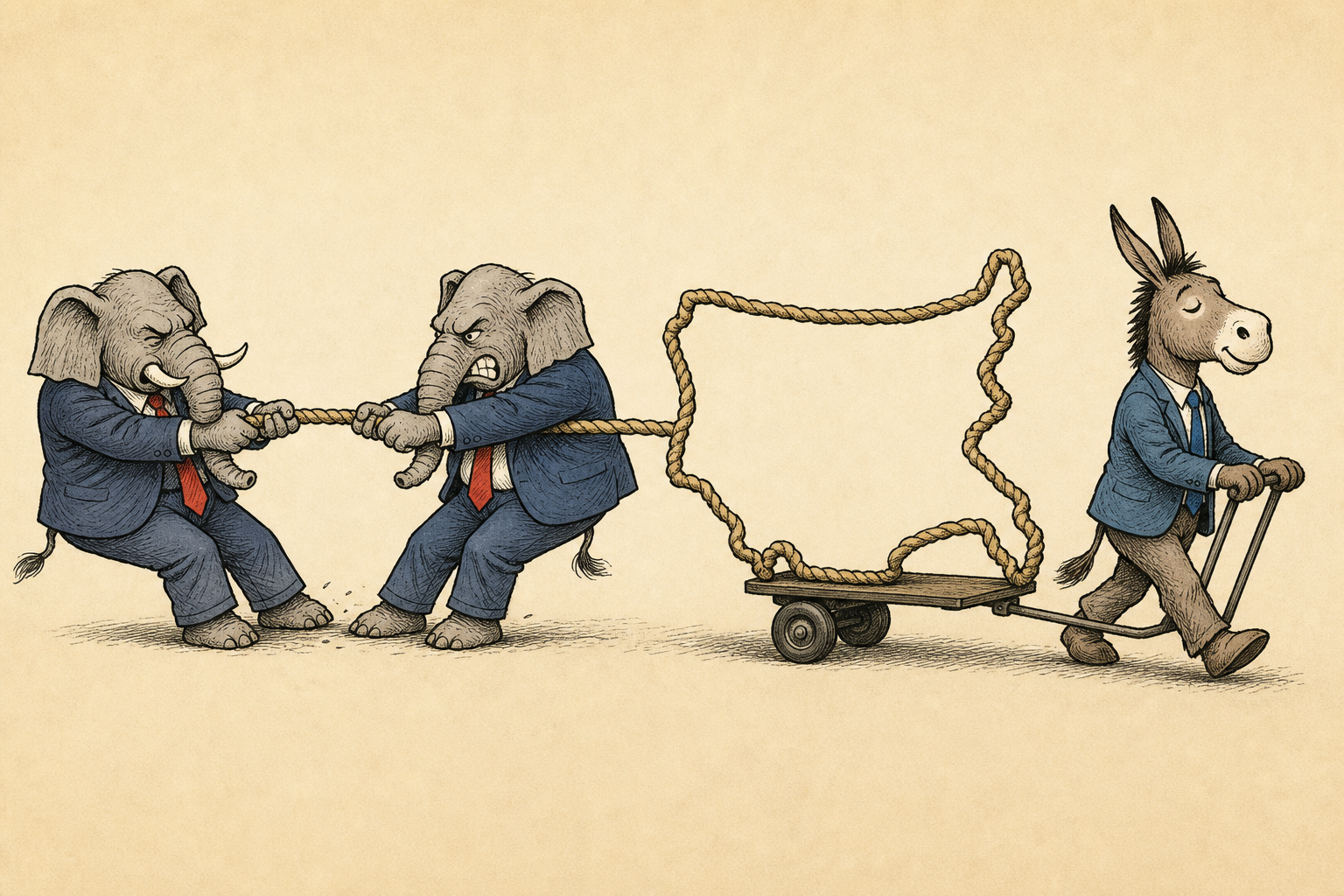
Asked about it in the Capitol hallways, House Democrats blamed “culture wars,” pivoted to “dysfunction,” said it wasn’t Washington’s business — or, in several cases, said they hadn’t heard the decision had come down. The party’s two top leaders said nothing at all.
Eight months earlier, according to Fox News, roughly 130 congressional Democrats had signed a brief asking the Court to rule the other way. The accountability question isn’t whether the ruling was right. It’s why elected officials won’t tell their own voters where they stand on it. Here is the record.
- 9-0Title IXThe Court held unanimously — the three liberal justices included — that the state laws do not violate Title IX (SCOTUS, June 30, 2026)
- 6-3equal protectionThe constitutional challenge failed along ideological lines; Idaho's and West Virginia's laws stand
- 27statesState laws limiting girls' and women's sports to biological females now stand — but this is NOT a nationwide ban (ESPN)
- 79%vs 18%Americans say trans athletes should not compete in women's sports — including 67% of Democrats (NYT/Ipsos, Jan. 2025, n=2,128)

The vote that matters most is the one almost no one mentioned. On the Title IX question — whether the state laws amount to illegal sex discrimination in education — the Court was unanimous. All nine justices, the three liberals included, agreed that limiting girls’ and women’s teams to biological females does not violate the statute. The 6-3 split, with Justice Brett Kavanaugh writing for Roberts, Thomas, Alito, Gorsuch, and Barrett, came on the separate constitutional question of Equal Protection.
Kavanaugh’s majority held that states may “maintain women’s and girls’ sports for biological females” and set eligibility “based on biological sex,” citing the “inherent physical differences” between the sexes relevant to athletics. He added that transgender athletes deserve “respect” and should not be “ostracized or vilified.” In dissent, Justice Sonia Sotomayor, joined by Kagan and Jackson, argued the majority “inflicts hardship on those it disfavors” and should have exercised “judicial restraint.” The decision reversed the Ninth Circuit in Hecox and the Fourth Circuit in B.P.J., leaving the laws of 27 states in force.
“States may maintain women's and girls' sports for biological females.”
Justice Brett Kavanaugh · majority opinion · June 30, 2026
Title IX: 9-0. Every justice agreed the state laws do not violate the federal ban on sex discrimination in schools.
Equal Protection: 6-3. The majority found the laws survive intermediate scrutiny; the three liberals dissented.
Author: Kavanaugh for the majority; Sotomayor for the dissent, joined by Kagan and Jackson.
What it is NOT: a nationwide ban. The ruling permits states to pass these laws — it does not require them. Roughly 21 to 23 states, including California and Massachusetts, still allow transgender athletes today.
The ruling put a simple question to House Democrats: do you agree with it? On July 4, Fox News Digital’s Hannah Brennan collected their answers in the Capitol hallways. Most would not give one.
Rep. Jim McGovern (D-Mass.) told Fox, “I think we spend far too much time obsessing over that,” then changed the subject: “What people should be focused on right now is the dysfunction here in Washington.” The Capitol, he said, “is a disaster… I’ve never seen this before.”
Rep. Sydney Kamlager-Dove (D-Calif.) pivoted to other issues entirely: “The focus should be on this economy and getting us out of this war.” She added, “The culture wars that we allow to divide us don’t do anything to feed our kids.” Rep. Seth Magaziner (D-R.I.) argued the question wasn’t Washington’s to answer, saying to “let the school athletic associations, let parents, let people at the local level decide,” and that he “frankly… do[esn’t] think that this is something that politicians in Washington should be involved in.” Only Rep. Sarah Elfreth (D-Md.) took a clear position, calling the ruling “unfortunate” and saying the justices “didn’t get a lot right today.” Fox reported that several other House Democrats did not know the decision had been handed down.
“I think we spend far too much time obsessing over that.”
Rep. Jim McGovern (D-Mass.) · asked about a ruling 67% of his party's voters agree with · Fox News, July 4, 2026
New York Times/Ipsos poll, January 2025: 18% of US adults say transgender athletes should be allowed to compete in women's sports. 79% say they should be barred, including 67% of Democrats.

The deflection is striking because the position House Democrats wouldn’t defend is one their own voters overwhelmingly hold. A New York Times/Ipsos poll in January 2025 (n=2,128) found 79% of U.S. adults say transgender athletes should not compete in women’s sports, against just 18% who say they should. That included 67% of Democrats, 64% of independents, and 94% of Republicans.
According to a recent New York Times/Ipsos poll, Americans oppose allowing trans athletes to compete in women's sports by a margin of 79% to 18%. Self-identified Democrats also believe trans athletes should NOT be allowed to compete in women's sports — by a margin of 67% to 31%.
It is not a one-poll fluke. Gallup, surveying in May 2025 (n=1,003), found 69% of Americans say trans athletes should compete only on teams matching their birth sex — up from 62% in 2021, as support for gender-identity-based teams fell from 34% to 24%. Even among Democrats, roughly four in ten back birth-sex policies — a far larger share than the near-uniform opposition or silence coming from the party’s House caucus. When elected officials will not state a position four in ten of their own partisans and eight in ten of all voters already hold, the gap is the story.
The deflection ran straight up the chain of command. In a July 2 Fox News report, Adam Pack found that House Minority Leader Hakeem Jeffries (D-N.Y.) had issued no public statement on the ruling and did not answer Fox’s outreach. Senate Minority Leader Chuck Schumer (D-N.Y.) was likewise silent. The Congressional Equality Caucus called the outcome “devastating” on social media but outlined no legislative response and did not answer questions about next steps.
Where members did speak, most objected. Sen. Ed Markey (D-Mass.) wrote on X, as quoted by Fox, that the decision “tears trans athletes from their teams and the sports they love,” vowing, “We will keep fighting.” Sen. Elizabeth Warren (D-Mass.) posted, per Fox, “My heart is with trans kids and their loved ones. I won’t stop fighting for them.” Rep. Sarah Jacobs (D-Calif.) told trans kids “that there are people here in Congress fighting for you.” Every one of these members represents an electorate that, by the polling, sits on the other side of the question.
“I want every trans kid to know that there are people here in Congress fighting for you.”
Rep. Sarah Jacobs (D-Calif.) · quoted by Fox News, July 2, 2026
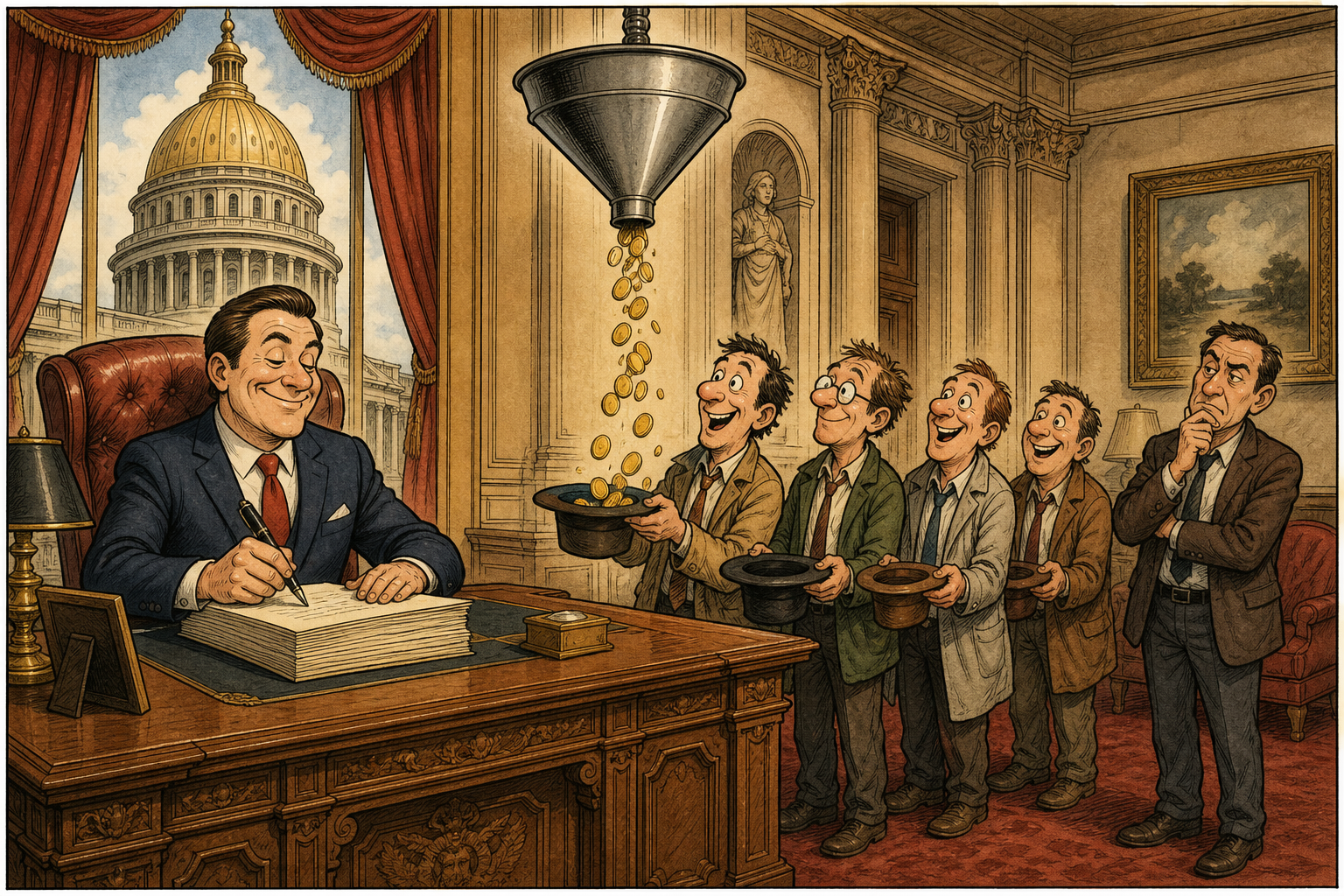
The contrast that gives the dodge its edge is on paper, in the Court’s own file. In November 2025, according to Fox News, roughly 130 congressional Democrats filed or backed a friend-of-the-court brief urging the justices to rule for the transgender athletes — the 18% position. Many of the same members now blaming “culture wars,” or professing not to have heard about the decision, had months earlier formally asked the Court to come out the other way.
Not everyone fell in line. Rep. Don Davis (D-N.C.) broke ranks and endorsed the ruling outright, saying the Court had affirmed “that states possess the legal authority to maintain separate sports teams based on biological sex,” and that Title IX “has played a vital role in expanding athletic opportunities for women and girls, and we must continue safeguarding those opportunities.” Rep. Marie Gluesenkamp Perez (D-Wash.) said the trans-rights movement “miss[es] some of the nuance” on women’s sports. They were the exceptions that proved the rule.
“Title IX has played a vital role in expanding athletic opportunities for women and girls, and we must continue safeguarding those opportunities.”
Rep. Don Davis (D-N.C.), breaking ranks · quoted by Fox News, July 2, 2026
For all the heat, the decision is narrower than either side’s loudest framing. It does not ban transgender athletes from women’s sports nationwide. It holds that states may pass such laws — and 27 have — while leaving untouched the roughly 21 to 23 states, including California and Massachusetts, where trans athletes remain eligible today. The majority expressly declined to decide whether schools may choose to allow trans athletes, and said its sports reasoning does not automatically extend to bathrooms or other settings.
BIG WIN: The United States Supreme Court just RULED AGAINST MEN PLAYING IN WOMEN'S SPORTS. Wow! That takes that ridiculous situation off the table!!!
Truth Social · verbatim post; PolitiFact rated the ‘ruled against men playing in women's sports’ framing Half True — the Court permitted state bans, it did not impose a federal one
That distinction is exactly why PolitiFact rated President Trump’s post Half True: the Court permitted state bans; it did not create a national one. The White House’s accompanying messaging leaned harder still into the sweeping read, framing the outcome as a guarantee that women’s sports “will only be for women” — a characterization that, like the president’s post, runs ahead of what the justices actually decided.
No men in women's sports. Women's sports will only be for women — the war on women's sports is over.
Paraphrased commentary · not a verbatim post
Paraphrase of White House messaging around the ruling and the Feb. 5, 2025 executive order, as characterized by PolitiFact — not a Truth Social post
Riley Gaines, the former college swimmer turned advocate whose 2022 tie with a transgender competitor helped ignite the issue, treated the ruling as a victory with an asterisk — the laws stand where they exist, but more than 20 states still permit what the Court now says states may forbid.
The law of the land now reflects reality and common sense. Insane that this requires celebrating, but it's a victory nonetheless.
The Supreme Court upheld a position 79% of Americans — and 67% of Democrats — tell pollsters they share. The 9-0 Title IX holding means even the three liberal justices rejected the discrimination framing.
Asked whether they agree, House Democratic leaders said nothing, and rank-and-file members changed the subject — eight months after roughly 130 of them, per Fox, asked the Court to rule the other way.
The question this page leaves the reader is not whether the ruling was correct. It is why elected officials will not tell their own constituents where they stand on a decision their constituents overwhelmingly support.