
Mike Johnson Bolts the SAVE Act onto the Defense Bill — a ‘MIRV’ Gambit, and the Wall Is Still the Senate.
On Monday, June 29, 2026, Speaker Mike Johnson (R-LA) announced a procedural gambit to break a stalemate that had ground the House to a halt: he would bolt the SAVE Act — the proof-of-citizenship voter-registration bill the House passed in February — onto the annual National Defense Authorization Act, the “must-pass” bill that funds the U.S. military.
The maneuver has a name borrowed from nuclear-weapons jargon: a MIRV, or “merge.” A procedural rule packages the two separately passed measures together so that one floor vote carries both to the Senate. The House Rules Committee advanced the rule on a party-line 8–4 vote. The hard-liners who triggered the shutdown of floor business want the SAVE Act on the Senate’s desk — and Johnson found a way to put it there.
This page lays out the maneuver, what the SAVE Act actually says, the case its supporters make on election integrity, the case its critics make on voter access, and the vote math that explains why — tactic or no tactic — the Senate is still the wall. We name the players and link the primary documents.
- 8–4 — the party-line House Rules Committee vote, June 30, 2026, advancing the rule that merges the SAVE Act onto the NDAA · Source: The Hill
- Passed Feb. 2026 — the House passed the SAVE Act on a near-party-line vote earlier this year; it has stalled in the Senate ever since · Source: Fox News; NPR
- 60 votes needed — the Senate filibuster threshold; with a 53-seat GOP majority, the bill needs at least 7 Democrats — none have materialized · Source: Ballotpedia News
- Documentary proof — the SAVE Act amends the 1993 motor-voter law to require a passport, birth certificate, or REAL ID-compliant citizenship document to register for federal elections · Source: Congress.gov H.R. 22
- ~21 million — U.S. citizens of voting age the Brennan Center says lack ready access to the required documents — the heart of the access objection · Source: Brennan Center
- 0.04% — share of voter-verification cases a USCIS program returned as noncitizens — supporters and critics read the same rarity very differently · Source: Bipartisan Policy Center
For days, a bloc of conservatives — led publicly by Rep. Anna Paulina Luna (R-FL) — had refused to vote for the procedural rules the House needs to do almost anything, vowing to keep the floor frozen until the Senate took up the SAVE Act. Johnson’s answer was the MIRV. As he described it to reporters: “We’re going to pass a MIRV, or what’s better known as a merge, onto the rule, so what that means is when Republicans vote for the rule, they will be voting not just for the NDAA and everything else that’s there, but they’ll be voting to merge onto that the SAVE America Act.”
In plain English: a single rule sends both bills, joined, to the Senate. The House Rules Committee — the panel that controls what reaches the floor and how — advanced the rule 8–4 along party lines on June 30. The NDAA is the annual policy bill that authorizes the entire Department of Defense; this year’s version carries roughly $1.15 trillion in authorized spending. Bolting a contested election bill onto it is precisely what makes the gambit powerful and risky at once: the defense bill is the rare vehicle that genuinely has to pass.

NEW — The Rules Committee is returning at 9pm with a plan in place from GOP leaders to report out a rule. This relies on Speaker Johnson's plan to merge the House-passed SAVE America Act with the NDAA after it passes the chamber.
Strip away the slogans and the bill — formally the Safeguard American Voter Eligibility Act, H.R. 22, also marketed by leadership as the “SAVE America Act” — does one core thing: it amends the National Voter Registration Act of 1993 (the “motor-voter” law) so that a state may not register anyone to vote in a federal election unless the applicant presents documentary proof of U.S. citizenship. A sworn attestation under penalty of perjury — the current standard — would no longer be enough on its own.
Acceptable documents include a valid U.S. passport, a REAL ID-compliant identification that indicates citizenship, a military ID paired with a service record showing U.S. birth, or a naturalization or citizenship certificate. The bill also directs states to set up programs to identify and remove noncitizens from existing rolls, using federal data such as Department of Homeland Security records. A consequential wrinkle that drives much of the debate: proof generally must be presented in person to an election office — which critics say effectively curtails the mail and online registration millions now use.
The SAVE America Act is one of the most important and consequential pieces of legislation in the history of Congress. No more rigged elections — Voter ID, Proof of Citizenship, and an end to unsupervised mail-in voting. We're the only country in the world that allows it.
Paraphrased commentary · not a verbatim post
Paraphrase of President Trump's repeated public statements pressing Congress to pass the SAVE Act. Source: NPR; White House 'SAVE America' page.
Supporters frame the SAVE Act as common-sense insurance. House Administration Committee Chairman Bryan Steil (R-WI) and bill champion Rep. Chip Roy (R-TX) argue that an honor-system attestation is too weak, and that documentary proof simply enforces a rule already on the books — it is already illegal for noncitizens to vote in federal elections. Backers point to state cleanups they say prove the rolls are dirty: Illinois removing roughly 600 noncitizens, a Georgia audit flagging more than 1,600 attempted noncitizen registrations, and Pennsylvania removing close to 10,000. Johnson’s office calls the bill “not controversial to anyone except Washington Democrats.”
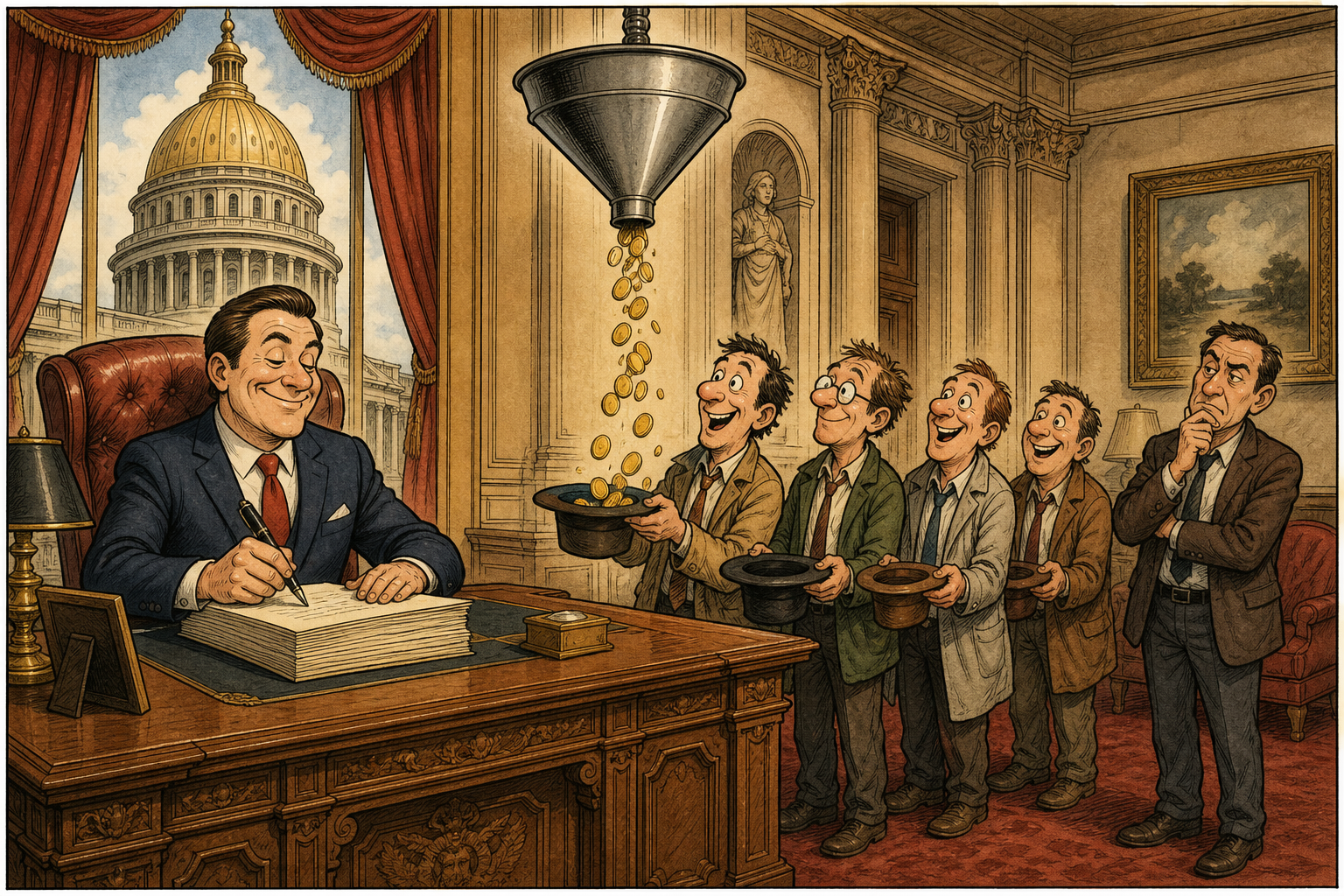
Critics do not dispute that noncitizen voting is illegal — they argue it is also vanishingly rare, and that the cure sweeps up eligible citizens. The Brennan Center estimates that more than 21 million voting-age citizens lack ready access to the required documents; the Bipartisan Policy Center notes a USCIS verification program returned just 0.04% of cases as noncitizens. The specific objections are concrete: married women whose current name does not match the name on their birth certificate, rural and elderly voters far from a passport office, and the in-person requirement that complicates the mail and online registration most Americans use. Brennan’s Wendy Weiser warns it would be “the first time in our history that Congress passed a law restricting access to voting.”
“It's already illegal for noncitizens to vote. The fight is over whether the fix protects the ballot or blocks the citizen — and both sides are arguing about the same documents.”
The SAVE Act debate, distilled
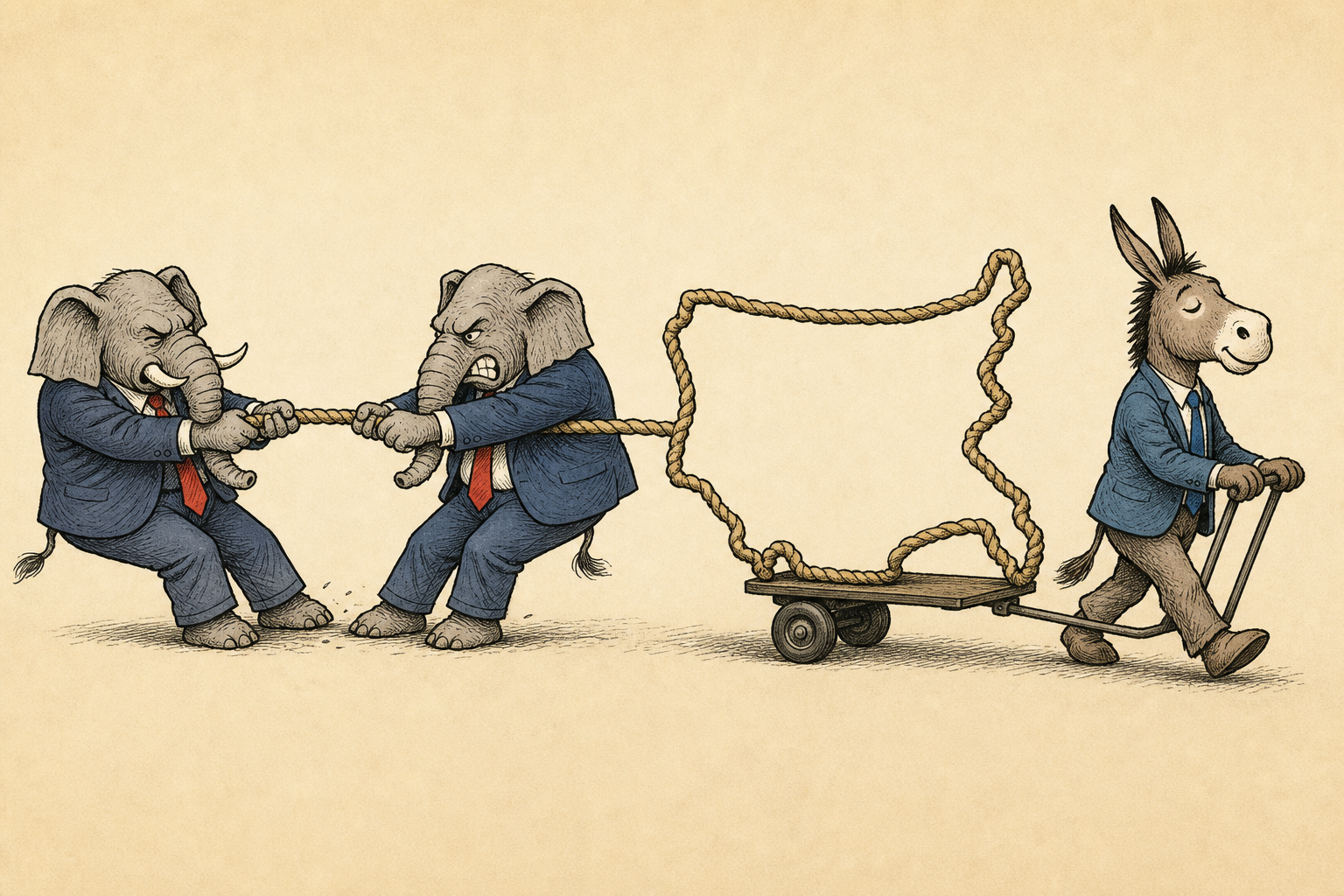
Here is the problem the MIRV does not solve. The House can pass the SAVE Act — it already has, on a near-party-line vote. The Senate is a different machine. Most legislation needs 60 votes to overcome a filibuster, and Republicans hold roughly 53 seats. That means at least seven Democrats would have to cross over, and so far none have. When the Senate took the bill up earlier in 2026, it failed to advance.
That is why even some SAVE Act champions are skeptical of the merge. Luna, who pushed her own amendment to write the bill directly into the NDAA’s text, argued the merge is too weak: the Senate, she warned on X, “could strip out” the voting measure no matter how it is attached. Democrats made the mirror argument from the other side. Rules Committee ranking member Rep. Jim McGovern (D-MA) offered an amendment to strike the SAVE Act language; Republicans rejected it. The Senate, he said, “will just strip the SAVE Act out” — and adding it to the NDAA does nothing to stop that. Democrats also warn the gambit risks the defense bill itself, the one piece of legislation Congress can least afford to sink.
We've got to go around the obstruction to get the SAVE America Act done — proof of citizenship and ID to vote in federal elections. It is not controversial to anyone except Washington Democrats.
Settled — The House Rules Committee advanced, 8–4, a rule that MIRVs (“merges”) the House-passed SAVE Act onto the FY-2027 NDAA. The SAVE Act requires documentary proof of citizenship to register for federal elections and amends the 1993 motor-voter law. It is already illegal for noncitizens to vote in federal elections.
Contested — Whether documented noncitizen voting is widespread enough to justify the bill, and whether the proof requirement would block large numbers of eligible citizens. Supporters and critics cite the same low USCIS rate to opposite conclusions.
Unresolved — Whether the Senate ever passes it. The 60-vote filibuster has stopped the bill once already, and senators of both parties expect the SAVE Act could be stripped from the NDAA regardless of how the House attaches it.
Mike Johnson did what speakers with a one-vote margin do: he found a procedural lever to satisfy his right flank without surrendering control of the floor. The MIRV lets him tell hard-liners the SAVE Act is on its way to the Senate while keeping the must-pass defense bill moving. But the maneuver is, at bottom, a messaging vehicle aimed at a wall it cannot climb — the Senate filibuster — and the people who most want the SAVE Act passed are the first to say so. The underlying question outlasts the tactic: does requiring documentary proof of citizenship protect the ballot, or does it block eligible citizens? Both sides are arguing over the same documents and the same small numbers. We will update this page as the NDAA moves and the Senate responds.
The SAVE America Act is more important than ever. The Senate needs to get it done — and if the filibuster is what's stopping election integrity, then Republicans should end the filibuster and pass it.
Paraphrased commentary · not a verbatim post
Paraphrase of President Trump's repeated calls for the Senate to pass the SAVE Act, including pressure to change the filibuster. Source: NPR; The Hill.
- 1.The Hill — 'Johnson announces gambit to attach SAVE America Act to must-pass defense bill,' June 29, 2026
- 2.The Hill — 'Key panel advances Johnson's plan to merge SAVE America Act with NDAA,' June 30, 2026 (Rules Committee 8-4 vote)
- 3.Washington Examiner — 'Johnson unveils plan to tie SAVE America Act to annual defense bill,' June 2026 (Johnson 'MIRV / merge' quote; Luna response)
- 4.The Hill — 'House aims to move NDAA, appropriations after conservative SAVE America Act rebellion,' June 2026
- 5.The Hill — 'Speaker Mike Johnson warns GOP over SAVE America Act demands,' June 2026
- 6.Office of Speaker Mike Johnson — 'The SAVE America Act is Not Controversial to Anyone Except Washington Democrats'
- 7.Congress.gov — H.R. 22, Safeguard American Voter Eligibility (SAVE) Act, 119th Congress, full bill text
- 8.Committee on House Administration (Chairman Bryan Steil, R-WI) — Statement on passage of the SAVE Act (documentary-proof rationale; noncitizen voter-roll removals)
- 9.Bipartisan Policy Center — 'Five Things to Know About the SAVE Act' (document-access estimates; USCIS 0.04% figure)
- 10.Brennan Center for Justice — 'House Passes New Version of the SAVE Act; Brennan Center Responds' (Wendy Weiser; ~21M citizens lacking ready document access)
- 11.NPR — 'Trump keeps sabotaging legislation over the SAVE Act. Here's what's in it,' June 25, 2026
- 12.FactCheck.org — 'Q&A on the SAVE America Act,' March 2026 (acceptable documents; in-person requirement)
- 13.PBS NewsHour — 'What to know about how the SAVE America Act could change voting'
- 14.Fox News — 'House passes bill requiring voters prove citizenship in federal elections' (House passage; Johnson and Rep. Chip Roy, R-TX)
- 15.Ballotpedia News — 'Senate takes up SAVE America Act to require voter ID, proof of citizenship for federal elections,' March 25, 2026 (60-vote threshold; 53-seat GOP majority)
Last updated June 30, 2026