
Social Security Is Heading Toward a 22% Benefit Cut — And the Senator Sounding the Alarm Is About to Leave.
Social Security is not going broke in the sense most people fear — the checks will not stop. But the program’s own actuaries say that within about eight years its main trust fund runs dry, and when it does, federal law triggers an automatic, across-the-board benefit cut of roughly 22 to 23 percent for everyone receiving retirement benefits. Not a proposal. Not a negotiation. An automatic cut written into current law.
Sen. Bill Cassidy (R-LA), the outgoing chairman of the Senate Health, Education, Labor and Pensions Committee, calls it the No. 1 issue facing the country and says he is racing to build consensus around a fix before he leaves office. He has spent about six years on a plan he calls his “big idea” — and after losing his May primary, he has only months left to sell it.
This page lays out the actual numbers from the Social Security Trustees — the depletion date, the size of the cut, what it would mean in dollars for an average retiree, and the 75-year shortfall — then walks through Cassidy’s proposal and why both supporters and skeptics say what they say. The goal is precision: what the Trustees project, what Cassidy claims, and where the projection ends and the politics begin.
- 2033 → late 2032 — the projected depletion year for the retirement (OASI) trust fund — the 2025 Trustees Report said early 2033; the 2026 report moved it to late 2032 · Source: SSA Trustees Report; CNBC
- ~22–23% — the automatic across-the-board benefit cut that takes effect under current law the moment the OASI fund is depleted · Source: SSA Trustees Report; CRFB
- 77% — the share of scheduled benefits the program could still pay from incoming payroll taxes after depletion — insolvency is a shortfall, not a shutdown · Source: SSA Trustees Report Summary
- ~$25–26 trillion — the program's projected 75-year shortfall on a present-value basis — the largest imbalance in nearly 50 years · Source: CRFB analysis of the 2025 Trustees Report
- ~71 million — Americans receiving Social Security benefits, the population exposed to an automatic cut if Congress does not act · Source: SSA
- $1.5 trillion — the size of the separate investment fund Sen. Bill Cassidy (R-LA) proposes seeding over five years to help close the gap · Source: The Hill; CNBC
Sen. Bill Cassidy (R-LA) — a physician by training who chairs the Senate’s health and labor committee — has made Social Security solvency the defining cause of his final stretch in the Senate. Appearing on CBS’s Face the Nation with Margaret Brennan on June 28, 2026, and in a string of interviews and op-eds before it, he warned that the program “is going to go insolvent” and that under current law beneficiaries would face “a cut of 22 percent to 25 percent in someone’s benefits.”
Cassidy is unusually free to talk about it. He lost his May Republican primary and is leaving the Senate, which means he is no longer running for anything — a fact he has used to argue that he can say the quiet part out loud. He says he has worked on a reform plan “for about six years” and intends to bring it “to completion” before his term ends. The political calendar, in other words, is now part of the story: the loudest voice for a fix is one of the soonest to depart.

“Social Security is going to go insolvent, and when it does there will be a cut of 22 to 25 percent in someone's benefits if we follow current law.”
Sen. Bill Cassidy (R-LA), as reported by The Hill and CBS News
The numbers come from the Social Security Board of Trustees, which issues an annual report on the program’s finances. The 2025 report projected that the Old-Age and Survivors Insurance (OASI) trust fund — the one that pays retirees and survivors — would be depleted in early 2033, one year sooner than the prior estimate. At that point, the Trustees projected, continuing payroll-tax revenue would cover only about 77 percent of scheduled benefits, implying an automatic cut of roughly 23 percent.
The 2026 report moved the date earlier still — to late 2032. The Social Security chief actuary attributed part of the acceleration to the 2025 tax law (the “One Big Beautiful Bill” Act), which reduced the income taxation of benefits and therefore the revenue flowing back to the trust funds, along with a lowered long-run birthrate assumption (1.75 children per woman, down from 1.9) that means fewer future workers paying in. The combined OASI and Disability funds, viewed together, are projected to last slightly longer — into 2034, with a smaller automatic cut near 19 percent — but Congress has never actually merged them.
Over the full 75-year horizon the Trustees use, the gap is enormous: the Committee for a Responsible Federal Budget put the shortfall at roughly $26 trillion on a present-value basis, or about 3.82 percent of taxable payroll — the largest imbalance in nearly half a century, and almost double what it was in 2010. Crucially, “insolvency” here is a precise term of art: it means the trust fund reserves are exhausted, not that the program stops paying. The checks keep coming; under current law, they simply shrink.
What it is — The trust-fund reserve runs out (projected late 2032 / early 2033). The program keeps collecting payroll taxes and keeps paying benefits.
What happens — Incoming taxes cover only ~77% of scheduled benefits, so current law forces an automatic across-the-board cut of roughly 22–23% for OASI.
What it is not — It is not a shutdown and not a missed payment. It is a legally mandated reduction unless Congress changes the law first.
Percentages are abstract; the household math is not. The average retired worker’s benefit sits near $2,000 a month in 2026. A 22-to-23 percent automatic cut would lop roughly $460 a month off that check — about $5,520 a year. CBS News, mapping the Trustees’ numbers, estimated the typical cut at around $500 a month once the fund is depleted.
That falls on a very large number of people. Roughly 71 million Americans receive Social Security benefits, and for a substantial share of seniors those checks are the majority of their income. The Committee for a Responsible Federal Budget’s “No State Spared” analysis found the cut would reach between roughly 10 and 23 percent of every state’s population — an unusually broad-based shock for a single policy event. The timing also has a human marker the Trustees like to cite: the OASI fund runs dry around the year today’s 59-year-olds reach full retirement age.
The 2025 Trustees Report projects Social Security's retirement trust fund (OASI) is depleted in 2033. At that point, the law requires an immediate ~23% across-the-board benefit cut. The 75-year shortfall is roughly $26 trillion. The longer Congress waits, the harder the fix.
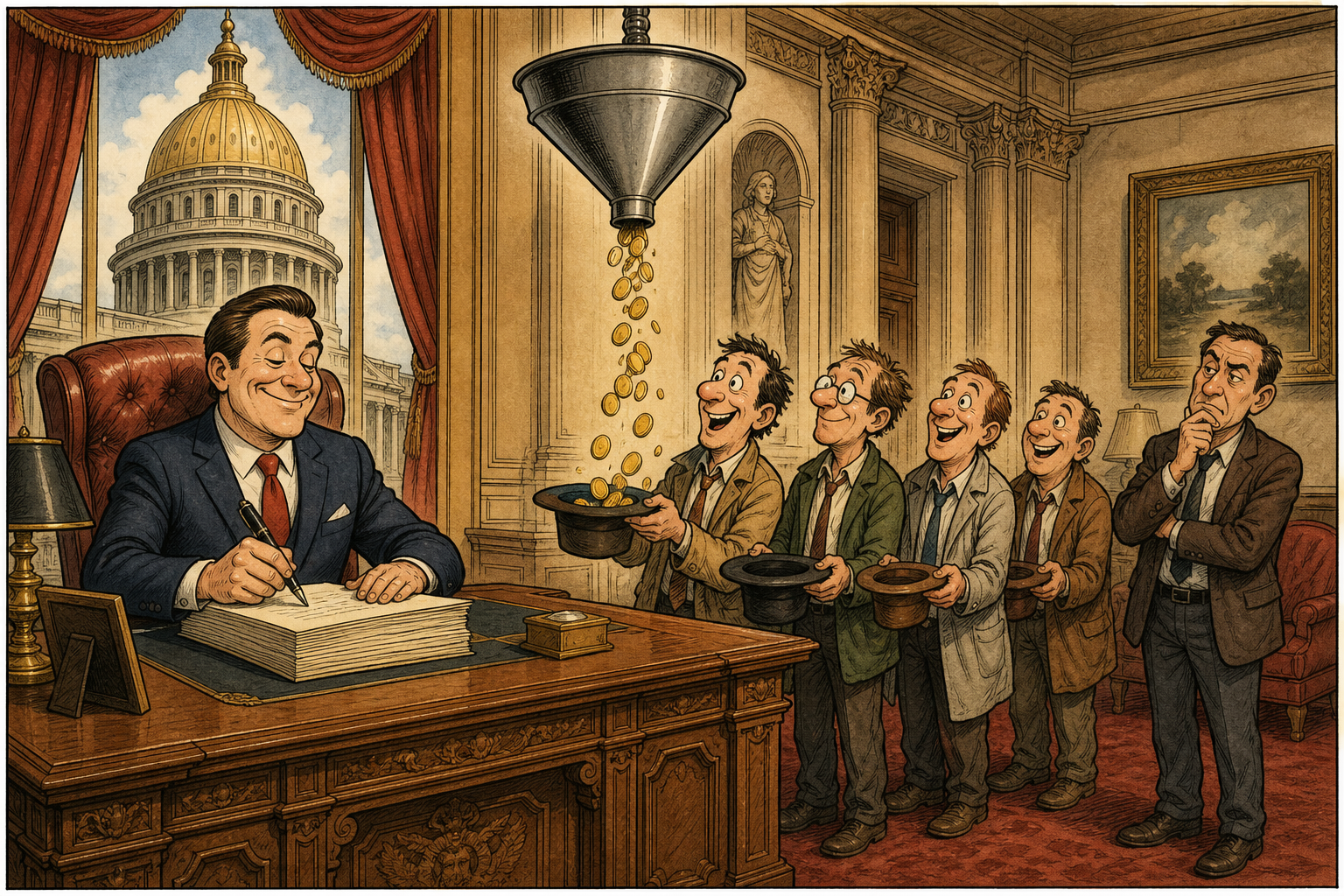
Cassidy’s plan tries to sidestep the two options everyone hates — raising taxes or cutting benefits. His pitch: the federal government borrows $1.5 trillion, roughly $300 billion a year for five years, and parks it in a new investment fund kept separate from the existing Social Security trust funds. Instead of the low-yielding Treasury bonds the trust funds are required to hold, this fund would invest in a diversified portfolio of stocks and bonds and let it compound in escrow for about 70 to 75 years.
Over 65 to 70 years, Cassidy says, the fund would grow to cover 60 to 65 percent of Social Security’s unfunded liability — not the whole gap, but enough, he argues, to shrink the painful choices that remain. He has stressed that “all risk is borne by the fund; people would get their promised benefits,” and that the model is not invented from scratch: it echoes the National Railroad Retirement Investment Fund, which Congress created in 2001 to let a federal trust invest railroad workers’ pensions in private markets. He has promoted it as a bipartisan effort alongside Sen. Tim Kaine (D-VA).
Cassidy frames the cost of waiting as the real danger. In a Wall Street Journal op-ed and on the Senate floor he has argued that every year Congress delays makes the eventual fix more expensive — more borrowing, larger tax increases, or deeper benefit cuts — because the program loses the compounding time that makes an investment approach work in the first place. “Congress cannot wait any longer,” he has said, casting his own departure as a reason to move now rather than an excuse to punt.
Social Security goes insolvent in less than a decade. If we do nothing, the law cuts everyone's benefits by more than 20%. My plan: invest in a separate fund now so we protect promised benefits without gutting them later. The cost of waiting only goes up.
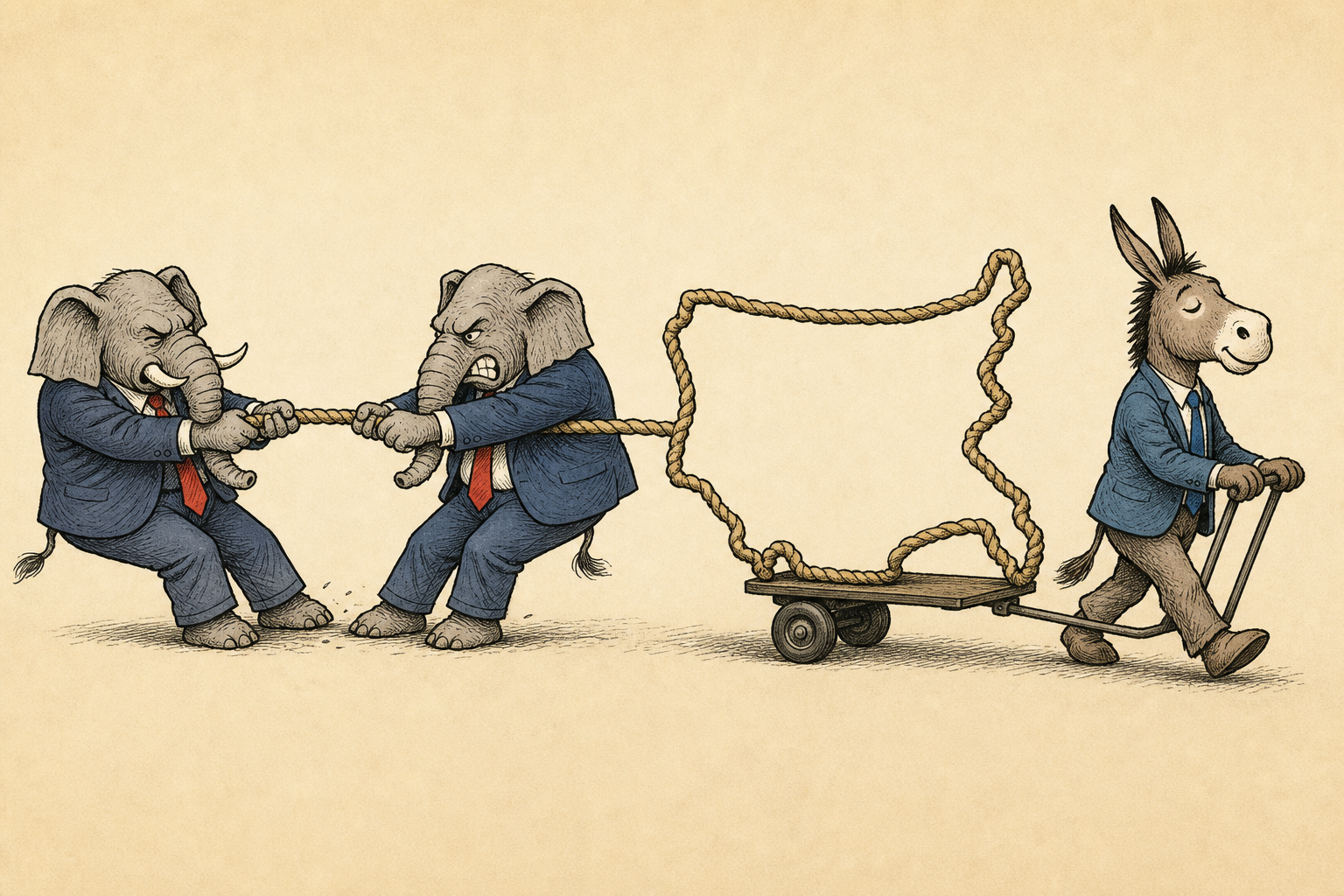
The politics are brutal, which is why the problem keeps getting deferred. Both parties have learned that proposing to touch Social Security is an electoral live wire. President Donald Trump (R) has repeatedly vowed not to cut Social Security benefits, and his administration has leaned on growth and other measures rather than the benefit-or-tax tradeoffs reformers say are unavoidable — even as the 2025 tax law it championed nudged the insolvency date earlier by trimming the taxation of benefits. Democrats, for their part, generally favor lifting the payroll-tax cap on high earners rather than restructuring the program.
Republicans themselves are split. When Speaker Mike Johnson (R-LA) floated the need for entitlement reform, parts of his own conference balked, wary of handing opponents a campaign weapon. And the fights are not only about money but about language: a constituent publicly rebuked Sen. Chuck Grassley (R-IA) for calling Social Security an “entitlement” at all — a reminder of how charged even the vocabulary has become.
Cassidy’s plan also faces hard analytical questions. The Center for Retirement Research at Boston College concluded that the investment-fund approach, on its own, is unlikely to close Social Security’s funding gap — in part because borrowing $1.5 trillion is not free, and because market returns are not guaranteed. As one financial-industry analyst put it to Newsweek, the idea makes sense “in theory,” but “theory needs to be backed by modeling — especially worst-case scenarios.” Critics note that if the portfolio underperforms over a 70-year horizon, the government is left owing the borrowed money with less to show for it.
I will always protect Social Security and Medicare for our great Seniors. We will not cut benefits — we will grow the economy and bring in the money the right way. Hands off Social Security!
Paraphrased commentary · not a verbatim post
Trump's consistent public position that he will not cut Social Security benefits — paraphrased and labeled as commentary, not a verbatim post.
Strip away the politics and the arithmetic is not in serious dispute. The Social Security Trustees project the retirement trust fund runs dry in the late-2032-to-early-2033 window, and current law then imposes an automatic cut of roughly 22 to 23 percent — about $460 to $500 a month off a typical benefit, across some 71 million recipients, with a 75-year shortfall near $26 trillion. What is in dispute is the fix. Sen. Bill Cassidy (R-LA) wants a $1.5 trillion invested fund to do the heavy lifting; skeptics say it cannot carry the load alone; and the broader political system has spent years preferring the automatic cut it never voted for to the explicit fix it would have to own.
The one thing nearly everyone agrees on is the cost of waiting: the longer Congress delays, the steeper the eventual tax increases or benefit cuts become. Cassidy’s exit removes one of the few senators willing to spend political capital on the issue. We will track whether his “big idea” gains co-sponsors, whether either party brings a solvency bill to a vote, and whether the next Trustees Report moves the date again.
The Democrats destroyed Social Security's finances for years. We are going to make our Economy so strong that Social Security is SAVED for generations. Our Seniors earned it, and they will get it!
Paraphrased commentary · not a verbatim post
Trump's framing that economic growth, not benefit cuts, is the answer — paraphrased and labeled as commentary, not a verbatim post.
- 1.Social Security Administration — 'Social Security Board of Trustees: Projection for Combined Trust Funds One Year Sooner than Last Year,' June 18, 2025 (primary source)
- 2.Social Security Administration — 2025 OASDI Trustees Report Summary (depletion dates and benefit-payable percentages, primary source)
- 3.Committee for a Responsible Federal Budget — 'Analysis of the 2025 Social Security Trustees Report,' June 18, 2025 (OASI 2033, combined 2034, ~$26T shortfall)
- 4.CNBC — 'Social Security retirement trust fund may be depleted in 2032, new trustees report finds,' June 9, 2026 (accelerated depletion date)
- 5.The Hill — 'Social Security's insolvency is No. 1 issue, says Sen. Bill Cassidy,' June 2026 (lead source)
- 6.The Hill — 'GOP senator forced out by Trump pushes $1.5 trillion investment for Social Security,' June 2026
- 7.CNBC — 'Sen. Cassidy plans to push ‘big idea’ for Social Security reform in last days in office,' June 23, 2026 (June 10 Squawk Box interview)
- 8.CBS News — 'Bill Cassidy on Face the Nation with Margaret Brennan' transcript, June 28, 2026
- 9.Newsweek — 'Social Security Update: Republican Senator Outlines Proposed Changes,' June 2026 (plan mechanics, skeptic responses)
- 10.CBS News — 'Social Security insolvency now projected for 2032, putting benefits at risk of a 22% cut,' 2026
- 11.CBS News — 'Your Social Security check could be cut by $500 a month in 2032, report finds' (average benefit-cut estimate)
- 12.PBS NewsHour — 'Social Security's retirement trust fund faces a projected funding shortfall in 2032, a year earlier than expected,' June 2026
- 13.Committee for a Responsible Federal Budget — 'No State Spared: Mapping the Impact of Social Security's Insolvency,' June 3, 2026
- 14.U.S. Senator Bill Cassidy — 'Cassidy Presents Plan to Save Social Security, Protect Benefits at Budget Hearing' (official statement)
- 15.U.S. Senator Bill Cassidy — 'ICYMI: Cassidy Warns Delaying Social Security Reform Will Only Raise Costs, Highlights Plan to Save It in WSJ' (official statement)
- 16.Center for Retirement Research at Boston College — 'Social Security's Financial Outlook: The 2025 Update in Perspective' (analysis of the investment-fund approach)
- 17.Bipartisan Policy Center — 'What's the Big Idea?' (explainer on the sovereign-wealth-fund concept and the Railroad Retirement model)
- 18.Social Security Administration — Fast Facts & Figures About Social Security, 2025 (beneficiary counts and average benefit)
Last updated June 28, 2026