A Trained Cop From Nicaragua Crossed the Border. Then He Beat a Federal Agent.
He told federal officers he had spent more than five years as a Nicaraguan police officer — and had been an instructor in defensive tactics. On June 17, 2026, a federal court in the Northern District of New York put that training on the record another way: 51 months in prison for assaulting the Homeland Security Investigations special agent who tried to arrest him.
The path there was short and ugly. A shoplifting stop in a Rotterdam grocery store. A federal arrest under the newly enacted Laken Riley Act. A slipped handcuff, a punch to an agent’s jaw, and a violent struggle that took at least six officers and a taser to end — leaving the agent with a back injury that kept him off the job for months.
Michel Manuel Garcia Rojas, 39, entered the United States illegally in 2023 and was released into the interior. This is the record of what came next — and of the enforcement law that finally held him.
- 51monthsfederal sentence for assaulting an HSI special agent — DOJ / ICE
- 6+officersplus a taser needed to subdue one handcuffed man — NDNY U.S. Attorney
- 5yearsas a Nicaraguan police officer and defensive-tactics instructor, by his own account — ICE
- 2023bordercrossed illegally at Brownsville, Texas, then released into the interior — ICE
On June 17, 2026, Michel Manuel Garcia Rojas, a 39-year-old Nicaraguan national in the country illegally, was sentenced to 51 months — more than four years — in federal prison. The charge, to which he had pleaded guilty on February 9, 2026: resisting, impeding, and assaulting a federal officer engaged in official duties and inflicting bodily injury, under 18 U.S.C. § 111. The victim was a special agent with Homeland Security Investigations, the criminal-investigative arm of ICE.
The sentencing was announced by First Assistant U.S. Attorney John A. Sarcone III of the Northern District of New York, alongside HSI Buffalo acting Special Agent in Charge Anthony Patrone and Enforcement and Removal Operations Buffalo acting Field Office Director Philip Rhoney. When his prison term ends, Garcia Rojas is expected to be deported to Nicaragua.
“It took at least six law enforcement officers and a taser to subdue and rearrest a single man who had already been handcuffed.”
U.S. Attorney's Office, Northern District of New York · case summary
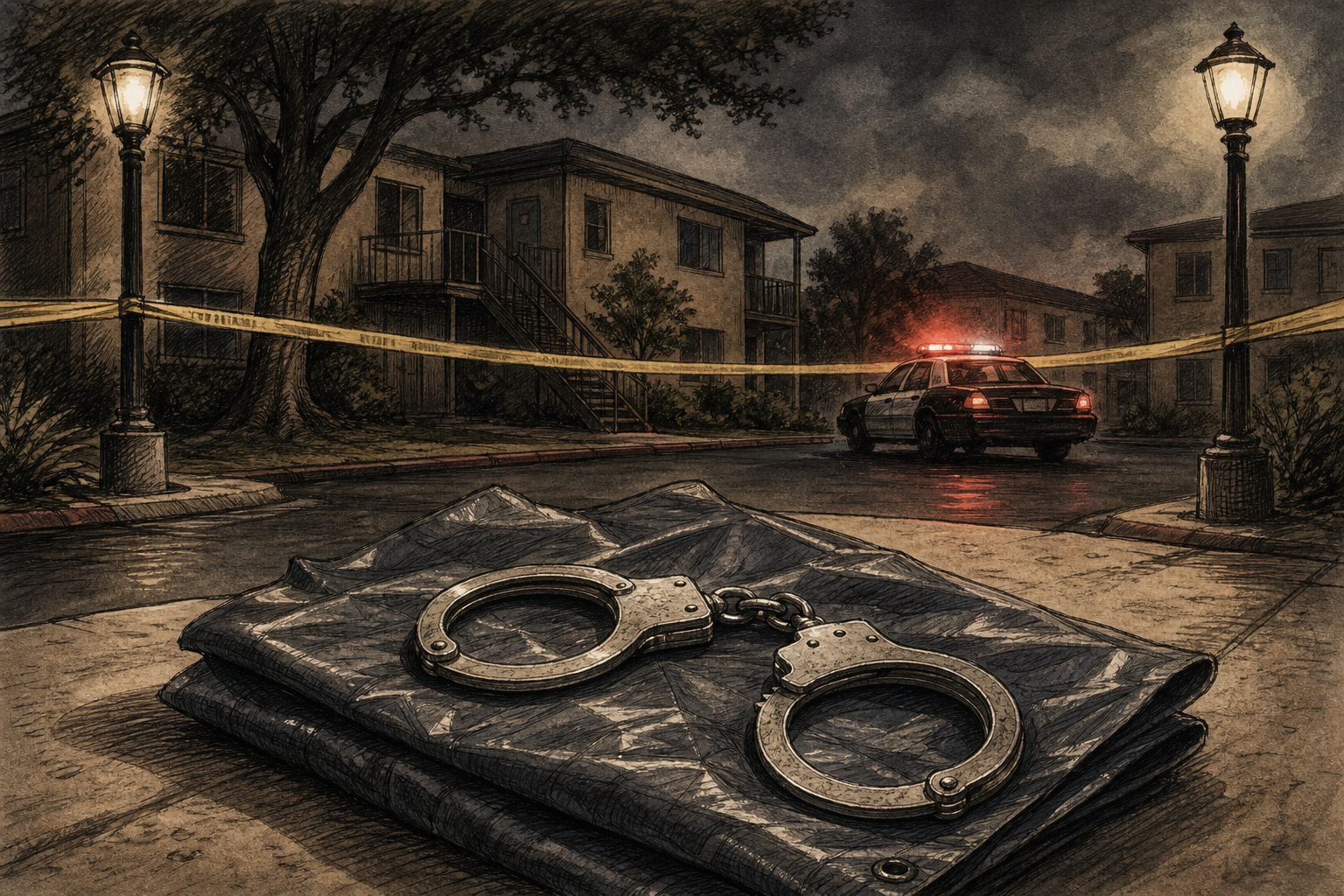
The confrontation happened on March 5, 2025, outside the Rotterdam Police Department in suburban Schenectady County. According to the U.S. Attorney’s account, Garcia Rojas had been placed, in handcuffs, in the back seat of a federal law-enforcement vehicle. He worked one hand free of the cuffs, opened the door, got out, and began to walk away.
An HSI special agent moved to place him back under arrest. Garcia Rojas fought — hard. He hit the agent in the jaw, knocking him to the ground, then shoved him into an exterior door inside a vestibule, wedging the agent in a spot where the police officers on the other side of the door could not get to him. It ultimately took, by the government’s count, at least six law-enforcement officers and the use of a taser to subdue and rearrest him. The agent suffered abrasions, bruising, and a back injury that kept him out of work for several months.
The struggle was not a scuffle that got out of hand. It was, on the record, a sustained assault on a federal officer by a man who — by his own later account — knew exactly how to fight one.

The federal agents were there because of a grocery-store theft. Garcia Rojas and a co-defendant, whom authorities also identified as an illegal alien, were accused of taking merchandise from a Rotterdam store and concealing the items underneath a child seated in a shopping cart. Rotterdam police charged them with petit larceny and endangering the welfare of a child — state misdemeanors.
Those charges triggered the Laken Riley Act. Signed into law on January 29, 2025 as Public Law 119-1 — the first bill of President Donald Trump’s second term — the Act requires federal detention of illegal aliens who are charged with, arrested for, or admit to theft-related crimes, burglary, assaulting a law-enforcement officer, or any offense causing death or serious injury. HSI moved to take custody of Garcia Rojas before he could be released on the state charges. That is the arrest he violently resisted.
Assaulting a federal officer is a federal crime — and it carries federal prison time. A criminal illegal alien who attacked an HSI special agent during a Laken Riley Act arrest in New York was sentenced to more than four years. HSI agents put themselves in harm's way every day; those who attack them will answer for it.
The Laken Riley Act is named for the 22-year-old Georgia nursing student murdered in 2024 by an illegal alien who had been arrested and released. DHS says the law has driven the detention of more than 17,500 criminal illegal aliens charged with qualifying crimes in its first eleven months. The Rotterdam case is one file in that stack — and a clean illustration of the argument for the statute: a man twice in contact with the system, first at the border in 2023, then in a grocery store in 2025, who did not stop until federal law required that he be held.
What sets this case apart from a routine resisting-arrest file is who was throwing the punches. During processing, Garcia Rojas told officers that he had served more than five years as a Nicaraguan police officer, that the Nicaraguan government had given him specialized training in defensive tactics, and that he had himself worked as an instructor of those tactics. In other words, the man who slipped a handcuff and put a federal agent on the ground was, by his own telling, a professional at exactly that.
Nicaragua is governed by the authoritarian regime of Daniel Ortega and Rosario Murillo, whose national police have drawn international condemnation for the violent suppression of protesters. A record of service in that force is not a mitigating credential. It is context for how a shoplifting arrest became a hospital-grade assault.
If you illegally cross our border and then attack the brave men and women of ICE and Homeland Security, you will be caught, you will be prosecuted, and you will be DEPORTED. Our agents are heroes. We will always have their backs.
Paraphrased commentary · not a verbatim post
Truth Social · paraphrase of the president's stated position on assaults against ICE agents
The Rotterdam assault did not happen in a vacuum. The Department of Homeland Security says attacks on its immigration officers have climbed sharply through 2025 and into 2026. In a January 8, 2026 statement, DHS reported a more than 1,300% increase in assaults against ICE officers, a 3,200% increase in vehicular attacks, and an 8,000% increase in death threats — blaming what it called the “radical rhetoric” of sanctuary-jurisdiction politicians.
The percentages are dramatic and the baseline is small — both things are true, and we report both. What is not in dispute is the direction, or the human cost behind each incident. The Rotterdam agent’s back injury and months of lost work are not a statistic in a press release; they are the price one HSI special agent paid for making a lawful arrest.
Assaults on our ICE officers are up over 1,000 percent. These are American law enforcement officers doing their jobs, and the people attacking them are being emboldened by reckless political rhetoric. We will prosecute every one of them to the fullest extent of the law.
The debate over that rhetoric has become a fixture of national commentary, from Fox News’s The Five to the daily back-and-forth over whether ICE agents should be masked for their own safety. Whatever one makes of the framing, the case in Rotterdam is a documented instance of the underlying fact: a federal agent, doing his job, injured badly enough to be sidelined for months by the person he was arresting.
Making America safe again means backing the law enforcement officers who put criminal illegal aliens behind bars. The Laken Riley Act is working — thousands of dangerous offenders detained, and those who assault our agents held fully accountable.
Paraphrased commentary · not a verbatim post
Truth Social · paraphrase of the department's stated position on the Laken Riley Act and assaults on ICE
New York is a Democratic-run state. Gov. Kathy Hochul (D-NY) has resisted federal immigration enforcement in several public standoffs, and the state’s sanctuary posture is precisely the environment DHS points to when it accounts for the surge in assaults on its officers. That framing is contested; the arrest, the assault, the guilty plea, and the 51-month sentence are not.
State: New York — Gov. Kathy Hochul (D-NY). New York limits state and local cooperation with federal immigration detainers in many circumstances.
The federal hook: the Laken Riley Act (Public Law 119-1) overrode that friction by mandating federal detention once Garcia Rojas was charged with qualifying state crimes.
DHS’s claim: that “radical rhetoric” from sanctuary-jurisdiction officials has fueled a 1,300%+ rise in assaults on ICE personnel. The claim is a matter of public debate; the injuries to the Rotterdam agent are a matter of court record.
The end of the story is administrative, and blunt. Garcia Rojas will serve his federal sentence and then, ICE says, be removed to Nicaragua — the country whose police force he says trained him. The agent he assaulted, in the government’s telling, went back to work. The next arrest under the Laken Riley Act is already somewhere in the queue.