An Illinois Judge Lost His Seat for Praising Trump. A Sitting Appellate Justice Writes About Abolishing the Police — and Keeps Getting Promoted.
Cook County Circuit Judge James R. Brown spent eighteen years on the bench, retired with a clean disciplinary record in 2020, and lost a temporary recall assignment forty-two days after a bar-association campaign over a blog post supporting President Trump — removed by a one-sentence Illinois Supreme Court order that never touched the state’s actual judicial-discipline process.
Fourteen months earlier, that same court had promoted Ramon Ocasio III (D) to the Illinois Appellate Court mid-column on “abolishing policing” and “white supremacy” in the legal system. No complaint has ever been filed against him.
Brown’s lawyers call it viewpoint discrimination. A federal judge just ruled his case can go to trial.
- 42 days — how long Judge Brown's recall assignment lasted before the Illinois Supreme Court's one-sentence removal order — Illinois Supreme Court order, Jan. 26, 2026
- 18 years — Brown's tenure as an elected Cook County Circuit judge before retiring with a clean disciplinary record in 2020 — Ballotpedia; Injustice Watch
- ~1,000 — traffic cases Brown cleared in the six weeks he was back on the bench — CWB Chicago; John Kass News
- 0 — judicial conduct complaints on the public record against Justice Ramon Ocasio III over his published columns, as of this writing — Liberty Justice Center federal court filing
James R. Brown spent eighteen years as an elected judge on the Cook County Circuit Court before retiring in 2020 with, by every account, a clean disciplinary record and endorsements from every bar association in the county — including the two that would later demand his ouster. Illinois recalled him anyway. Facing a chronic shortage of judges in Cook County’s high-volume traffic division, the Illinois Supreme Court put out an urgent call for retired judges to return to the bench, and on December 15, 2025, Brown took his seat as one of seven judges recalled for what was supposed to be a one-year assignment.
He lasted forty-two days. Four months earlier — while still a private citizen, before he had even applied to return to the bench — Brown had published a guest column on John Kass News titled “His Judgement Cometh, and That Right Soon.” The Cook County Bar Association and the Chicago Council of Lawyers petitioned the Illinois Supreme Court in late December to reverse the assignment. On Monday, January 26, 2026, the court did: a one-sentence order, issued without a hearing or written findings, that never routed the matter through the Judicial Inquiry Board or the Illinois Courts Commission — the two-step process the Illinois Constitution assigns to judicial-conduct complaints. In his six weeks on the bench, Brown had cleared roughly 1,000 traffic cases.
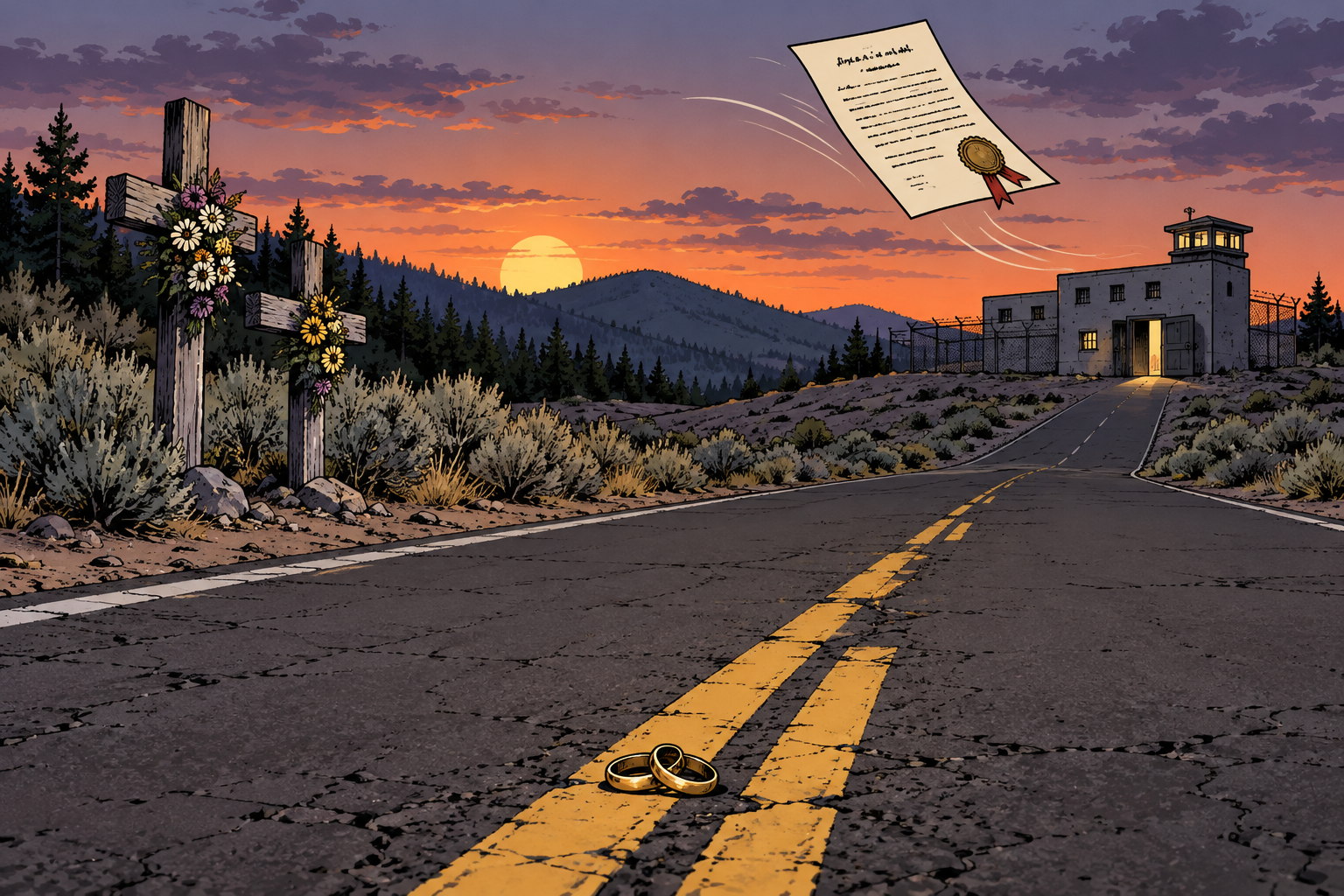
The column accused “Soros-funded progressive prosecutors” of having “blatantly violated their oath to uphold the law” through what Brown called “lawfare” against Donald Trump, and predicted that “accountability, in one form or another, is coming” for it. He wrote that “justice awaits those who brazenly and viciously demonized the 77 million Trump supporters,” criticized a Supreme Court nominee who “could not articulate the definition of ‘woman’” at her confirmation hearing, and wrote that “American citizens have been senselessly murdered by illegal aliens.” He also criticized former Cook County State’s Attorney Kim Foxx (D) by name, and in a separate radio appearance said “conservatives, I don’t think, are welcome on the Cook County judiciary.”
The Illinois Supreme Court’s rescission order found that Brown’s comments “clearly violate” the Illinois Code of Judicial Conduct’s requirement that judges act in ways that “promote public confidence” in the judiciary, and that his “impartiality as a judge might reasonably be questioned” as a result — adding that the views had gone undisclosed on his recall application. Brown has not disputed writing the column. His legal argument is narrower: that he wrote it as a private citizen, months before returning to any bench, and that the First Amendment does not evaporate because a retired judge later accepts a temporary recall assignment.
Fourteen months before it removed Brown, that same Illinois Supreme Court elevated a different Cook County judge — Ramon Ocasio III (D), first elected to the circuit court’s 6th Judicial Subcircuit in 2006 and twice retained since, most recently in 2024 — to the Illinois Appellate Court, First District, effective September 29, 2023. Ocasio writes a recurring column for the Chicago Daily Law Bulletin under his own name and, according to Brown’s federal court filing, his official government email address. That filing quotes columns in which Ocasio discussed “the abolition of policing” through the lens of Native American “indigenous resistance” against police as “foot soldiers of U.S. occupation, racism, and misogyny,” the “pervasive influence of white supremacy” evidenced in “legal frameworks, societal norms, and economic systems,” and the teaching of critical race theory in public schools.
No bar association has petitioned for Ocasio’s removal. No Judicial Inquiry Board complaint against him appears in the public record. He was promoted to the appellate bench while writing these columns and, as far as the public record shows, has continued publishing since. Brown’s attorneys at the Liberty Justice Center call the disparity “viewpoint discrimination” — arguing the state tolerates a sitting judge’s progressive commentary on policing and race while treating a retired judge’s conservative commentary on the same category of public controversies as disqualifying.
“By removing Judge James Brown from the bench, the justices of the Illinois Supreme Court chose politics over the rule of law.”
Brendan Philbin · Senior Counsel, Liberty Justice Center
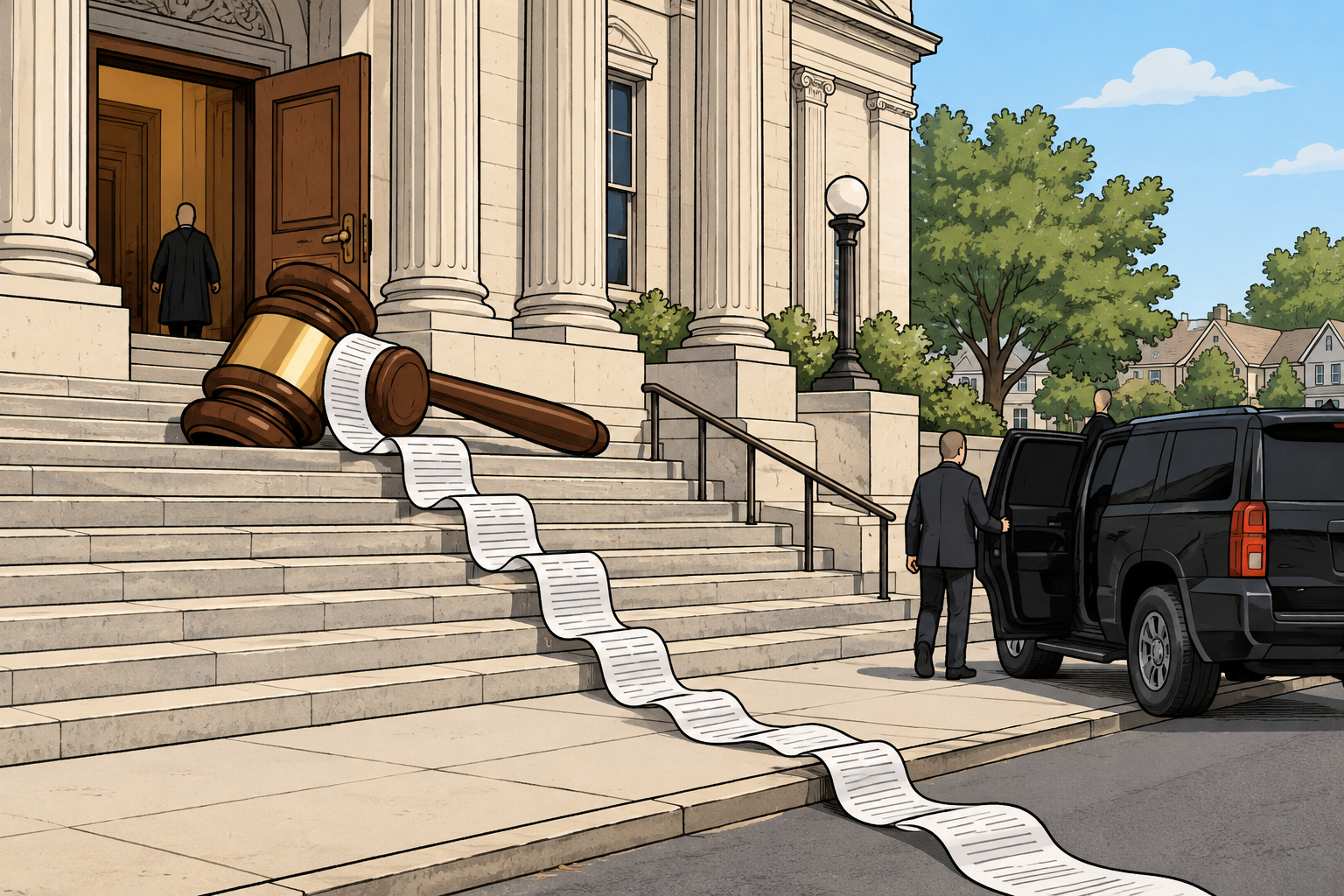
Brown sued the justices of the Illinois Supreme Court — led in the case caption by Chief Justice P. Scott Neville Jr. (D) — in the U.S. District Court for the Northern District of Illinois on February 18, 2026, alleging First Amendment retaliation and a due-process violation. Defending the justices, Illinois Attorney General Kwame Raoul (D)’s office argued in an April 3, 2026 brief that Brown’s column would force “an unmanageable number” of recusals and undermine “harmony” in the Cook County courts, and that federal courts lack jurisdiction over the state high court’s personnel decisions at all. Two weeks later, Brown’s lawyers filed the brief naming Ocasio, arguing the defendants “allow other sitting judges to publicly speak on matters of public concern” while treating Brown’s speech alone as grounds for removal.
On June 1, 2026, U.S. District Judge Edmond E. Chang split the difference. He denied Brown’s request for immediate reinstatement, reasoning that putting him back on the bench now could cause more harm if his removal is later found proper. But Chang also rejected the justices’ claim to judicial immunity, found it “plausible” that Brown was speaking as a private citizen on a matter of public concern, and let his First Amendment and due-process claims proceed toward trial. Chang’s order did not address the Ocasio comparison directly, and as of this writing neither Ocasio nor the Illinois Supreme Court has issued any public response to being named in the filing.
The judge removed — James R. Brown, retired Cook County Circuit Court judge (2002–2020), recalled to traffic court December 2025, removed January 26, 2026.
The judge facing no complaint — Ramon Ocasio III (D), Illinois Appellate Court, First District, since September 2023; previously Cook County Circuit Court, 6th Judicial Subcircuit, 2006–2023.
The court that removed Brown and is now defending that decision — the Illinois Supreme Court, led in the litigation by Chief Justice P. Scott Neville Jr. (D) and defended by Attorney General Kwame Raoul (D).
Brown’s case is still pending, with no trial date set. If he ultimately wins, it would establish that the Illinois Supreme Court violated a retired judge’s constitutional speech rights in the name of protecting “public confidence” — while a sitting appellate justice’s own published commentary on policing and race drew no comparable scrutiny. If he loses, Illinois will have effectively established that its high court can bypass the Judicial Inquiry Board and Illinois Courts Commission entirely whenever it decides a judge’s off-bench political speech is disqualifying — so long as that judge holds a temporary recall assignment rather than an elected term.
The Illinois Supreme Court removed retired Judge James R. Brown from a temporary bench assignment forty-two days after bar groups objected to his pro-Trump blog post — using a one-sentence order that bypassed the state’s constitutional judicial-discipline process entirely. Fourteen months earlier, that same court promoted Justice Ramon Ocasio III (D) to the appellate bench mid-column on abolishing policing and white supremacy in the legal system, and no complaint against him has ever surfaced. A federal judge has now let Brown’s claims go to trial — but neither Ocasio nor the court has said a word about the comparison itself.