
Samsung Just Handed ChatGPT to Its Workforce — three years after banning it for leaking source code.
On June 21, 2026, OpenAI announced that Samsung Electronics is rolling out ChatGPT Enterprise and its coding agent Codex to its workforce — every employee in South Korea, plus every employee worldwide in its sprawling Device eXperience (DX) division, the unit that builds Galaxy phones, TVs, and home appliances. OpenAI called it “one of OpenAI’s largest enterprise deployments to date.”
The plan is to embed the tools across software development, R&D, manufacturing, marketing, and corporate functions. Samsung says it expects to finish training its broader global workforce by the end of 2026. The two companies signed a letter of intent back in October 2025; this is the deal going live at scale.
What makes the move striking is the history. In 2023, Samsung banned ChatGPT and other generative AI tools company-wide after engineers pasted proprietary semiconductor source code into the chatbot in a span of weeks. The same company that treated public AI as an intellectual-property hazard is now standardizing on it — a reversal that says as much about how enterprise AI has matured as it does about Samsung.
- June 21, 2026 — OpenAI announced the Samsung deployment — ChatGPT Enterprise + Codex to all Korea staff and the global DX division · Source: OpenAI; Techmeme
- DX division — Samsung's Device eXperience unit (Galaxy phones, TVs, appliances) gets the tools worldwide; full global rollout targeted by end of 2026 · Source: OpenAI; Korea Times
- 5M+ weekly — people now use Codex every week across technical and non-technical roles, up from ~600k at the start of 2026 · Source: OpenAI; Constellation Research
- ~800% — growth in Codex weekly active users in Korea since February 1, 2026 · Source: OpenAI
- 2023 ban — Samsung barred ChatGPT after engineers leaked semiconductor source code into it — the policy this deal reverses · Source: Bloomberg
Two products are going in. The first is ChatGPT Enterprise, OpenAI’s managed plan for organizations — the same underlying models as the consumer app, but wrapped in enterprise controls: data is not used to train OpenAI’s models, conversations are encrypted in transit and at rest, and admins get single sign-on, access management, and usage governance. That last point is the whole story for a company with Samsung’s 2023 scar tissue: the enterprise tier is built so proprietary data stays inside the corporate security perimeter rather than leaking into a public model’s training set.
The second is Codex, OpenAI’s coding agent. It started as a developer tool — writing, reviewing, and debugging code — but OpenAI now pitches it well beyond engineering. The company says employees can use Codex to turn ideas into working software, internal tools, websites, and automated workflows without necessarily being programmers. For a hardware-and-software giant like Samsung, that’s the pitch: faster product development on the engineering side, and self-serve automation for the marketing and operations teams who would otherwise file a ticket and wait.
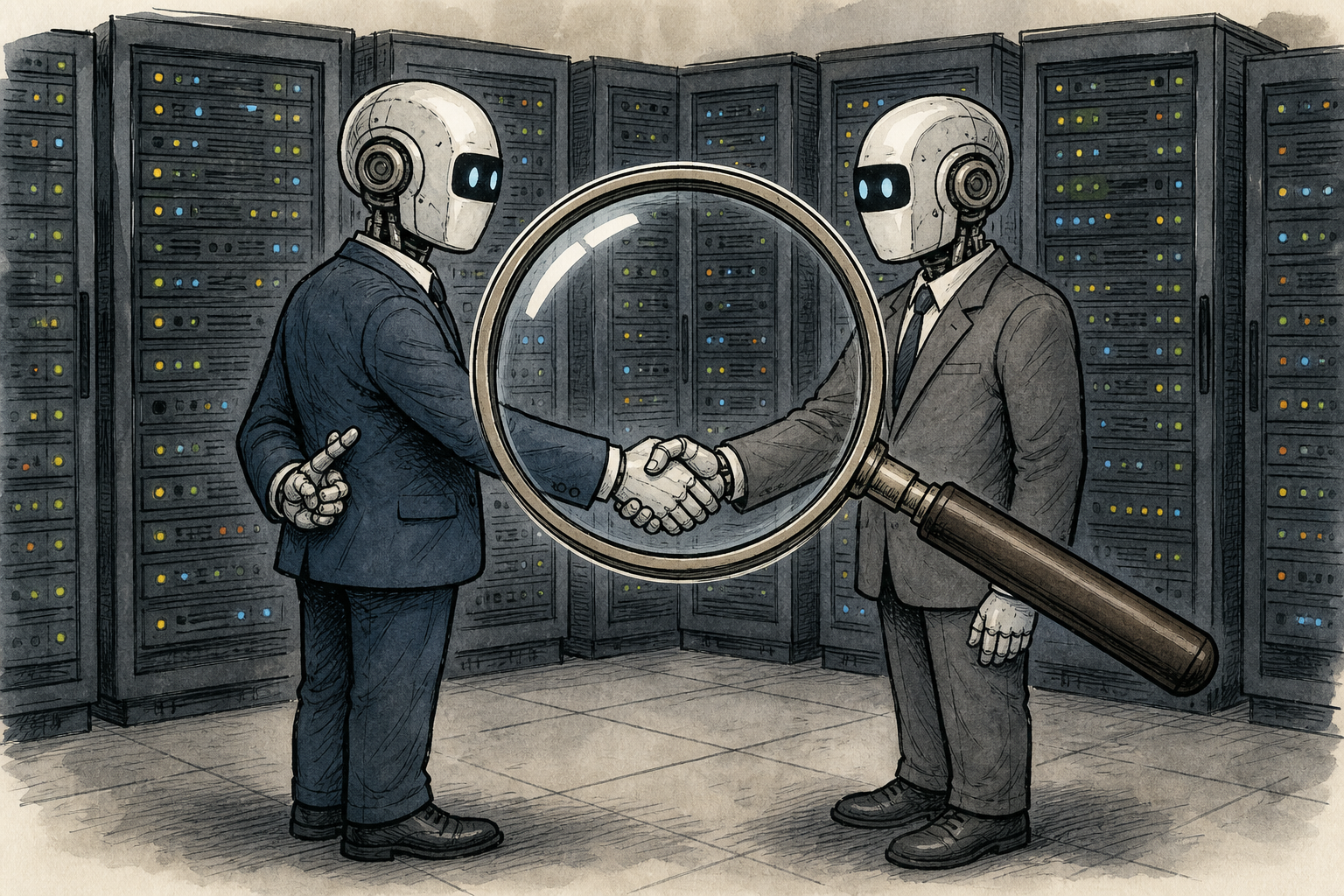
“This deployment is significant in OpenAI's history because Samsung is adopting AI as a core platform to enhance the way employees work.”
Kim Kyoung-hoon, OpenAI Korea general manager — via The Korea Times
Samsung Electronics employs roughly a quarter of a million people. Giving ChatGPT and Codex to all of its Korean staff and the entire global DX division puts the deployment among the largest single corporate AI rollouts anyone has announced. It lands at a moment when Codex usage is climbing steeply on its own: OpenAI says more than five million people now use Codex weekly — up from about 600,000 at the start of 2026 — and that roughly one in five of those users are not developers at all, but analysts, marketers, and operators. In Korea specifically, OpenAI reports weekly Codex users grew nearly 800 percent since February.
That non-developer share is the part enterprises are watching. OpenAI spent the spring extending Codex beyond pure coding — adding role-specific plug-ins for data analytics, sales, product design, and other functions, plus a “Sites” feature that lets a non-engineer describe an internal tool and have the agent build it. A rollout the size of Samsung’s is, in effect, a stress test of whether that broader pitch holds up across a workforce that is mostly not made of programmers.
Samsung Electronics is bringing ChatGPT Enterprise and Codex to employees — one of our largest enterprise deployments to date, spanning all staff in Korea and the global DX division.
Excited to partner with Samsung as they roll out ChatGPT and Codex across the company. Watching a hardware giant make AI a core part of how its people build is exactly the kind of enterprise shift we've been working toward.
To understand the reversal, rewind to April 2023. Samsung had just lifted an internal restriction and allowed engineers in its semiconductor unit to use ChatGPT. Within about twenty days, employees leaked sensitive data into the tool three separate times: one pasted in proprietary database source code to check for errors, another uploaded code meant to detect chip-equipment defects, and a third fed in a transcript of an internal meeting to generate minutes. By May 2023, Samsung had banned external generative AI on company devices and networks entirely, and said it would build its own internal tools instead. Bloomberg reported the ban at the time.

What changed is less Samsung’s caution than the product category. In 2023, the realistic options were a consumer chatbot that trained on whatever you typed, or nothing. By 2026, ChatGPT Enterprise exists precisely to answer the 2023 failure mode — contractual no-training guarantees, admin controls, audit logging, and the ability to bound where data goes. The deployment is also not uniformly company-wide: Samsung’s most sensitive semiconductor operations have historically kept tighter limits on external AI tools, and the announced rollout centers on the DX side and the broader Korea workforce rather than every corner of the chip business.
2023 — Samsung allows ChatGPT in its chip unit, then bans all external generative AI company-wide within weeks after engineers leak proprietary source code three times.
2025 — Samsung and OpenAI sign a letter of intent (October) as enterprise-grade controls mature and the broader market shifts from experimentation to operational use.
2026 — ChatGPT Enterprise + Codex go live for all Korea staff and the global DX division, with full-workforce training targeted by year-end.
Samsung standardizing on OpenAI is a notable win in a market that, by 2026, has stopped looking like a one-horse race. Microsoft has pushed 365 Copilot deep into the Office and Windows install base; Google has folded Gemini across Workspace; Anthropic’s Claude has carved out a niche in secure long-document reasoning. Microsoft has reported Copilot adoption in the millions of paid seats — real scale, but still only a slice of its commercial base — and deals like Samsung's show OpenAI continues to win marquee enterprise standardizations even where Copilot and Gemini are bundled.
The trend most analysts describe is not winner-take-all but a multi-assistant workplace, where companies route different tasks to different tools under a governance layer. In that world, the decisive battle is over default placement — whose tool is the one a quarter-million employees open first thing in the morning. A standardization deal with a name like Samsung is exactly how OpenAI converts general mindshare into committed enterprise seats, and it gives the company a flagship reference customer in Asia’s corporate market.
Deals like this are how the enterprise-AI story actually gets written — not in model benchmarks, but in procurement decisions at companies that build real products. Samsung is a manufacturer with decades of trade-secret discipline; its willingness to put a third-party model in front of its workforce is a signal to every risk-averse enterprise still sitting on the sidelines that the security posture has caught up to the ambition. The 2023-to-2026 arc is, in miniature, the arc of the whole category: from “ban it, it’s a leak risk” to “standardize on it, with controls.”
The open questions are the ones any large rollout faces. Adoption is not the same as usage — Copilot’s history shows seats can sit idle — so the real measure will be whether Samsung employees fold these tools into daily work or let them gather dust. Training a quarter-million people by year-end is a logistics problem as much as a technical one. And the security promise will be tested in practice, not in a contract: enterprise controls reduce the 2023 risk, but a workforce learning to lean on AI for sensitive work is exactly where governance gets stress-tested.
Samsung went from banning ChatGPT in 2023 to making it — and OpenAI’s Codex agent — a standard tool for its Korean staff and global devices division in 2026. It is one of OpenAI’s largest enterprise deployments, it rides a Codex usage curve that has gone from hundreds of thousands to millions of weekly users in months, and it plants a flag in a market where Microsoft and Google are pushing just as hard. The headline is the reversal; the substance is the maturing of enterprise-grade AI controls that made the reversal defensible. The test now is whether a quarter-million people actually use it — and whether the governance holds up under that much real-world traffic.

- 1.OpenAI — 'Samsung Electronics brings ChatGPT and Codex to employees,' June 21, 2026
- 2.The Korea Times — 'OpenAI lands Samsung as major ChatGPT Enterprise customer,' June 22, 2026
- 3.The Asia Business Daily — 'OpenAI to Provide ChatGPT and Codex to All Samsung Electronics Employees,' June 22, 2026
- 4.Techmeme — 'Samsung rolls out ChatGPT Enterprise and Codex to all staff in Korea and DX division staff globally,' June 21, 2026
- 5.Constellation Research — 'OpenAI touts broadening Codex usage with 5 million weekly active users,' June 2026
- 6.TechCrunch — 'OpenAI launches new Codex tools for white-collar work,' June 2, 2026
- 7.VentureBeat — 'OpenAI's Codex update lets agents build interactive enterprise workspaces via Sites and role-specific plugins,' June 2026
- 8.Bloomberg — 'Samsung Bans ChatGPT, Google Bard, Other Generative AI Use by Staff After Leak,' May 2, 2023
- 9.GeekWire — 'Microsoft 365 Copilot and the end of the single-model era in enterprise AI,' 2026
- 10.OpenAI — 'Introducing ChatGPT Enterprise' (product overview, security and admin controls)
- 11.OpenAI — 'Scaling Codex to enterprises worldwide'
- 12.OpenAI — 'Introducing Codex' (coding agent overview)
Last updated June 22, 2026