Three Trillion Dollars,
Paid to the Wrong People.
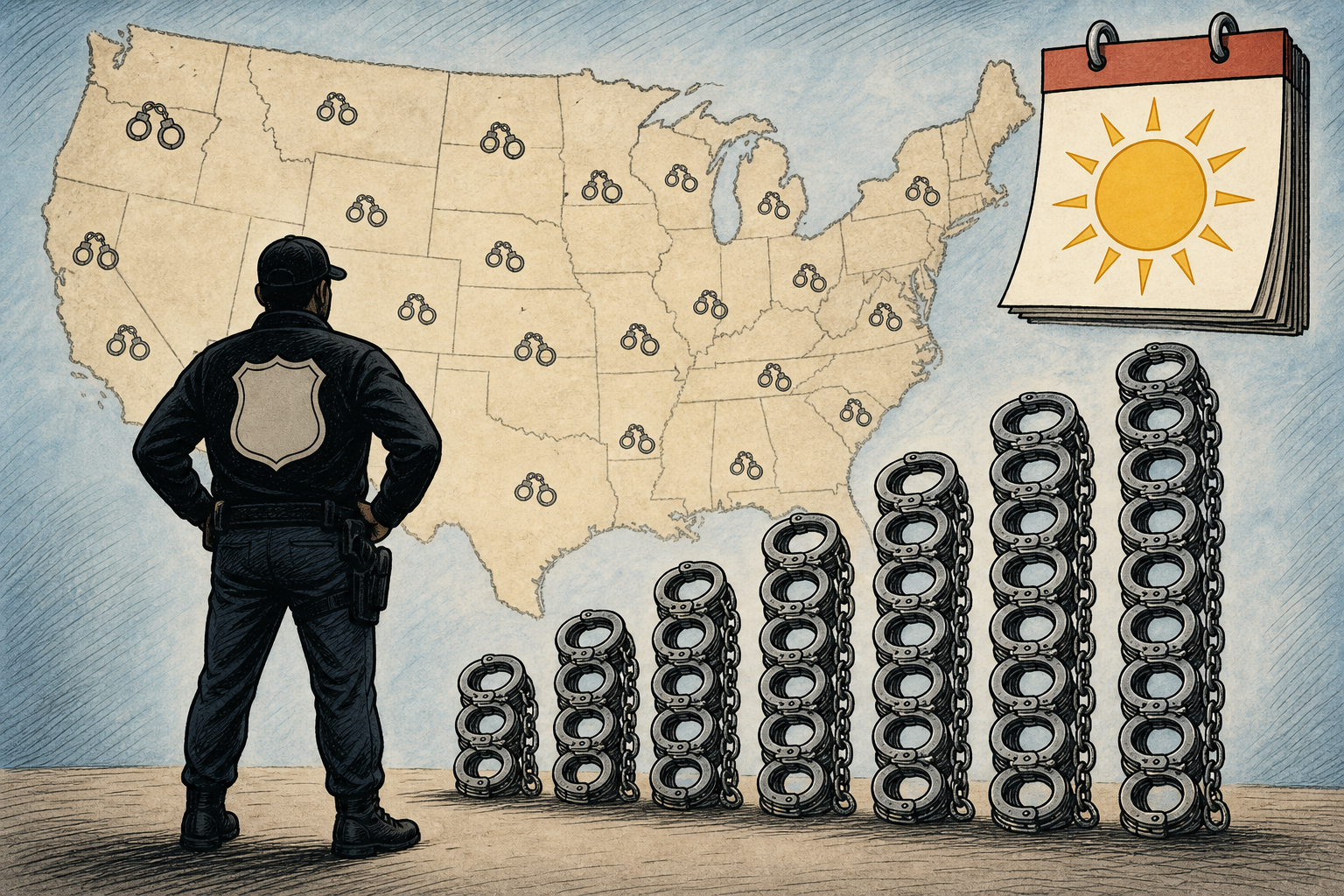
In fiscal year 2025 the federal government made an estimated $186 billion in improper payments — money sent in the wrong amount, to the wrong recipient, or with no documentation that it was owed at all. That is the government’s own accountant talking. The Government Accountability Office published the number on April 27, 2026, and it was $24 billion higher than the year before.
Stack up every year since FY2003 and the running total is roughly $3 trillion — and GAO says even that is an undercount, because many of the leakiest programs still don’t report at all. Layered on top is a separate, first-of-its-kind GAO estimate that outright fraud drains another $233 billion to $521 billion from federal programs every single year.
This is the story of where the money goes, which programs bleed the most, and why the officials who presided over the biggest losses — from California’s $32 billion unemployment breach to Minnesota’s $250 million meals-for-kids scheme — keep collecting the checks anyway.
- $186BFY2025improper payments, 15 agencies, 64 programs — GAO-26-108694
- $3Tsince 2003cumulative reported improper payments — GAO
- $521Bper yearhigh end of GAO's federal fraud-loss estimate — GAO-24-105833
- $94BhealthMedicare ($57B) + Medicaid ($37B) improper payments, FY2025

On April 27, 2026, the Government Accountability Office released its annual payment-integrity report and put the FY2025 improper-payment total at $186 billion across 64 programs run by 15 federal agencies. Those programs cover roughly $4.5 trillion in non-interest spending — about three-quarters of the money the government moves. Of the $186 billion, GAO found that about $153 billion — four-fifths — were overpayments: dollars that went out the door and, in most cases, will never come back.
An improper payment is not a partisan accusation. It is a defined federal accounting term: a payment made in the wrong amount, to the wrong recipient, or without the documentation needed to show it was owed. Payments to dead people. Payments to the ineligible. Duplicate checks. A benefit calculated wrong. Some of it is honest administrative error; some of it is theft. GAO’s point is that the government cannot always tell the difference — which is itself the scandal.
The FY2025 figure was $24 billion higher than FY2024’s $162 billion. Cumulatively, since agencies began reporting in FY2003, the estimated total has reached about $3 trillion. GAO is careful to say the real number is “likely significantly higher,” because the estimate leaves out programs that don’t report — including Temporary Assistance for Needy Families — and understates programs whose own error-measurement methods miss large categories of loss.
“The improper payment estimates do not represent the full extent of government-wide improper payments.”
U.S. Government Accountability Office · Payment Integrity report · April 2026
Improper payments are not spread evenly. They concentrate in a handful of the largest health, tax-credit, and benefit programs. More than half of the FY2025 total came from health care alone: Medicare at $57 billion (31%) and Medicaid at $37 billion (20%). Refundable tax credits added roughly $28 billion more — led by the Earned Income Tax Credit, where the government pays out improperly at a rate of nearly one dollar in three.
The Earned Income Tax Credit is the chronic case. Treasury has reported an EITC error rate above 20% for years — it reached 32.7% with $21 billion in improper payments in the most recent reporting — and the Additional Child Tax Credit and American Opportunity Tax Credit have topped a 10% error rate every year since FY2019. These are not obscure line items. They are among the largest cash-transfer programs the IRS administers, and their error rates have proven remarkably resistant to two decades of promised fixes.
Medicaid deserves a footnote of its own. CMS reported a FY2024 Medicaid improper-payment rate of 5.09%, or about $31 billion — but that figure omits a category CMS itself once refused to measure: whether enrollees were actually eligible. When the Paragon Health Institute added eligibility errors back in, it estimated Medicaid’s true improper payments at roughly $1.1 trillion over the last decade — about double the $543 billion CMS reported. Under the Obama and Biden administrations, CMS did not include state eligibility determinations in its Payment Error Rate Measurement audits. The single biggest source of error was the one the government stopped counting.

Improper payments and fraud are not the same thing, and GAO is precise about it: all fraud is improper, but not all improper payments are fraud. Which raises the obvious question — how much of the loss is actual theft? For most of the government’s history, nobody had a number. In April 2024, GAO produced the first government-wide estimate of fraud ever attempted.
Using FY2018–2022 data, GAO estimated the government loses between $233 billion and $521 billion a year to fraud — the equivalent of 3% to 7% of average federal obligations. The range is wide because fraud is, by design, hidden; GAO called the data “notoriously underreported.” The estimate excludes fraud against federal revenue and most fraud at the state and local level. In other words, the true figure runs from “a quarter-trillion” to “more than half a trillion” dollars — every year, on top of the improper-payment tally.
Our latest review found agencies made an estimated $186 billion in improper payments in FY2025 — and cumulative improper payments since 2003 now total about $3 trillion. The real figure is likely higher.
The improper-payment total peaked at $281 billion in FY2021 for a reason: Congress pushed trillions of relief dollars out the door with the fraud controls switched off. Two programs became the emblems of that decision.
Unemployment insurance. In September 2023, GAO estimated that pandemic UI programs were hit with $100 billion to $135 billion in fraud from April 2020 through May 2023 — roughly 11% to 15% of all benefits paid. Fraudsters used stolen identities, filed across multiple states, and drained the Pandemic Unemployment Assistance program that had been built, deliberately, with minimal verification.
Small-business loans. The SBA Inspector General estimated in June 2023 that the agency disbursed more than $200 billion in potentially fraudulent COVID-era EIDL and PPP loans — about 17% of the $1.2 trillion it moved. The IG found SBA had “weakened or removed the controls necessary to prevent fraudsters from easily gaining access.” Investigators have since won more than 500 convictions and clawed back roughly $30 billion — a fraction of the loss.
Minnesota has become a hub of fraudulent money laundering activity. Billions of dollars are missing, and the people responsible are getting away with it. We are going to get that money back and hold them accountable.
Paraphrased commentary · not a verbatim post
Truth Social · President Trump on the Minnesota fraud investigations
My annual Waste Report again documents more than a trillion dollars in wasteful and improper federal spending. Washington loses hundreds of billions a year to payments that never should have been made — and almost none of it is ever recovered.
Sen. Rand Paul (R-KY), who chairs the Senate Homeland Security and Governmental Affairs Committee, put the total documented federal waste in his 2025 “Festivus Report” at $1,639,135,969,608. It is a rhetorical device, but the underlying line items are sourced — and the improper-payment share of it is GAO’s, not his.
No single jurisdiction lost more to pandemic unemployment fraud than California. Estimates of the loss at the state’s Employment Development Department range from about $20 billion to $32.6 billion — by the higher estimate, as much as a third of the entire nation’s UI fraud. The California State Auditor found that EDD, under Gov. Gavin Newsom (D), did not move to bolster fraud detection until months into the pandemic, and as a result paid about $10.4 billion in claims it later determined may have been fraudulent — including claims filed in the names of prison inmates.
The official who ran California’s Labor and Workforce Development Agency during that collapse was Julie Su (D). She was later elevated to Deputy Secretary and then Acting Secretary of the U.S. Department of Labor — the federal agency that oversees the entire unemployment-insurance system. In May 2024, Senate Finance Republicans Mike Crapo (R-ID) and Bill Cassidy (R-LA) demanded transparency on a DOL policy they said effectively let states off the hook for recovering fraudulently paid pandemic benefits — a policy they framed, pointedly, as “forgiving Julie Su for losing $32 billion.”
Governor: Gavin Newsom (D-CA) — in office throughout the pandemic UI collapse.
State labor secretary at the time: Julie Su (D) — later Acting U.S. Secretary of Labor, overseeing the national UI system.
Documented loss: up to $32.6 billion in UI fraud; ~$10.4 billion in claims EDD itself flagged as possibly fraudulent (California State Auditor).
Recovered: the EDD reports clawing back roughly $5.9 billion — a minority of the loss.
If California is the scale story, Minnesota is the audacity story. A nonprofit called Feeding Our Future claimed to serve meals to needy children through a federal food program, then submitted fake meal counts and invoices to draw down the money. Federal prosecutors called it a $250 million scheme — the largest pandemic-relief fraud yet charged — involving upwards of 70 defendants.
In March 2025, a federal jury convicted Feeding Our Future founder Aimee Bock; she was sentenced to more than 41 years in prison, and more than 60 others have pleaded guilty or been convicted. The money flowed through a state-administered federal program in a state run by Gov. Tim Walz (D), with Attorney General Keith Ellison (D) as the state’s chief law-enforcement officer. Walz has defended his administration’s response, saying the state has “spent years cracking down on fraudsters” and accusing critics of politicizing the issue; in January 2026 he announced he would not seek a third term.
Our committee's report shows CMS has been a poor steward of federal Medicaid dollars. The program is now handing out $37 billion a year in improper payments — a 157% increase since 2013. This is the taxpayers' money, and the waste is staggering.
Both cases share a structural feature worth naming: the federal government wrote the checks, but state agencies administered the programs and were supposed to police eligibility. When that split fails, the loss lands on the federal ledger — and the state officials who ran the programs rarely appear in the improper-payment statistics at all.
The recurring cause is boringly simple: agencies pay first and verify later, and the databases that could have caught a bad payment don’t talk to each other. Treasury runs a “Do Not Pay” screening system, but for years many agencies weren’t required to check it before cutting a check. GAO has flagged the same control gaps in report after report; Congress has held hearing after hearing. The estimates keep climbing.
President Trump is modernizing the way America's Bank Account pays and gets paid — strengthening Treasury's ability to identify improper payments, prevent fraud, and stop taxpayer dollars from going out the door to the wrong people.
Paraphrased commentary · not a verbatim post
Truth Social · on Executive Orders 14247 and 14249, modernizing federal payments
On March 25, 2025, President Trump (R) signed Executive Orders 14247 and 14249, directing Treasury to modernize its payment systems and expand fraud screening. OMB followed with Memorandum M-25-32 to make the Do Not Pay system easier for agencies to use. In Congress, House Budget Chairman Jodey Arrington (R-TX) and Oversight Chairman James Comer (R-KY) introduced the Stopping Fraudulent Payments Act and a companion bill to give Treasury the data access needed to block improper payments before they happen.
Whether any of it moves the number is the open question. The pandemic surge is over, which is why FY2024 fell to $162 billion — but FY2025 already climbed back to $186 billion on the strength of the permanent programs. Medicare, Medicaid, and the tax credits are not temporary emergencies. They are the load-bearing walls of the federal budget, and they leak in good years and bad. The reforms on the table are real; so is the two-decade record of the total refusing to fall.
$186 billion in a single year. Roughly $3 trillion since 2003. Up to $521 billion more lost to fraud annually. These are the government’s own auditors, not a campaign ad — and their central warning is that the true totals are higher than anyone has measured. The money is real, the losers are taxpayers, and the officials who presided over the biggest breaches have mostly moved on to bigger jobs. Until the agencies verify before they pay, the ledger will keep growing — one improper payment at a time.