California Regulated Its Own Refineries Out of Existence. Now It’s Asking Asia to Tank in the Gasoline.
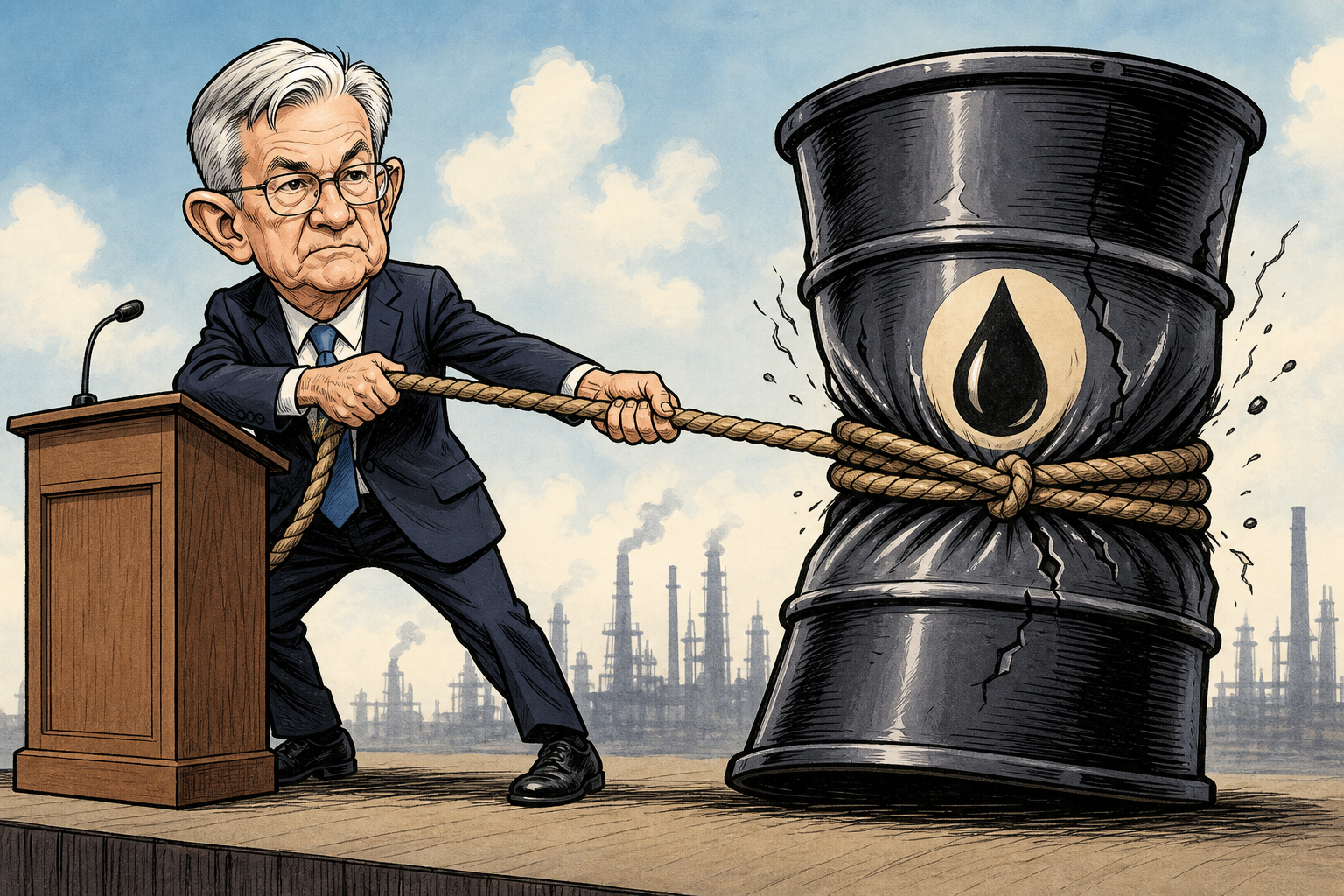
In a span of six months, California will lose two refineries that, between them, processed roughly 292,000 barrels of crude per day. Phillips 66 ceased crude processing at its 147,000 bpd Los Angeles complex on October 16, 2025, with the remaining units idled by year-end. Valero’s 145,000 bpd Benicia refinery is scheduled to halt operations in April 2026. The Compton Chamber’s 2026 energy outlook estimates the two closures will strip 17-20% of California’s in-state refining capacity. That is not a market accident. It is the predicted outcome of a fifteen-year regulatory campaign.
Six California refineries have shut since 2008. Six more sit on the closure watch list. In-state crude oil production is down 65% from peak. California now imports roughly 80% of the oil it refines — up from a state that was, within living memory, the third-largest oil producer in the United States. A USC Marshall School analysis by Prof. Michael Mische, released in May 2025, projects that the combined capacity loss plus the compounding Low Carbon Fuel Standard cost could push average California regular gasoline to $8.43 per gallon by the end of 2026 — a 75% increase over the April 2025 baseline.
California’s response has been instructive. After Phillips 66 and Valero filed closure notices, Gov. Gavin Newsom (D-CA) and the California Energy Commission — chaired by David Hochschild (D) — quietly voted 3-0 to defer the “maximum gross gasoline refining margin” profit-cap penalty regime through 2030. The same law Newsom signed in 2023 as a victory over “oil price gouging” was shelved within 30 months because the regulators themselves concluded that enforcing it might accelerate the very refinery exits already underway. The accountability picture writes itself.
- 17-20%of refining capacityremoved from California by mid-2026 between the Phillips 66 LA and Valero Benicia closures— Compton Chamber 2026 Energy Outlook
- $8.43per gallon scenarioUSC Marshall School Prof. Mische projection for CA regular gasoline by end of 2026 — a 75% increase over April 2025— California Globe, KFI, ABC10 (USC report)
- 2×national averageCalifornia residential electricity rate (~33.75¢/kWh) vs. ~18.05¢/kWh nationally — already the highest in the lower 48— Institute for Energy Research; EIA
- 80%of crude importedCalifornia now imports roughly 80% of its oil; in-state production has fallen 65% from peak — a foreign-tanker pipeline by policy design— Energy In Depth; Consumer Watchdog
Phillips 66’s Wilmington-Carson complex was one of the largest refineries on the West Coast. According to the company’s Q3 2025 8-K filing with the SEC, crude processing was halted on October 16, 2025, with all remaining units expected to be idled by year-end. The site’s nameplate throughput was approximately 147,000 barrels per day. Phillips 66 did not announce a buyer. It announced redevelopment of the land for industrial and logistics use.
Valero Energy — the nation’s second-largest refiner by capacity — filed notice with the California Energy Commission of its intent to idle, restructure, or cease operations at its 145,000 bpd Benicia refinery by April 2026. Under the updated plan, Valero will continue producing gasoline through April and then transition to importing finished gasoline into Northern California from the wider Valero refining network and Asian suppliers. The closure will eliminate more than 400 direct refinery jobs and reduce statewide gasoline production capacity by roughly 9% on its own.
Closed (2008-2024): Six California refineries have shut since 2008, including Shell Bakersfield, Big West / Flying J Bakersfield, Paramount Petroleum (partial), Andeavor Wilmington, Marathon Martinez (converted), and the Phillips 66 Rodeo conversion to renewable diesel.
Closing now (2025-2026): Phillips 66 Los Angeles (147,000 bpd, Q4 2025) and Valero Benicia (145,000 bpd, April 2026). Together, ~17-20% of remaining in-state capacity.
Still standing: 13 operating refineries supply what is left. Industry analysts have publicly warned that several of those 13 are reviewing their California positions.
On January 6, 2026, Newsom’s office issued a formal statement on the Valero closure expressing that state officials were “working to keep Benicia’s Valero refinery open.” The state simultaneously continued enforcing the regulatory cost stack — CARB cap-and-trade, the Low Carbon Fuel Standard uplift, AB 32 emissions compliance, refinery-specific air-quality permitting, and the looming (now-deferred) SB X1-2 profit cap — that Valero, Phillips 66, and the trade association Western States Petroleum Association have all publicly cited as making California refining uneconomic. The contradiction is not subtle.
California consumed roughly 13.4 billion gallons of gasoline in 2024. Demand has fallen incrementally over the past decade as electric-vehicle adoption ramps, but it has not fallen anywhere near the pace at which the state is removing refining capacity. That gap — demand decline trending at single-digit percentage points per decade, supply removal at 17-20% over twelve months — is the entire story.
“The refinery closings will cost the state about 21% of its fuel production between 2023 and 2026, and California gas prices could rise 75% by the end of 2026 — potentially hitting $8.49 a gallon.”
Prof. Michael Mische · USC Marshall School of Business · May 2025 analysis
Mische’s May 2025 USC Marshall School analysis projected the combined effect of the Phillips 66 and Valero closures, the LCFS cost uplift, and California’s “fuel island” geography — the state runs a quasi-isolated CARB-spec gasoline market that does not interchange easily with the rest of the U.S. supply system — could push average regular gasoline from about $4.82 in April 2025 to as high as $8.43 by the end of 2026. Newsom’s office attacked the analysis personally; Sen. Brian Jones (R-CA) issued a release calling the response “petty, misleading, and unworthy of his office.”
The mechanics of the squeeze matter. California’s gasoline spec is unique. When a refinery goes offline, the state cannot simply pull replacement barrels from a pipeline running in from Texas or Oklahoma — there is no such pipeline. Replacement fuel arrives by ship. From order to dock to terminal to pump, the lag is roughly three weeks. A May 2025 Valero Benicia fire triggered a Northern California price spike of more than 40 cents per gallon over that window. The February 2025 PBF Martinez explosion did similar damage. Those were single-refinery events on infrastructure that was still nominally running. Removing two entire refineries permanently is not a 40-cent event.
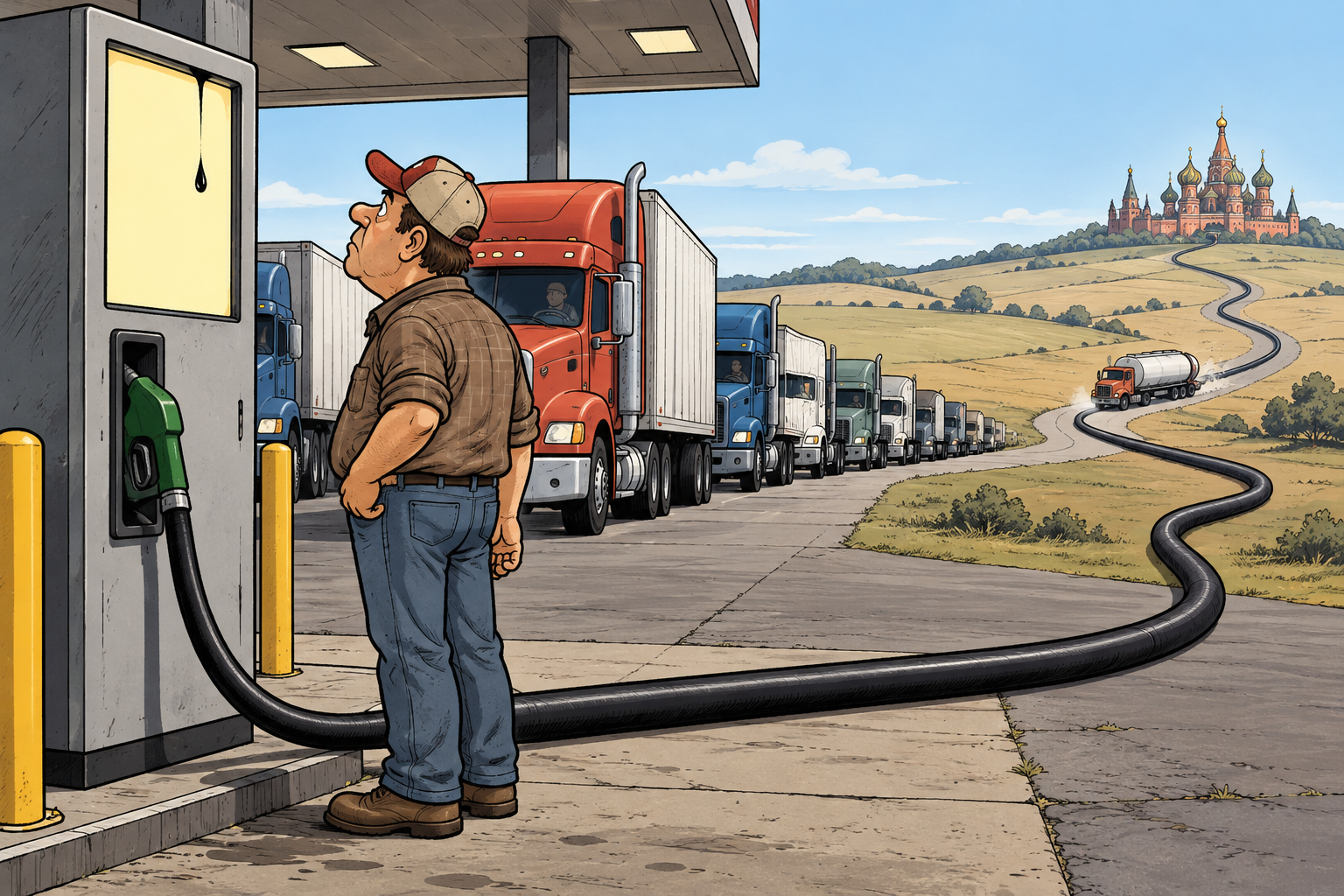
California’s in-state oil production has fallen 65% from its peak. The state, once a top-three U.S. producer, now imports roughly 80% of the crude it refines. Under Newsom (D), the state largely stopped issuing new drilling permits in Kern County and elsewhere. That decision did not reduce California’s oil demand — it simply rerouted it.
Top foreign suppliers of crude to California: Iraq, Ecuador, Guyana, Brazil, Saudi Arabia, and (for finished gasoline) increasingly the refining hubs of South Korea and Singapore.
Environmental footprint: Crude extracted in jurisdictions with weaker environmental enforcement, loaded onto bunker-fuel-powered ocean tankers, shipped roughly 8,000 miles to the U.S. West Coast. The net carbon intensity per delivered barrel is, in many cases, materially higher than the in-state Kern County crude California regulators effectively banned.
National-security note: The U.S. Navy’s Pacific Fleet refuels at California-area facilities. Refined-fuel dependency on Asian and OPEC suppliers introduces a logistics vulnerability that did not exist when the state refined its own crude.
Late in 2025, after years of refusal, Newsom reversed course partially: he supported SB 237 — authored by Sen. Shannon Grove (R-Bakersfield) and signed in fall 2025 — authorizing up to 2,000 new Kern County drilling permits per year starting in 2026. The bill is real relief, and the political about-face is notable. But CalMatters and independent analysts have noted that even if all 2,000 permits issued and produced at typical Kern County rates, the impact on statewide crude supply would be modest and would not, on its own, reverse the structural decline. The refineries that would have processed that crude are closing.
California Senate Democrats just voted again to keep the Low Carbon Fuel Standard hike in place — the policy that, on top of the refinery closures, is helping drive gasoline toward $8 a gallon. Repeal SB 2 to immediately roll back the 65-cent hike. Californians deserve relief, not lectures.
Gasoline is only half of the energy story. California residential electricity rates have climbed to roughly 33.75 cents per kWh, against a U.S. national average of about 18.05 cents per kWh. That is roughly an 87% premium — the Institute for Energy Research and consumer-utility trackers put California at or near double the national rate, by far the highest of any state in the lower 48. Between 2019 and 2024 alone, California’s investor-owned utilities spent over $27 billion responding to wildfires — much of it caused by their own equipment — and every dollar of that spending recovers through rates.
Starting March 2026, most PG&E customers see a new Base Services Charge of about $24 per month layered on top of per-kWh usage prices. PG&E announced an approximately 5% per-kWh reduction in January 2026 to offset the new fixed charge, but the net effect for moderate-usage households is roughly unchanged or modestly higher. The state is, simultaneously, planning a 2035 ban on the sale of new internal-combustion-engine vehicles — a policy that depends on the grid the state is currently struggling to keep operational at peak demand.
The gap to peer states isn’t close. California pays more than twice what its neighbors in the Pacific Northwest pay, and more than triple what hydro-heavy Washington pays. The states below California on the chart are not coincidentally all states with permissive energy-policy regimes — they kept the generation mix, the grid build-out, and the regulatory throughput that California systematically dismantled in the name of climate goals it could have pursued at a fraction of the consumer cost.
Gasoline (regular avg., May 2026):~$6.13 / gal vs. ~$3.20 national avg. — roughly $2.93 California premium per gallon, or ~$1,460/year extra on a typical 500-gal household.
Electricity (residential, 2026):~33.75¢ / kWh vs. ~18.05¢ national avg. — roughly $1,100-$1,400/year extra on a typical 600 kWh/month household.
Combined direct energy premium per California household: ~$2,500-$3,000/year before counting the indirect cost of higher commercial energy embedded in every good and service Californians purchase locally.
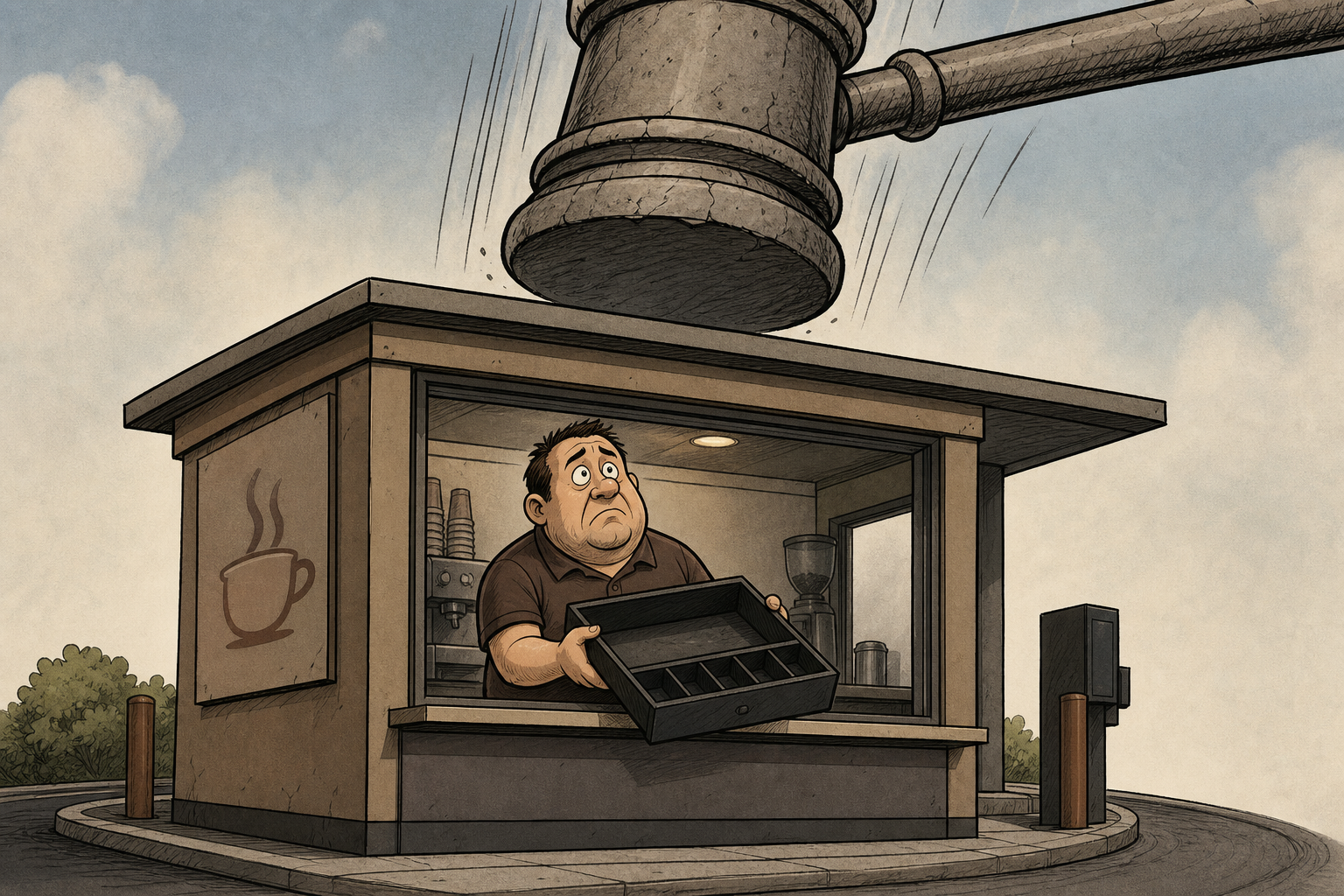
The 2025 Palisades wildfires damaged grid transmission infrastructure in the Los Angeles basin. The Institute for Energy Research and CalMatters have documented that California’s grid now routinely operates under conditions where any two of four stresses — heat-wave demand, wildfire Public Safety Power Shutoff (PSPS) events, tight in-state fuel inventories, and constrained imports — trigger rolling outages. A recent multi-day heat wave produced 24-hour outages across pockets of the LA area. The compound-stress problem is precisely what California critics have been warning about for a decade.
CARB — chaired by Lauren Sanchez (D) since October 2025, succeeding Liane Randolph (D) — has continued advancing the Advanced Clean Cars II regulation that targets 100% zero-emission new-vehicle sales by 2035. That regulation, the LCFS uplift, and the cap-and-trade program operate together. Each one, in isolation, raises consumer energy costs. Together, they have built a regulatory cost floor that has now demonstrably driven two major refiners to the exit.
In 2023, Newsom signed SB X1-2, the California Gas Price Gouging and Transparency Law. The legislation authorized the California Energy Commission to set a “maximum gross gasoline refining margin” (GGRM) and impose financial penalties on refiners exceeding it. Newsom described it at the time as a tool to break the “rip-off” cycle California drivers experienced at the pump. The bill was a centerpiece accomplishment.
In 2025, with Phillips 66 and Valero closure notices on the desk, the California Energy Commission — chaired by David Hochschild (D) — voted 3-0 to defer adoption of the GGRM and the penalty regime for five years, through 2030. The commission’s public rationale explicitly cited “fuel reliability” and the risk that a punitive cap could accelerate refinery exits before alternatives were ready. The translation is the giveaway: the policy the state had marketed as protecting consumers from gouging was, in the regulators’ own assessment, capable of making shortages worse. The law remains on the books. Enforcement does not.
“Newsom's war on energy is crippling California and undermining our military.”
Rep. Vince Fong (R-Bakersfield) · Fox News op-ed, 2025
The same legislature has, simultaneously, declined to repeal or delay the Low Carbon Fuel Standard update that the Kleinman Center for Energy Policy at the University of Pennsylvania estimates will add up to 65 cents per gallon to California pump prices. Sen. Brian Jones’s SB 2, which would have halted the LCFS hike, was voted down on party lines. The same body voted to defer the penalty on refiners. The pattern of which cost-drivers get preserved and which get shelved is the pattern of who actually absorbs the cost: the driver, not the regulator.
California has lost two refineries in six months and 65% of its in-state oil production over the last decade. Sacramento Democrats responded by quietly shelving the profit-cap law they passed in 2023 — because their own regulators concluded enforcing it would make the supply crisis worse. The policies caused this. Voters paid for it.
Assembly Republican Leader Heath Flora (R-Ripon) and the caucus have been on record for two years warning that the regulatory stack — LCFS uplift, cap-and-trade, SB X1-2 — would drive refiners out of California. Phillips 66 and Valero just confirmed it. The state's response: shelve the penalty law, not the cost burdens on drivers.
Energy policy in California is not made by accident or by markets alone. It is the product of identifiable decisions by named officials operating with overwhelming partisan supermajorities. The decisions are theirs. The consequences are everyone’s.
Governor: Gov. Gavin Newsom (D-CA) — signed SB X1-2 (2023); signed the LCFS uplift; presided over the deferral of his own profit cap; reversed on Kern permits via SB 237 (2025).
California Energy Commission Chair: David Hochschild (D, Newsom appointee, 2019-) — commission voted 3-0 to defer the SB X1-2 GGRM through 2030.
CARB Chair (current): Lauren Sanchez (D, Newsom appointee) — started Oct. 1, 2025; succeeded Liane Randolph (D), who retired Sept. 30, 2025 after presiding over Advanced Clean Cars II and the LCFS uplift.
CA Attorney General: Rob Bonta (D-CA) — has pursued litigation against major oil companies; has not, to date, opened any state action examining whether CARB and CEC regulatory design itself contributed to the refinery exits.
Assembly Speaker: Robert Rivas (D-Salinas) — Democratic supermajority leader.
Senate President Pro Tem (current): Mike McGuire (D-Healdsburg) — termed out 2026; transition to Monique Limón (D-Santa Barbara).
Senate Republican Leader: Brian Jones (R-Santee) — sponsor of SB 2 (LCFS repeal) and the most consistent floor critic of the regulatory cost stack.
Assembly Republican Leader: Heath Flora (R-Ripon) — succeeded James Gallagher (R-Yuba City) in September 2025; agriculture/Central Valley caucus.
U.S. Senators (CA): Sen. Alex Padilla (D-CA) · Sen. Adam Schiff (D-CA) — both have backed federal LCFS-equivalent rules and the EV mandate trajectory.
Federal counterparts: EPA Administrator Lee Zeldin (R) and Energy Sec. Chris Wright (R) — the Trump administration has revoked California’s Clean Air Act waiver for the 2035 ICE ban (action upheld in part by Congressional Review Act resolution in 2025).
California energy policy is the most expensive disaster in America. Gavin Newsom shut down their refineries, drove gas above six dollars, doubled their electric bills, and is now begging Saudi Arabia and China to ship in the gasoline he refused to let his own state produce. Drill, baby, drill.
Paraphrased commentary · not a verbatim post
Texas refines what California won't. Texas drills what California has banned. Texas keeps its electric grid powered when California shuts its own grid down in heat waves. The contrast is policy choice, not geography — and Texans aren't paying $6 a gallon for it.
Paraphrased commentary · not a verbatim post
Florida is not going to follow the California model on energy — not the ICE ban, not the refinery cost stack, not the foreign-tanker dependence. We will keep gas affordable, keep the grid reliable, and keep the policy choices that drove California into this position out of our state.
Paraphrased commentary · not a verbatim post
California signed a profit-cap law in 2023, banned new oil permits, layered an LCFS uplift, kept cap-and-trade, and ordered gasoline cars off dealer lots by 2035 — and then, when Phillips 66 and Valero turned off the lights on roughly 20% of in-state refining capacity within six months, the California Energy Commission quietly shelved the same profit cap through 2030 because enforcing it would have accelerated the exits. The result: $6+ gasoline trending toward $8, electricity at double the national rate, an 80%-imported crude diet shipped in by foreign tanker, a grid that fails on heat days, and a Newsom administration now backing Kern County drilling permits it spent six years refusing to issue. The regulators caused this. The voters who keep returning the supermajority that wrote these laws own the next round.