OpenAI Will Pay $3.2 Million to Settle DOJ Claims It Steered Jobs Away From American Workers. Some of the Openings Were Advertised on Late-Night Radio.
The Justice Department’s Civil Rights Division announced on August 4 that OpenAI OpCo LLC and its subsidiary Statsig Inc. will pay $3,200,000 to resolve allegations that the companies discriminated against American workers in hiring — $1,200,000 as a civil penalty to the United States and up to $2,000,000 into a capped back-pay fund for the US workers the department says were shut out.
The conduct at issue was not an interview question or a hiring quota. It was a set of advertising choices. According to the department, OpenAI kept certain openings off its own public careers website — the single place every other job at the company was listed — required applicants for those roles to mail in paper applications while every other role accepted electronic ones, and promoted some of them through radio spots that aired late at night.
Every one of those openings was attached to a green-card sponsorship filing that, by law, requires a good-faith search for available American workers first. OpenAI denies wrongdoing and says it settled to move on.
- $3.2M total settlement — a $1.2 million civil penalty to the United States plus a back-pay fund capped at $2 million for affected US workers — DOJ Civil Rights Division, Aug. 4, 2026
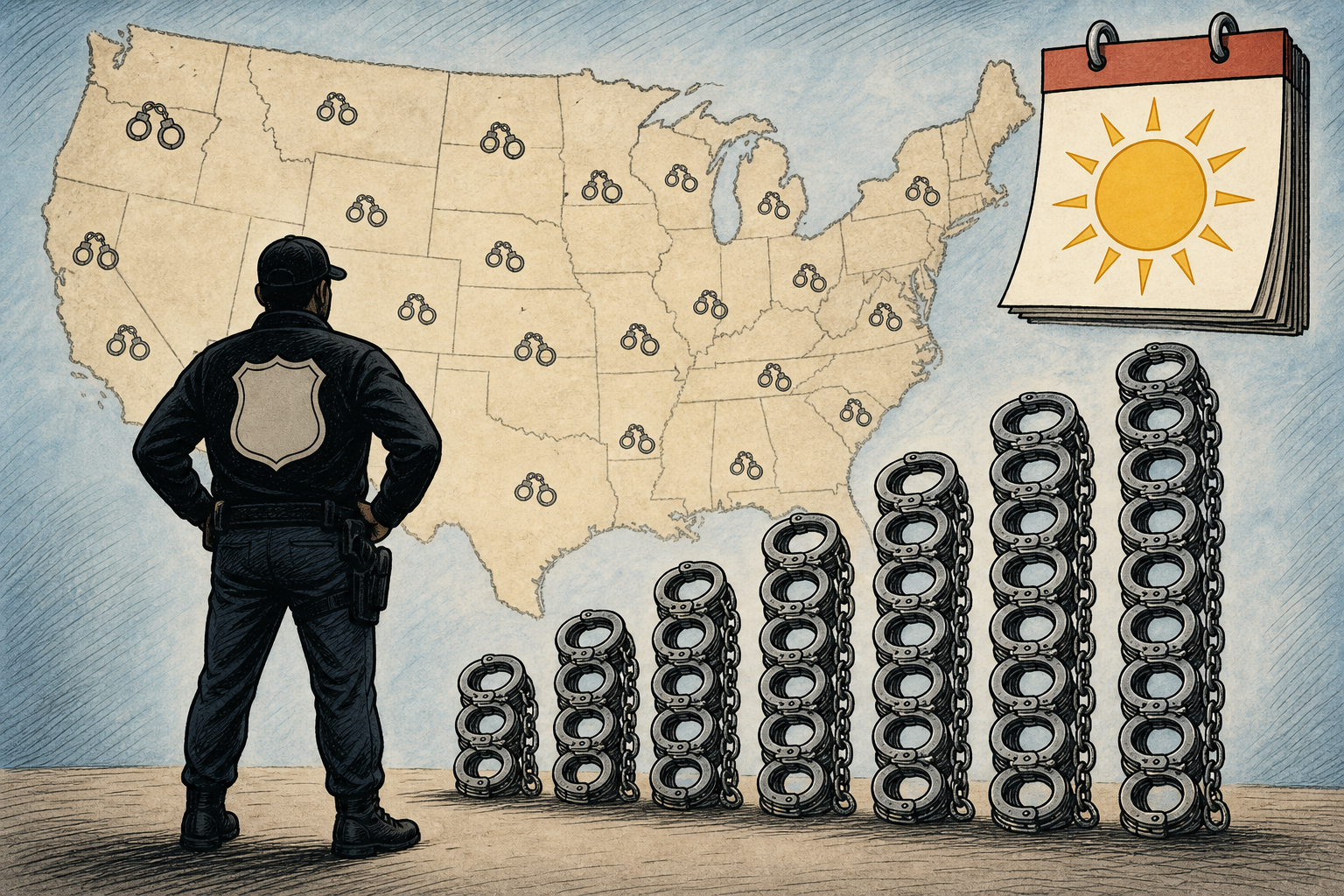
- 13th settlement since the Justice Department relaunched its Protecting U.S. Workers Initiative in 2025 — not the largest of them — DOJ / employment-immigration counsel
- $25M Apple's 2023 settlement over a nearly identical recruitment scheme — close to eight times OpenAI's total — DOJ Civil Rights Division

Read the department’s account and a pattern emerges that has nothing to do with who OpenAI interviewed and everything to do with whoever learned the job existed. The company runs a public careers page. Software engineers, researchers and operations staff find OpenAI roles there the same way they find roles at every other technology company. But a specific set of positions, investigators found, never appeared on it.
The second practice compounds the first. For those same positions, the department alleges, OpenAI required candidates to submit applications by mail — printed, stamped and posted — while every other opening at the company took electronic applications through the normal pipeline. An American engineer who somehow found the listing still had to want the job enough to send a letter, and then wait.
The third is the one that reads worst. Some of these openings, the department says, were advertised over the radio — in spots that ran late at night. Radio advertising is a lawful recruitment channel and appears on the menu of options an employer may use. A radio spot at two in the morning is a technically completed step that almost no software engineer will hear.
1 · Off the careers site. Sponsorship-linked positions were not posted on OpenAI’s own public careers website, where every other opening at the company was listed and where American candidates actually look.
2 · Paper only. Applicants for those roles were required to apply by mail. Every other role at the company accepted electronic applications.
3 · Late-night radio. Some of the positions were advertised through radio spots aired late at night — a channel and a timeslot that minimize the odds a qualified US applicant ever hears the ad.
“It is illegal to discriminate against U.S. workers by preferring temporary visa holders for jobs.”
Harmeet K. Dhillon (Trump appointee) · Assistant Attorney General, DOJ Civil Rights Division · August 4, 2026
The openings all sat inside a process called PERM — Permanent Labor Certification — the step an employer must clear before it can sponsor a foreign worker for a green card. The premise of PERM is a labor-market test. Before the government will certify that a company needs to import a worker permanently, the company has to run a recruitment campaign and demonstrate that no able, willing, qualified and available American worker answered it.
That requirement only means anything if the recruitment is real. An employer that would rather sponsor its preferred candidate has an obvious incentive to run the search in the most technically compliant, least effective way available — to satisfy the checklist without generating applicants. The Justice Department’s position is that a company advertising every ordinary job on its website while routing sponsorship-linked jobs to postal mail and overnight radio is doing exactly that.
The statute is the Immigration and Nationality Act’s anti-discrimination provision at 8 U.S.C. § 1324b, which bars employers from discriminating against protected individuals — a category that includes US citizens — on the basis of citizenship status. It is enforced by the Civil Rights Division’s Immigrant and Employee Rights Section, which holds an authority most employment statutes do not confer: it can open an investigation on its own initiative, without any worker filing a charge. Nobody has to know they were passed over. That is how a case like this one gets built at all, since the entire alleged injury is to people who never saw the listing.
The money is the smaller half of the agreement. OpenAI pays $1,200,000 to the United States as a civil penalty and funds a back-pay pool capped at $2,000,000 for US workers the department identifies as harmed — a capped fund, meaning the ceiling is fixed and the eventual distribution depends on how many claimants the division can locate and verify.
The compliance terms are the part that changes behavior. Going forward, OpenAI must post every PERM-linked opening on its public careers website as a unique posting, and must accept electronic applications for those roles on the same footing as every other role at the company. The company must also train its staff on the INA’s anti-discrimination requirements, revise its internal employment policies, and submit to Justice Department monitoring for a multi-year term — reported as three years.
OpenAI, whose chief executive is Sam Altman, did not admit wrongdoing. In its statement the company said it disagrees with the department’s findings and settled to end the matter: it reached the agreement, it said, “to resolve the matter and move forward with our PERM program, which is critical for employees and candidates requiring immigration support.”
The Civil Rights Division secured a settlement with OpenAI to resolve allegations that the company discriminated against U.S. workers in hiring. It is illegal to discriminate against U.S. workers by preferring temporary visa holders for jobs.
The fact pattern is not new, and OpenAI is not the biggest name in it. In October 2021, Meta — then Facebook — settled a nearly identical case: sponsorship-linked positions routed to mail-only applications, kept away from the channels the company used for everything else. Meta paid a $4,750,000 civil penalty and funded up to $9,500,000 in back pay, roughly $14,250,000 combined.
On November 9, 2023, Apple settled a case that maps onto OpenAI’s almost line for line: failing to advertise PERM positions externally, and requiring paper applications for them. Apple paid a $6,750,000 civil penalty and funded an $18,250,000 back-pay pool — a total near $25,000,000, and the largest back-pay distribution the Civil Rights Division has overseen in this line of enforcement.
Meta, October 2021. $4,750,000 civil penalty plus up to $9,500,000 in back pay — about $14,250,000 combined, for a mail-only PERM application scheme.
Apple, November 2023. $6,750,000 civil penalty plus an $18,250,000 back-pay fund — roughly $25,000,000, for failing to advertise PERM roles externally and requiring paper applications.
OpenAI, August 2026. $3,200,000 all in. It is the 13th settlement since the initiative’s 2025 relaunch — and materially smaller than either of the two above.
The pipeline has not emptied out. On April 28, 2026, the Justice Department filed an administrative complaint against the data company Cloudera alleging a similar recruitment scheme. That matter is unresolved and Cloudera has not been found liable of anything. Employment-immigration counsel now write client advisories on this specific exposure, which is its own signal: PERM recruitment has moved from paperwork to enforcement risk.
The enforcement priority that produced this settlement dates to 2017, when the first Trump administration’s Justice Department stood up the Protecting U.S. Workers Initiative inside the Civil Rights Division. It ran, produced settlements including Meta’s and Apple’s, and was relaunched in 2025 with a broader mandate. OpenAI’s is the 13th settlement since that relaunch.
It no longer runs alone. On September 19, 2025, the Labor Department launched Project Firewall, a complementary enforcement initiative aimed at H-1B compliance — a different visa category and a different statute, but the same underlying question of whether the American labor market is actually being tested before a foreign hire is approved. Two departments now work the same ground from opposite ends.
“This substantial settlement ensures that OpenAI redresses harm and changes its recruitment practices so that U.S. workers receive a fair opportunity for highly sought-after technology positions.”
Harmeet K. Dhillon (Trump appointee) · Assistant Attorney General, DOJ Civil Rights Division · August 4, 2026
For a company that has raised money at valuations in the hundreds of billions, $3,200,000 is not a deterrent. The posting requirements might be. The practical effect of the agreement is that every green-card-sponsored role at OpenAI now has to appear in public, on the company’s own site, accepting the same applications as every other job — where an American engineer can see it, and apply to it, without buying a stamp or staying up past midnight with the radio on.
The Justice Department did not accuse OpenAI of turning away American applicants. It accused the company of building a recruitment process American applicants would never find — and then certifying that none had applied. OpenAI paid $3,200,000, admitted nothing, and agreed to post the jobs where people can see them. Meta paid more. Apple paid nearly eight times more. The same fact pattern has now surfaced at three of the largest technology companies in the country, and a fourth case is still open.