The Dow Closed Above 54,000 for the First Time. The Deal It Rallied On Doesn’t Exist Yet.
The Dow Jones Industrial Average closed Tuesday, August 4, at 54,085.88 — up 907.47 points, or 1.71%. It was a record close, the second in as many sessions, and the first time in the index’s history that it has finished a day above 54,000.
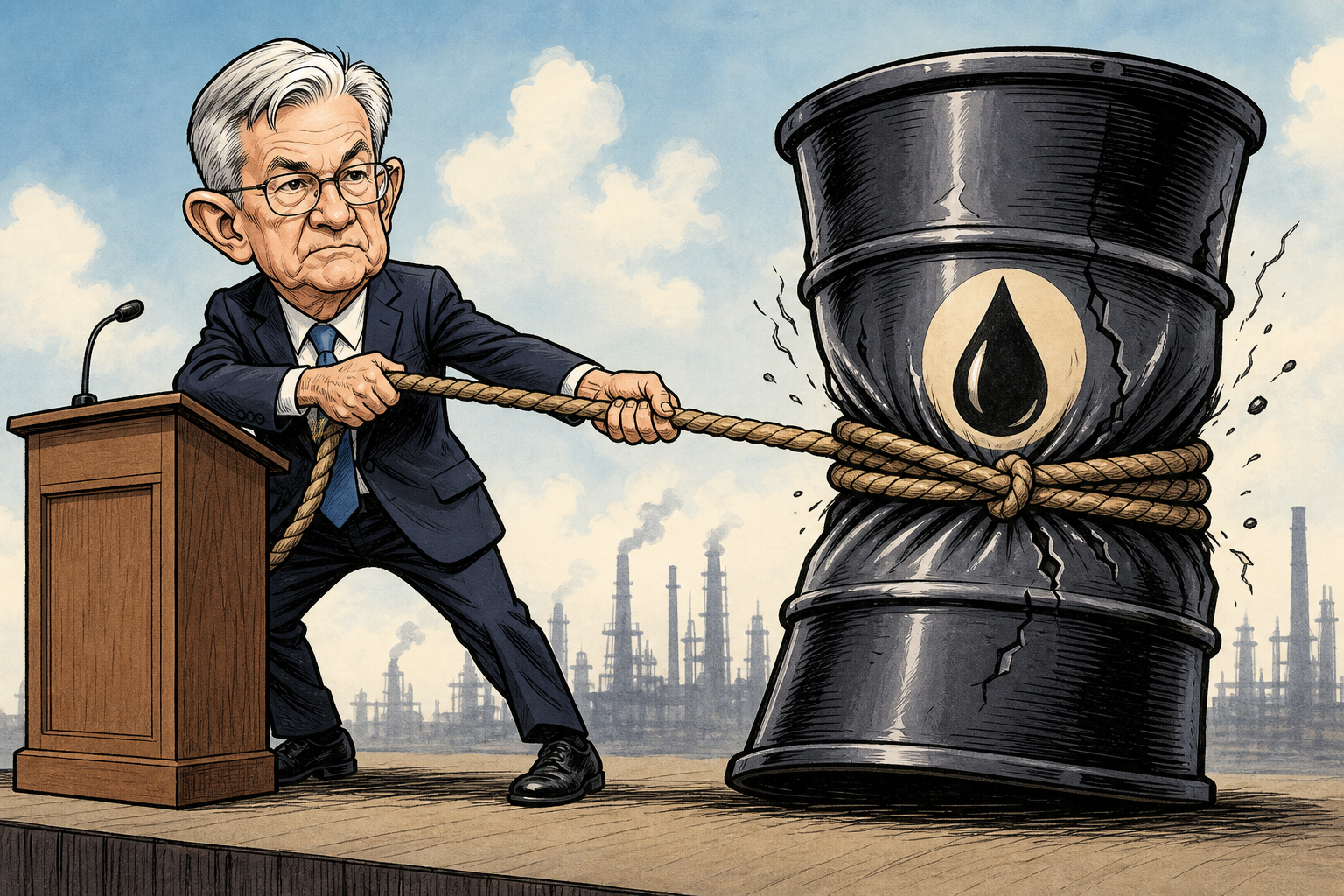
The catalyst landed at roughly 10:15 that morning, when Treasury Secretary Scott Bessent (R) told CNBC’s “Squawk Box” that the United States was talking to Iran and might have an agreement “today or tomorrow” to reopen the Strait of Hormuz. Crude fell more than 5% before the close.
No agreement has been signed. Iran’s Foreign Ministry was publicly denying that direct US-Iran talks were even occurring, and the last de-escalation framework collapsed inside three weeks. What the market repriced Tuesday was a possibility, described by one official, on live television.
- 54,085.88 the Dow's Tuesday close — up 907.47 points (1.71%), a second straight record and the first finish ever above 54,000 — CBS News, Breitbart market wrap
- 5%+ one-day drop in both WTI and Brent crude, as traders priced out the war-risk premium the Strait has carried since March — CNBC, Yahoo Finance
- 0 signed US-Iran agreements. Tehran's Foreign Ministry says any contacts run indirectly, through Oman — Washington Post, Al Jazeera

Three indexes moved together, which is unusual enough to be worth noting on its own. The Dow’s 907.47-point gain was the headline, but the S&P 500 did something arguably more significant: it closed near 7,736, up roughly 1.7% to 1.8%, and set its first record close in about two months, finally clearing the mark it had set on June 2. The Nasdaq Composite ran hardest, finishing better than 2% higher.
The energy tape moved the opposite direction, which is the tell. West Texas Intermediate fell around 5% to settle near $76 a barrel. Brent fell a comparable amount to settle just under $80, its lowest close since July 10. The 10-year Treasury yield eased modestly to roughly 4.6%. Equities up, crude down, yields softer — that is not a growth story. That is a war-premium story.
One housekeeping note on the number itself, because it will be quoted differently everywhere. Breitbart’s headline described the Dow as soaring roughly 1,000 points. The actual close-to-close move was 907.47. Rounding a nine-hundred-point session up to a thousand is standard financial-headline shorthand, not an error — but the precise figure is the one worth carrying, because the next time somebody cites “the thousand-point Iran rally” it will already have drifted.
The Treasury Secretary was not vague, and he was not making a forecast about markets. He was describing a negotiation in progress and attaching a timeline to it.
“We are in talks with the Iranians… There is a chance we may have a deal today or tomorrow to open the Strait and move towards a more normalized position in this conflict.”
Treasury Secretary Scott Bessent · CNBC 'Squawk Box' · August 4, 2026
Asked directly whether Iran would be permitted to charge a toll for passage through the waterway — the arrangement Tehran has floated repeatedly since the closure — Bessent said the arrangement “would be freedom of movement.” That is a substantive answer, not a deflection: a toll regime and free passage are different agreements with different price implications, and he ruled one of them out on air.
He also put a number on the backlog. “Once the strait reopens, there are hundreds if not a thousand ships sitting in there waiting to go out,” he said. And he made the point that traders acted on fastest: relief would not stop at crude. Bessent named fertilizer, refined products, and industrial gases as the other cargoes stacked up behind the closure, and predicted that “we could see a big relief trade as those prices go down.”
Treasury Secretary Scott Bessent says the U.S. is in talks with Iran and that a deal to reopen the Strait of Hormuz could come “today or tomorrow.” Iran’s Foreign Ministry has denied that direct negotiations with Washington are taking place.
Attributing an entire 907-point session to one television interview is the easy story, and it is not quite the true one. Tuesday was also a heavy earnings day, and two names carried an outsized share of the move.
Caterpillar — a Dow component, and one of its highest-priced and thus most heavily weighted — rose more than 5% after raising its revenue guidance, with some intraday marks putting the gain far higher. Palantir was the day’s spectacle, closing up roughly 29% after a quarter its chief executive, Alex Karp, described as “otherworldly.” Nearly every outlet covering the session named those two results alongside Bessent as co-equal drivers, and on the Dow specifically, a single high-priced industrial jumping 5% is worth real index points on its own.
Not everyone bought the size of the move. Melissa Brown of SimCorp told CNN she was surprised by “the rally’s magnitude… against the backdrop of relatively negative sentiment, and without a real fundamental reason to support it.”
That is the honest framing. A headline about a negotiation is not a fundamental. An earnings beat is. Tuesday delivered both on the same day, and separating how much each contributed is guesswork, including for the people who trade it professionally.

Inside the administration, the same day produced a noticeably more cautious read. Secretary of State Marco Rubio (R) said there had “been progress made in those talks, but not finality yet,” and framed the current track as narrow: access through the Strait now, with nuclear negotiations to follow. Those are two different scopes of agreement, and Rubio was careful to say so.
President Donald Trump (R) had set the sequence in motion two days earlier, posting on Truth Social that Iran and other regional governments had asked him to hold off a planned strike because the outline of a deal was agreed. By the following day his assessment had changed.
We have just been asked by Iran, and other Middle Eastern Countries, to hold off any attack in that the perimeters of a deal has been agreed to... Based on this request, I have agreed... to cancel the attack, subject to being able to rapidly make a DEAL.
The post that started the week — including a demand for the immediate, complete and total opening of the Hormuz Strait
Iranian Leadership is unbelievably duplicitous!
Posted a day later, alongside a warning that Tehran was at its last chance
Iran’s Foreign Ministry disputed the President’s characterization both times, insisting that no direct negotiations with Washington were underway and that any contact was running indirectly through Oman and Qatar. As of August 3 — the day before Bessent went on air — Tehran was publicly denying the existence of the very channel the Treasury Secretary described the next morning. Both accounts cannot be right, and neither side has produced a document.
There is also precedent, and it is recent. This is the second attempt at de-escalation in seven weeks. The June 17 Islamabad Memorandum, agreed between Trump and Iranian President Masoud Pezeshkian, had fully collapsed by July 8 after Iranian forces struck commercial vessels and Treasury reimposed sanctions. Anyone pricing Tuesday’s headline as a resolution is pricing a framework that has already failed once, negotiated with a counterparty that denied the talks were happening.
The Strait has been effectively shut to commercial traffic since Iran’s formal closure declaration on March 4, following the February 28 Operation Epic Fury strikes. Every barrel priced since then has carried a premium for the possibility that it never gets through. Tuesday, the market started removing that premium on the strength of a maybe.
Bessent’s list of the other stranded cargoes is the part most likely to matter to household budgets, and it got the least attention. Fertilizer feeds directly into next season’s crop input costs and, with a lag, into grocery prices. Refined products are diesel and jet fuel — freight and airfare. Industrial gases are an input to steel, semiconductors, food processing and hospital oxygen supply. A crude-only reading of the reopening trade understates it, which is presumably why the Treasury Secretary went out of his way to name all three categories on television.
The hundreds-to-a-thousand vessels Bessent described are the mechanism. They do not clear instantly, and the unwinding of a five-month shipping backlog is not a same-week event even in the best case. But the direction is unambiguous: if the waterway opens on anything like the terms he described, the disinflationary impulse runs well past the gas pump.
Bessent on the sanctions campaign against Tehran: the administration has described its pressure track as an economic fury aimed at cutting off Iran’s revenue, the backdrop against which the current Hormuz talks are being conducted.
None of which changes the central fact of the session. A record close is a real number. The thing it was built on is a statement about a negotiation that one of the two parties says is not taking place in the form described.
The Dow gained 907.47 points on Tuesday and closed above 54,000 for the first time. Roughly half that move traces to two earnings beats and roughly half to nine words from a Treasury Secretary about a deal that has not been signed, with a counterparty that denies the talks exist, under a framework that already collapsed once in July. The record is real. The premise is still an open question.