
Gas Prices Rose 37% Since the Iran War Began. Chevron and Exxon’s Profits Rose Up to 384%.
On Feb. 26, 2026, the day before the United States and Israel struck Iran and Tehran began threatening tanker traffic through the Strait of Hormuz, the AAA national average for a gallon of regular gasoline was $2.98. Five months later it was $4.09 — up 37%, and the fourth time since 2022 that pump prices have crossed $4 a gallon.
Days later, Chevron and ExxonMobil reported second-quarter earnings that were the best either company had posted in years. Both companies say the story is simple: crude got more expensive and refining got harder, so prices rose everywhere, including at their own bottom line.
Their own numbers say something more specific. Both companies kept a bigger share of every dollar in sales as profit than they did a year ago — not the same share of a bigger number.
Chevron posted net income of $12,100,000,000 for the second quarter — its highest quarterly profit in at least six years, and a 384% jump from the $2,500,000,000 it earned in the same quarter of 2025. ExxonMobil posted $14,500,000,000, more than double its year-earlier total and its best quarter since the 2022 energy crisis. Combined, the two companies reported more than $26,500,000,000 in profit for three months of business, or roughly $160 million a day for ExxonMobil alone.
President Donald Trump (R) said the obvious part out loud. “I don’t like it,” he told reporters Aug. 3. “Chevron, too much money. ExxonMobil, too much. Too much money.” He singled out Chevron chief executive Mike Wirth for not crediting his administration’s energy policies during a Fox News interview days earlier, then posted on Truth Social.
The only thing he conveniently forgot to mention is that, without the genius, foresight, strength, and stability, of the TRUMP Administration, the Oil Industry, and our Country itself, would be DEAD!
Paraphrased commentary · not a verbatim post
Posted after Chevron CEO Mike Wirth's Fox News interview on the company's Q2 2026 earnings; no independent Truth Social URL was verifiable at time of publication
What Trump didn’t say — and what the companies’ own numbers answer — is whether “too much money” means the companies charged more because crude oil got more expensive, or because they used the disruption to keep a bigger cut for themselves.
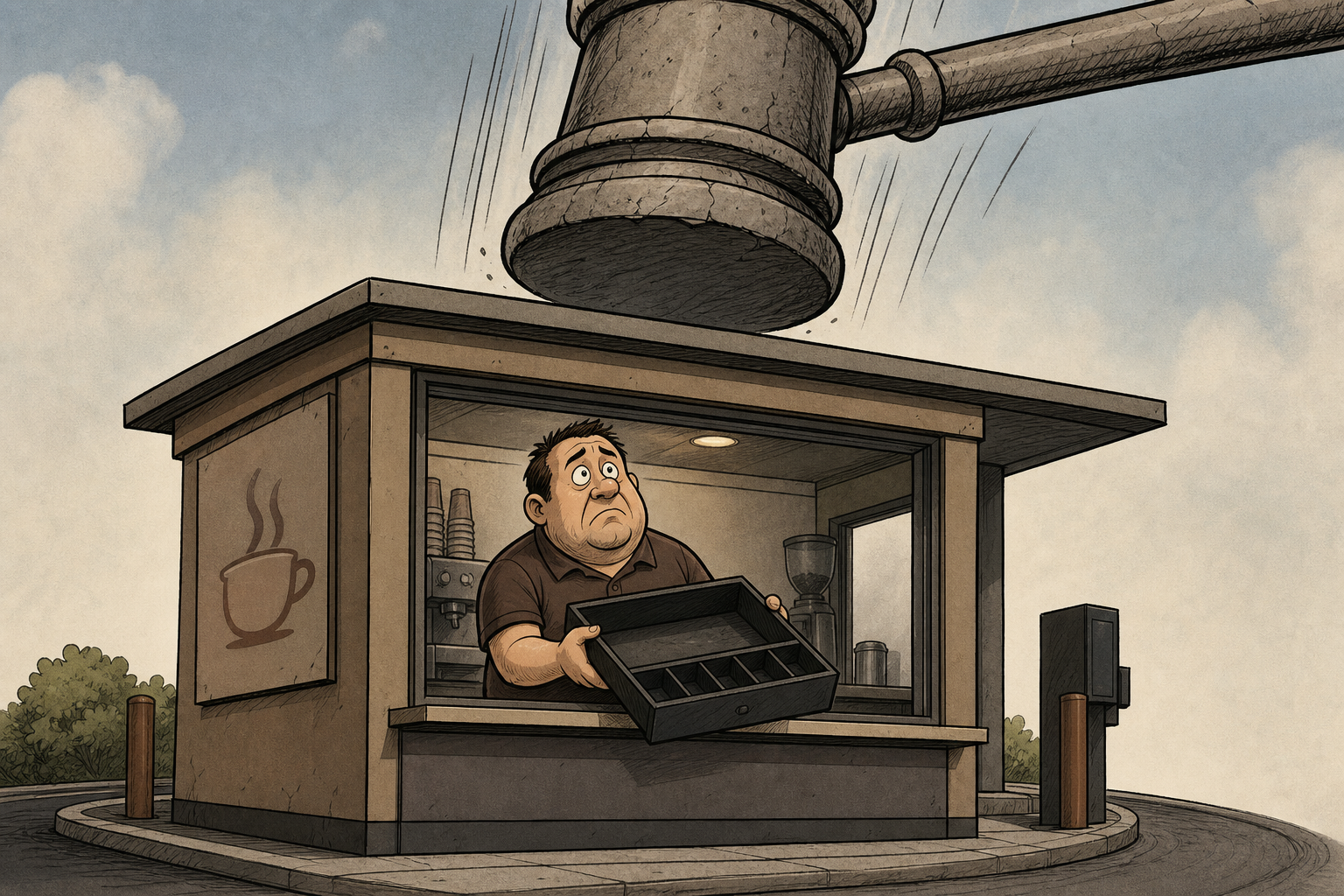
The first quarter of 2026 looked nothing like the second, and it is worth sitting with before looking at the record numbers. When the Iran war first disrupted Middle East shipping and refining, both companies took a hit. Chevron’s downstream segment — refining and marketing — posted an $817 million loss in Q1 2026, reversed from a $325 million profit a year earlier, on unfavorable timing effects and higher transportation costs. ExxonMobil’s equivalent segment, Energy Products, lost $1.3 billion in the same quarter, driven mostly by mark-to-market losses on financial hedges tied to the war’s early disruption. Chevron’s total net income fell to $2,200,000,000; ExxonMobil’s fell to $4,200,000,000.
Then came the second quarter. As Iran’s blockade tightened and refineries worldwide struggled to keep up with demand for gasoline and diesel, Chevron’s downstream earnings swung to $4,900,000,000, up from just $737,000,000 a year earlier — a 565% increase Chevron itself attributed to “higher margins on refined product sales,” not higher volume. Its refineries ran at 97% of capacity, a record, while crude inputs rose only 2%. ExxonMobil’s Energy Products segment swung from that $1.3 billion loss to $5,500,000,000 in earnings, including $3,000,000,000 from its US operations alone, on what the company called record diesel production and strong Gulf Coast utilization.
If Chevron’s profit margin had simply stayed where it was a year earlier, net income would have grown roughly in step with revenue — about 56%. Instead it grew 384%, nearly seven times faster than sales. ExxonMobil’s revenue grew 42%; its net income grew 104%, more than double the pace. Profit only outgrows revenue that dramatically if a company keeps a larger share of each sales dollar as profit — a wider margin, not a passed-through cost.
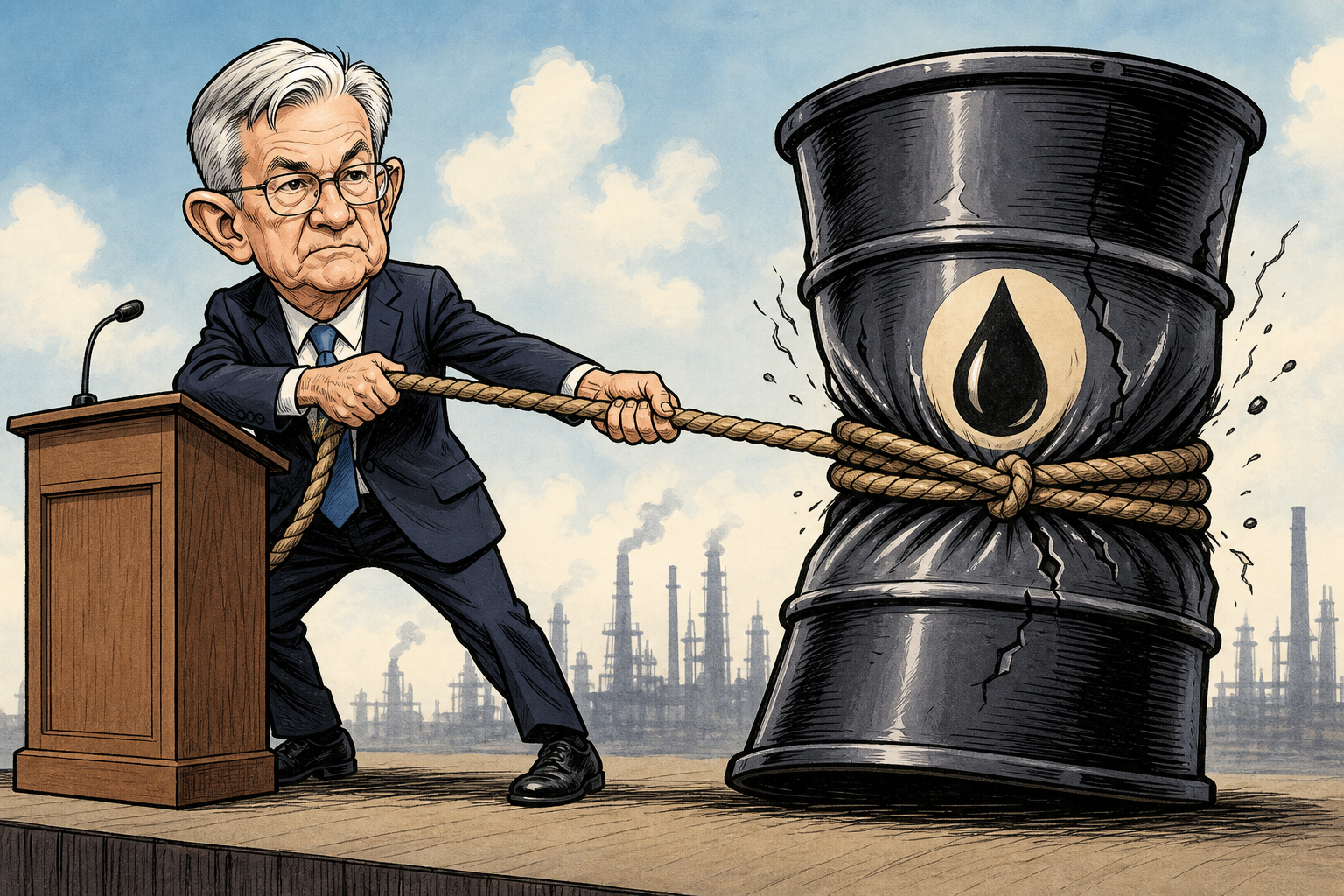
The industry-wide data backs up what the company-specific numbers show. Brent crude averaged roughly $104 a barrel in the second quarter, up 53% from about $68 a year earlier. Gasoline futures prices, by contrast, were up 98% for 2026 through late July — nearly double the rate crude oil rose over the same stretch, according to Forbes’ analysis of the “3-2-1 crack spread,” the standard measure of a refiner’s margin between crude cost and finished-product price. That spread hit an all-time high in July. “Distillate cracks in both the US and Europe have surged toward record highs,” JPMorgan commodities strategist Natasha Kaneva wrote, “an indication that the shock is increasingly becoming a refining story rather than simply a crude supply story.”
ExxonMobil’s own chief executive, Darren Woods, said as much the day the earnings came out. There is “a disconnect between crude prices and pump prices,” he told CNBC, and it isn’t likely to close quickly. Asked whether drivers should expect relief, Woods was blunt: “I wouldn’t hold my breath.”
Not every dollar of the increase is margin capture, and the companies have a real defense on part of it. Roughly half of Chevron’s earnings growth came from its upstream (production) business, where earnings rose to $8,200,000,000 — about 200% higher than a year earlier — simply because the price of the oil Chevron pumps out of the ground went up. That is a producer benefiting from a market price it does not set, not a markup charged to consumers. Bill Drolet of the Post Oak Group investment bank noted Chevron is also structurally fortunate here: more than 70% of its production sits in the US, and less than 5% of its output ever passes through the Strait of Hormuz, insulating the company from the disruption that is driving the higher prices everyone else is paying.
The American Petroleum Institute, the industry’s trade group, argues the refining-margin story is not company-specific price-setting at all. “Gasoline prices don’t move in lockstep with crude oil, especially during a major global disruption that is still affecting supply, refining and inventories,” the group said. The margin widening is also genuinely industry-wide, not unique to these two companies: pure-play refiners with no oil production at all, like Valero and Marathon Petroleum, posted even larger percentage stock gains than Chevron or ExxonMobil this year — evidence the shortage is real and structural, not a scheme run by any one company.
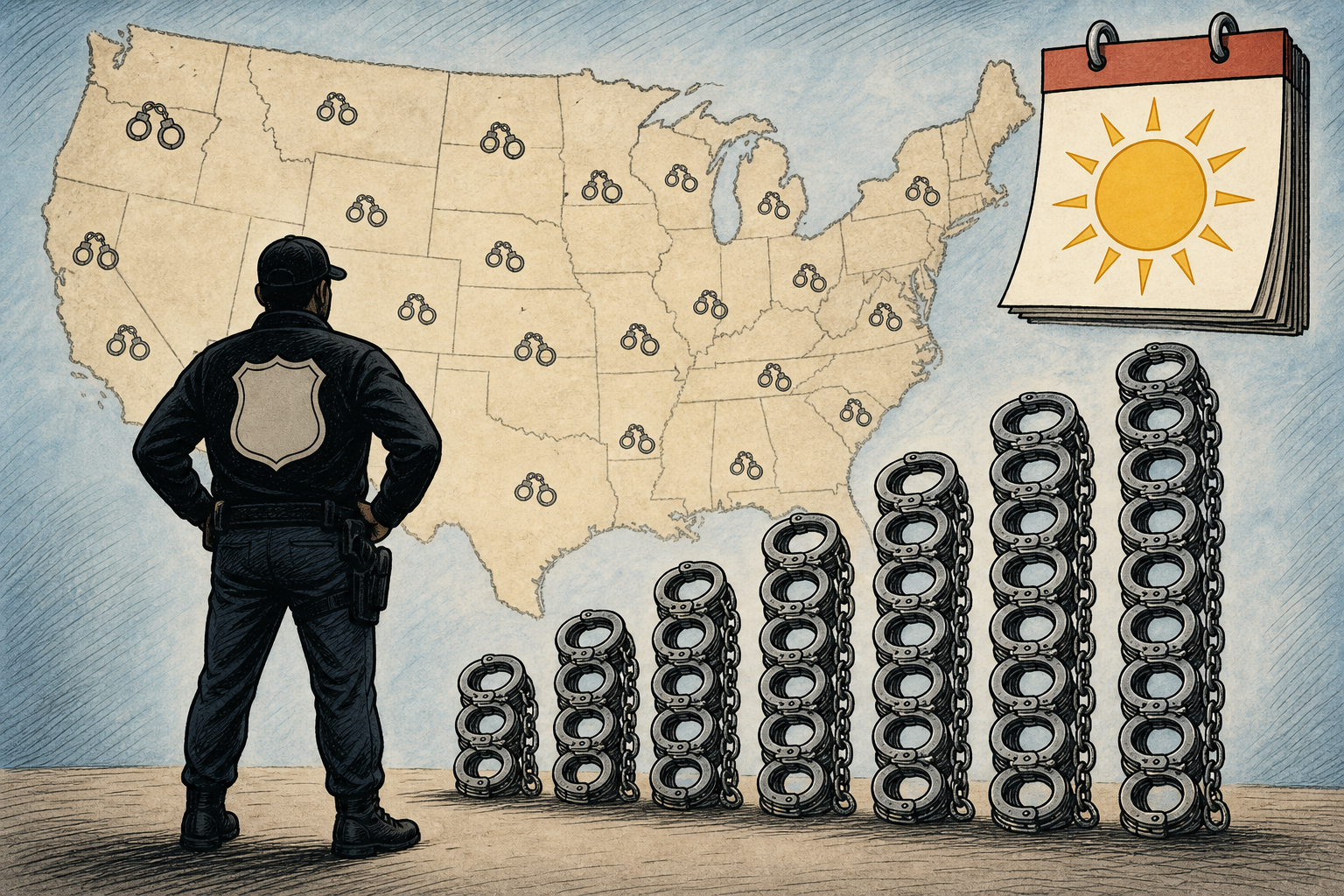
The national average has moved in both directions since the war began. It briefly touched a regional-driven spike above $4.25 a gallon in April, per GasBuddy’s own real-time tracking, before easing back to the $4.09 national average cited above by early August — a reminder that the pump-price line is noisier month to month than the steadily climbing refining-margin line underneath it.
National average $4.27/gal with prices absolutely skyrocketing in MI/IN/IL/OH/WI, we're now on par for $4.50/gal in the next week or two at this rate.
Trump is not the first person in Washington to say oil companies are pocketing too much. Sen. Sheldon Whitehouse (D-RI) has pushed a windfall-profits tax on oil companies in one form or another since 2022, and reintroduced his Big Oil Windfall Profits Tax Act again in March 2026 as gas prices climbed. His bill would tax half the difference between a company’s current per-barrel price and the prior year’s average and rebate the money to consumers. It has never passed — not in 2022, not in 2023, not now.
Mr. President: I have a windfall excess profits bill you could support. Big Oil already pocketed over $40 billion in excess profits from gouging U.S. consumers since Hormuz. (On top of their regular profits, which are plenty!)
Trump’s own remedy has stopped short of a tax. On June 30, weeks before the Q2 earnings came out, he posted on Truth Social demanding retailers cut prices immediately and setting an unofficial target of $2.50 a gallon — a price gasoline has not touched nationally since 2021.
Gasoline retailers must get their prices down, IMMEDIATELY — they're too high given where the price of oil is. Drop your price for our great American people!
Paraphrased commentary · not a verbatim post
Posted a month before Chevron and ExxonMobil reported their record Q2 2026 earnings
Neither approach has moved the number that matters at the pump. Gas is still above $4 a gallon, the windfall tax is still stalled in committee, and Chevron and ExxonMobil are still reporting the numbers that started this argument in the first place.
Chevron and ExxonMobil are not lying when they say crude costs and refining constraints from the Iran war are real. They are. But the companies’ own numbers settle the sharper question: profit grew far faster than revenue, refined-product prices rose nearly double the rate of crude oil, and both companies’ executives describe a widening gap between what they pay for oil and what drivers pay at the pump. That gap is margin, not pass-through — and in the second quarter of 2026, Chevron and ExxonMobil captured more of it than they had in years.
- 01.
- 02.Chevron Corp. (Primary)·"Chevron Reports First Quarter 2026 Results" — net income $2.2B; downstream posted an $817M loss
- 03.Chevron Corp. (Primary)·"Chevron Reports Second Quarter 2025 Results" — net income $2.5B, the Q2 2025 baseline
- 04.SEC EDGAR (Primary filing)·Chevron Corp. Form 10-Q, quarter ended June 30, 2025 — sales and other operating revenues of $44,375 million
- 05.
- 06.
- 07.
- 08.SEC EDGAR (Primary filing)·ExxonMobil Form 8-K exhibit, first-quarter 2026 earnings — $1.00 per share, filed May 1, 2026
- 09.AAA Gas Prices (Primary data)·National average price archive — $2.98/gal (Feb. 26, 2026) to $4.09/gal (early August 2026)
- 10.
- 11.
- 12.
- 13.
- 14.
- 15.
- 16.US Senate Environment & Public Works Cmte. (Whitehouse, Minority)·"Whitehouse, Warren Demand Answers About Big Oil's Massive Windfall Profits" — June 15, 2026; $40B in Q1 2026 industry windfall
- 17.
- 18.US Energy Information Administration·"Stable crude oil prices, increasing refinery margins in third quarter of 2025" — crack-spread methodology reference