
The Supreme Court Killed Trump’s Birthright Citizenship Order — and the Real Vote Was Closer to 5–4 Than 6–3.
On June 30, 2026, the Supreme Court struck down President Trump’s executive order ending birthright citizenship for children born to illegal or temporarily present immigrants. The case, Trump v. Barbara, No. 25-365, is a merits ruling on the Fourteenth Amendment itself — a different case, deciding a different question, from the one most Americans think settled this a year ago. Trump v. CASA, Inc., decided June 27, 2025, was a procedural ruling about whether federal judges can issue nationwide injunctions. It never addressed whether birthright citizenship is constitutional. Trump v. Barbara is the case that finally did.
The headline number is 6–3: six justices voted to strike down the order, three voted to let some or all of it stand. But that number hides the real story. Only five justices — Chief Justice John Roberts, writing for the majority, joined by Justices Sonia Sotomayor, Elena Kagan, Amy Coney Barrett, and Ketanji Brown Jackson — actually held that the order is unconstitutional under the Fourteenth Amendment. Justice Brett Kavanaugh supplied the sixth vote to strike the order, but only on narrow statutory grounds, explicitly refusing to join Roberts’s constitutional reasoning. Take Kavanaugh’s vote out of the constitutional column, and the Fourteenth Amendment holding itself passed 5–4 — with Justice Barrett as the deciding vote among the Court’s Republican appointees.
Vice President JD Vance (R) made exactly that point on Fox News hours after the ruling, calling it “a very disappointing ruling” and a “major, major mistake” that leaves the concept of birthright citizenship “hanging by a thread.” What follows is the ruling itself, the reaction from the White House and Capitol Hill, the unusually open fight breaking out between conservatives and the Republican-appointed justices who delivered this outcome, and where the rest of the Court’s biggest term lands for Trump — three wins and one loss on the marquee cases decided the same week.
- 6–3 to strike, 5–4 on the Constitution — Trump v. Barbara struck EO 14160 on a 6-3 judgment, but only 5 justices — Roberts, Sotomayor, Kagan, Barrett, Jackson — joined the constitutional holding · Source: SCOTUSblog
- “Hanging by a thread” — VP JD Vance's description of birthright citizenship after the ruling, pointing to the effectively 5-4 constitutional vote · Source: Breitbart
- Only 2 of 6 — Republican-appointed justices — Roberts and Barrett — who joined the majority striking the order on constitutional grounds; the other four dissented or concurred on statutory grounds only · Source: Washington Examiner
- 225,000–250,000 — estimated births to illegal immigrants in 2023 alone (~7% of all U.S. births), per the Center for Immigration Studies — the population EO 14160 would have targeted going forward (estimate disputed; no official government count exists) · Source: CIS
- 1898 — the year of United States v. Wong Kim Ark, the precedent Chief Justice Roberts's majority relied on most heavily · Source: Cornell LII
- 3-for-4 — Trump/conservatives' record on the Court's marquee rulings the same week — wins on removal power, trans athletes, and campaign spending; birthright citizenship was the one loss · Source: The Hill; CNBC
Start with what this case is not. On January 20, 2025, his first day back in office, Trump signed Executive Order 14160, directing federal agencies to stop recognizing citizenship for children born on U.S. soil to mothers who were in the country illegally or on a temporary visa, unless the father was a citizen or lawful permanent resident. Lower courts blocked it almost immediately, and by June 2025 the fight had reached the Supreme Court — but only on a procedural question: could individual district judges issue nationwide injunctions blocking the order everywhere, or only for the specific plaintiffs in front of them? In Trump v. CASA, Inc. (June 27, 2025), the Court limited the power of nationwide injunctions. It said nothing about whether EO 14160 itself was constitutional. Commentators across the political spectrum have conflated the two cases ever since; they are not the same ruling.
Trump v. Barbara, No. 25-365, is the case that reached the merits. Writing for the Court, Chief Justice Roberts held that the Fourteenth Amendment’s Citizenship Clause — “all persons born or naturalized in the United States, and subject to the jurisdiction thereof, are citizens” — extends to children born here regardless of their parents’ immigration status. The opinion leans heavily on United States v. Wong Kim Ark (1898), the 128-year-old precedent holding that a child born in the U.S. to non-citizen parents is a citizen at birth. EO 14160, the majority held, cannot override a constitutional guarantee by executive order — or, for that matter, by ordinary statute.
That is the constitutional holding — and it is the part of the ruling with real teeth. A future Congress or future president cannot simply pass a statute to reach the outcome EO 14160 tried to reach by fiat, at least not without confronting the Fourteenth Amendment question the majority just answered. Which is exactly why the size of that majority matters so much.

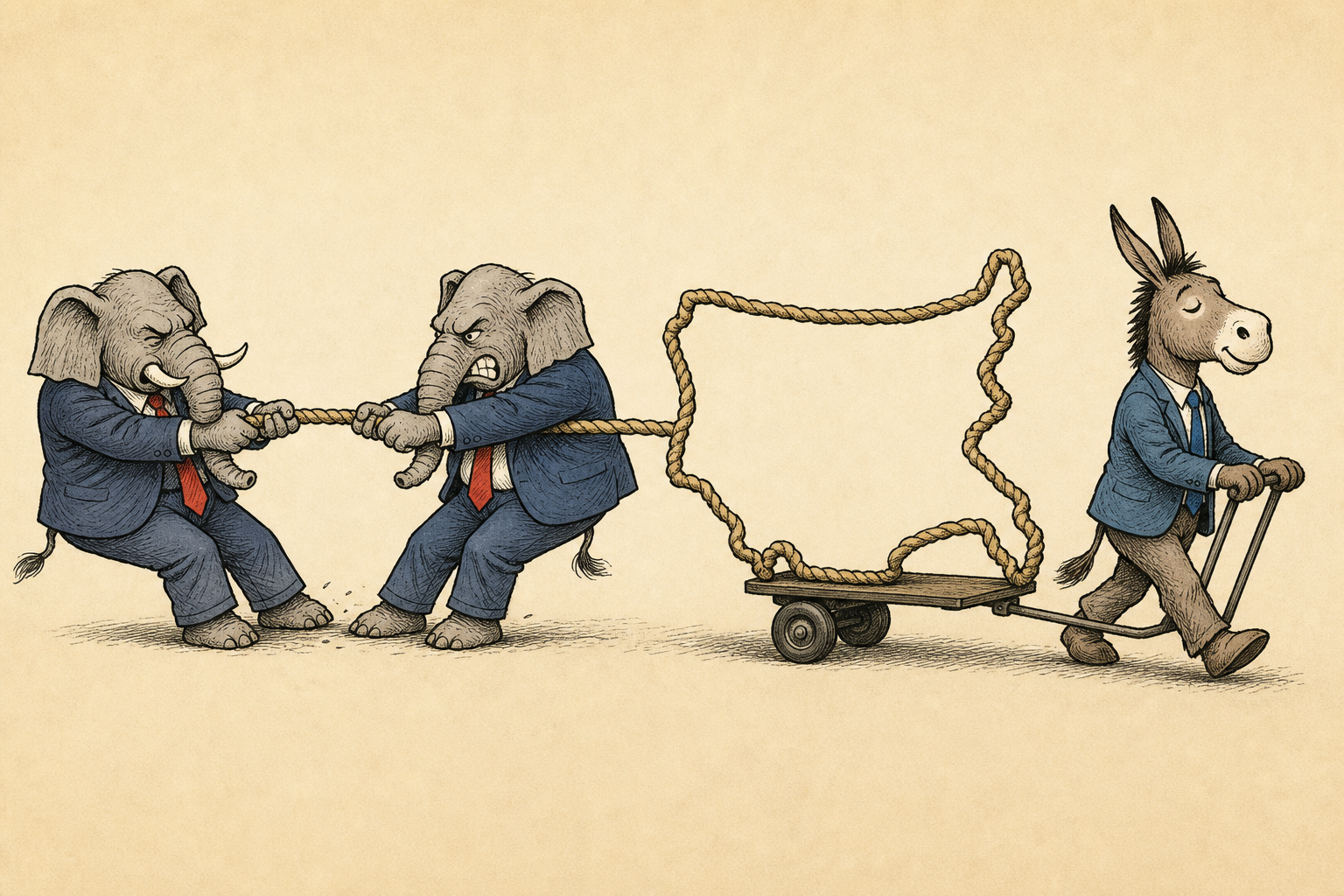
Every wire-service headline out of the Court on June 30 read some version of “6–3.” That is technically true of the judgment — the vote to strike down EO 14160 — but it flattens a far more fractured Court. Five justices, Roberts, Sotomayor, Kagan, Barrett, and Jackson, joined the actual constitutional holding: that the order is unconstitutional under the Fourteenth Amendment, full stop. Justice Kavanaugh supplied the sixth vote for the judgment — agreeing the order was unlawful — but he wrote separately to say he reached that result only on statutory grounds, interpreting an existing federal citizenship statute, and pointedly declined to join Roberts’s constitutional reasoning at all.
On the other side, Justices Clarence Thomas and Samuel Alito each wrote separate dissents that would have upheld some or all of the order, and Justice Neil Gorsuch dissented as well. Even Gorsuch’s dissent was narrower than conservative activists wanted: as the Washington Examiner reported, “not even Justice Neil Gorsuch, the only Trump-nominated dissenter, appeared ready to disqualify the children of illegal immigrants” outright. Net effect: six votes killed the executive order, but only five backed the constitutional theory doing the killing — and without Justice Barrett, only four justices would have signed onto that reasoning at all. Her vote was the one that made it a majority.
Vice President JD Vance (R) went on Fox News’ The Ingraham Angle the evening of the ruling and did not hide his frustration: “This is a very disappointing ruling from the Supreme Court… Of course, we respect it, but we also think that it was a major, major mistake.” Pressed on the vote math, Vance made the same point this page opens with — that the case being “effectively” 5–4 “means that the concept of birthright citizenship, which is an absurdity [as applied] to the Fourteenth Amendment — that concept is hanging by a thread.” He also warned the ruling could “invite… people to come here quite literally on a vacation, give birth, and then all of a sudden, the child and their family have the full benefits of American citizenship.”
Vance repeated the “preposterous” framing in a shorter Fox News clip the same day (watch here), calling the ruling “preposterous” on top of “a major mistake.”
Trump’s own reaction, posted to Truth Social the same day, pivoted immediately from the courtroom to Capitol Hill: if the justices would not end birthright citizenship, he argued, Congress should. He also could not resist a jab at Beijing, sarcastically congratulating China on its “win.”
The Supreme Court upheld Birthright Citizenship, which is too bad for our Country, but we can easily make it up in Congress through Legislation... No long and unwieldy Constitutional Amendment is necessary! Congress should start TODAY to work on ending expensive and unfair to our Country, Birthright Citizenship. They will have my Complete and Total Support!
Paraphrased commentary · not a verbatim post
Corroborated across multiple outlets; exact post permalink not independently confirmed. Source: NBC News; Hot Air.
I would like to congratulate President Xi, and the Great Country of China, on their massive Birthright Citizenship WIN!
Paraphrased commentary · not a verbatim post
Corroborated across multiple outlets; exact post permalink not independently confirmed. Source: Breitbart.
Notably, Trump’s tone on the Court itself was more conciliatory than Vance’s or his own deputies’ once he turned to the rest of the term’s docket (covered in §06 below), praising a separate ruling for giving “tremendous additional Power back to the Presidency, where it belongs,” and adding that “the Republican Party was treated very fairly by the United States Supreme Court.” The birthright ruling, in other words, was the exception Trump was willing to fight in public — not evidence he considered the Court broadly hostile.
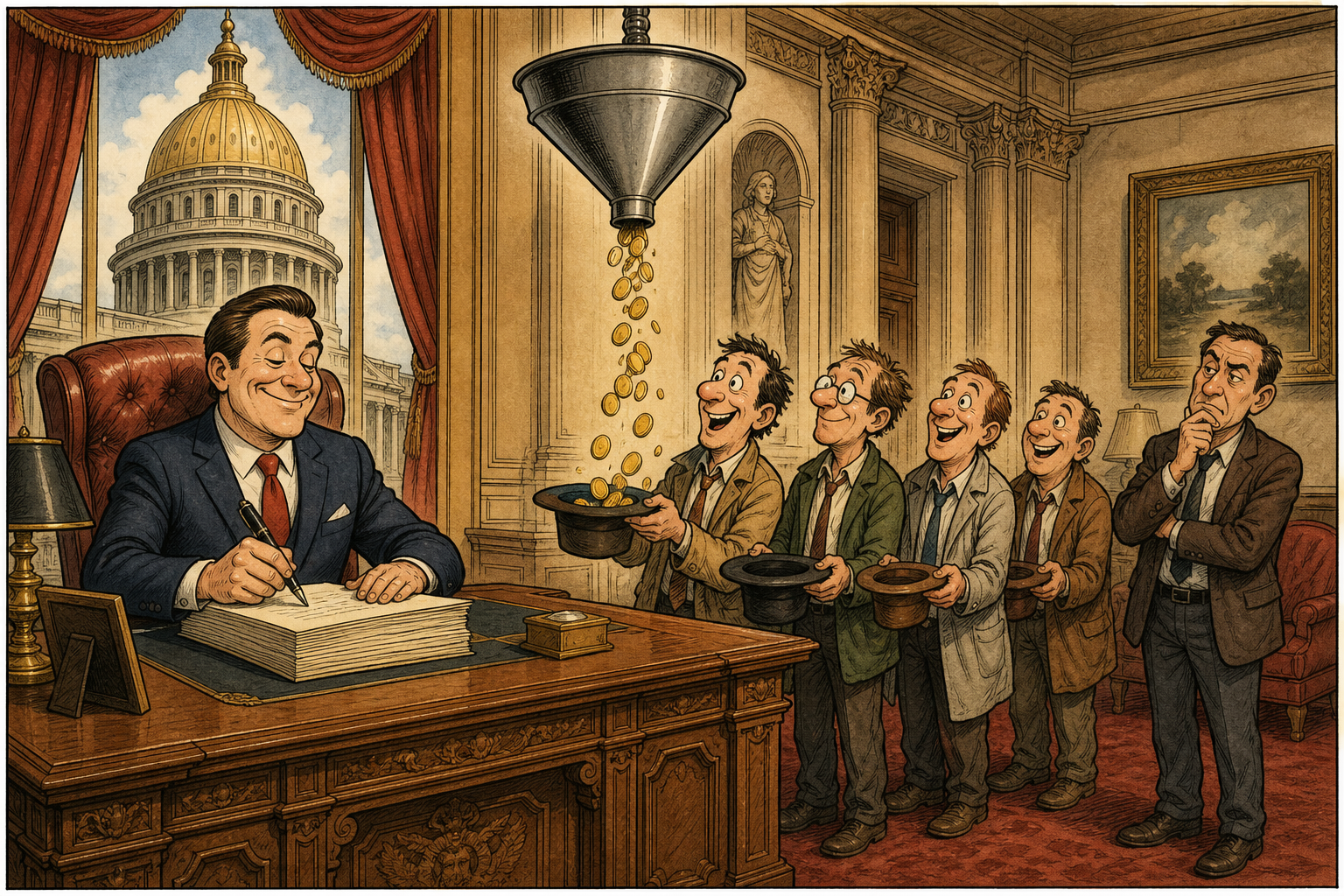
The sharpest reaction did not come from Democrats — it came from the right, aimed at the Court’s own Republican-appointed majority. White House deputy chief of staff for policy Stephen Miller wrote on X that the ruling was “one of the most destructive and outrageous decisions in the long history of the Supreme Court,” adding: “American citizenship is not the birthright of the world. It belongs only and solely to Americans. No provision of the Constitution can be read to require our national self-obliteration.”
The anger landed hardest on Justice Barrett, a Notre Dame Law School alumna and former faculty member. The Notre Dame College Republicans posted on X: “Barrett is an absolute disgrace to the Notre Dame name. We apologize on her behalf to all who will suffer the devastating consequences of infinity third-world migration.” Conservative commentator Douglass Mackey wrote that “Roberts and Barrett have completely sold out our birthright.” The Washington Examiner framed the episode as continuing “a pattern of conservative disappointment with Republican-appointed justices,” despite what is nominally a durable 6-3 conservative majority on the Court — and reported that Trump himself is described as “on the outs” with the Federalist Society, the conservative legal network that vetted all three of his Supreme Court picks.
Speaker Mike Johnson (R-LA): “I’m very disappointed in that outcome. I think it subjects the country to serious challenges going forward, and we’ll have to deal with it as Congress.”
Sen. Mike Lee (R-UT): “We’re going to need a constitutional amendment.”
Rep. Chip Roy (R-TX): the Court “failed the American people, the Constitution, and the rule of law.”
Sen. Eric Schmitt (R-MO): the decision was “wrong, dangerous, and disastrous for American sovereignty.”
Not every reaction ran in that direction. Rep. Jennifer McClellan (D-VA) praised the ruling as preserving birthright citizenship as a constitutional right belonging to everyone born on American soil, arguing the Fourteenth Amendment’s text was written precisely to foreclose the kind of caste system EO 14160 would have created. It was a rare moment where the loudest Democratic reaction was relief rather than outrage — the opposite of the reaction on the right.
Vance’s warning about “birth tourism” and the underlying policy fight are not abstract. The Center for Immigration Studies, an immigration-restrictionist research group, estimates that 225,000 to 250,000 births to illegal immigrants occurred in the United States in 2023 alone — roughly 7 percent of all U.S. births that year. That estimate is disputed by immigrant-rights groups and is not an official government count; no federal agency tracks parental immigration status at the moment of a child’s birth. It is, nonetheless, the rough scale of the population EO 14160 would have targeted going forward had it survived review: hundreds of thousands of U.S.-born children a year whose citizenship status would have turned on their parents’ immigration paperwork rather than on where they were born.
“Congress should start TODAY to work on ending expensive and unfair to our Country, Birthright Citizenship. They will have my Complete and Total Support!”
President Donald Trump, Truth Social, June 30, 2026 (paraphrase; corroborated across outlets)
Trump’s stated fallback — ordinary legislation rather than a constitutional amendment — runs directly into the hole the Roberts majority just dug. If the Fourteenth Amendment itself guarantees birthright citizenship regardless of parental status, as five justices just held, then a statute trying to narrow that guarantee faces the same constitutional problem the executive order did. Sen. Lee’s call for “a constitutional amendment” is the more legally coherent path of the two being floated by Republicans this week — and also, given the two-thirds and three-quarters supermajorities a constitutional amendment requires, by far the harder one to actually accomplish.
Birthright citizenship was the loss in an otherwise strong week for Trump and the Court’s conservative wing on the term’s other marquee cases. The day before, on June 29, 2026, the Court decided Trump v. Slaughter, 6–3 along the Court’s conservative-liberal line, overturning the 90-year-old Humphrey’s Executor precedent and confirming the president can remove independent-agency commissioners — here, the FTC’s Rebecca Slaughter — without cause. Justice Sotomayor read her dissent from the bench, a rare, deliberate signal of just how sharply she disagreed.
On June 30, the same day as the birthright ruling, the Court also decided Little v. Hecox and West Virginia v. B.P.J., 6–3, upholding Idaho’s and West Virginia’s bans on transgender athletes competing in girls’ and women’s school sports. And in National Republican Senatorial Committee v. FEC, also 6–3 with Justice Kavanaugh writing, the Court struck down federal limits on coordinated spending between political parties and their candidates. That case carries a personal footnote: Vice President Vance was himself an original challenger in the case back when he was a sitting senator — meaning he won a major Supreme Court case the same week he was on Fox News calling the Court’s birthright ruling “a major, major mistake.”
Win — Trump v. Slaughter (6–3, June 29): overturns Humphrey’s Executor; presidents can remove independent-agency commissioners without cause.
Win — Little v. Hecox / West Virginia v. B.P.J. (6–3, June 30): upholds state bans on transgender athletes in girls’/women’s school sports.
Win — NRSC v. FEC (6–3, June 30): strikes down federal limits on party-candidate coordinated spending; VP Vance was an original challenger as a then-senator.
Loss — Trump v. Barbara (6–3 judgment / 5–4 constitutional, June 30): EO 14160 struck down as unconstitutional — the term’s most politically symbolic defeat.
The Supreme Court did not deliver Trump a clean 6–3 defeat on birthright citizenship — it delivered something more fragile and, for the administration’s critics on the right, more alarming: a constitutional holding that survived by a single vote once Kavanaugh’s narrower concurrence is set aside, carried by a Republican-appointed justice, Amy Coney Barrett, whom conservative activists are now publicly disowning. Trump’s own posture split the difference — sarcastic about the ruling, warm about the rest of his term — while his vice president and his own White House policy chief said, in near-identical language, that the Court got the single biggest case of the week wrong. Congress, not the Court, is now where Trump says this fight moves next; the Fourteenth Amendment text the majority just leaned on is exactly what stands in the way of a simple statutory fix.
What to watch next: whether any birthright-citizenship legislation is introduced given Lee’s acknowledgment that only a constitutional amendment could reliably survive review; whether the rift between the White House and the Federalist Society hardens or cools; and whether Barrett faces further organized backlash from the conservative legal movement that helped put her on the bench. We will update this page as those threads develop.

- 1.SCOTUSblog — Case page, Trump v. Barbara, No. 25-365
- 2.Cornell Legal Information Institute — Supreme Court text, No. 25-365
- 3.Hot Air — 'SCOTUS Denies Trump on Birthright Citizenship,' June 30, 2026
- 4.PJ Media — 'Here's How Devastating the Birthright Citizenship Ruling Is,' June 30, 2026
- 5.The Hill — 'Birthright citizenship ruling criticized' (Vance 'major mistake' reaction), June 30, 2026
- 6.Washington Examiner — 'Supreme Court's birthright citizenship ruling exposes rift with conservative justices,' June 30, 2026
- 7.Washington Examiner — 'Notre Dame College Republicans blast Amy Coney Barrett over birthright citizenship vote,' June 30, 2026
- 8.Fox News — 'Supreme Court lambasted as "destructive," "outrageous" in birthright citizenship decision' (Stephen Miller reaction), June 30, 2026
- 9.Daily Wire — '"Legal Abomination": Conservatives React to SCOTUS Birthright Citizenship Ruling,' June 30, 2026
- 10.Breitbart — 'Trump Trolls Supreme Court: "China Massive Birthright Citizenship WIN,"' June 30, 2026
- 11.Breitbart — 'Vance: Supreme Court's Close Birthright Citizenship Vote Shows Concept "Hanging by a Thread,"' June 30, 2026
- 12.NBC News — 'Supreme Court loss on birthright citizenship, Trump turns to Congress,' June 30, 2026
- 13.The Hill — 'Mike Johnson reacts to Supreme Court birthright citizenship ruling,' June 30, 2026
Last updated July 1, 2026