OpenAI Signed a Classified Pentagon AI Deal Hours After Trump Blacklisted Its Rival. No One Knows What It Costs.
- Hours the gap between President Trump's Truth Social order banning Anthropic and OpenAI's blog post announcing its own Pentagon deal — Fortune; TechCrunch, Feb. 27-28, 2026
- Undisclosed the dollar figure for OpenAI's classified-network Department of War contract — neither OpenAI nor the Pentagon has released one — TechCrunch; EFF, Mar. 2026
- 8 companies named in the Pentagon's May 1, 2026 classified-network (IL6/IL7) expansion, with Anthropic explicitly excluded — DefenseScoop, May 1, 2026
- $200,000,000 the ceiling of a separate, earlier June 2025 Pentagon contract awarded identically to OpenAI, Anthropic, Google, and xAI — not the Department of War deal — Breaking Defense, June 2025
- 0 Republican members of Congress who have publicly questioned this deal, per available reporting — every named critic is a Democrat — Civic Intelligence review of congressional record
On February 27, 2026, President Donald Trump (R) posted on Truth Social ordering every federal agency to immediately stop using Anthropic’s AI, calling the company a national-security risk. Secretary of War Pete Hegseth (R) — the Trump administration’s appointee atop the Pentagon, whose department’s legal name under federal statute is still “Department of Defense” even as it now operates under the “Department of War” title Trump authorized by executive order — went further in public remarks, accusing Anthropic of delivering “a master class in arrogance and betrayal” and demanding that AI vendors give the Pentagon “full, unrestricted access… for every LAWFUL purpose.”
Hours later, on February 28, OpenAI published a blog post titled “Our agreement with the Department of War,” announcing a deal to deploy its models on the Pentagon’s classified network. No dollar figure came with it — and over five months later, none has ever been disclosed.
That timing is the story. Anthropic lost its Pentagon relationship for refusing to accept the government’s open-ended access demands without hard contractual limits. OpenAI took the deal — and, by its own later admission, took it in a way that looked “opportunistic and sloppy.” What it actually agreed to still isn’t public.
OpenAI CEO Sam Altman framed the agreement as safety-first, writing that “two of our most important safety principles are prohibitions on domestic mass surveillance and human responsibility for the use of force, including for autonomous weapon systems.” OpenAI safety researcher Boaz Barak went further, telling reporters the company could “embed our red lines — no mass surveillance and no directing weapons systems without human involvement — directly into model behavior.”
Tonight, we reached an agreement with the Department of War to deploy our models in their classified network. In all of our interactions, the DoW displayed a deep respect for safety and a desire to partner to achieve the best possible outcome…
Altman later conceded the rollout hadn’t gone the way OpenAI intended. On March 3, he admitted the announcement “looked opportunistic and sloppy,” and OpenAI amended the contract language days later to add explicit carve-outs against NSA use and domestic surveillance — after both internal and external backlash. The most visible internal dissent came from Caitlin Kalinowski, OpenAI’s robotics and hardware lead, who resigned and said publicly:
“Surveillance of Americans without judicial oversight and lethal autonomy without human authorization are lines that deserved more deliberation than they got.”
Caitlin Kalinowski, resigning OpenAI robotics/hardware lead
Trump had made his own view of Anthropic’s alternative plain the night before OpenAI’s post went up.
THE UNITED STATES OF AMERICA WILL NEVER ALLOW A RADICAL LEFT, WOKE COMPANY TO DICTATE HOW OUR GREAT MILITARY FIGHTS AND WINS WARS! That decision belongs to YOUR COMMANDER-IN-CHIEF... The Leftwing nut jobs at Anthropic...
Paraphrased commentary · not a verbatim post
Paraphrase of Trump's Truth Social post ordering federal agencies to stop using Anthropic's technology, as widely reported in the press.

The detail that separates this from an ordinary contract-signing story is what Anthropic refused to sign. Anthropic rejected the Pentagon’s unconditional “all lawful purposes” language and insisted on hard, written contractual limits on surveillance and autonomous-weapons use, rather than relying on existing law and policy to hold. OpenAI took the opposite approach: its safeguards rest on a 2023 Pentagon autonomous-weapons directive and Fourth Amendment protections already on the books — not on explicit prohibitions written into the contract itself.
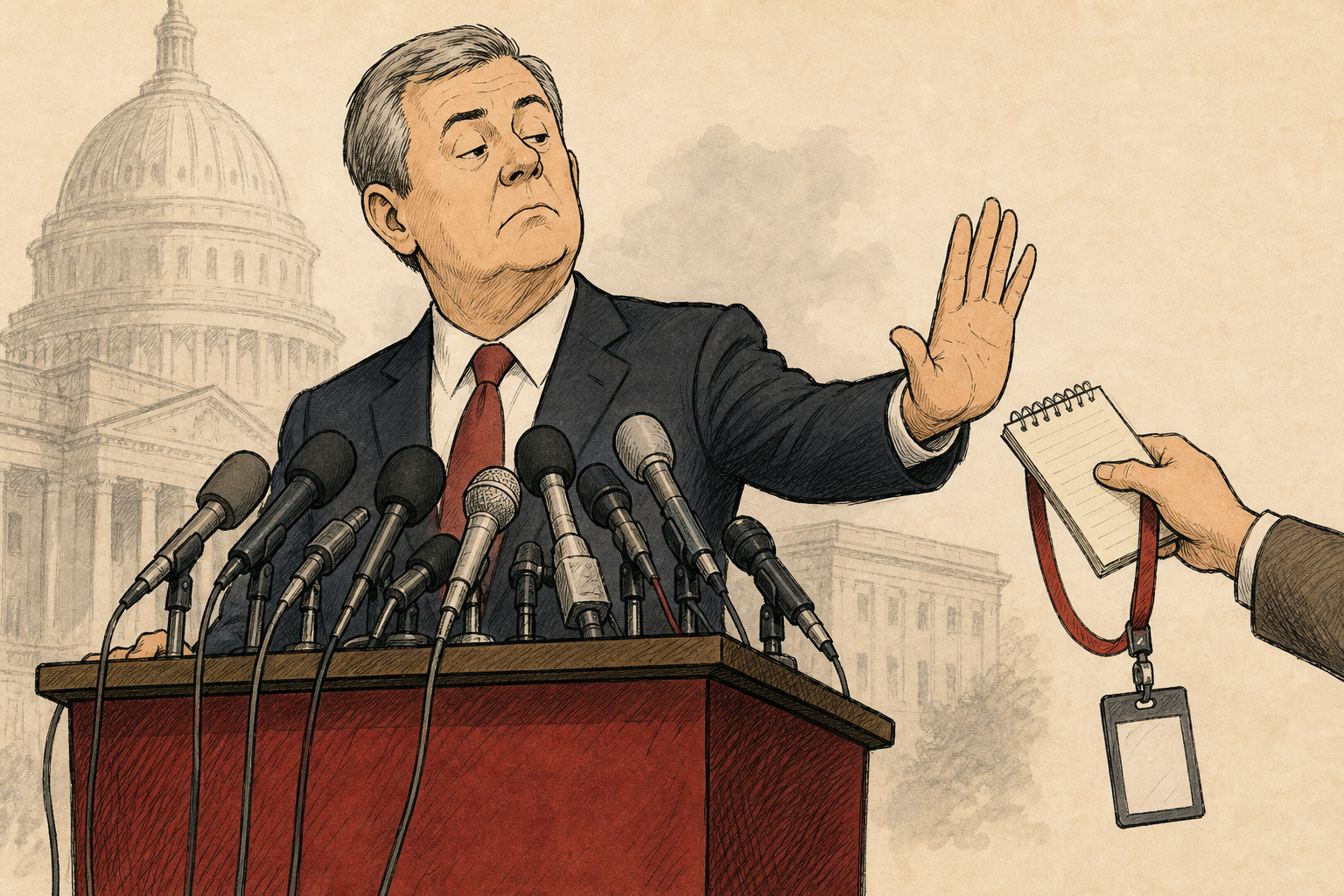
MIT Technology Review and TechCrunch both frame that as a materially weaker protection than the one Anthropic sought and lost its Pentagon relationship over. And every “red line” claim in circulation traces back to a single source: OpenAI’s own blog post and Altman’s own statements. No DoD Inspector General report, no GAO audit, and no court filing has independently confirmed that OpenAI is complying with any of it — because the underlying contract has never been released. Alan Rozenshtein, a former DOJ National Security Division attorney, told The Intercept flatly:
“There is nothing OpenAI can do to clarify this except release the contract.”
Alan Rozenshtein, former DOJ National Security Division attorney, via The Intercept
OpenAI's own framing of the deal, meanwhile, described it as unusually protective:
Yesterday we reached an agreement with the Department of War for deploying advanced AI systems in classified environments, which we requested they make available to all AI companies. We think our deployment has more guardrails than any previous agreement for classified AI…
Say plainly what isn’t known: no dollar figure for the February 2026 Department of War classified-network deal has been disclosed anywhere, by either OpenAI or the Pentagon. That absence is itself a finding. A different, earlier contract is public — in June 2025, the Pentagon’s Chief Digital and Artificial Intelligence Office awarded OpenAI a $200,000,000-ceiling Other Transaction Agreement for prototype work, the identical award structure and ceiling given at the same time to Anthropic, Google, and xAI. That is not the Department of War deal; it predates the Anthropic blacklisting by eight months.
The classified deal grew from there without ever generating a number. On May 1, 2026, the Department of War announced a broader classified-network (IL6/IL7) expansion spanning eight companies — OpenAI, SpaceX, Google, Nvidia, Reflection, Microsoft, AWS, and Oracle — with Anthropic explicitly excluded. Again, no dollar figures were disclosed for any of the eight. A search of USASpending.gov, the federal government’s own public spending-transparency tool, turns up zero matching award records for “OpenAI” as of this writing — meaning the deal isn’t merely undisclosed in a press release — it doesn’t appear in ordinary federal spending records at all.
A federal audit released in the middle of all this reads like it was written with exactly this pattern in mind. GAO-26-107859, published April 13, 2026, found that federal agencies should be systematically collecting and applying lessons learned to improve future AI procurements — a recommendation that presumes the procurements are visible enough to learn from in the first place.

The oversight pressure on this deal has come from exactly one party. Rep. George Whitesides (D-CA-27), of the House Armed Services Committee, wrote to Hegseth the same day Trump posted his Anthropic order:
“AI has the potential to strengthen our national security and deliver extraordinary benefits across American life, but powerful technologies deployed without clear guardrails, transparency, and accountability risk eroding public trust and undermining the very democratic values we are trying to defend.”
Rep. George Whitesides (D-CA-27), letter to Secretary Hegseth, Feb. 27, 2026
Sen. Elizabeth Warren (D-MA), on the Senate Armed Services Committee, opened a formal investigation on March 23 into both the Anthropic blacklisting and the new OpenAI contract, writing to Hegseth and Altman directly. On March 26, Sen. Kirsten Gillibrand (D-NY) led a joint letter with five other Senate Democrats to six AI and cloud vendors demanding disclosure of which models are deployed inside the Pentagon and what oversight governs them. Warren followed up on July 7 with letters to seven more vendors demanding the contracts themselves be released, writing:
“DoD appears to have forged ahead in expanding AI use throughout the military, including as part of President Trump's illegal war in Iran, while releasing no meaningful information about contractual guardrails to prevent the misuse of these tools or communicating to Congress and the public how these tools are used at all.”
Sen. Elizabeth Warren (D-MA), letter to AI and cloud vendors, July 7, 2026
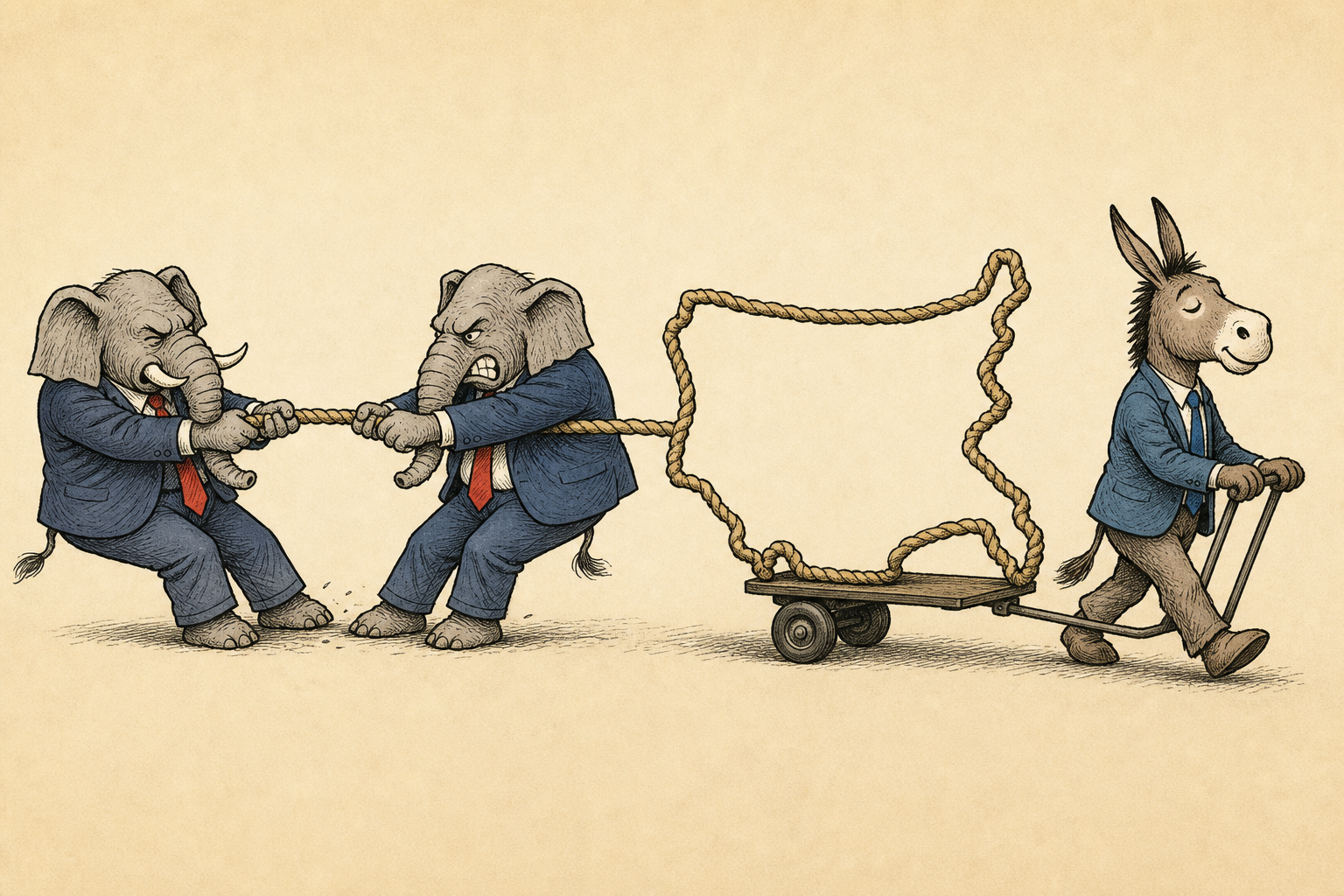
Per available reporting, that is the complete list of named congressional critics on this deal — and every one of them is a Democrat. No Republican member of Congress has publicly questioned the Department of War’s decision to sideline Anthropic, take an OpenAI deal with no disclosed price and no contractual red lines, or exclude the terms from ordinary federal spending records. That is not evidence Republicans support the deal; it is simply the state of the public record as of this writing, and it means the only check on this contract right now is coming from one side of the aisle.
Hours after Trump ordered federal agencies off Anthropic’s AI, OpenAI announced its own deal to run models on the Pentagon’s classified network. Unlike Anthropic, which insisted on written contractual limits and lost the relationship over it, OpenAI’s safeguards rest on existing law and Altman’s own public statements — unverified by any independent audit, court filing, or released contract. No dollar figure has been disclosed for the deal, and it doesn’t appear in federal spending records at all. Sen. Elizabeth Warren (D-MA), Rep. George Whitesides (D-CA-27), and Sen. Kirsten Gillibrand (D-NY) have all pressed for answers. No Republican member of Congress has, per available reporting.