
California Is Blocking a Federal Audit of Its Voter Rolls, the Top U.S. Attorney in L.A. Says
U.S. Attorney Bill Essayli — the Trump-appointed top federal prosecutor for the Central District of California — says the state is refusing to let the Justice Department audit its voter rolls. In a June 8, 2026 post on X, Essayli declared flatly: “California Is Blocking a Federal Audit of Its Voter Rolls,” and pointed to a year-long standoff over the state’s statewide voter file.
The DOJ wants California’s complete, unredacted voter list and registration records to confirm, it argues, that only eligible U.S. citizens are registered. It sued California Secretary of State Shirley Weber (D) in September 2025, invoking federal election law. California refused, citing state privacy statutes that bar disclosure of the full file — and in January 2026 a federal judge sided with the state and dismissed the suit. The DOJ has appealed to the Ninth Circuit.
One detail Essayli keeps returning to is what California accepts as ID from first-time voters who register without a driver’s license or Social Security number: a gym membership card, an employer ID, a credit or debit card, a prescription drug label, an insurance card. It is worth being precise about what this is and is not: Essayli has alleged a process he calls dangerously loose, but neither he nor the DOJ has publicly produced evidence of widespread fraud in California. This is a fight over access and standards — not, so far, a proven fraud case.
- 5 ID types — Essayli flagged that California accepts from first-time voters who lack a license or SSN: gym card, employer ID, credit/debit card, prescription label, insurance card · Source: U.S. Attorney Essayli (X); CA Secretary of State first-time-voter guidance
- Sept. 2025 — the DOJ sued CA Secretary of State Shirley Weber (D) in the Central District of California seeking the full statewide voter file · Source: DOJ Complaint, United States v. Weber
- Jan. 2026 — a federal judge dismissed the DOJ suit, finding state privacy law was not preempted; DOJ has appealed to the Ninth Circuit · Source: ACLU of Southern California; KTLA 5
The dispute is more than a year old. In August 2025, Assistant Attorney General Harmeet Dhillon, who runs the DOJ’s Civil Rights Division, sent California a letter demanding a complete electronic copy of the statewide voter registration list — voter names, dates of birth, residential addresses, driver’s license numbers or the last four digits of Social Security numbers — along with voter-registration applications submitted between December 1, 2023 and July 1, 2025, and records of voters removed for death or non-citizenship.
California declined to hand over the full, unredacted file. Secretary of State Shirley Weber (D) responded on August 8, citing privacy concerns, but offered a middle path: DOJ officials could inspect the unredacted database in person, by appointment. The department rejected that as insufficient and, on September 25, 2025, sued Weber and the State of California in the U.S. District Court for the Central District of California.
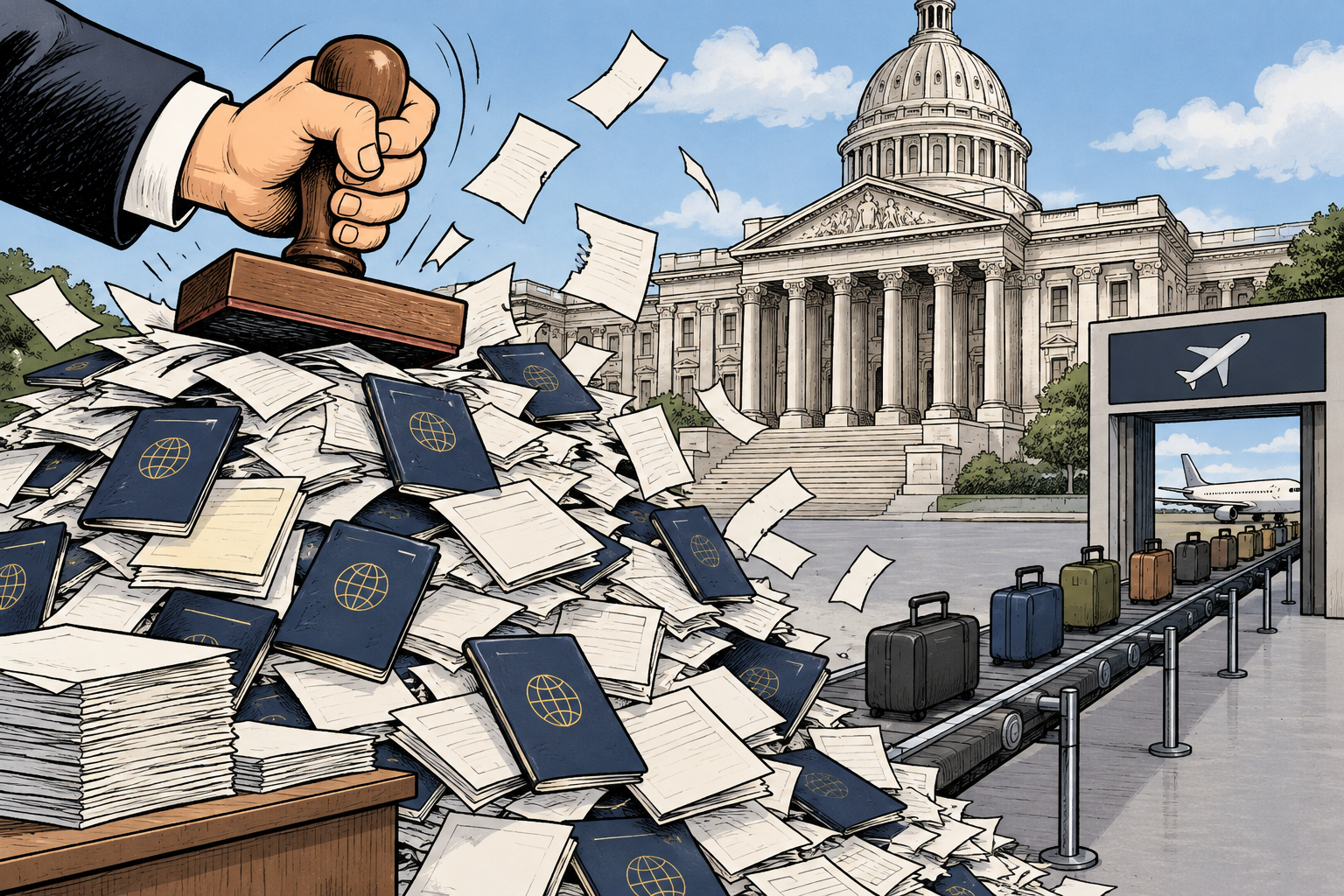
California Is Blocking a Federal Audit of Its Voter Rolls. California allows first-time voters to register using forms of ID that most Americans would find surprising, including: gym membership card, employer ID card, credit or debit card, prescription drug label, insurance card.
The DOJ rests its demand on three federal statutes: the National Voter Registration Act (NVRA), the Help America Vote Act (HAVA), and the Civil Rights Act of 1960. The NVRA requires states to conduct general voter-list maintenance and makes certain list-maintenance records available for public inspection. The Civil Rights Act of 1960 requires election officials to retain federal-election records and permits the Attorney General to demand them. The DOJ argues these laws give it the right to inspect the file and that California’s privacy statutes cannot override federal law.
California reads the same statutes differently. The state contends the NVRA’s public-inspection clause does not reach the sensitive, individualized data the DOJ wants — full birthdates, license numbers, partial Social Security numbers — and that nothing in federal law preempts California’s privacy protections for that data. The first-time-voter ID options Essayli highlights, meanwhile, are not a California invention: they track the list of HAVA-acceptable documents that federal law itself lets first-time mail registrants use when they lack a license or SSN.
“For over a year, the Department of Justice has been trying to audit California's voter rolls.”
U.S. Attorney Bill Essayli · Central District of California · 2026
The lawsuit has not gone the DOJ’s way so far. In January 2026, a federal district judge dismissed United States v. Weber, granting motions to dismiss filed by the state and by the League of Women Voters of California, which intervened with the ACLU to defend voter privacy. The court found the DOJ had not satisfied the Civil Rights Act of 1960’s requirements and that the NVRA neither preempted California’s privacy laws nor entitled the department to the sensitive voter data it sought.
California was not alone: it was among roughly two dozen states that have declined to turn over unredacted voter files to the federal government. Pro-voting groups that intervened warned that releasing the full database could chill participation, particularly among Black and immigrant voters. The DOJ has appealed the dismissal to the U.S. Court of Appeals for the Ninth Circuit, where the case remains pending — which is the legal posture Essayli describes when he says the state is “blocking” the audit.
U.S. Attorney Bill Essayli (Trump-appointed) — top federal prosecutor for the Central District of California; says the state is blocking the audit and that “multiple election fraud investigations” are underway.
CA Secretary of State Shirley Weber (D) — chief elections officer; refused the unredacted file on privacy grounds, offered in-person inspection by appointment.
CA Attorney General Rob Bonta (D) — the state’s top lawyer, defending California against the DOJ’s demand for the data.
Asst. AG Harmeet Dhillon (Trump-appointed) — heads the DOJ Civil Rights Division; sent the August 2025 letter demanding the file and is working with Essayli on the audit.
After California’s slow-counting June 2, 2026 primary, Essayli announced that his office had “multiple election fraud investigations underway” and was working with Dhillon to conduct a comprehensive audit of the rolls. He pointed to a Marina del Rey woman charged the previous month with allegedly paying people, including unhoused individuals on Skid Row, to register to vote. “We will follow the evidence wherever it leads and prosecute any violations of federal election law to the fullest extent,” he said.
Here is the part that matters for getting the story right: as of this writing, neither Essayli nor the U.S. Attorney’s Office has identified specific cases under investigation or publicly produced evidence of widespread voter fraud in California. The reporting from KTLA, ABC7, and the Washington Examiner is consistent on this point. What is documented is a real, unresolved dispute over access to the rolls and over the standards California uses — not a proven verdict that fraud occurred.
The Justice Department is fighting to audit California's voter rolls and the Democrats are blocking it every step of the way. Clean voter rolls are the foundation of free and fair elections. We will not stop.
Paraphrased commentary · not a verbatim post
California’s position is straightforward: it says it follows federal law, that its rolls are maintained as the NVRA requires, and that it cannot legally hand the full unredacted file to anyone, including the federal government, without violating state privacy protections. Weber’s office has repeatedly pointed to the in-person inspection it offered as proof it is not hiding anything — the dispute, the state argues, is over the form of access, not whether the DOJ gets to look.
State election officials have also defended California’s system on the merits, citing registration verification, signature matching, ballot tracking, and post-election audits. Attorney General Rob Bonta (D), who is leading the legal defense, has framed the DOJ’s demand as federal overreach into a domain — running elections — that the Constitution leaves primarily to the states. A federal judge, at least at the trial level, agreed with that reading.
“Voters should never have to choose between their privacy and their fundamental right to vote. States must retain authority to manage elections in ways that safeguard sensitive information.”
ACLU of Southern California / League of Women Voters of California · on the January 2026 dismissal
California maintains its voter rolls in full compliance with federal law. We will not hand over Californians' sensitive personal data in violation of state privacy protections. A federal court has already agreed with us — and we will keep defending voters' privacy.
The next move belongs to the Ninth Circuit, where the DOJ’s appeal of the dismissal is pending. If the appeals court upholds the lower-court ruling, California keeps its file and the federal “audit” Essayli wants stays blocked. If it reverses, the state may have to choose between handing over the data and a deeper fight, potentially to the Supreme Court. Separately, the November ballot may carry a California voter-ID initiative that would tighten the very registration standards at the center of this dispute.
For readers, the honest summary is the unglamorous one: this is a genuine, consequential standoff between a Trump-appointed prosecutor who wants to inspect the rolls and a Democratic state that says federal law does not entitle him to the raw data. Essayli has raised pointed questions about California’s ID standards and announced investigations; California says it is compliant and a court has so far agreed. Whether any of it amounts to fraud is, at this stage, an open question — not a settled fact.
California refuses to let us check their voter rolls. What are they hiding? You can register to vote there with a gym card. We are going to get to the bottom of it and protect the integrity of our elections.
Paraphrased commentary · not a verbatim post
- 1.U.S. Department of Justice, Civil Rights Division — Complaint, United States v. Shirley Weber & State of California (C.D. Cal.), filed Sept. 25, 2025
- 2.KTLA 5 — 'U.S. attorney accuses California of blocking voter roll audit amid legal battle,' June 2026
- 3.KTLA 5 — 'U.S. attorney says election fraud probes are underway in California,' June 5, 2026
- 4.Washington Examiner — 'Trump-linked US attorney says California "blocking" federal audit of voter rolls,' June 2026
- 5.FOX 11 Los Angeles — 'Election fraud probes in California announced by US Attorney amid rising tensions over slow vote count,' June 2026
- 6.ABC7 Los Angeles — 'Essayli says "multiple election fraud investigations underway," gives no specifics,' June 5, 2026
- 7.ACLU of Southern California — 'Federal Court Dismisses DOJ Lawsuit Seeking California Voter Data,' January 2026
- 8.League of Women Voters — 'United States of America v. Weber' (case page)
- 9.The Spokesman-Review — 'Feds pursuing "multiple" election fraud investigations in California, top prosecutor says,' June 5, 2026
- 10.California Secretary of State — 'What to Bring to Your Polling Place' (HAVA first-time-voter ID guidance)
- 11.52 U.S.C. § 20507 — National Voter Registration Act, list-maintenance & public-inspection provisions (Cornell LII)
- 12.OANN — 'Top prosecutor: "Multiple election fraud investigations underway" in Calif.,' June 2026
- 13.U.S. Attorney Bill Essayli (@USAttyEssayli) on X — 'California Is Blocking a Federal Audit of Its Voter Rolls,' June 8, 2026
Last updated June 8, 2026