
A GOP Bill Would Ban Credit-Card Tracking of Gun Buyers — Here’s What the 2A Groups Are Saying.
A Republican-led bill moving through Congress would bar the major payment networks from flagging firearm and ammunition retailers with a special “merchant category code” — the four-digit label that tells a bank what kind of store ran a credit-card charge. Supporters call it a firewall against a backdoor registry of gun owners; opponents call it the removal of a tool that could spot warning signs before a mass shooting.
The measure is the Protecting Privacy in Purchases Act, carried in the Senate by Sen. Bill Hagerty (R-TN) as S. 1715 and in the House by Rep. Riley Moore (R-WV) as H.R. 1181, with co-leads Rep. Richard Hudson (R-NC) and Rep. Andy Barr (R-KY). The four big 2A organizations — NSSF, Gun Owners of America, the NRA, and the Congressional Sportsmen’s Foundation — have all endorsed it.
This page lays out what the bill actually does, where the underlying merchant-code fight came from, what the gun-rights groups are saying word-for-word, and the case the other side makes. The frame is the facts: the statutory text, the named sponsors, the states that have already acted, and the dispute over what a payment code can and cannot see.
- MCC 5949 — the firearm-and-ammunition merchant category code at the center of the fight; ISO approved it in September 2022 after a proposal from New York's Amalgamated Bank · Source: NPR; NSSF
- S. 1715 / H.R. 1181 — the Senate and House versions of the Protecting Privacy in Purchases Act, sponsored by Sen. Bill Hagerty (R-TN) and Rep. Riley Moore (R-WV) · Source: Congress.gov
- ~20 states — have passed laws banning or restricting a firearm-specific merchant code; three — California, Colorado, and New York — require it · Source: Payments Dive; NSSF
- March 2023 — when Visa, Mastercard, and American Express paused rolling out the firearms code; the pause was never formally lifted · Source: The Daily Caller; CBS News
- 118+ cosponsors — on the House bill; the Senate version added 16 cosponsors — the measure has broad Republican backing but no clear path past a filibuster · Source: Congress.gov
- Vetoed in Arizona — Gov. Katie Hobbs (D) vetoed a state version on May 26, 2026, calling merchant codes 'vital tools' for law enforcement · Source: KJZZ
The Protecting Privacy in Purchases Act is short and specific. It would prohibit payment-card networks and the financial institutions that work with them from requiring the use of, or assigning, a merchant category code that distinguishes a firearms retailer from a general-merchandise or sporting-goods retailer. In plain terms: a gun store’s credit-card transactions would keep looking, to the payment system, like any other sporting-goods purchase — not like a separately tagged “firearms” sale. The bill also directs the attorney general to report annually to Congress on any related investigations.
The current push runs on two tracks. In the Senate, Sen. Bill Hagerty (R-TN) introduced S. 1715, which picked up 16 Republican cosponsors. In the House, Rep. Riley Moore (R-WV) introduced H.R. 1181 alongside Rep. Richard Hudson (R-NC) and Rep. Andy Barr (R-KY); that version has drawn well over 100 cosponsors. The idea is not new: it was first introduced in the 118th Congress by then-Conference Chair Rep. Elise Stefanik (R-NY) and Hagerty. The House bill is before the Financial Services Committee; the Senate bill sits with the Banking Committee.

A merchant category code, or MCC, is a four-digit number the card networks attach to a business to describe what it sells — restaurants, airlines, hardware stores, and so on. Banks use the codes for routine things like rewards categories and fraud screening. For decades, standalone gun shops were folded into broader buckets such as “sporting goods” or “general merchandise.” There was no code that singled out a firearms dealer as a firearms dealer.
That changed in September 2022, when the International Organization for Standardization (ISO) approved a new code — MCC 5949, for firearm and ammunition retailers. The proposal came from Amalgamated Bank, a New York institution long aligned with gun-control advocates, who argued the code could help banks flag suspicious purchasing patterns and report them to law enforcement. To gun-rights groups, the same capability looked like the scaffolding for a government-adjacent registry of who buys guns.
The technical limits of the code are central to the dispute. The card networks say an MCC identifies only the type of store — not the customer, not the items, not whether a buyer purchased a rifle or a fishing reel. Critics counter that knowing a charge happened at a firearms-only retailer is itself sensitive, and that a code distinguishing those merchants is the first building block of any future tracking system. Both things can be true at once, which is why the fight has been less about today’s data and more about what the code makes possible tomorrow.
Sen. Hagerty's Protecting Privacy in Purchases Act would prohibit banks and the government from creating watchlists or deciding when law-abiding citizens may exercise their Second Amendment rights. A firearm-specific merchant code is a step toward a backdoor registry.
The gun-rights groups have lined up behind the bill in unusually unified fashion. NSSF, the firearms industry’s trade association, framed it as a privacy firewall. Its senior vice president and general counsel, Lawrence G. Keane, said Hagerty’s bill “would prohibit banks and the government from creating watchlists or determining when law-abiding citizens may exercise their Second Amendment rights,” calling a firearm-specific code part of an “Orwellian” tracking scheme.
Gun Owners of America put it in debanking terms. Aidan Johnston, GOA’s director of federal affairs, said “anti-gunners have repeatedly tried to weaponize financial institutions to de-bank the firearms industry and undermine the Second Amendment,” and described the use of merchant codes to track gun owners as “just the latest example of the violation of our privacy.” The NRA’s Institute for Legislative Action, through executive director John Commerford, accused the payment networks of trying to “surveil and stigmatize” Americans’ Second Amendment rights and called the code “an ill-conceived attempt to create a de facto national firearms registry.”
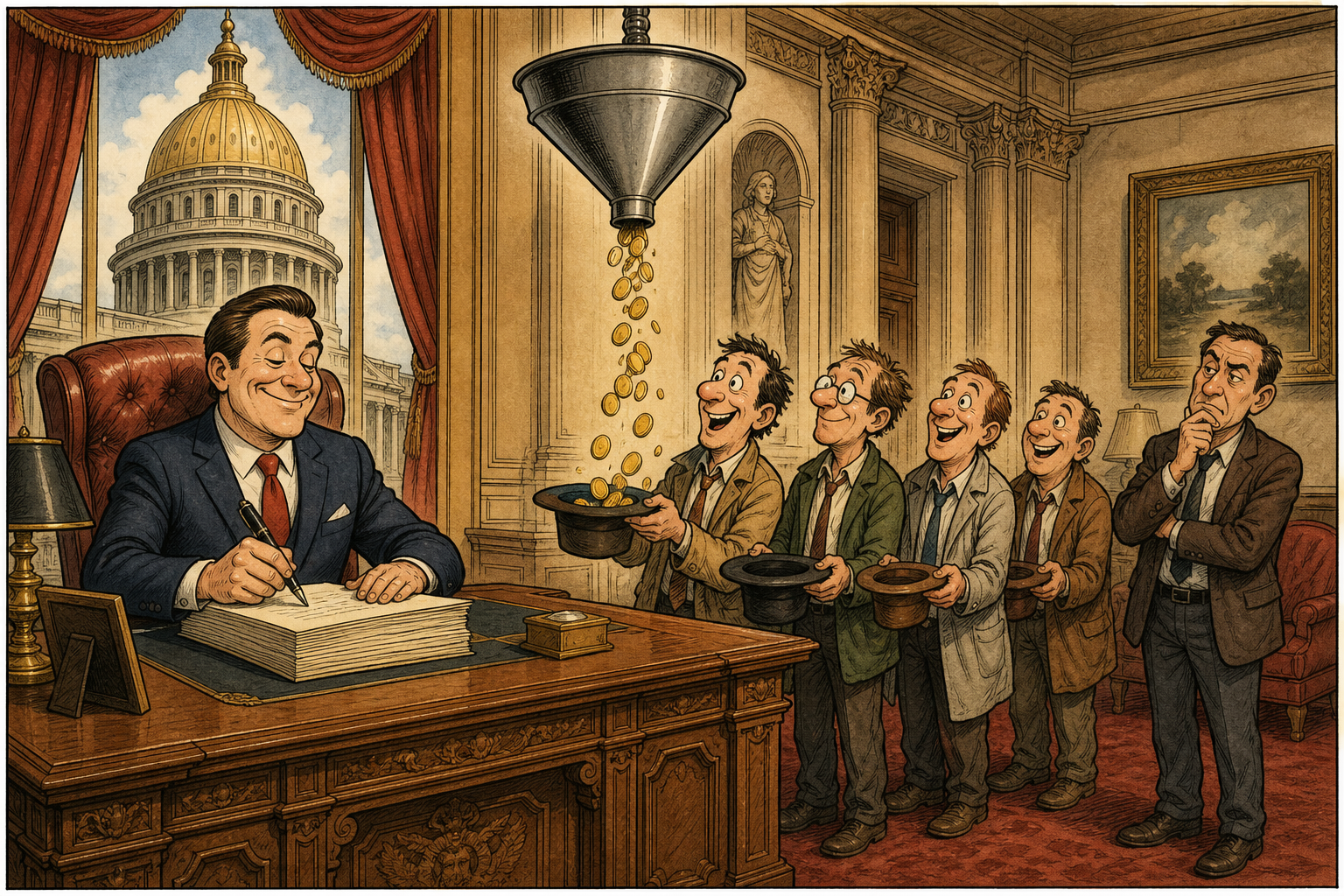
“The implementation of Merchant Category Codes to surveil lawful purchases is nothing more than an ill-conceived attempt to create a de facto national firearms registry.”
John Commerford, Executive Director, NRA-ILA
The Congressional Sportsmen’s Foundation rounded out the endorsements, and the sponsors leaned into the same theme. Rep. Stefanik, who launched the effort in the prior Congress, argued that “the tracking of gun purchases is a violation and infringement on the Constitutional rights” of Americans. The through-line across all four groups: the objection is not to any one bank’s policy, but to building a standardized, nationwide way to mark who shops at a gun store.
After ISO approved the code, Visa, Mastercard, and American Express initially agreed to adopt it, then paused implementation in March 2023 amid legal uncertainty and a wave of Second Amendment pushback. That pause was never formally lifted. But the issue did not stay frozen: because some states began requiring the code while others banned it, the networks were left navigating contradictory mandates.
By 2026 the tally had hardened into a roughly two-to-one split. About 20 states — nearly all with Republican-led legislatures — had passed laws prohibiting or restricting a firearm-specific code. Three states pulled the other way: California’s AB 1587 requires the code, and Colorado and New York followed with mandates of their own. Visa updated its merchant-data manual to add the firearms code in order to comply with California, even as it held off elsewhere — the clearest sign that the patchwork, not the networks, is now driving the outcome.
What the bill does — Bars payment networks from requiring or assigning a merchant code that singles out firearms retailers; orders an annual DOJ report. S. 1715 (Hagerty) / H.R. 1181 (Moore).
What supporters say — A firearm-specific code is the foundation of a backdoor gun-owner registry and a debanking tool; privacy of lawful buyers comes first.
What opponents say — The code only marks the store, not the buyer or the items, and could help flag trafficking and warning signs; banning it ties law enforcement’s hands.
The Republican measure has a mirror-image rival. House Democrats Rep. Maxwell Frost (D-FL) and Rep. Jared Moskowitz (D-FL) introduced the Identify Gun Stores Act, which would do the opposite — require the firearms merchant code and preempt state laws that ban it. Its sponsors argue the code could surface “common red flags,” such as an 18-year-old rapidly buying multiple AR-15s, body armor, and ammunition. Everytown for Gun Safety, which backed the original ISO code, frames the data as a tool to help curb gun violence.
The clearest recent test came at the state level. On May 26, 2026, Arizona Gov. Katie Hobbs (D) vetoed a bill that would have restricted the firearms code, writing that “merchant category codes are vital tools that help law enforcement crack down on illegal gun trafficking” and that the measure “would make it harder for law enforcement to catch violent criminals.” The veto is a useful marker of where the dividing line sits: Republican legislatures moving to ban the code, Democratic executives moving to keep it available.
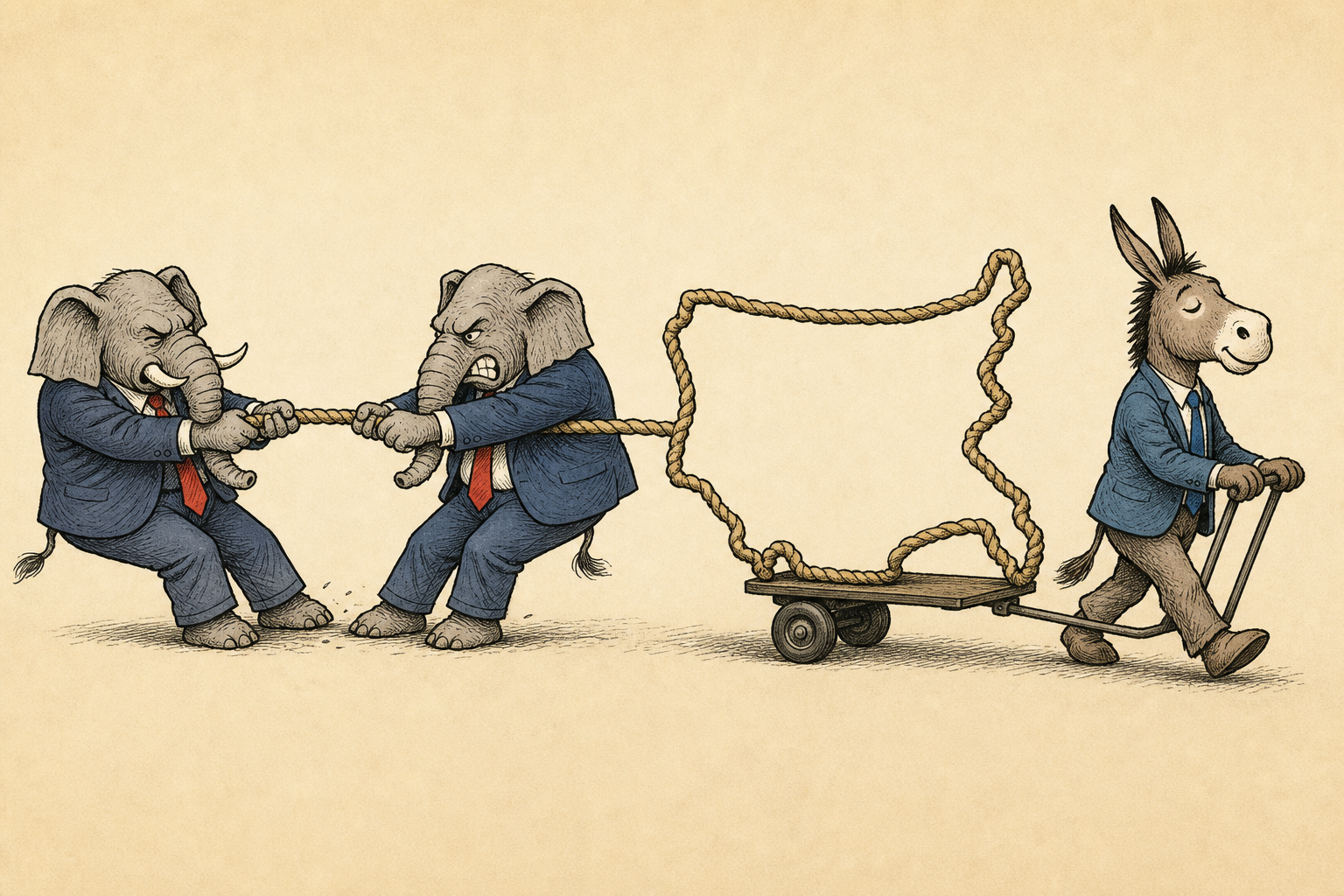
That partisan geography matters for the federal bill’s odds. With Republican majorities, the Protecting Privacy in Purchases Act can pass the House and clear committee in the Senate, but a stand-alone bill still faces the 60-vote filibuster threshold — which is why backers have also eyed attaching its language to larger financial-services or appropriations vehicles. For now, the most durable action remains in the statehouses, not in Washington.
The Protecting Privacy in Purchases Act — S. 1715 from Sen. Bill Hagerty (R-TN) and H.R. 1181 from Rep. Riley Moore (R-WV) — would forbid payment networks from tagging firearms retailers with a distinct merchant code. NSSF, Gun Owners of America, the NRA, and the Congressional Sportsmen’s Foundation back it as a guard against a backdoor gun registry and against the debanking of the firearms industry. Gun-control groups and the bill’s Democratic rivals counter that the code is a narrow, store-level marker that could help law enforcement, and that banning it removes a possible safeguard. Roughly 20 states have already banned the code, three require it, and the card networks remain paused in the middle. The federal bill has the votes to move in the House and momentum in the states, but no clear path through the Senate filibuster. We’ll track committee action and any move to fold its language into a larger package.
No American should have their lawful firearm purchases tracked, tagged, and turned into a watchlist. The Protecting Privacy in Purchases Act stops the financial surveillance of gun owners. Pass it.
Paraphrased commentary · not a verbatim post
Gun Owners of America's framing of the bill — paraphrased and labeled as commentary, not a verbatim post.
Merchant category codes that single out gun stores are the building blocks of a de facto national firearms registry. The NRA supports the Protecting Privacy in Purchases Act to shut that door.
Paraphrased commentary · not a verbatim post
The NRA's framing of the bill — paraphrased and labeled as commentary, not a verbatim post.
Here's what 2A organizations are saying about the GOP-led gun-purchasing privacy bill making its way through Congress — a measure to block banks from tracking firearm purchases with a special merchant category code.
- 1.The Daily Caller — 'Here's What 2A Orgs Are Saying About GOP-Led Gun-Purchasing Privacy Bill Making Its Way Through Congress,' June 28, 2026 (primary lead)
- 2.Congress.gov — S. 1715, Protecting Privacy in Purchases Act, 119th Congress (Sen. Bill Hagerty, R-TN): full bill text (primary source)
- 3.Congress.gov — H.R. 1181, Protecting Privacy in Purchases Act, 119th Congress (Rep. Riley Moore, R-WV): full bill text (primary source)
- 4.NSSF — 'NSSF Applauds Sen. Bill Hagerty's Protecting Privacy in Purchases Act Introduction' (Lawrence G. Keane statement)
- 5.Rep. Richard Hudson (R-NC) — 'Reps. Hudson, Moore, Barr Introduce Legislation to Stop Unconstitutional Tracking of Lawful Gun Purchases' (GOA, NRA, NSSF endorsements)
- 6.Rep. Riley Moore (R-WV) — 'Congressmen Moore, Hudson, Barr Introduce Legislation to Prohibit Tracking of Gun and Ammo Sales by Financial Institutions'
- 7.Rep. Elise Stefanik (R-NY) — 'Stefanik Introduces Protecting Privacy in Purchases Act to Stop Unconstitutional Tracking of Gun Sales' (118th Congress origin)
- 8.Payments Dive — 'Congress members lob dueling gun code bills' (Protecting Privacy in Purchases Act vs. the Democratic Identify Gun Stores Act)
- 9.Payments Dive — 'States split over gun merchant category code' (state-by-state ban vs. mandate breakdown)
- 10.KJZZ — 'Governor vetoes bill to restrict merchant codes for Arizona gun, ammo purchases' (Gov. Katie Hobbs (D) veto, May 26, 2026)
- 11.CBS News — 'American Express, Visa, Mastercard move ahead with code to track gun store purchases in California'
- 12.NPR — 'A new credit card merchant code could help curb gun violence, advocates say,' Sept. 15, 2022 (ISO approval; Amalgamated Bank background)
- 13.Fox Business — 'Senate Republicans demand credit card companies reverse decision to track gun store sales'
- 14.Everytown for Gun Safety — 'WIN FOR GUN SAFETY: Major Credit Card Companies Adopt New Merchant Category Codes for Gun Sales' (the gun-control case for the MCC)
Last updated June 28, 2026