
New York Democrats Move to Gerrymander Their Maps — Too Little, Too Late, and Too Expensive.
On June 4, 2026, the Democrat-controlled New York Legislature gave first passage to a constitutional amendment built to let the state redraw its congressional map in the middle of the decade — and to strip out the very anti-gerrymandering rules that New York’s own highest court used to throw out the Democrats’ last partisan map in 2022. It was sold as a counterpunch in the national redistricting arms race that Texas started and California escalated.
There is one problem the press releases tend to skip: by New York’s own constitution, this amendment cannot touch the 2026 midterms. It cannot touch anything until 2028 at the earliest. A constitutional amendment in New York must pass two separately elected Legislatures and then win a statewide voter referendum — a multi-year gauntlet that runs straight past the election Democrats say they are trying to win.
This page lays out what the amendment actually does, why it arrives too late to matter for the fight it was pitched to win, what it would cost in money and credibility, and why the 2030 census — in which New York is projected to lose a seat anyway — makes the whole effort look like a lot of expense for a very short payoff. The mission here is the record, not the rhetoric.
- June 4, 2026 — the date the New York Legislature gave first passage to the redistricting amendment (S.10637 / A.11553), just before adjourning the regular session · Source: Spectrum News NY1; The Hill
- 2028 — the earliest election any new map could affect — the amendment is useless for the 2026 midterms it was pitched to influence · Source: NBC News; Ballotpedia
- 2 Legislatures + 1 referendum — New York's bar for a constitutional amendment: passage by two separately elected Legislatures, then statewide voter approval (earliest ballot: November 2027) · Source: Ballotpedia; Gothamist
- 2–4 House seats — the Democratic gain analysts estimate a redrawn New York map could yield in 2028 · Source: The Hill; Bloomberg Government
- Loses a seat in 2030 — New York is currently projected to lose a congressional seat at the next census — less than two years after any 2028 map would take effect · Source: The Daily Caller; apportionment projections
- Struck down in 2022 — New York's last Democratic congressional gerrymander was thrown out by the state Court of Appeals in Harkenrider v. Hochul · Source: N.Y. Court of Appeals
Late on the night of June 1, 2026, Assembly Speaker Carl Heastie (D) and Senate Majority Leader Andrea Stewart-Cousins (D) introduced a single constitutional amendment, S.10637 / A.11553. Three days later, on June 4, both chambers passed it on a party-line basis and adjourned the regular session. That vote was the first of the two passages New York requires — an opening move, not a finished law.
The effort had been building for months. Senate Deputy Leader Michael Gianaris (D) carried an earlier version (S8467) that would let New York redraw congressional lines off-cycle if another state did so first — an explicit “they-started-it” trigger aimed at Texas. Governor Kathy Hochul (D-NY) and House Minority Leader Hakeem Jeffries (D-NY) both backed the push, framing it as refusing to “unilaterally disarm” while Republicans redrew maps elsewhere.

Here is the part that makes the “war footing” rhetoric collapse on contact with the calendar. New York is not California. It cannot redraw a map by statute or by ballot proposition in a single year. Amending the state constitution requires passage by two separately elected Legislatures — meaning the amendment must pass again after the November 2026 elections seat a new Legislature — and only then go to voters, who could not weigh in until November 2027 at the earliest. New maps drawn under it would not be usable until the 2028 cycle.
That is the “too late” in the headline. The mid-decade redistricting wave was set off to shape the 2026 House — Texas to add Republican seats, California to answer with Democratic ones. New York’s amendment, by contrast, is structurally incapable of affecting 2026. By the time any New York map drawn under it could be used, the midterms the whole scramble was about will be two years in the past.
New York was ground zero for illegal gerrymandering led by Kathy Hochul the last two election cycles. She lost in court — not once, but twice — trying to rig our congressional lines. Now she wants to change the constitution to do it again.
The amendment is not a neutral “respond-if-attacked” switch. According to the bill language and reporting on it, it would do three things that move power toward the Legislature’s Democratic supermajority. First, it would permit mid-decade congressional redistricting — redrawing lines without waiting for a new census. Second, it would let the Legislature adopt maps by a simple majority, eliminating the bipartisan supermajority threshold currently needed to override the Independent Redistricting Commission.
Third — and most striking — it would remove the constitutional language that bars drawing districts to favor a party or an incumbent, along with rules requiring districts to be compact and to avoid splitting counties and towns. The 10-member Independent Redistricting Commission would be reduced to holding hearings and producing a single set of maps by January 15 in the second year of each decade; if the Legislature rejects it, lawmakers draw their own. Critics call this gutting the reform New Yorkers voted into the constitution in 2014.
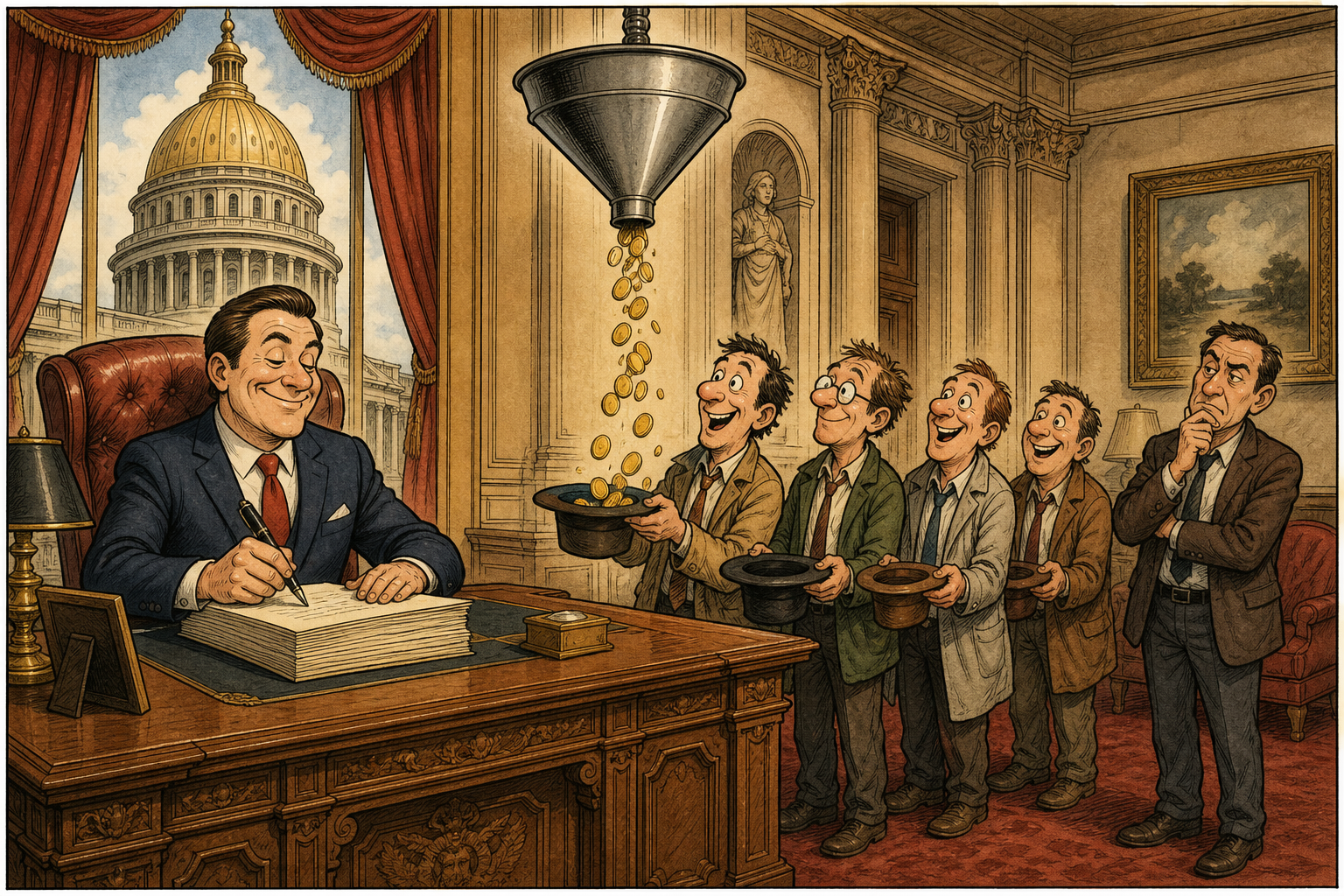
Removes — the constitutional ban on drawing districts to favor a party or incumbent; the compactness and keep-counties-whole requirements; the bipartisan supermajority needed to pass legislative maps.
Adds — authority for mid-decade congressional redistricting; a path for the Legislature to adopt maps by simple majority; a hard deadline that sidelines the Independent Redistricting Commission to a single advisory submission.
Net effect — the Democratic legislative majority, not an independent commission, would control the lines — starting in 2028.
While far-right extremists clear the path for partisan gerrymandering across the country, New York Democrats refuse to unilaterally disarm. We will change the constitution so New Yorkers are not disenfranchised.
The “too expensive” charge is partly literal and partly strategic. Pushing a constitutional amendment across two legislative sessions and onto a statewide ballot means a multi-year political and advertising campaign to persuade voters to scrap their own anti-gerrymandering protections — protections those same voters approved in 2014. We have not seen an official price tag for that campaign, and we will not invent one; the honest statement is that it is a sustained statewide expense whose total has not been published.
The “too little” is the math. Analysts estimate a redrawn New York map could net Democrats somewhere between two and four House seats — real, but modest. And whatever map emerges for 2028 would have a remarkably short shelf life: the 2030 census triggers the next regular redistricting almost immediately after, and New York is currently projected to lose a congressional seat in that reapportionment regardless of who draws the lines. A gerrymander that takes the better part of a decade to legalize, then expires in one cycle, is the definition of a poor return on a large investment.
“Unlike other states that rushed into mid-decade redistricting, New York cannot simply draw a new map in time for the 2026 midterms.”
The Daily Caller, June 28, 2026
The Democrats are the Masters of the Gerrymander — they've done it in New York for years and got caught by their own Courts. Now Kathy Hochul wants to change the Constitution to cheat AGAIN. It won't even be ready until 2028. Too little, too late!
Paraphrased commentary · not a verbatim post
President Trump's general framing of the New York effort — paraphrased and labeled as commentary, not a verbatim post.
New York Democrats have run this play before, and it ended badly. In Harkenrider v. Hochul, decided April 27, 2022, the New York Court of Appeals — the state’s highest court — struck down the congressional map the Democratic Legislature had drawn, holding it was enacted in violation of the constitution’s redistricting procedures and was an impermissible partisan gerrymander favoring Democrats. The court handed map-drawing to a neutral special master, and the court-ordered map cost Democrats seats in 2022. The new amendment is, in effect, an attempt to delete the constitutional language the court relied on so the same map could not be challenged the same way.
There is a fresher cautionary tale, too. The Daily Caller points to Virginia, where Democrats moved quickly to push their own mid-decade gerrymander into effect for 2026 — and saw the effort rejected in court. The lesson the New York amendment’s authors seem to have drawn is to slow down and do it by constitutional amendment instead; the lesson the calendar draws is that slowing down means missing the only election the fight was about. Either you move fast and risk the courts, or you move by amendment and miss the midterms. New York chose the second.

Kathy Hochul already lost in court TWICE for illegal gerrymandering. Now she wants to rewrite New York's constitution to legalize it. The Worst Governor in America is rigging the maps because she can't win on her record.
Paraphrased commentary · not a verbatim post
Rep. Elise Stefanik's (R-NY) general framing of the amendment — paraphrased and labeled as commentary, not a verbatim post.
New York Democrats have started down a long road to redraw their congressional map and to erase the anti-gerrymandering rules their own constitution contains. The amendment passed its first hurdle on June 4, 2026. But it cannot affect the 2026 midterms it was sold to win; it cannot take effect before 2028; it requires a second legislative passage and a statewide referendum to get there; it promises a modest two-to-four-seat gain; and it would deliver that gain just before the 2030 census — in which New York is projected to lose a seat — wipes the slate. Too little, too late, and, by the Daily Caller’s framing, too expensive for what it buys. We will track the second passage, the referendum, and whether the Independent Redistricting Commission survives the rewrite.
- 1.The Daily Caller — 'New York Democrats' Gerrymander: Too Little, Too Late And Too Expensive,' opinion by Denis Polio and Nadin Linthorst, June 28, 2026 (lead source)
- 2.New York State Senate — S8467 (Sen. Michael Gianaris, D), concurrent resolution proposing a constitutional amendment on mid-decade redistricting (primary source — bill text and status)
- 3.Governor Kathy Hochul — official remarks on New York's redistricting plans amid the nationwide gerrymandering push, May 5, 2026 (primary source — video, audio, and rush transcript)
- 4.Harkenrider v. Hochul, 38 N.Y.3d 494 (N.Y. Court of Appeals, Apr. 27, 2022) — the decision striking New York's 2022 congressional map as an unconstitutional partisan gerrymander (primary source via Justia)
- 5.NBC News — 'New York Democrats unveil their own mid-decade redistricting scheme, targeting future elections,' 2026
- 6.Spectrum News NY1 — 'State legislature approves first passage of redistricting amendment,' June 4, 2026
- 7.The Hill — 'New York Democrats introduce redistricting measure that could add 4 House seats in 2028,' 2026
- 8.Bloomberg Government — 'NY Dems Move to Tighten Control Of Redistricting Before 2028,' 2026
- 9.City Journal — 'New York Democrats Play Fast and Loose With Redistricting,' 2026
- 10.Ballotpedia — 'Redistricting in New York ahead of the 2026 elections' (process, IRC, and constitutional-amendment timeline)
- 11.Washington Examiner — 'Stefanik releases ad ripping Hochul for alleged redistricting hypocrisy,' August 2025
- 12.FactCheck.org — 'Assessing Redistricting Claims from Texas, New York Governors,' August 2025
- 13.Gothamist — 'New York lawmakers tee up redistricting battle with move to change state constitution,' 2026
- 14.NOTUS — 'New York State Assembly Advances Redistricting Amendment,' June 2026
- 15.Wikipedia — '2025–2026 United States redistricting' (national mid-decade redistricting timeline: Texas, California, and the arms race)
Last updated June 28, 2026