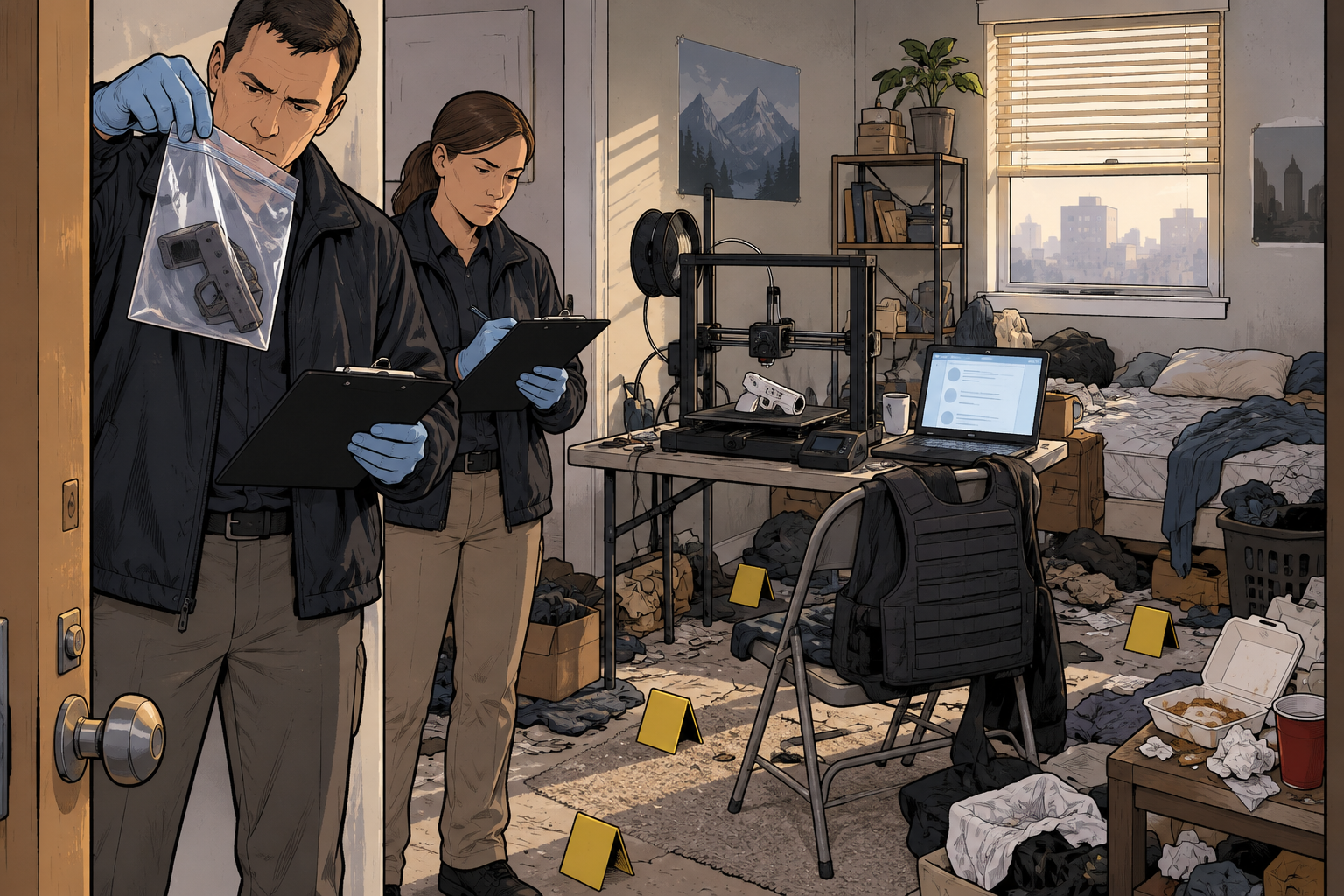
DHS Told Angus King the Man ICE Killed in Maine Was the Target —
Three Hours Later, It Called Back to Say That Was Wrong.
On the morning of July 13, 2026, an ICE officer shot and killed Joan Sebastian Guerrero, 26, at the intersection of Pool and Hill streets in Biddeford, Maine, during what the Department of Homeland Security called “targeted surveillance” of a residence tied to someone with a final removal order. Neither agent wore a body camera. DHS said nothing publicly for roughly twelve hours.
Then Sen. Angus King (I-ME) disclosed something DHS’s own statement never mentioned: DHS Secretary Markwayne Mullin told him by phone that Guerrero was the actual target of the operation and had “weaponized” his vehicle against agents. Three hours later, Mullin called King back, unprompted, to say that was wrong — Guerrero was not the man named in the warrant at all.
“He had given me incorrect information,” King said. “Once he learned it was incorrect, he let me know — which I respect.” No charges have been filed against the officer. The FBI, DHS’s Inspector General, and Maine’s attorney general are now all investigating what happened on Pool Street — and why the public account and the private one didn’t match.
- 26 — age of Joan Sebastian Guerrero, the Colombian national ICE shot and killed in Biddeford · Source: Bangor Daily News; Fox News
- ~12 hours — how long DHS said nothing publicly before Maine House Speaker Ryan Fecteau confirmed the shooting · Source: Maine Public; WBUR
- 3 hours — how long after telling King Guerrero was the target, DHS Secretary Mullin called back to say he wasn't · Source: Washington Examiner; Office of Sen. Angus King
- 0 — body cameras worn by either ICE agent involved in the stop · Source: Office of Sen. Angus King
- $20 million — appropriated in DHS's latest funding bill for ICE body cameras — still ~45 days from deployment · Source: Office of Sen. Angus King
At roughly 7 a.m., ICE agents were watching a Biddeford address connected to a person with a final order of removal, according to DHS. A vehicle left the residence; agents attempted a stop at Pool and Hill streets; the vehicle, DHS said, “attempted to flee the scene,” and an officer opened fire. The driver — later identified as Guerrero, a Colombian national — was struck and pronounced dead. Advocacy groups say he held a valid Social Security number and was authorized to work; he leaves behind a partner and a young daughter, according to Mufalo Chitam of the Maine Immigrants’ Rights Coalition, who said the community is “grieving” and “furious.”
~7:00–7:17 a.m.: Stop, shooting, Guerrero later pronounced dead. Neither agent wore a body camera.
Monday afternoon, ~12 hrs later: DHS issues its only public statement.
Monday afternoon: King’s first call with Secretary Mullin — told Guerrero was the target.
~3 hours later: Mullin calls King back, unprompted, to correct the record.
Monday evening: Maine AG opens a state probe; officer placed on leave; protests begin in Biddeford and Portland.
For nearly twelve hours, DHS said nothing publicly. The first official confirmation didn’t come from the agency that pulled the trigger — it came from Maine House Speaker Ryan Fecteau (D-Biddeford), who told reporters a person had been killed and “we deserve answers about why lethal force was used and why an operation was being carried out in our streets.” By evening, hundreds had gathered in Biddeford, and a candlelight vigil drew hundreds more to Portland’s Monument Square.
Breaking coverage of the ICE-involved shooting in Biddeford, Maine that left one man dead.

DHS’s account of Monday’s shooting is the only public description of what happened — and it leaves out the detail that turned this into a national story. Roughly twelve hours after the shooting, DHS issued a single statement laying out its version: agents were watching the address, the vehicle “attempted to flee,” and the officer fired “fearing for public safety.” Nothing in that statement says whether the man behind the wheel was the person ICE was actually looking for.
“[ICE] was conducting targeted surveillance on the last known address of an illegal alien with a final order of removal… An illegal alien departed the residence in a vehicle. ICE law enforcement attempted to conduct a vehicle stop. The vehicle attempted to flee the scene and fearing for public safety an officer discharged his weapon.”
Source: DHS spokesperson statement, via The Hill and CNN.
What King disclosed publicly is that Mullin gave him a fuller — and different — account than the one DHS put out. In their first call Monday afternoon, Mullin told King that Guerrero was the actual target of the arrest warrant and had “weaponized” his vehicle against the agents trying to stop him. Roughly three hours later, Mullin called King back, unprompted this time, with a correction: he had “learned subsequently” that Guerrero was not the person named in the warrant at all. Maine Attorney General Aaron Frey’s office has offered a third characterization — that the vehicle was moving “in the direction of the officer” — which matches neither DHS’s “attempted to flee” language nor the “weaponized” description King says he was first given. Three officials, three descriptions of the same several seconds, and no video yet to settle it.
Live updates on the fatal Biddeford, Maine shooting involving ICE agents.
“He had given me incorrect information. Once he learned it was incorrect, he let me know — which I respect.”
Sen. Angus King (I-ME), on DHS Secretary Markwayne Mullin's correction
King, Maine’s senior senator, is not a Democrat — he is one of the Senate’s two independents and caucuses with Democrats for committee purposes, a distinction worth stating precisely given how central his account has become to this story. It was King’s office, not DHS’s press shop, that first told reporters at Washington Examiner and Fox News about the target mismatch. King has said he isn’t interested in prejudging the officer: “The question is, what did he do with his vehicle. Were officers threatened? Were the threats rising to the level that justified deadly force? That’s what this investigation is all about.”
What King says he can say for certain is that neither agent on Pool Street was wearing a body camera — and that new cameras are still roughly 45 days from deployment despite $20 million appropriated for the rollout in DHS’s latest funding bill. That timeline traces back to a promise made after two U.S. citizens, Renee Good and Alex Pretti, were killed by federal immigration officers in Minneapolis in January 2026: nationwide body cameras, DHS said then, were coming. Six months later, in Biddeford, they still weren’t there. “That doesn’t help us in this case,” King said. Mullin, a former U.S. senator from Oklahoma who caucused as a Republican before joining the Cabinet earlier this year, has not publicly disputed King’s account of either call.
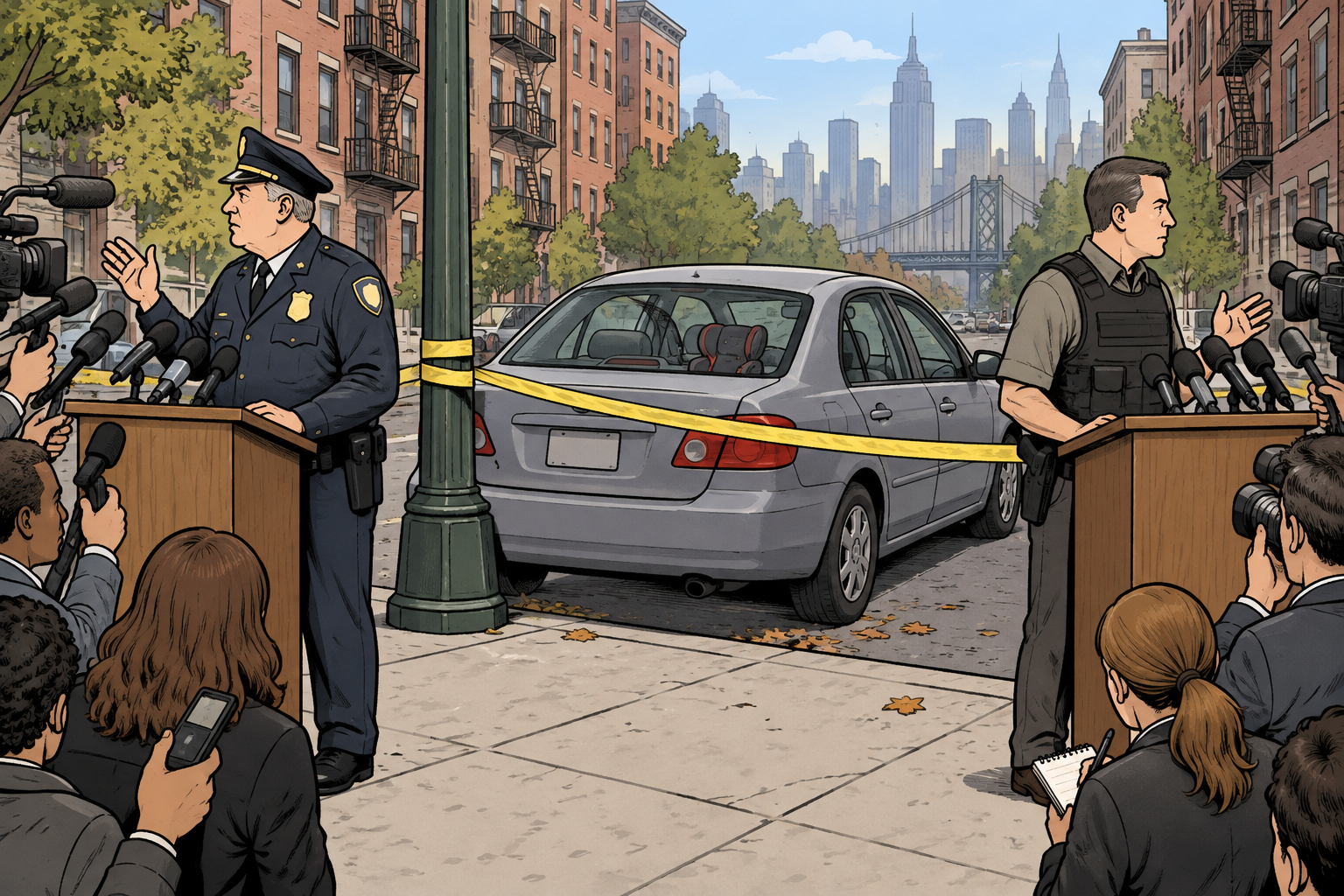
The reaction in Maine crossed party lines from the start. Sen. Susan Collins (R-ME) called for “a full and impartial investigation” and later said Mullin had told her the Boston field office of DHS’s Inspector General had taken over the case in cooperation with the FBI. Gov. Janet Mills (D-ME) went further once the target mismatch became public: “This development makes this tragedy even more disturbing and infuriating, and it underscores the reckless and haphazard manner in which immigration enforcement operations are being conducted in Maine and across the country. This has to end.” Roughly two dozen protesters entered Collins’s Biddeford office the evening of the shooting; she was not present.
This tragedy requires a full and impartial investigation.
This development makes this tragedy even more disturbing and infuriating, and it underscores the reckless and haphazard manner in which immigration enforcement operations are being conducted in Maine and across the country. This has to end.
Other Maine Democrats added detail rather than volume. Rep. Chellie Pingree (D-ME-1) corroborated King’s account that the agents involved had no body cameras. Secretary of State Shenna Bellows (D) called for ICE to be pulled off Maine streets entirely. And it was Fecteau, not DHS, who told the public a person had died in the first place. The tone wasn’t uniform — Collins’s language was procedural, Mills’s was pointed — but the demand underneath it was the same: an accounting of why deadly force was used, and why the first public account of the shooting left out the detail King says he learned within hours.
Nothing about Monday’s shooting has actually been resolved by evidence. There is no body-camera, dash-cam, or agency-released footage of the stop itself — only a doorbell recording that captured the moment from a distance and an aftermath video that circulated afterward. Three officials have offered three different descriptions of what the vehicle did in its final seconds — “attempted to flee,” “weaponized,” and moving “in the direction of the officer” — and none has been reconciled against footage the public can see. The officer involved is on administrative leave, standard protocol pending an investigation; no criminal charges have been filed against him, and none should be assumed from the leave status alone.
DHS Secretary Markwayne Mullin has informed me that the Boston office of the DHS Inspector General has taken over the investigation of the Biddeford shooting in cooperation with the FBI.
The FBI is leading the federal investigation; DHS’s Office of Inspector General in Boston and the Maine attorney general’s office are running parallel probes. Outlets disagree even on how unusual this is: Washington Examiner counted Guerrero’s death as the ninth fatal ICE or Customs and Border Protection use-of-force incident under the current administration, while wire reporting carried by the Boston Globe and others put the tally at “at least the 11th” — and Biddeford came six days after a fatal ICE-involved shooting in Houston. Until the investigations conclude, or footage surfaces, the discrepancy King disclosed is the closest thing to an official record of what DHS actually knew, and when.
An ICE officer shot and killed Joan Sebastian Guerrero, 26, in Biddeford, Maine, on July 13, 2026. DHS’s only public statement never disclosed that agents may have had the wrong man — that fact became public only because Sen. Angus King (I-ME) volunteered that DHS Secretary Markwayne Mullin gave him one account, then called back three hours later to correct it. Neither agent wore a body camera; new cameras are still weeks away despite $20 million already appropriated. Sen. Susan Collins (R-ME) and Gov. Janet Mills (D-ME) are both demanding answers. No charges have been filed. No footage has yet resolved what actually happened in the seconds before the shots were fired.