
The Man Behind a $1,200,000,000 Medicare Fraud Skipped Sentencing and Fled to Manila. The FBI Just Brought Him Home.
Herbert Leon Kimble pleaded guilty in 2019 to orchestrating one of the largest Medicare fraud schemes ever charged — a call-center operation that, by the government’s account, ran up more than $1,200,000,000 in Medicare charges for orthopedic braces thousands of elderly Americans never needed. Then, with sentencing looming, he simply stopped showing up to court and disappeared overseas.
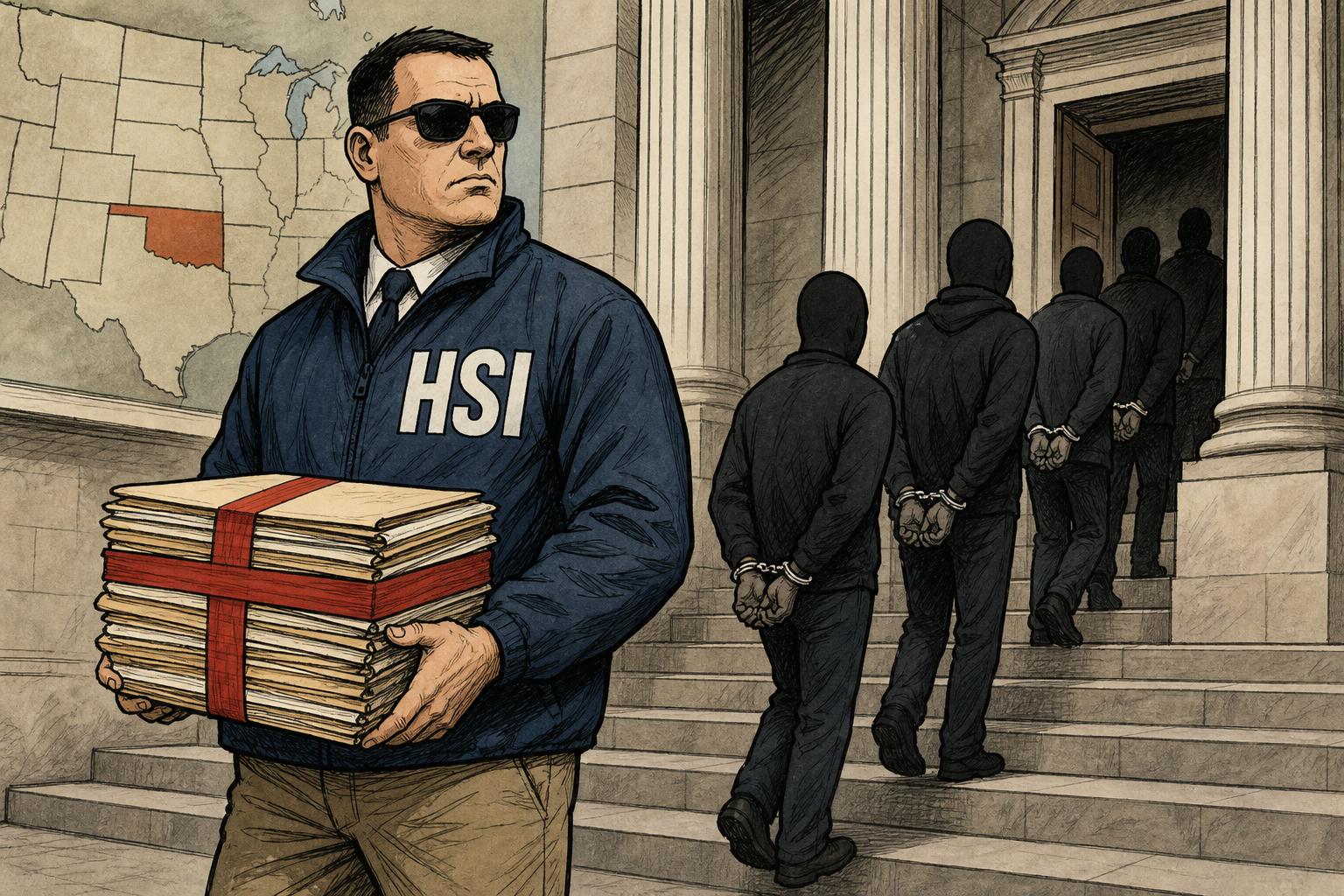
On June 11, 2026, the Philippine Bureau of Immigration’s fugitive search unit caught up with him in a commercial area of Pasig City, in Metro Manila — reportedly at a casino. He was deported and returned to the United States. The FBI announced the capture this week, calling Kimble the second fugitive arrested from its newly launched Most Wanted Fraudsters list.
One precise note up front. Kimble is not a defendant awaiting trial — he already pleaded guilty in federal court in 2019. What he evaded was sentencing, not adjudication of guilt. The $1,200,000,000 figure is the volume of Medicare charges the scheme generated, per federal prosecutors and the FBI; it is the headline measure of the program-integrity damage, not a single net loss to the Treasury. This page reports the record as the government has laid it out.
- $1,200,000,000 — in Medicare charges generated by Kimble's orthopedic-brace scheme, affecting thousands of beneficiaries — most of them elderly · Source: FBI; DOJ; Fox News
- Pleaded guilty 2019 — Kimble pleaded guilty April 4, 2019 in the U.S. District Court for South Carolina to conspiracy, healthcare fraud, wire fraud, mail fraud, false claims, and kickbacks — this is a conviction, not an allegation · Source: HHS-OIG; FBI
- Fugitive ~2 years — he failed to appear for sentencing in 2024 and fled; a federal bench warrant and an international manhunt followed · Source: HHS-OIG; The Post and Courier
- Caught in Pasig City — arrested June 11, 2026 by the Philippine Bureau of Immigration fugitive search unit and deported June 18; returned to face sentencing in the U.S. · Source: Philippine Bureau of Immigration; GMA News; Philstar
- 2nd of the list — Kimble is the second arrest from the FBI's Most Wanted Fraudsters list, launched June 4, 2026 under VP JD Vance's White House Task Force to Eliminate Fraud · Source: FBI; Fox News
By the Philippine government’s account, immigration agents had been tracking Kimble’s whereabouts for months before they moved. On June 11, 2026, the Bureau of Immigration’s fugitive search unit — working with government intelligence officers — arrested the 60-year-old American in a commercial area of Pasig City, in Metro Manila. He was deported on June 18 and placed on the bureau’s blacklist, and U.S. authorities confirmed he had been returned to the United States to finally face the sentencing he skipped.
Acting Attorney General Todd Blanche (Trump administration) put it bluntly: instead of facing accountability for his $1,200,000,000 Medicare fraud crimes in the United States, Kimble fled to the Philippines hoping to escape justice — and, in Blanche’s words, “that plan failed.”
From 2014 to 2019, Kimble ran an offshore call-center operation — including a center in the Philippines staffed by “chasers” — that served as the marketing engine for a nationwide Medicare fraud. Television and radio ads promised “free” orthopedic braces; seniors who called in were screened for Medicare eligibility, talked into requesting braces they often did not need, and routed to telemedicine doctors who issued prescriptions with little or no real medical evaluation. Those prescriptions were sold to durable-medical-equipment companies, which shipped the braces and billed Medicare for reimbursement.
The case was part of the Justice Department’s 2019 “Operation Brace Yourself,” one of the largest healthcare-fraud takedowns in U.S. history: 24 defendants charged, more than 80 search warrants in 17 federal districts, and roughly $1,200,000,000 in fraudulent brace billing across the broader ring. Kimble pleaded guilty on April 4, 2019, in the District of South Carolina to conspiracy to defraud the United States and a stack of related healthcare-fraud and kickback counts.
“If you defraud the American people, we will find you and we will bring you to justice.”
Vice President JD Vance (R), on the Kimble capture — quoted by Fox News, June 2026
A guilty plea is not the end of a case; sentencing is. Kimble never got there on his own terms. According to the HHS Office of Inspector General and the FBI, he failed to appear for sentencing in 2024 — local reporting in South Carolina described him skipping court repeatedly — and a federal bench warrant was issued. His own defense attorney later said Kimble emailed to say he would not fly back from the Southeast Asian country where he had been living, calling it “an odd email.” A co-defendant, Andrew Chmiel of Mount Pleasant, had already been sentenced to nine years.
One detail to flag honestly: the public record carries conflicting dates for the missed sentencing — the FBI and HHS-OIG cite October 7, 2024, the Philippine Bureau of Immigration cites August 27, 2024, and South Carolina reporting referenced a November 7, 2024 date among multiple skipped hearings. The through-line is consistent: he was scheduled to be sentenced in the second half of 2024, did not appear, and became a fugitive. We have noted the discrepancy rather than paper over it.

The second fugitive on the FBI's Most Wanted Fraudsters list is in custody. Herbert Leon Kimble — who pleaded guilty in a $1.2 billion Medicare fraud scheme and then fled before sentencing — was captured in the Philippines and returned to the United States.
Kimble’s arrest is the second from a tool that did not exist a month ago. On June 4, 2026, FBI Director Kash Patel unveiled the bureau’s first “Most Wanted Fraudsters” list — an idea Patel credited to Vice President JD Vance, tied to the White House Task Force to Eliminate Fraud that Vance chairs. The premise is the same one the FBI has used against violent fugitives for decades: publish names, faces, and dollar figures, and let the public help find them.
Director Patel framed the pace as the point. “In just over two weeks, this is the second Most Wanted Fraudster arrested on the FBI’s list,” he said. The first, Said Abdullahi Ereg, 47, surrendered in Minneapolis in a separate matter — a child-nutrition-program fraud case covered in our earlier reporting. Kimble’s capture, overseas and via a foreign immigration service, is a different test of the same idea: whether publicity plus international cooperation can reach a fugitive who left the country entirely.
One of the country's most wanted fraudsters will now answer for his crimes. Herbert Leon Kimble fled to the Philippines to escape sentencing in a $1.2 billion Medicare fraud scheme. That plan failed. He has been returned to the United States.
Strip away the manhunt and the casino, and what is left is a question about Medicare itself. A single offshore call-center operation generated more than $1,200,000,000 in brace charges before it was stopped — not by a billing safeguard catching the pattern in real time, but by a sprawling federal investigation after the fact. The orthopedic-brace racket worked because telemarketing, telemedicine prescriptions, and durable-medical-equipment billing could be chained together faster than program integrity could check them.
Who paid. The charges hit Medicare — taxpayer-funded health coverage for seniors and the disabled. Thousands of beneficiaries, most of them elderly, were used as billing vehicles for braces they often did not need.
What it represents. The $1,200,000,000 figure is the volume of Medicare charges the scheme generated, per the FBI and DOJ — the measure of the program-integrity breach, not a single net loss number.
Why it matters. Every fraudulent brace claim is money diverted from a program with finite funding. The case is a textbook example of why telehealth and DME billing remain among the most-exploited corners of federal healthcare spending.
This is not a presumption-of-innocence story. Kimble admitted his guilt in 2019; the open question was only whether he would ever be sentenced for it, and for nearly two years the answer was no. His capture in Pasig City and return to the United States closes that gap — the second name struck off a fraud list that is barely two weeks old. The honest framing is straightforward: a documented $1,200,000,000 Medicare fraud, a convicted defendant who ran, and a system that, this time, reached across the Pacific to bring him back. We will update this page as Kimble is sentenced.

- 1.Fox News — 'FBI Captures $1.2B Medicare Fraud Fugitive in Philippines, Second Arrest From Most Wanted Fraudsters List,' June 20, 2026
- 2.FBI — 'Statement From FBI Director Patel on Most Wanted Fraudster Arrest' (primary), June 2026
- 3.FBI — Most Wanted Fraudsters: Herbert Leon Kimble wanted poster (primary, PDF)
- 4.U.S. HHS Office of Inspector General — Fugitive profile: Herbert 'Herb' Kimble (primary)
- 5.FBI — 'Billion-Dollar Medicare Fraud Bust' (Operation Brace Yourself, primary), April 9, 2019
- 6.Philippine Bureau of Immigration / Philippine News Agency — 'American Linked to $2-B Healthcare Scam Arrested,' June 2026
- 7.GMA News — 'US Gov't: PH Immigration Agents Captured One of FBI's Most Wanted Fraudsters,' June 2026
- 8.Rappler — 'One of FBI's Most Wanted Fraudsters Arrested in the Philippines,' June 2026
- 9.Philstar — 'BI Arrests, Deports US Fraud Suspect,' June 21, 2026
- 10.The Post and Courier — 'Ringleader of a Massive Medicare Fraud Skips SC Court Date — for the 3rd Time,' 2024
- 11.Breitbart — 'Most Wanted Fraudsters List: Fugitive Who Pled Guilty in $1.2 Billion Medicare Scheme Nabbed in the Philippines,' June 20, 2026
- 12.STAT News — 'Feds Break Up $1.2 Billion Medicare Orthopedic Brace Scam,' April 9, 2019
- 13.Inquirer (USA) — 'American Fugitive Nabbed in PH Over $1.2B Healthcare Fraud Case,' June 2026
- 14.Legal Insurrection — 'FBI Captures Second Most Wanted Fraudster,' June 2026
Last updated June 20, 2026