
The Supreme Court Just Reopened the Fight Over Biden’s Gas-Furnace Rule. The Rule That Would Outlaw Half the Furnaces in America.
On Monday, June 8, 2026, the U.S. Supreme Court handed the natural-gas industry — and the Trump administration’s deregulation drive — a procedural win against one of the Biden Energy Department’s most contested appliance rules. In American Gas Association v. Department of Energy, the justices granted review, vacated a November 2025 D.C. Circuit decision that had upheld the rule, and sent the case back to that appeals court for a fresh look.
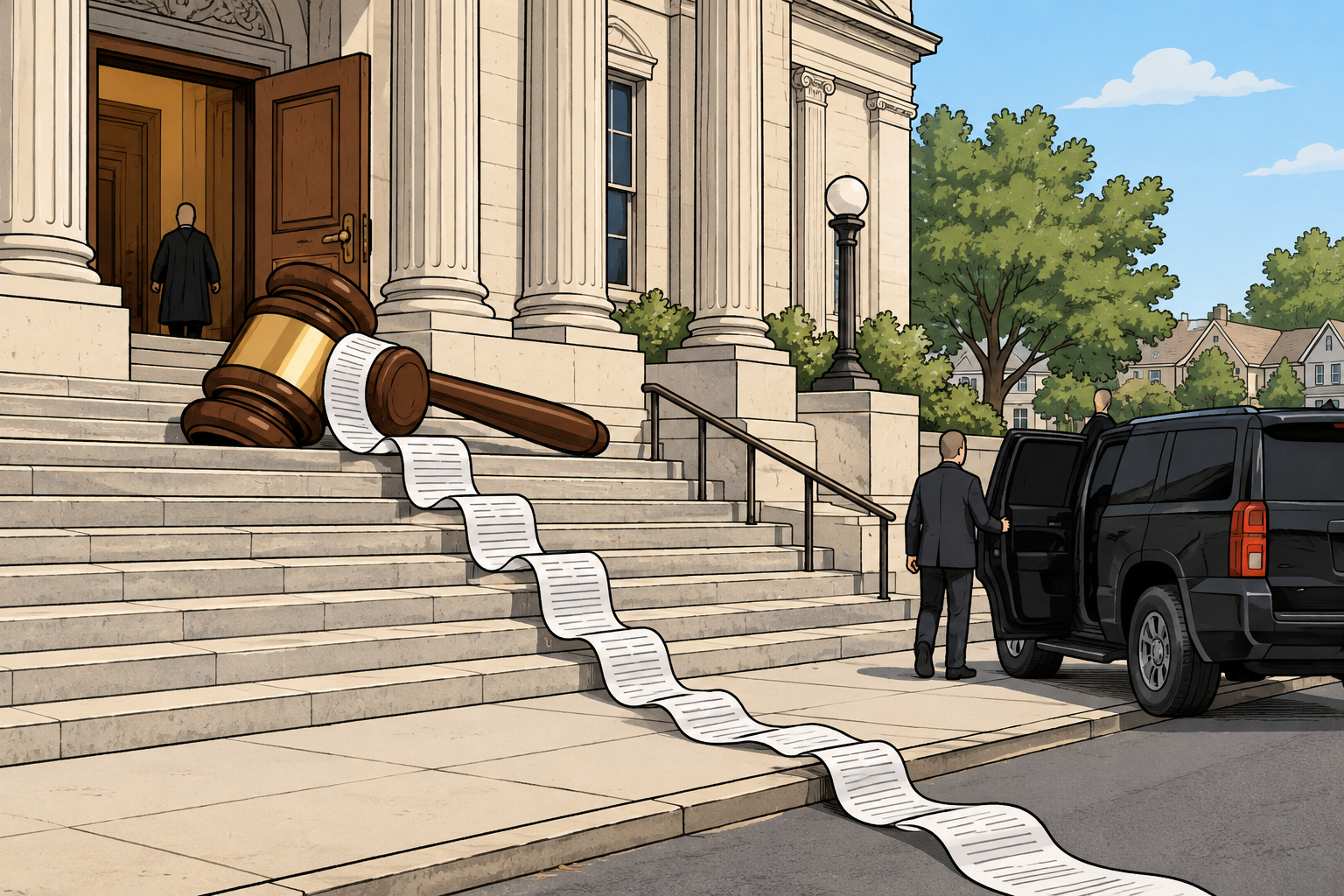
Be precise about what happened, because the headlines were not. The Court did not strike down the standards on the merits, and it said nothing about gas stoves. What it did was a “GVR” — grant, vacate, remand — a one-line order erasing the lower court’s ruling so the D.C. Circuit can reconsider it “in light of the position” of the new administration. The rule at issue covers residential gas furnaces and commercial gas water heaters, and it requires them to hit a 95 percent efficiency mark that only condensing models can meet.
That 95 percent floor is the whole fight. Roughly 55 percent of the natural-gas furnaces sold in America are non-condensing units, and the Biden rule would make them illegal to manufacture starting December 18, 2028. Industry groups argue that violates a provision of the Energy Policy and Conservation Act that bars the Energy Department from writing standards that wipe out a product class entirely — and Trump’s Solicitor General now agrees with them, telling the Court the rule “rest[s] on a legal error.”
- 55% — share of natural-gas furnaces sold in the U.S. that are non-condensing — the models the 95% rule would make illegal to manufacture in 2028 · Source: Just the News, E&E News
- 95% AFUE — the efficiency floor the Biden DOE rule sets for gas furnaces, a level reachable only by condensing units with different venting · Source: Federal Register 88 FR 87502, Bloomberg Law
- Dec 18, 2028 — compliance date when non-condensing gas furnaces would be barred from manufacture under the rule the Court just reopened · Source: Federal Register, DOE final rule
The Supreme Court’s June 8 order list disposed of the case in a single sentence: the petition for certiorari was granted, the judgment of the D.C. Circuit was vacated, and the case was remanded for further consideration. There was no oral argument, no signed majority opinion, and no named dissent on the question — this was a summary disposition known to lawyers as a GVR. It does not declare the gas-furnace rule unlawful. It clears the lower court’s decision off the board and tells the D.C. Circuit to start over with the federal government now on the other side.
That “other side” is the key. When the American Gas Association, the American Public Gas Association, the National Propane Gas Association and furnace maker Thermo Products sued, the Biden Energy Department defended the rule and the D.C. Circuit upheld it in a divided November 2025 decision. Under President Trump, the Energy Department reversed its own position. Solicitor General D. John Sauer told the Court the Department “has determined that the rules at issue are factually and legally flawed” and asked the justices to vacate the ruling so the agency could revisit them. The Court obliged.

The contested standard was finalized by the Biden Energy Department in December 2023 and published in the Federal Register at 88 FR 87502. It sets the minimum annual fuel utilization efficiency (AFUE) for consumer gas furnaces at 95 percent, with compliance required on and after December 18, 2028. Furnace efficiency standards had last been updated in 2007; this was the first tightening in a generation, and it was a steep one.
Here is why 95 percent matters so much. Standard non-condensing furnaces top out around 80 percent efficiency and vent through an existing chimney or metal flue. Condensing furnaces — the only kind that can hit 90 to 95 percent — extract more heat from the exhaust but produce acidic condensate and require different PVC venting, often a new drain line, and sometimes structural changes to the home. Mandating 95 percent does not merely make furnaces better; it deletes the non-condensing category, which industry data put at roughly 55 percent of units sold. The American Gas Association argued the result would “force millions of Americans with gas appliances to either renovate their homes or switch to electric appliances.”
“The Department may not adopt standards that effectively eliminate from the market products that have distinct performance characteristics.”
Solicitor General D. John Sauer · brief urging the Court to vacate the D.C. Circuit ruling · paraphrased from filings
The case does not turn on the major-questions doctrine or a broad attack on the administrative state. It turns on a specific clause of the Energy Policy and Conservation Act — the 1975 law that authorizes federal appliance standards in the first place. EPCA’s “features provision” bars the Energy Department from setting any standard that is “likely to result in the unavailability” of a product type with performance characteristics consumers want, or that reduces consumer choice by eliminating a class of products outright.
The gas industry’s argument is that non-condensing furnaces are exactly such a class — cheaper to buy, cheaper to install, and the only practical option for many older homes that cannot easily accommodate condensate drains or new venting. By demanding an efficiency level only condensing units can reach, the rule does not regulate the category, it abolishes it. The Biden Energy Department and the divided D.C. Circuit majority read EPCA the other way, holding that Congress gave the Department broad discretion and that “venting” is not a protected performance feature. The Supreme Court’s GVR does not resolve that dispute — it simply forces the D.C. Circuit to weigh it again, this time without the federal government defending the rule.
The Senate already voted on a bipartisan basis to block this furnace rule. It would have banned more than half the gas furnaces on the market and stuck families with thousands in renovation costs. Glad the Supreme Court sent it back. Now finish the job and repeal it for good.
The dollar figures cut both ways, and honest accounting requires both. The Energy Department’s own analysis claimed the furnace rule would cut household utility costs by about $1,500,000,000 a year and save consumers a cumulative $24,800,000,000 on energy bills over 30 years, while reducing carbon and methane emissions. Those are the government’s projected efficiency savings, and they assume households can absorb the higher up-front equipment and installation costs.
That assumption is where the consumer-cost case lives. A condensing furnace and the venting and drainage it requires can run substantially more than a like-for-like non-condensing replacement, and for homes that cannot easily route a condensate line, the alternative is a costly retrofit or switching to an electric heat pump. Critics — including Senators Ted Cruz (R-TX), Jim Risch (R-ID) and Mike Crapo (R-ID), who pushed a Congressional Review Act resolution the Senate passed to disapprove the rule — argue the mandate functions as a regressive tax on lower-income and rural households heating older homes with gas. The Court’s remand does not settle whose math wins; it reopens the venue where that argument gets made.
Court: U.S. Supreme Court, order list of June 8, 2026 — a summary GVR (grant, vacate, remand), not a merits ruling. The case now returns to the U.S. Court of Appeals for the D.C. Circuit.
Case: American Gas Association, et al. v. Department of Energy, et al. Petitioners include the American Gas Association, American Public Gas Association, National Propane Gas Association, and Thermo Products.
Rule struck from review: The Biden DOE’s December 2023 consumer-furnace standard (88 FR 87502) requiring 95% AFUE — reachable only by condensing units — with a December 18, 2028 compliance date. The companion commercial water-heater standard is in the same dispute.
Basis: The Energy Policy and Conservation Act’s “features provision,” which bars DOE from standards that eliminate a product class. Solicitor General D. John Sauer told the Court the rule “rest[s] on a legal error.”
Impact: The non-condensing furnace ban (~55% of the market) is paused for reconsideration; the Trump DOE is separately revising the rule. No furnace standard is repealed yet.
This ruling sits squarely inside the Trump administration’s broader campaign to unwind Biden-era appliance and energy regulations — the regulatory-rollback half of the Department of Government Efficiency agenda. The mechanism here is unusual and worth naming plainly: the government did not lose the case so much as switch teams. The same Energy Department that wrote the rule and defended it in the D.C. Circuit told the Supreme Court the rule was wrong, and the Court used that confession of error to wipe the favorable lower-court ruling.
That is a legitimate tool — agencies are allowed to change position when administrations change — but it is also a reminder of how much these appliance fights are about politics, not just engineering. The gas-stove panic of 2023, the furnace rule, the water-heater standard, and the CRA resolutions Congress passed to block them were all skirmishes in the same war over whether Washington should be allowed to legislate the contents of American kitchens and basements through efficiency math. The Supreme Court did not end that war. It reset one battlefield.
Great news! The Supreme Court just threw out the Radical Left's insane rule that would have BANNED more than half the gas furnaces in America and forced families to spend a fortune. We are ending the War on Appliances. You will keep your gas stoves, your furnaces, your washing machines, and your dishwashers!
Paraphrased commentary · not a verbatim post
For consumers, nothing changes overnight. Non-condensing gas furnaces remain legal to manufacture and install today; the 2028 compliance date is the trigger that the rule, if it survives, would activate. The case now goes back to the D.C. Circuit, which will reconsider the EPCA “features provision” question with the federal government no longer defending the standard — a posture that makes it far more likely the rule gets narrowed or vacated than upheld. Separately, the Trump Energy Department says it is already revising the underlying regulation through its own rulemaking.
The honest bottom line: a sweeping Biden-era mandate that would have erased the cheaper half of the gas-furnace market has been knocked back into review, and the agency that wrote it now wants it gone. Whether that ends in repeal, a softer standard, or a renewed defense by some future administration is unresolved. What is settled is the direction of travel — toward consumer choice and away from a 95 percent floor — and the unusual sight of the Energy Department asking a court to vacate its own work.
Today's Supreme Court action is a win for consumer choice. The challenged DOE standard would have eliminated non-condensing furnaces and commercial water heaters that millions of households and businesses rely on. We look forward to the D.C. Circuit's reconsideration.
The Department has determined the prior furnace and water-heater efficiency standards rest on legal error and reduce consumer choice. It welcomes the Supreme Court's decision to vacate the lower-court ruling and is revising these rules to put American families and affordability first.
Paraphrased commentary · not a verbatim post


- 1.U.S. Supreme Court — Order List, June 8, 2026 (American Gas Association, et al. v. Department of Energy — cert. granted, judgment vacated, remanded to D.C. Circuit)
- 2.Federal Register — 'Energy Conservation Program: Energy Conservation Standards for Consumer Furnaces,' Final Rule, Dec. 18, 2023 (88 FR 87502; 95% AFUE; compliance Dec. 18, 2028)
- 3.U.S. Department of Energy — 'DOE Finalizes Energy Efficiency Standards for Residential Furnaces to Save Americans $1.5 Billion in Annual Utility Bills,' 2023
- 4.Daily Caller — 'Supreme Court Tosses Biden-Era ‘Energy Efficiency’ Standards For Gas Appliances,' June 8, 2026
- 5.Washington Examiner — 'Supreme Court tosses DC Circuit ruling on Biden’s gas appliance rules,' June 8, 2026
- 6.E&E News by POLITICO — 'Supreme Court revives gas industry fight over Biden efficiency regs,' June 8, 2026
- 7.The Epoch Times — 'Supreme Court Revives Challenge to Biden-Era Gas Furnace Ban,' June 8, 2026
- 8.Just the News — 'Supreme Court overturns ruling on Biden-era furnace rules in win for natural gas groups,' June 8, 2026
- 9.American Gas Association — 'AGA files reply brief in Supreme Court petition to vacate Biden-Administration ban on natural gas furnaces, commercial water heaters'
- 10.Utility Dive — 'DOE finalizes gas furnace efficiency rule, potentially saving consumers $25B over 30 years,' 2023
- 11.Bloomberg Law — 'Gas Furnaces Face 95% Efficiency Standard With Final DOE Rule,' 2023
- 12.U.S. Sen. Ted Cruz — 'Senate Passes Cruz Resolution Blocking Biden Rule Against Gas Furnaces,' 2024
- 13.U.S. House Committee on Oversight — 'DOE’s Proposed Rule Regulates Gas Stoves Out of Existence, Further Strangles U.S. Consumer Choice,' hearing wrap-up
- 14.The Heritage Foundation — 'Biden Administration Now Wants to Ban Furnaces' (commentary)
Last updated June 9, 2026