
$81 Billion in Drug Discounts. Where Did the Money Go?
In 1992 Congress built a small program called 340B to do one humane thing: let hospitals and clinics that serve the poor buy outpatient drugs at a steep discount, so the savings could stretch to cover more low-income patients. Three decades later that program moved $81.4 billion in discounted medicines in a single year — up nearly 23% from the year before, and roughly twelve times its size in 2010. It is now the second-largest federal drug program in the country, behind only Medicare Part D.
Here is the part nobody designed and almost nobody polices: the law that mandates the discount never required the discount to reach a patient. A covered hospital can buy a drug at the 340B price, bill a commercial insurer or Medicare the full sticker price, and keep the spread — with no obligation to pass a penny to the sick person who took the pill. Multiply that across $81 billion in purchases and the question writes itself, the same question a RealClear-network columnist aimed straight at the new Department of Government Efficiency in 2025: where did the money go?
The answer, assembled from GAO audits, HRSA data, a Senate investigation, and the program’s own numbers, is that a program sold as charity for the poor has become a profit center for large hospital systems, the pharmacy chains they contract with, and the pharmacy-benefit middlemen who sit between them. The discount is real. The charity, increasingly, is not.
- $81.4 billion — in discounted 340B drug purchases in 2024 — up 22.8% over 2023's $66.3 billion, and about 12x the program's 2010 size · Source: Drug Channels, HRSA
- $66.4 billion — the 2024 gap between drugs' list prices and their 340B purchase prices — a rough proxy for the discount dollars in play, much of it kept rather than passed to patients · Source: Drug Channels
- 87% — of all 340B purchases run through hospitals — not the community health centers most associate with safety-net care · Source: Drug Channels
- 5 of 20 — GAO recommendations to fix HRSA's 340B oversight that the agency had actually implemented as of October 2025 — it rejected 6 outright · Source: GAO-26-108784
The mechanics are simple and the loophole is built into them. Drug manufacturers that want their products covered by Medicaid and Medicare Part B must, as a condition, sell those same drugs to “covered entities” — certain hospitals, federally qualified health centers, and specialty clinics — at a deep statutory discount, typically 25% to 50% off and sometimes far more. The original idea, in HRSA’s own framing, was to let those providers “stretch scarce federal resources as far as possible, reaching more eligible patients and providing more comprehensive services.”
But the statute stops at the purchase. It tells the hospital what it pays the manufacturer; it says nothing about what the hospital charges the patient or the insurer. So when a covered hospital dispenses a 340B drug to a commercially insured patient, it can buy at, say, $1,000 and collect $3,000 from the insurer, pocketing the $2,000 “spread.” The Commonwealth Fund, no opponent of the program, describes this plainly: 340B providers are generally “not required to pass the savings on to patients.” That single design gap is the engine of everything that follows.

A program this lucrative did not stay small. By the analysis of pharmaceutical economist Adam J. Fein of Drug Channels — whose annual tally is the most-cited figure in the field — discounted 340B purchases hit $81.4 billion in 2024, a 22.8% jump over the $66.3 billion recorded for 2023, which itself was up 23.4% over 2022. The Congressional Budget Office traces the same arc from a different angle: from about $6.6 billion in 2010 to $43.9 billion in 2021 and onward. By 2024 the program was moving more than 50% more in drugs than Medicaid’s entire net prescription spend.
Two facts inside the growth reframe the “safety net” label. First, hospitals — not community clinics — account for roughly 87% of all 340B purchases, and disproportionate-share hospitals alone bought nearly $52 billion of the 2023 total. Second, the number of covered-entity sites more than doubled between 2013 and 2023; today there are more than 50,000 340B sites, representing more than 40% of all U.S. hospitals. Researchers have repeatedly found hospitals expanding 340B-eligible clinics into wealthier neighborhoods — where the commercially insured patients, and the fattest spreads, actually are.
“A growing share of 340B dollars are captured by for-profit pharmacies and PBMs.”
Adam J. Fein, Ph.D. · Drug Channels Institute
The clearest map of where the money goes came from the Senate. A multi-year investigation by Sen. Bill Cassidy (R-LA), chair of the Health, Education, Labor and Pensions Committee, documented hospital systems generating enormous 340B revenue with little reaching patients. Richmond Community Hospital, part of Bon Secours Mercy Health, brought in roughly $276.5 million in 340B revenue between 2018 and 2023 while, the report found, it did not pass those savings to patients. The Cleveland Clinic pulled in nearly $933.7 million over three years. More than half of the 340B hospitals Cassidy’s committee surveyed reported that they did not share the discounts with patients at all.
Then there are the middlemen. As contract-pharmacy arrangements exploded — the number of pharmacy contracts rose from about 4,400 in 2010 to more than 75,000 by 2022, most run by Walgreens or CVS — for-profit chains and pharmacy-benefit managers began harvesting the spread directly. Cassidy’s investigation found that roughly 50 cents of every dollar of contract-pharmacy 340B profit flowed to just four large PBM-and-pharmacy companies. CVS’s in-house administrator, Wellpartner, alone collected an estimated $382 million in third-party-administrator fees in 2023; CVS’s specialty pharmacy was found to earn around 13% of negotiated commercial reimbursement on 340B prescriptions. In one illustrative specialty case, Drug Channels calculated a health system could net about $2,429 per prescription — without ever physically dispensing the drug.
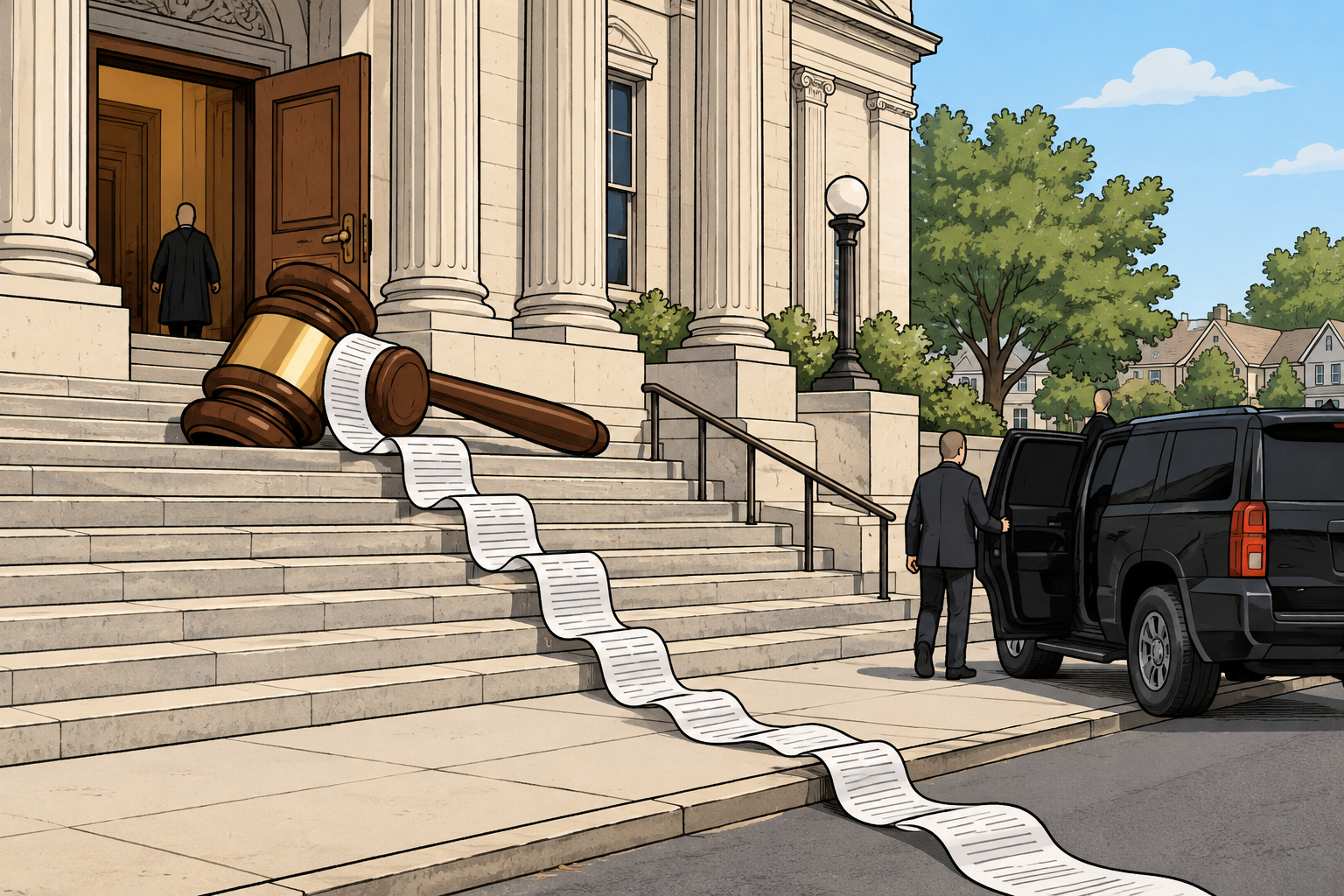
The 340B program was created to help low-income and uninsured patients afford their medications. Our investigation found hospitals and pharmacies generating hundreds of millions in revenue — while patients see little to none of the discount. Congress needs to act.
340B hit $81.4 billion in 2024 — up nearly 23%. A growing share of those dollars are captured by for-profit pharmacies and PBMs, not the low-income patients the program was built to serve. The program is structurally flawed and vulnerable to abuse.
If $81 billion is flowing through a federal program, someone is auditing it — lightly. The Government Accountability Office has spent years cataloging the weaknesses at the Health Resources and Services Administration, the small HHS office that runs 340B. In its October 2025 report (GAO-26-108784), the watchdog found HRSA’s audit-closure process “does not ensure covered entities have fully addressed any noncompliance,” that its audits do not adequately check for prohibited “duplicate discounts” — where a drug gets both the 340B price and a Medicaid rebate — and that it fails to verify hospital eligibility before letting entities into the program.
The scoreboard on fixes is the tell. GAO has made 20 recommendations to HRSA; as of October 2025, the agency had implemented just 5. It rejected 6 outright and, on 9 others, agreed in principle while insisting it lacks the statutory authority to act — and asked Congress for more power. HRSA audits roughly 200 covered entities a year out of more than 50,000 sites. Put differently: a program that grew to $81 billion is policed by an office that, on its own account, cannot fully enforce its own rules and reviews well under 1% of participants annually.
The promise (1992): let safety-net providers buy outpatient drugs cheap so the savings reach more low-income and uninsured patients.
The gap: the statute mandates the discounted purchase but never requires the savings to reach a patient. Providers may bill insurers full price and keep the spread.
The result: by the Senate’s and GAO’s findings, large hospital systems, contract pharmacy chains, and PBMs capture a growing share of $66+ billion in annual discount value — with thin federal oversight and no patient-pass-through requirement.
So, to the question on the page: where did the money go? The honest answer is that no single ledger tracks it, and that is itself the scandal. HRSA does not require covered entities to report how they spend 340B proceeds. Studies and the Senate investigation point to the same destinations — general operating budgets, capital projects, expansion into affluent markets, executive compensation, and the fees skimmed by contract pharmacies and PBMs — but because the program demands no accounting for “community benefit,” the public cannot follow the bulk of the dollars even if it wanted to.
What can be said with confidence is what the money largely did not do: it did not, in most cases, lower the price the low-income patient paid at the pharmacy counter. The 2018 GAO review of contract pharmacies found that fewer than half of covered entities studied passed the 340B discount on to uninsured patients at those pharmacies. The program is now nearly one-fifth of the entire U.S. “gross-to-net” gap between drug list prices and what is actually paid — a $356 billion distortion in 2024 — and a rising share of it lands in for-profit hands rather than in patient relief.
340B sits in an unusual political spot: the loudest critics include Republicans like Bill Cassidy (R-LA) and free-market policy shops, but the program’s biggest defenders are large hospital lobbies that span both parties, and the prior administration’s HRSA fought drug-makers’ attempts to demand more data — threatening to expel manufacturers who tried to verify eligibility before granting discounts. Reformers want three things that the receipts plainly support: a requirement that savings reach patients, real reporting on how proceeds are spent, and oversight with teeth. The Inflation Reduction Act’s drug-price provisions, analysts note, may also shrink the 340B margin and force some of the transparency the program has resisted for thirty years.
None of this means 340B should not exist. Genuine safety-net hospitals and community health centers do use the discount the way Congress intended, and they would be the first hurt by a clumsy repeal. But a program that has grown to $81 billion a year, sends 87 cents of every purchasing dollar through hospitals rather than clinics, lets middlemen skim half the contract-pharmacy profit, and cannot tell the public where the money went — that program is no longer the thing its name promises. The discount was supposed to buy medicine for the poor. The country deserves to know how much of it still does.
“The 340B program is structurally flawed and vulnerable to abuse by for-profit interests.”
Adam J. Fein, Ph.D. · Drug Channels Institute
A conservative advocacy group’s paid placement in Breitbart’s sponsored-content section this week, headlined “Trump’s 340B Proposal Puts Patients Over Criminals and Big Hospital Profits,” pointed at a real underlying government action — but the piece itself is sponsored content from Americans for Limited Government, not Breitbart’s editorial desk, and it cites no primary document. Here’s what HRSA actually did.
On July 31, 2026, HRSA posted a revised Notice Regarding the 340B Rebate Model Pilot Program for public inspection ahead of its formal Federal Register publication (Document 2026-15633, published August 3, 2026). It’s a voluntary pilot, not a final rule and not legislation: qualifying manufacturers would charge the full price upfront on a defined list of drugs subject to Medicare’s IRA price-negotiation program, then rebate the 340B discount back to covered entities after their claims are validated — the inverse of today’s upfront-discount model. The revised version covers up to 25 drugs from 13 manufacturers, up from 10 drugs and 8 manufacturers in the original design. Manufacturer plans are due August 24, 2026; HRSA approval is expected by late September; the pilot would take effect January 1, 2027.
HRSA tried this exact mechanism once already. The original rebate pilot, announced July 31, 2025, was blocked by a federal judge in Maine on December 29, 2025 after the American Hospital Association sued, on the grounds HRSA’s own record supporting the change was “threadbare.” The First Circuit upheld the injunction; HHS dropped its appeal and the pilot was vacated in February 2026. HRSA then ran a public comment period through April 2026 before issuing this revised version. The AHA has signaled it may sue again.

HRSA Administrator Thomas Engels (Trump administration) framed the revision as an oversight upgrade: “This revised pilot helps modernize program oversight by improving visibility into 340B transactions while helping preserve the program’s long-term sustainability.” Hospital groups disagree just as pointedly. Rick Pollack, president of the American Hospital Association, said the pilot “dramatically understates the true costs of this program, ignoring the hundreds of millions of dollars in compliance expenses, cash-flow disruptions, and operational burdens,” and that AHA is “considering all available options.” 340B Health CEO Maureen Testoni was blunter: “HRSA’s initial attempt was blocked by federal courts that found the program likely violated federal administrative law, and it may be again.” The drug industry’s own trade group, PhRMA, welcomed it — spokesperson Molly Jenkins called it “a positive step toward improving transparency.”
No independent government audit has verified either side’s cost estimates for this specific 25-drug version — the hospital-side “hundreds of millions” figure and HRSA’s oversight-benefit framing are both self-interested claims, not GAO- or CBO-scored numbers. Separately, and on a different track entirely, Senate HELP Committee chairman Bill Cassidy (R-LA) released his own legislative discussion draft, the 340B Drug Pricing Integrity and Affordability for Patients Act, on June 25, 2026, open for comment through August 28 — a congressional reform track running in parallel to HRSA’s executive one.


- 1.RealClearHealth — Jack Kalavritinos, 'Hey DOGE – Check out 340B and Where the Money Is Going,' March 27, 2025
- 2.RealClearHealth — 'The 340B Program Is Failing Patients,' December 3, 2025
- 3.U.S. GAO — '340B Drug Discount Program: Agency Oversight Has Improved, but Actions Needed to Address Weaknesses' (GAO-26-108784), October 23, 2025
- 4.U.S. GAO — 'Drug Discount Program: Federal Oversight of Compliance at 340B Contract Pharmacies Needs Improvement' (GAO-18-480), June 2018
- 5.HRSA — Office of Pharmacy Affairs, 2024 340B Covered Entity Purchases
- 6.HRSA — 340B Drug Pricing Program (Office of Pharmacy Affairs) overview
- 7.Drug Channels (Adam J. Fein, Ph.D.) — '340B Hit $81 Billion in 2024 (+23%): Why CMS and the IRA Are Poised to Cool the Program's Runaway Growth,' December 2025
- 8.Drug Channels — 'The 340B Program Reached $66 Billion in 2023—Up 23% vs. 2022,' October 2024
- 9.Drug Channels — 'Follow the 340B Dollar: Senator Cassidy Exposes How CVS Health and Walgreens Profit as 340B Contract Pharmacies,' May 2025
- 10.U.S. Senate HELP Committee — 'Chair Cassidy Releases Report on 340B Reform, Calls for Congressional Action'
- 11.U.S. Senate HELP Committee — 'Chair Cassidy Delivers Remarks During Hearing on 340B Drug Program, Impact on American Patients,' October 23, 2025
- 12.Congressional Budget Office — 'Growth in the 340B Drug Pricing Program'
- 13.Congress.gov / CRS — 'Overview of the 340B Drug Discount Program' (IF12232)
- 14.Commonwealth Fund — '340B Drug Pricing Program: How It Works, Why It's Controversial,' August 2025
- 15.Empire Center for Public Policy — 'Getting to the Bottom of the 340B Drug Discount Boondoggle'
- 16.Federal Register — Notice Regarding the 340B Rebate Model Pilot Program (Document 2026-15633), HRSA, posted July 31, 2026
- 17.STAT News (Pharmalot) — Trump administration revises rebate pilot for 340B drug discount program, July 31, 2026
- 18.Healthcare Dive — The Trump administration tries again on 340B rebates, July 31, 2026
- 19.Fierce Healthcare — Revised 340B rebate model pilot program moves forward despite provider pushback
- 20.Becker's Hospital Review — HRSA revises 340B rebate pilot program
- 21.340B Report — HRSA releases new 340B rebate pilot with 2027 start date
- 22.340B Health — 340B Health responds to HRSA 340B Rebate Pilot Program
Last updated August 1, 2026