Nine Years, One Apartment, and a Quarter-Million Dollars Gone. A Brooklyn Landlord Calls It a “Twilight Zone.”
Thomas Diana owns a small eight-unit building in Park Slope, Brooklyn. For nearly nine years he has been trying, through the New York courts, to recover a single apartment in it. He has not been able to. By his accounting the fight has cost him somewhere between $275,000 and $325,000 in lost and unpaid rent — money he says drained his daughter’s college fund.
The occupant moved in around 2014, answering a Craigslist ad to be a live-in companion for an elderly, disabled tenant. That tenant died in 2016. Diana says the companion never left, has not paid in full in years, and that the courts keep adjourning. He calls the case — without affection — a “Twilight Zone Marathon.”
The occupant’s lawyers tell a different story: this is a rent-stabilization fight, not a squatter case, and a judge has already found that Diana improperly pulled the unit out of stabilization. We lay out both sides below. But on one point there is no dispute — the case has run nearly a decade, and New York’s housing-court machinery is the reason it can.
- ~9 years Diana says he has spent in court trying to recover one apartment — Fox News · June 1, 2026
- $275,000–$325,000 the range of lost and unpaid rent Diana puts on the dispute — Fox News · June 1, 2026
- 8+ times the occupant has changed lawyers over the course of the litigation — Fox News · June 1, 2026
- $830/mo the occupant’s agreed share of rent under a 2022 deal — unpaid, per court records — News 12 Brooklyn · June 20, 2025
- ~2 years the average time an eviction takes in New York City, before any warrant executes — ABC7 New York · City Journal · 2024–2026
A Craigslist companion, a death in 2016, and a tenancy that never ended. The clock has run nearly a decade.
Diana’s account, as told to Fox News and to News 12 Brooklyn, is straightforward. Around 2014, a woman answered a Craigslist advertisement to serve as a live-in companion for an elderly, disabled tenant in one of his Park Slope apartments. When that original tenant died in 2016, the companion stayed. According to court documents cited by News 12, she has not made a rent payment since January 2019.
In 2022, Diana says, the occupant agreed in court to pay her share of the rent — just over $830 a month, retroactive to 2019. Per the same documents, that payment never came. The unpaid balance, in Diana’s telling, has climbed past $200,000 and, with legal costs and lost rent factored in, somewhere between $275,000 and $325,000. He estimates the unit bleeds him roughly $40,000 to $50,000 a year.
What grinds at him is not only the money but the calendar. The occupant has changed lawyers at least eight times, he says, and the court keeps adjourning — into the summer of 2026, guaranteeing the saga rolls into its tenth year. That, to Diana, is the “Twilight Zone”: a process with no apparent endpoint.
“This court case has become a Twilight Zone Marathon.”
Thomas Diana, Park Slope landlord · Fox News · June 1, 2026
Her lawyers say this is no squatter case at all. A judge found the unit was wrongly deregulated.
The occupant’s attorneys — from Brooklyn Legal Services and Legal Services NYC — reject the word “squatter” outright. Their position is that she is a lawful, rent-stabilized tenant, and that the dispute is about whether Diana improperly removed the apartment from rent-stabilization protections. On that question a judge has, per the reporting, sided with the tenant: the court found the unit was improperly deregulated. The tenant at one point sued Diana over it.
Casey Gilfoil, an attorney with Brooklyn Legal Services, put it bluntly to Fox News: “Mr. Diana’s distortion of the facts in this case is a sad attempt to harass our client out of her rent-stabilized apartment.”
We report that as it stands, on the record, without resolving it. This matters for accuracy and for fairness: legally, this is a rent-regulation fight, not a textbook squatting case — the occupant entered with permission, as a companion, and claims tenancy rights flowing from that. The contested question is the deregulation, and a court has ruled against the landlord on it. Whatever the merits, both sides agree on the consequence: nine years in, no one has possession of an answer.
- →Diana (landlord): The occupant moved in as a Craigslist live-in companion in 2014; the original tenant died in 2016; she stayed, stopped paying in full, and owes $200,000+. He calls it a 9-year squatter saga.
- →The occupant (via Brooklyn Legal Services / Legal Services NYC): She is a lawful rent-stabilized tenant, not a squatter; Diana improperly removed the unit from rent stabilization.
- →The court: A judge found the apartment was improperly removed from rent-stabilization protections — siding with the tenant on the deregulation question.
- →Both agree on: The case has run nearly nine years; the occupant has changed lawyers 8+ times; adjournments push it into a tenth year.
“Judges talk in terms of months.” A small landlord pays in years.
The dollar figures are the headline, but Diana’s sharpest complaint is about time and proportion. A small landlord with an eight-unit building does not have the balance sheet of an institutional owner; one non-paying unit for the better part of a decade is the difference between solvency and borrowing. He told Fox News the fight drained his daughter’s college fund, and that the family is now borrowing to cover tuition while the case drags on.
“Judges talk in terms of months. They don't talk about what $300,000 actually does to a family.”
Thomas Diana · Fox News · June 1, 2026
His bitterest line is reserved for the advice he says he keeps getting from inside the system: “They tell you to sell your building. They tell you to accept a buyout, to pay the person who owes you hundreds of thousands of dollars. That’s not justice. That’s legalized theft.” That is one landlord’s framing, offered against a tenant who disputes his account — but the underlying friction, the years and the carrying cost, is documented and real.
NYC landlord pleads for help as '9-year-squatter' continues to drain him dry in court saga: 'Twilight Zone.' Brooklyn's Tom Diana says the case drained his daughter's college fund.
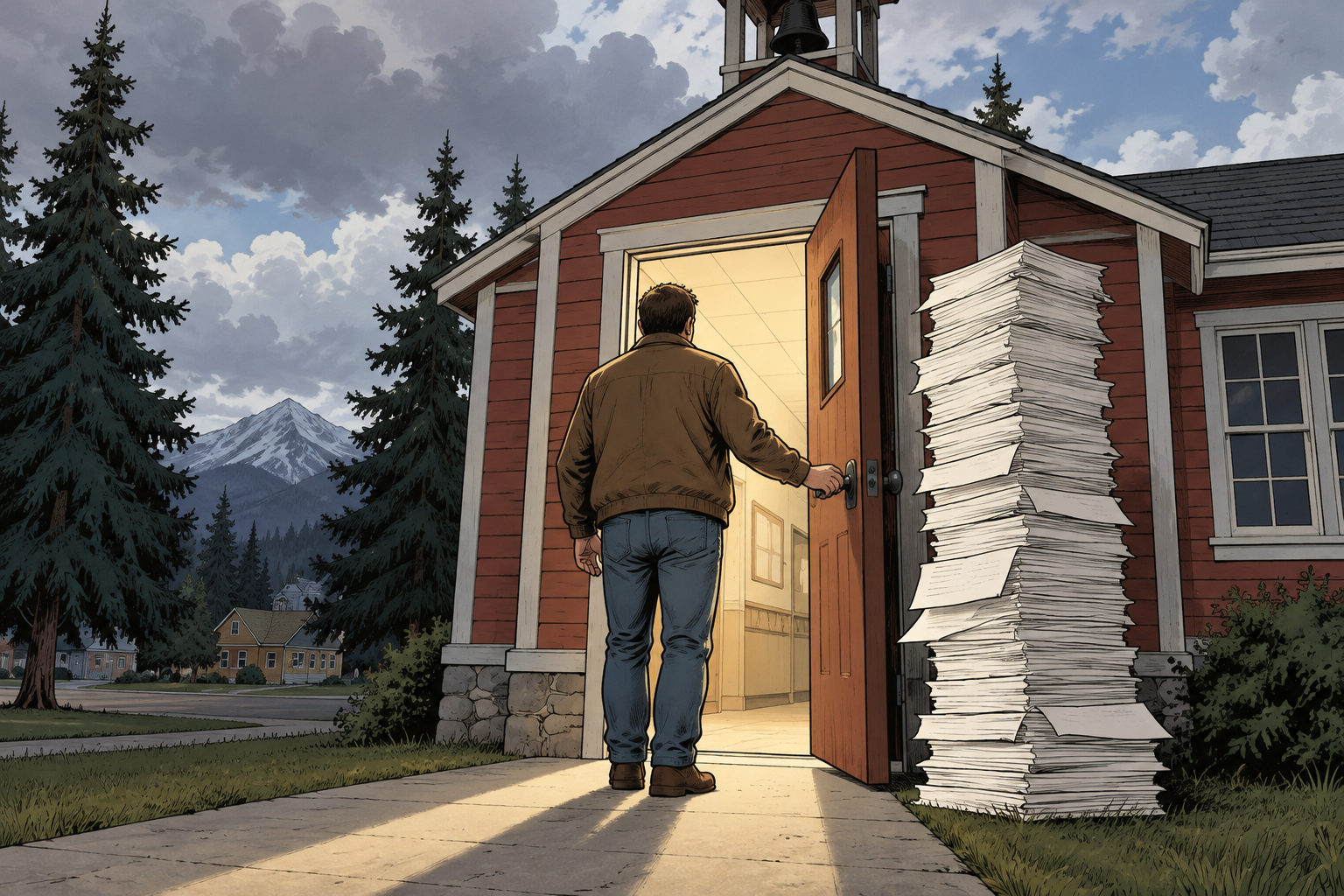
New York’s 30-day rule and a tenant-favorable court. Albany changed the words in 2024 — not the math.
Until 2024, New York law treated almost anyone in possession of a home for 30 consecutive days as having tenant-like rights — meaning an owner could not simply call the police, but had to go to housing court and prove the case. The relevant statute, RPAPL § 711, governs summary proceedings where a landlord-tenant relationship exists; RPAPL § 713 covers cases where it does not. A former Chief Judge, Colleen McMahon, called the residential-eviction process “a slow, cumbersome and extremely tenant-favorable process, especially when compared to analogous procedures in other states.”
In April 2024, Governor Kathy Hochul (D-NY) signed a budget provision amending RPAPL § 711 to state plainly that “a tenant shall not include a squatter,” defining a squatter as someone who enters without permission and occupies without title or the owner’s consent. The stated goal: let police intervene in true squatting cases instead of forcing owners into years of housing court.
But the 2024 fix does little for a case like Diana’s, and the reason is the distinction at the heart of his fight. His occupant entered with permission, as a companion, and claims tenancy through it. The new squatter definition does not touch a rent-stabilization dispute with a person who was lawfully let in. As the Empire Center warned at the time, the “fix” may “fix squat” for the broader category of New Yorkers stuck in housing court — the people the courts still treat as tenants.
- →RPAPL § 711 (pre-2024): A person in possession 30+ consecutive days could assert tenant-like rights, forcing owners into housing court rather than a police removal.
- →April 2024 (FY2025 budget): Gov. Kathy Hochul (D-NY) signed an amendment stating 'a tenant shall not include a squatter,' defining a squatter as someone who entered without permission.
- →The gap: The change targets unlawful entrants. It does not reach disputes — like Diana's — over someone lawfully let in who then claims rent-stabilized tenancy.
- →Pending: S2366 (Sen. Jessica Scarcella-Spanton, D) would raise the tenancy threshold from 30 to 60 consecutive days; it remains in the Senate Housing Committee as of 2026.
No verified Truth Social post on the Diana case exists. New York's 2024 squatter law redefined the word 'squatter' — but left the housing-court machinery, and its years-long timelines, untouched for the tenants and lawful occupants who make up most of these disputes.
Paraphrased commentary · not a verbatim post
Diana is not an outlier. He is the system working as built.
ABC7’s 7 On Your Side called it “housing court hell” — a years-long backlog that has some New Yorkers on the verge of bankruptcy. The numbers behind the phrase are stark. The Manhattan Institute’s John Ketcham, writing in City Journal, documented a backlog of more than 200,000 cases accumulated between March 2020 and January 2022, against a housing-court bench of just 50 judges — a figure unchanged for over 25 years. Trial dates routinely land more than a year after filing.
The practical result, as ABC7 reported, is that an eviction in New York City averages about two years, and landlords say the warrant alone takes at least six months to execute. In Queens, owners sued the court administrator to force the pace; the administrator answered that clearing a nearly two-year pandemic backlog was a “monumental” task hampered by judge and staff shortages. The friction is not a glitch in the system. For a non-paying or disputed unit, the delay is the system.
That is the accountability point, and it cuts cleanly regardless of who is right in Diana’s specific case. A court process that routinely takes years — with a bench frozen at 1990s staffing levels while a city of millions cycles through it — produces exactly these outcomes: an owner draining a college fund, a tenant living under a cloud of litigation, and a docket that benefits whoever can outlast the calendar. The people who set that staffing and those rules are accountable for the outcomes they produce.

The offices that write the rules and fund the courts. Named, titled, and current.
Housing law and the courts that enforce it are set in Albany and administered through the state and city. The statutes that define who is a tenant, the budget that staffs the housing courts, and the reform bills that sit in committee all run through specific offices. We name the current officeholders as a matter of record. Naming them is not an allegation against any of them in Diana’s individual case — it is the political geography of a policy that produces these outcomes.
- Gov. Kathy Hochul (D-NY)Governor of New YorkSigned the April 2024 budget provision redefining 'squatter' in RPAPL § 711. Sets the state budget that funds the housing courts and signs the statutes that define tenancy.
- Sen. Jessica Scarcella-Spanton (D)NY State Senate, 23rd District — sponsor of S2366Her bill would raise the tenancy threshold from 30 to 60 consecutive days. It has sat in the Senate Housing, Construction and Community Development Committee since 2025.
- NY State Legislature (Democratic majorities)Albany — writes RPAPL and sets court fundingDemocrats hold majorities in both the Assembly and the Senate, controlling the housing statutes and the budget that staffs New York's 50-judge housing-court bench.
- Mayor Zohran Mamdani (D)Mayor of New York City — 112th MayorSworn in January 1, 2026. City housing policy, code enforcement, and the local political fight over eviction pace and tenant protections run through City Hall.
New York's squatter and tenant-protection laws keep small landlords trapped in housing court for years — a backlog critics have dubbed 'housing court hell.'
Both sides can dispute the facts of one apartment. Neither can dispute the nine years.
What is contested here is real and worth stating plainly: Diana calls the occupant a squatter who owes him a quarter-million dollars; her attorneys call her a lawful rent-stabilized tenant whom Diana tried to deregulate out of her home, and a judge has agreed with the tenant on the deregulation. We do not resolve that. A court will.
But the thing the story is really about sits above the dispute. New York built a housing-court system that takes about two years to move an ordinary eviction, with a bench frozen at 50 judges for a generation, and statutes — even after the 2024 squatter fix — that keep most occupancy fights inside that slow machinery. The predictable product is a small landlord nine years deep, a tenant living under endless litigation, and a docket that rewards endurance over merit.
That is a choice, made and maintained by named officials in Albany and City Hall. Gov. Hochul signed the partial fix; the Legislature’s Democratic majorities write the statutes and fund the courts; a reform to extend the 30-day threshold has sat in committee for over a year. Until those choices change, “Twilight Zone” will keep being a fair description — for landlords and tenants alike.