Dr. Oz Says California Unions Are the “Biggest Beneficiaries” of a Medicaid Fraud Scheme
- $867,500,000 in federal Medicaid matching funds CMS froze from California in its July 2026 deferral — CalMatters, July 2026
- $30,000,000,000 the annual size of California's In-Home Supportive Services (IHSS) program, the largest Medicaid-funded home-care program in the country — CalMatters / KFF Health News
- 600,000+ elderly and disabled Californians and their caregivers enrolled in IHSS — CalMatters, May 2026
- $149,000,000 combined 2024 dues collected by SEIU Local 2015 and United Domestic Workers of America from IHSS-linked caregivers — Fox News / Forbes reporting on CMS's claims
California runs the largest Medicaid-funded home-care program in the country. In-Home Supportive Services, or IHSS, pays roughly $30,000,000,000 a year to keep elderly and disabled residents cared for at home — often by family members — instead of in nursing facilities. It is, by most accounts, a program that keeps people out of institutions and saves money doing it.
CMS Administrator Dr. Mehmet Oz (R appointee) says that same program has become something else: a pipeline that routes hundreds of millions of Medicaid dollars into union dues, and from there into Democratic political spending. In July 2026, his agency froze $867,500,000 in matching funds to California over it.
What follows separates what is documented fact — a real funding freeze, a real audit demand — from what is Oz's characterization of the underlying conduct, which has not been independently adjudicated.
Independent investigative journalist Nick Shirley has spent 2026 building a parallel evidence trail on the broader claim this page documents: that California’s Medicaid-funded safety-net programs carry systemic billing irregularities. On March 16, 2026, Shirley posted a 40-minute investigation to X after visiting dozens of licensed California daycare and hospice addresses around Los Angeles and San Diego. He said his crew found “ghost” locations — empty lots, boarded storefronts, and residential homes registered as active care facilities — behind more than $170,000,000 in billings; one daycare listed 39 children enrolled, his crew found five present. FOX 11 Los Angeles and FOX 9 Minneapolis both reported the video as “echoing” CMS Administrator Dr. Oz’s hospice-fraud claims covered above — the same broader Medicaid-fraud narrative this page’s union-dues reporting belongs to, though Shirley’s daycare/hospice findings are a distinct data set this page had not previously covered.
Federal enforcement records back up the broader pattern independent of Shirley’s reporting or Oz’s characterization. The HHS Office of Inspector General’s own hospice-fraud enforcement log lists a Los Angeles hospice fraud ring charged April 9, 2026 — 21 defendants, $267,000,000 in alleged fraud — and a separate April 2, 2026 health-care fraud takedown that arrested eight people, including hospice owners accused of billing taxpayers millions. Those are DOJ/HHS-OIG actions, not Shirley’s or Oz’s claims, and they predate both this page’s original reporting and Shirley’s March video.
California lawmakers have since moved — not against the fraud Shirley documented, but against Shirley. Assemblymember Mia Bonta (D-Oakland) authored AB 2624, formally titled “Privacy for Immigration Support Services Providers,” which would bar publicly posting images of a “designated immigrant support services provider” online if done as “harassment.” The Assembly passed it 57-19 on May 28, 2026; Assemblymember Carl DeMaio (R-San Diego) read the bill’s text aloud on the floor in opposition, and critics dubbed it the “Stop Nick Shirley Act.” Shirley responded directly: “This bill was created only after I exposed billions of dollars in fraud throughout immigrant communities in the US… now that the fraud has been exposed, they are trying to criminalize those who look into the fraud.” A state Senate committee held a hearing on the bill June 30, 2026; as of this writing it remains pending in the Senate and has not reached Gov. Gavin Newsom’s (D-CA) desk.
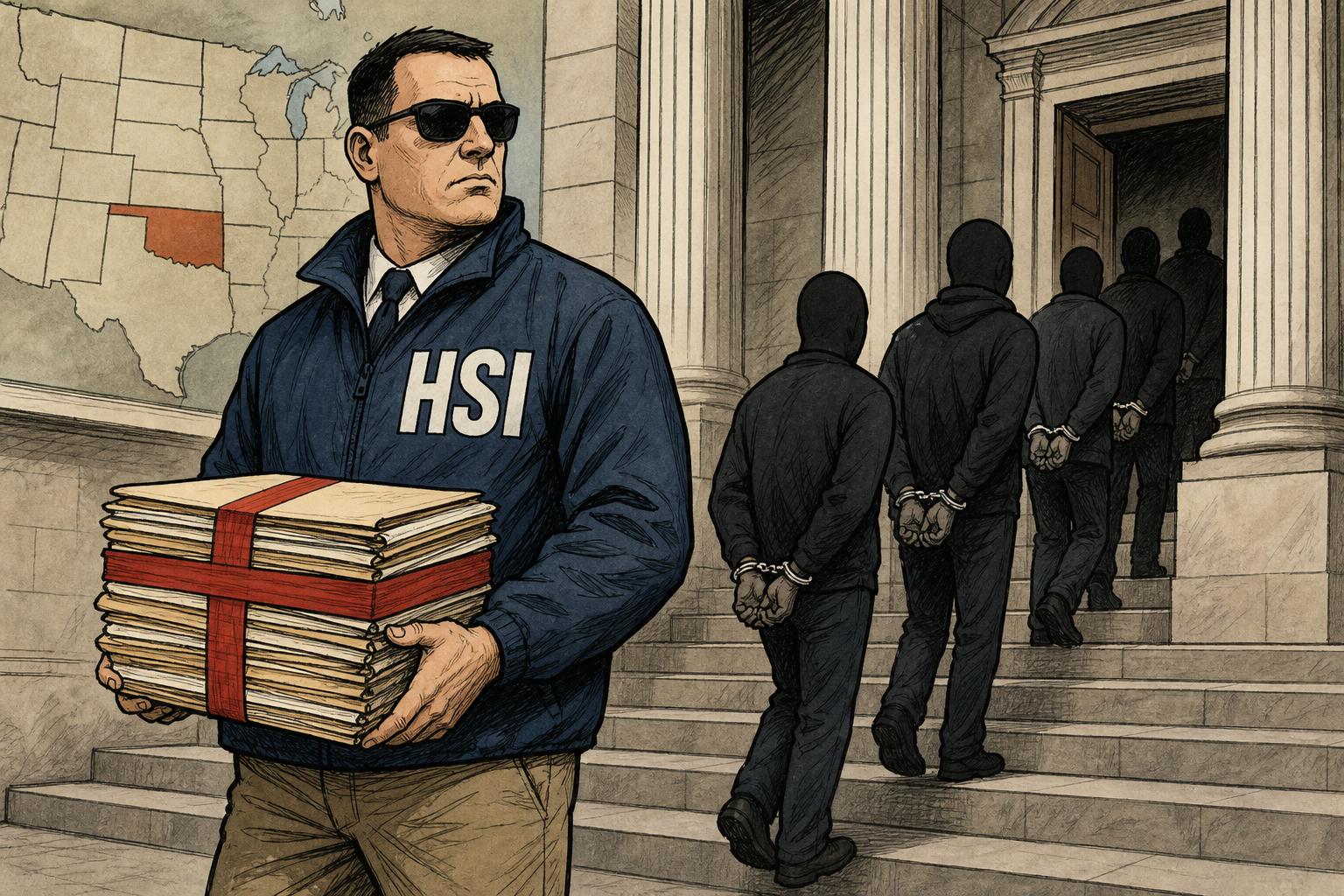
IHSS caregivers — more than 600,000 of them, many caring for their own relatives — are classified as public employees for collective-bargaining purposes. That classification means their Medicaid-funded wages are subject to union representation, and dues can be deducted from the state-paid checks. Two unions, SEIU Local 2015 and United Domestic Workers of America (UDW), collected a combined $149,000,000 in dues in 2024 under that structure.
Oz argues that structure is the point, not a side effect. “The service industry’s unionizing these workers,” he told Fox News Digital on July 10, 2026. “That gets union dues into their coffers, those union dues can now pay for political action committees, funding. Of course, one party — always. That party now has a lot of money coming in for local and state elections, and we are paying for it!”
He put it more bluntly later in the same interview: “Stealing money from Medicaid is not a flaw for a lot of states, it’s a feature of the program.” Oz has separately raised more contested claims about hospice-fraud networks in California that are outside the scope of this piece — they are part of why Gov. Gavin Newsom (D-CA) has become one of Oz's most vocal critics, but this page sticks to the IHSS union-dues allegation specifically.

The first move came on May 13, 2026, when CMS deferred $1,300,000,000 in federal Medicaid funding to California, with Oz announcing it directly on X: “When states like California refuse to work with the federal government on saving American taxpayer dollars, @CMSGov and the @WHFraudTF will hold those states accountable. Today, CMS notified the California Dept. of Health Care Services that we are deferring $1.3 billion in federal Medicaid funding…”
Six weeks later, on June 24 and 25, 2026, CMS sent letters to nine governors, California among them, demanding audits of their union-dues-consent arrangements. The letters cited the Supreme Court’s 2018 ruling in Janus v. AFSCME, which held that public employees cannot be compelled to fund union speech without affirmative consent: “There is no grace period for arrangements that violate federal law,” the letters read. “You must terminate impermissible dues-related payment structures.”
CMS refined its position on July 21-22, 2026, formally deferring $1,100,000,000 combined between California and Minnesota. California’s share, $867,500,000, spans several overlapping fraud-indicator categories CMS flagged in its review: $646,000,000 tied to IHSS claims, $250,000,000 tied to high-risk provider billing patterns — claims from providers billing four or more simultaneous patients, or filed more than a year late — and roughly $5,000,000 tied to claims submitted after a beneficiary’s date of death, with some claims flagged under more than one category. CalMatters called it the largest state Medicaid funding freeze in the program’s history. California's audit response was due August 6, 2026; the outcome has not been publicly disclosed as of this writing.
Oz did not announce the refined deferral alone. HHS Secretary Robert F. Kennedy Jr. (R admin) joined him at the July 21 press conference, part of a broader Trump administration push to treat Medicaid billing irregularities in Democratic-run states as a department-wide enforcement priority rather than a CMS-only matter.
When states like California refuse to work with the federal government on saving American taxpayer dollars, @CMSGov and the @WHFraudTF will hold those states accountable. Today, CMS notified the California Dept. of Health Care Services that we are deferring $1.3 billion in federal Medicaid funding...
The funding freeze and the audit demand are not in dispute — they are documented federal actions, confirmed across CMS records, CalMatters, Healthcare Dive, and Fierce Healthcare. What is contested is how much they prove about fraud itself. Gov. Gavin Newsom (D-CA) rejects the fraud framing outright; his press office has described Oz's campaign as an attempt to “cosplay as fraud fighter” rather than a good-faith audit.
FactCheck.org's August 2026 review, “Oz’s Medicaid Fraud Claims About California and Minnesota Lack Context,” found that Oz's July 21 press conference described statistical “outliers” and billing “anomalies” California had not accounted for — but did not present hard evidence of widespread fraud at that specific event. That distinction matters: California's billing irregularities and the union-dues structure Oz is targeting are real and now under federal review, but the full “fraud” characterization remains Oz's characterization of the program, not yet an independently adjudicated finding.
“The service industry's unionizing these workers. That gets union dues into their coffers, those union dues can now pay for political action committees, funding. Of course, one party — always.”
Dr. Mehmet Oz, CMS Administrator, Fox News Digital, July 10, 2026
The immediate risk sits with the more than 600,000 elderly and disabled Californians who depend on IHSS to stay in their own homes rather than move into nursing facilities. $867,500,000 in frozen federal matching funds threatens the continuity of a program that state officials warn cannot easily absorb a gap that size without disrupting care.
The dispute has also stalled a separate, larger piece of state financing: California's pending $2,000,000,000 Medi-Cal financing plan is currently sitting with CMS for approval, and the standoff over IHSS billing and union dues gives federal regulators leverage they did not have before the deferral began.
That leverage cuts both ways. If California and the eight other states that received June's audit letters cannot demonstrate their union-dues arrangements satisfy Janus v. AFSCME, CMS has signaled it will keep withholding matching funds rather than treat compliance as optional. If California can show its consent procedures are lawful, the fraud framing Oz has attached to the broader IHSS program still has to stand on its own evidence — which, per FactCheck.org, has not yet been fully shown.
CMS Administrator Dr. Mehmet Oz has frozen $867,500,000 in federal Medicaid matching funds from California and ordered an audit of the union-dues arrangements built into its $30,000,000,000-a-year IHSS home-care program, citing Janus v. AFSCME. Those are documented federal actions. His broader claim — that the program's structure is designed to route Medicaid dollars into Democratic political spending via SEIU Local 2015 and UDW's $149,000,000 in 2024 dues — is his characterization, and FactCheck.org found his July 21 press conference cited statistical anomalies rather than hard proof of widespread fraud. Both things can be true at once: a real funding freeze with real stakes for 600,000-plus Californians, and a fraud narrative that has not yet been independently proven.