
A Harvard Professor’s Anti-Trump Column Ran in the Financial Times. Three Days Later, the Paper Admitted It Was Built by AI.
On August 13, 2026, the Financial Times published an opinion column attacking President Trump’s tariff policy under the byline of Ricardo Hausmann, the Rafik Hariri Professor of the Practice of International Political Economy at Harvard’s Kennedy School and founder of Harvard’s Growth Lab. The headline: “Trump is taxing the dark matter that pays America’s way.” Readers noticed almost immediately that the prose did not read like the work of one of the world’s most credentialed development economists — it read like a machine had gotten to it.
They were right. Three days later, on Sunday, August 16, the FT quietly appended an editor’s note to the piece: “It has come to our attention that AI was used to condense a longer draft of this column prior to submission to the FT and our own editorial involvement.” The note went further, citing the paper’s own rules: “The FT editorial code of conduct specifically prohibits the use of AI in the writing process.”
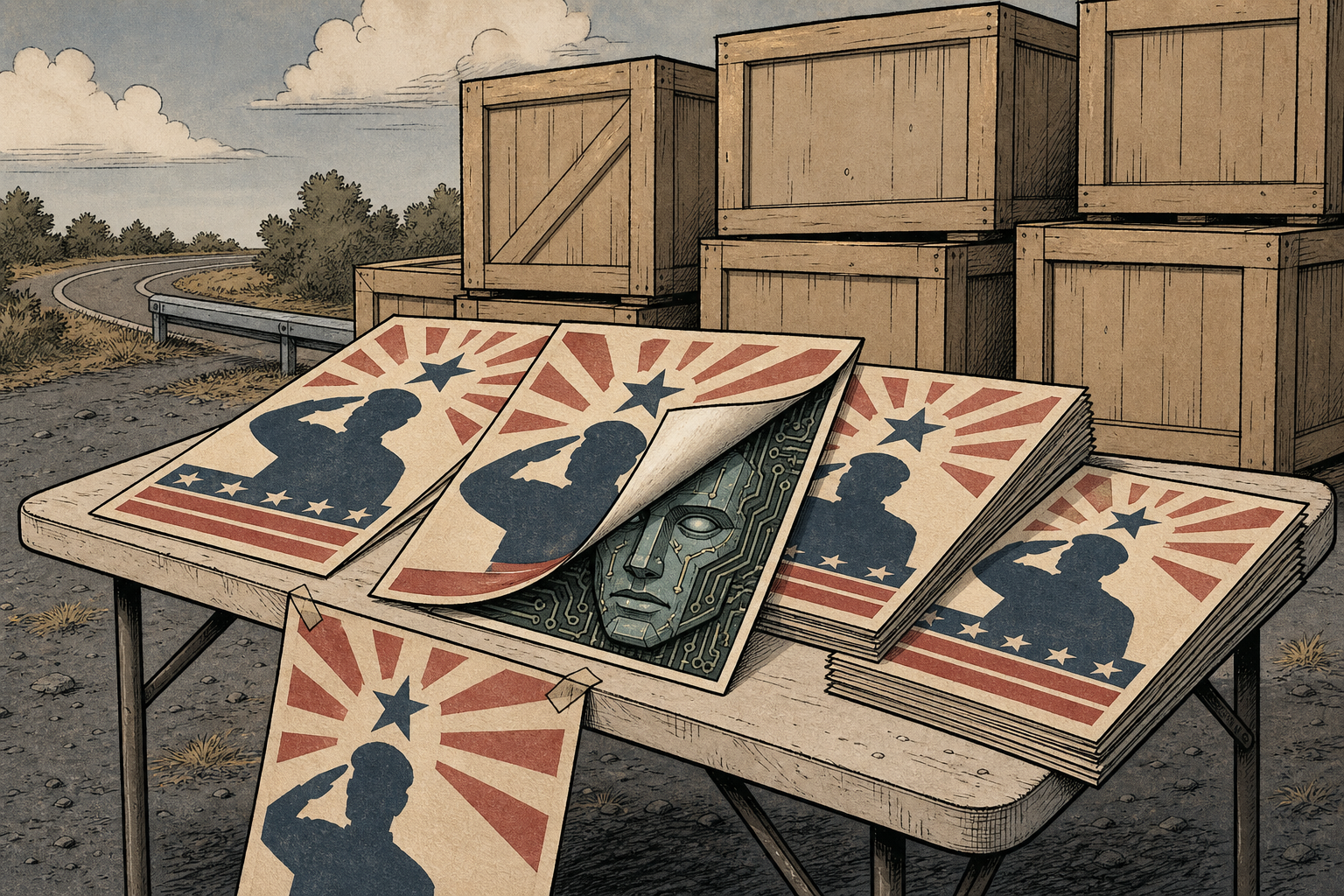
This is a TDS Watch item because of what got outsourced and to what end: a Harvard professor’s core case against Trump’s economic policy was run through an AI tool before it reached one of the world’s most prestigious financial papers — in direct violation of that paper’s own written ban — and the violation surfaced only because readers caught the prose sounding wrong. Nobody at the FT flagged it first.
- August 13, 2026 — date the Financial Times published Ricardo Hausmann's column, "Trump is taxing the dark matter that pays America's way" · Source: Fox News, Daily Caller
- 71% — share of the column's text flagged as AI-generated by the Pangram detector, per Dartmouth political scientist Brendan Nyhan's analysis · Source: Fox News, Daily Beast
- 3 days — how long the column ran unflagged before the FT appended its AI-use disclaimer, on Sunday, August 16 · Source: Mediaite, Daily Beast
- "Condense a longer draft" — the FT's own description of what an undisclosed AI tool did to Hausmann's column before submission · Source: Financial Times editor's note, via Mediaite
- Zero — on-record statements from Hausmann addressing the episode; he did not respond to Mediaite's request for comment · Source: Mediaite
Hausmann’s argument was substantive on paper: America’s current account deficit in 2025 came in at $1.18 trillion — virtually unchanged from the year before, despite what he called the most protectionist turn in living memory. His point was that a current account deficit is not, as tariff advocates frame it, “a scorecard of trade cheating” but the gap between what a country invests and what it saves — a gap tariffs do not actually close. Last year’s tax cuts, he argued, widened the federal budget deficit and pulled national savings down by roughly as much as the tariffs were supposed to add, netting out to no change at all.
It is a real economic argument, made by a real economist, running in a paper that built its 138-year reputation — the FT was founded in 1888 — on exactly this kind of rigorous financial commentary. That is precisely why the prose stood out. Readers described it as stiff, clipped, and oddly listy — heavy on short declarative sentences and mechanical transitions, the telltale rhythm of AI-generated text rather than an economist’s own voice.

The reaction built quickly on social media. Harvard student and freelance writer Alex Bronzini-Vender wrote on X: “Gotta be the worst AI slop I’ve seen in a major publication.” Bloomberg’s Joe Weisenthal was more pointed given his history with Hausmann’s work: “I have learned a lot from @ricardo_hausman, I’m a big appreciator of his thought, and have enjoyed talking with him. And yet I find this astonishing, both in its writing and its publication.”
The most concrete evidence came from Brendan Nyhan, a political scientist at Dartmouth, who ran the column through Pangram, an AI-text detection tool, and posted the result: 71 percent of the text scored as AI-generated. That figure — not a vague impression, a measured score — is what turned a round of social-media griping into a story the FT could no longer ignore.

The FT did not pull the column. It did not run a correction in the conventional sense. What it did, three days after publication, was quietly attach an editor’s note to the top of the piece — the paper’s own admission that its editorial process had failed to catch an AI-assisted submission before it ran under a named professor’s byline, criticizing a sitting president’s signature economic policy.
“It has come to our attention that AI was used to condense a longer draft of this column prior to submission to the FT and our own editorial involvement. The FT editorial code of conduct specifically prohibits the use of AI in the writing process.”
Financial Times — editor's note appended to Hausmann's column, August 16, 2026
A Financial Times spokesperson told Fox News Digital the paper would run an “editorial review process to look at this piece in more detail.” That review, as of this writing, has not produced a public accounting of how the column cleared the FT’s opinion desk in the first place, or whether any editor read a draft before an AI tool condensed it.
“I have learned a lot from Ricardo Hausmann, I'm a big appreciator of his thought, and have enjoyed talking with him. And yet I find this astonishing, both in its writing and its publication.”
Joe Weisenthal, Bloomberg, on X (paraphrased from reporting — a verified direct link to the post wasn't available at publication)
“Gotta be the worst AI slop I've seen in a major publication.”
Alex Bronzini-Vender, on X (paraphrased from reporting — a verified direct link to the post wasn't available at publication)
This was not an anonymous freelancer or a first-time contributor. Ricardo Hausmann has spent more than two decades on the Harvard faculty, has served as Venezuela’s planning minister and as chief economist of the Inter-American Development Bank, and regularly publishes in the FT and Project Syndicate on trade and development economics. He holds an endowed chair — the Rafik Hariri Professorship — and directs Harvard’s Growth Lab, a research center that advises governments on economic policy. That resume is exactly why the episode traveled as far as it did: this was not a marginal voice cutting corners, but one of the field’s most credentialed names, in one of the world’s most read financial papers, running commentary critical of the president that turned out to be substantially AI-condensed. Hausmann did not respond to Mediaite’s request for comment, and no public statement from him about the episode has surfaced as of this writing.
Because Hausmann is an academic rather than an elected or appointed official, no party label applies here — the relevant fact is his institutional standing, not his politics. What is documented is narrower and does not require guessing at his intentions: a Harvard professor’s draft went through an AI tool before it reached print, the FT’s own rules forbid that, and the paper’s process did not catch it until readers did.
Media-ethics site Poynter framed the episode as crossing “a novel ethical line” — not because Hausmann didn’t do his own reporting or develop his own argument, but because handing a finished draft to AI to shorten it blurs the boundary between editing and writing. Poynter’s broader point: a newsroom’s AI policy, however clearly written, does no good once the byline belongs to someone who has never seen the newsroom’s Slack channel.
“The FT editorial code of conduct specifically prohibits the use of AI in the writing process.” That is the FT’s own language, published alongside its admission that the rule was broken in Hausmann’s column — on a piece attacking the sitting president’s tariff policy, discovered by outside readers, not the paper’s own editors.
University of Maine journalism-department chair Michael Socolow told the Daily Beast the episode complicates his own job: holding students to a no-AI standard gets harder to defend the same week a Harvard professor’s AI-condensed column ran, uncaught, in one of the most respected financial papers in the world.
The bottom line: a credentialed Harvard economist’s attack on Trump’s tariffs was, by the FT’s own admission and an independent AI-detection score of 71 percent, substantially machine-condensed before it ran — a direct violation of the paper’s written ban on AI in the writing process. The FT caught it only after readers did, three days late, and has yet to explain how its editorial process missed it. The economics argument may or may not hold up; the process that got it into print did not.

- 1.Mediaite — 'FT Admits Harvard Professor Ricardo Hausmann Used AI in Post,' August 2026
- 2.Fox News — 'Harvard professor caught using AI to condense Financial Times op-ed trashing Trump tariffs,' August 17, 2026
- 3.The Daily Caller — 'Harvard Professor Slammed For Allegedly Relying On AI In Anti-Trump Op-Ed,' August 16, 2026
- 4.The Daily Beast — 'Financial Times Adds AI Disclosure to Harvard Professor Ricardo Hausmann's Trump Tariffs Column,' August 17, 2026
- 5.Townhall — 'Harvard Professor Humiliated After Using AI Slop to Attack Trump,' Jeff Charles, August 17, 2026
- 6.WCBM News-Talk Radio — 'Harvard Professor Humiliated After Using AI Slop to Attack Trump,' August 2026
- 7.Poynter — 'An FT column was condensed with AI. It crossed a novel ethical line.,' August 2026
- 8.Yahoo News Canada — 'Elite Harvard economist busted using AI to write newspaper Trump op-ed,' August 2026
- 9.Press Gazette — 'AI in journalism: Live tracker of scandals and mistakes,' 2026
- 10.Harvard Kennedy School — Faculty profile, Ricardo Hausmann (Rafik Hariri Professor of the Practice of International Political Economy; Director, Harvard Growth Lab)
- 11.Financial Times (@FT) on X — promotional post linking Hausmann's column, 'Trump is taxing the dark matter that pays America's way'
This story broke within the last 24 hours; no YouTube or Truth Social coverage had surfaced as of publication, and the two social reactions quoted above are cited as prose attribution rather than embedded X cards, since a verified direct link to each post wasn’t available at publication.
Last updated August 17, 2026