
JioStar’s $3 Billion ICC Exit — How Cricket’s Media-Rights Bubble Burst.
It was supposed to be the safest bet in sports media: own cricket in India, and you own the most valuable audience on Earth. Then the buyer tried to give it back. In December 2025, multiple Indian outlets — led by Mid-day — reported that JioStar, the Reliance–Disney media giant, had told the International Cricket Council it could not service the remaining years of its roughly $3 billion global media-rights contract, the richest cricket deal the ICC had ever signed.
The trigger was not a ratings miss or a rival outbidding it. It was the broadcaster’s own books. JioStar’s accounting provision for losses on sports-content deals more than doubled in a single year — from about ₹12,319 crore to roughly ₹25,760 crore (INR) — with the ICC rights named as the single largest drain. A contract priced in U.S. dollars had collided with a collapsing Indian advertising market.
Days later, the ICC and JioStar issued a joint statement insisting the deal “remains fully in force.” Both things can be true: a partner publicly committed to honoring a contract, and a partner that has privately signaled it wants out. This page lays out the numbers behind the breakup — the deal’s size, the losses, the failed sub-license, the gaming-ad ban, and the ICC’s scramble for a successor — sourced line by line.
- $3 billion (USD) — value of the ICC India media-rights deal for the 2024–2027 cycle that JioStar acquired — the contract it has signaled it can no longer carry · Source: Mid-day; SportsPro; Business Standard
- ₹25,760 crore (INR) — JioStar's FY25 provision for losses on onerous sports-content contracts — up from ₹12,319 crore (INR) a year earlier, with the ICC deal named the largest single component · Source: BestMediaInfo; Business Today
- ~$3.3 billion (USD) — estimated effective liability on the dollar-denominated ICC contract after a weakening rupee inflated the cost in INR terms · Source: cross-outlet reporting (Business Today; SportsPro)
- $2.4 billion (USD) — what the ICC is now seeking in a fresh sale process for India rights for the 2026–2029 cycle — below the $3B it last got · Source: Exchange4media; Mid-day
- ~$840 million (USD) — estimated annual cricket-advertising gap opened by India's real-money-gaming ban, which wiped out the single biggest category of cricket advertisers · Source: MediaNama
- Sony · Netflix · Amazon — the three buyers the ICC sounded out to take over the rights — none, per reporting, has shown substantive interest at the asking price · Source: Inside Sport; SportsPro; Exchange4media
The contract at the center of the dispute is the ICC’s India media rights for the 2024–2027 cycle, originally acquired by Disney’s Star India in 2022 for a reported $3 billion. It covers the ICC’s marquee global events — one major men’s tournament a year, including the T20 World Cup, the 50-over World Cup, and the Champions Trophy. India is the financial engine of the sport: by industry estimates the country generates close to 80% of the ICC’s revenue, which is exactly why the India package commands a sum larger than the global rights to most other sports.

The buyer changed shape mid-contract. In November 2024, Reliance Industries and The Walt Disney Company completed the merger of their Indian media assets into a single joint venture — JioStar — valued at about ₹70,352 crore (roughly $8.5 billion USD). Reliance Industries and its subsidiary Viacom18 together hold 63.16%, with Disney at 36.84%, and Nita M. Ambani as chairperson and Uday Shankar as vice chairperson. The new entity inherited the ICC contract — and, with it, a bill that was already looking far harder to pay than it had in 2022.
The clearest evidence of distress is in JioStar’s own filings. For the year ended March 2024, Star India reported a standalone net loss of about ₹12,548 crore (INR), of which roughly ₹12,319 crore was an “onerous contract” provision tied to the ICC rights — accountant’s language for a deal expected to lose money over its life. A year later that provision against loss-making sports contracts had ballooned to about ₹25,760 crore (INR), more than doubling.
The arithmetic underneath is brutal. Reporting pegs JioStar’s annual ICC rights payment at around ₹10,000 crore (INR) against ICC-event advertising revenue closer to ₹5,000 crore — a structural gap that no amount of audience size closes. And because the contract is denominated in U.S. dollars, a weakening rupee has pushed the broadcaster’s effective liability higher in INR terms, with the all-in cost estimated near $3.3 billion (USD). The deal didn’t just underperform; it became a contract the buyer was paying more to hold than it could ever earn back.
Report: JioStar has conveyed to the ICC that it cannot fulfil the remaining period of its USD 3 billion media-rights deal (2024–27), citing heavy losses — chiefly from the T20 World Cup 2024 and Champions Trophy 2025.
On December 12, 2025, with exit reports dominating the cricket-business press, the ICC and JioStar issued a rare joint statement. “The existing agreement between the ICC and JioStar remains fully in force, and JioStar continues as the ICC’s official media rights partner in India,” it read, adding that JioStar is “fully committed to honour its contractual obligations in letter and spirit” and that “any suggestion that JioStar has withdrawn from the agreement is incorrect.”

Read carefully, the statement denies a withdrawal — not a desire to renegotiate. It is fully consistent with the underlying reporting: that JioStar has sought relief from a deal it is still legally bound to, while the ICC quietly tests the market for a replacement. Star India had, after all, already petitioned the ICC back in August 2024 to renegotiate the contract, blaming weak Indian viewership for the 2024 T20 World Cup — staged across the United States and West Indies, with India-unfriendly match times and weather-hit games.
The denial — ICC and JioStar (Dec. 12, 2025): the agreement “remains fully in force” and reports of a withdrawal are “incorrect.”
The reporting — Mid-day, SportsPro, Business Standard and others: JioStar has signaled it cannot service the remaining two years (2026–2027) and wants out, citing losses.
The reconciliation — both can hold at once. A contract stays binding until it is renegotiated or replaced; a public commitment is not the same as a private willingness to keep paying.
Two specific shocks turned an expensive contract into an unbearable one. The first was regulatory: India’s ban on real-money gaming. Fantasy-sports and betting-adjacent apps had become the single biggest category of cricket advertisers, and their removal opened an estimated $840 million (USD) annual hole in cricket ad spending that no other sector — not autos, not fintech, not FMCG — has refilled.
The second shock was a broken sub-license. To defray the ICC bill, the broadcaster had struck a television sub-licensing arrangement reportedly worth about $1.5 billion with Zee for ICC men’s and Under-19 events. That deal collapsed in early 2024 — and when it fell through, the entire cost snapped back onto JioStar, triggering arbitration and a damages claim reported at more than $1 billion. Add a shrinking pay-TV subscriber base and a streaming business still running at a loss, and the “safest bet in sports media” had quietly become one of the most expensive liabilities on an Indian media balance sheet.
The economics of cricket's biggest media deal are under strain: India's real-money-gaming ad ban and a collapsed sub-license have left JioStar's ICC rights deeply loss-making, even as the broadcaster publicly affirms its commitment.
Whatever the public language, the ICC has behaved like a rights-holder preparing to replace its partner. It has opened a fresh sale process for India media rights covering the 2026–2029 cycle, reportedly seeking around $2.4 billion (USD) — a notable markdown from the $3 billion it last commanded. And it has sounded out the obvious buyers: Sony Pictures Networks India, Netflix, and Amazon Prime Video.
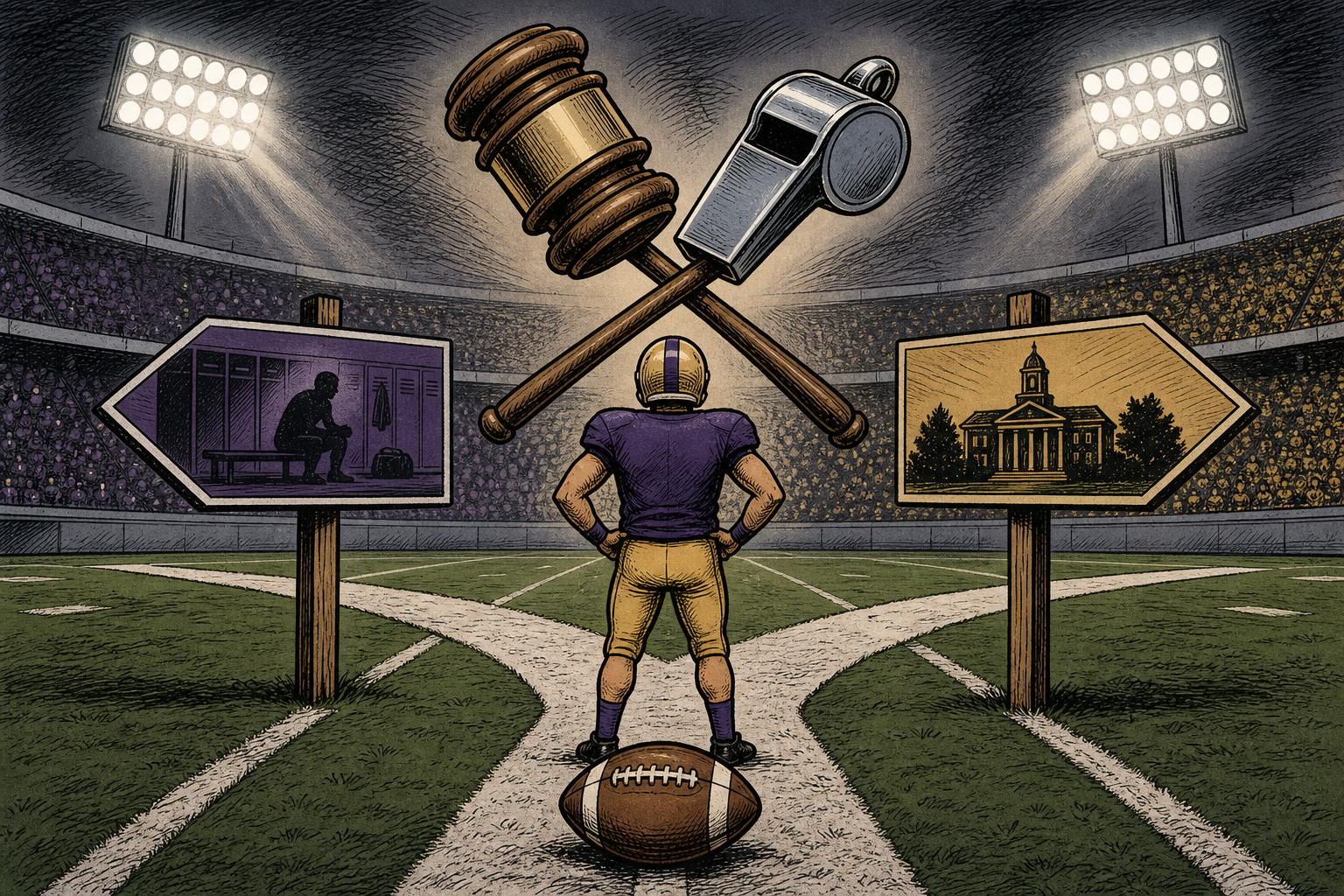
So far, per the reporting, none has bitten at the asking price. The same forces that broke JioStar — the gaming-ad vacuum, the dollar-denominated cost, the gap between rights fees and recoverable revenue — are visible to every potential successor. The lesson the market is absorbing is the one that defined the era: Indian cricket rights were bid to valuations that assumed advertising would keep climbing forever. When that assumption broke, the most coveted contract in the sport became a parcel nobody wanted to catch.
“The existing agreement between the ICC and JioStar remains fully in force, and JioStar continues as the ICC's official media rights partner in India.”
Joint statement, ICC and JioStar, December 12, 2025
For viewers, the immediate message from both sides was continuity: the joint statement stressed that preparations for upcoming ICC events — including the Men’s T20 World Cup — were proceeding as planned, with no disruption to audiences, advertisers, or partners. The contract’s binding nature is, in the short term, the broadcaster’s problem, not the fan’s. The deeper question is what happens at the seams between cycles, when a loss-making incumbent and a rights-holder seeking a richer replacement have to coexist.
The stakes extend well beyond one tournament. JioStar also holds the domestic IPL media rights — a separate set of deals reported in the multi-billion-dollar range — and India’s outbound cricket rights. If the ICC contract has proven this hard to carry, every cricket valuation built on the same assumptions is now an open question. A successor at $2.4 billion would itself confirm the markdown; a failed sale would confirm something larger about where the ceiling on cricket rights actually sits.
Strip away the dueling statements and the picture is consistent. JioStar bought, or inherited, the richest cricket-rights contract the ICC ever sold — about $3 billion for the 2024–2027 India cycle — and its own filings show the deal turning into a loss provision that doubled to roughly ₹25,760 crore (INR) in a year. A gaming-ad ban erased cricket’s biggest advertiser category, a $1.5 billion sub-license collapsed, and a strengthening dollar pushed the bill toward $3.3 billion. The ICC says the deal is “fully in force” — and is simultaneously shopping the next cycle to Sony, Netflix, and Amazon at a lower price. The receipts tell the story the press releases won’t: cricket’s media-rights bubble has met its limit, and the most valuable contract in the sport is the one its buyer wants to give back.
- 1.Mid-day — 'JioStar to exit ICC media rights deal' (originating report: JioStar conveyed it cannot fulfil the remaining USD 3 billion 2024–27 contract after T20 World Cup 2024 and Champions Trophy 2025 losses)
- 2.International Cricket Council — 'Joint Statement from ICC and JioStar on Media Rights Agreement and recent media reports,' December 12, 2025 (primary: 'the existing agreement … remains fully in force')
- 3.Business Standard — 'JioStar to continue as ICC's media rights partner till 2027 in India,' December 12, 2025
- 4.Business Today — '‘Agreement fully in force’: ICC, JioStar clarify on media deal over reports of exit ahead of T20 World Cup,' December 13, 2025
- 5.BestMediaInfo — 'From Star India’s distress sale to JioStar’s ICC exit: How the cricketing media-rights bubble caught up,' December 11, 2025 (FY24 net loss Rs 12,548 cr; Rs 12,319 cr onerous-contract provision; ~Rs 10,000 cr annual ICC payment vs ~Rs 5,000 cr ad revenue)
- 6.SportsPro — 'JioStar seeks exit from US$3bn ICC cricket deal,' December 8, 2025 (Zee US$1.5bn sublicensing collapse; >US$1bn arbitration claim; India = ~80% of ICC revenue)
- 7.Inside Sport India — 'ICC in trouble as JioStar wants to exit media rights deal before T20 World Cup 2026; Netflix, Amazon Prime approached'
- 8.The Federal — 'JioStar wants to exit USD 3 bn ICC media rights deal ahead of T20 WC: Report'
- 9.MediaNama — 'JioStar Seeks Exit From ICC Media Rights Deal: What This Means,' December 2025 (real-money-gaming ad ban opened an estimated US$840M annual cricket-ad gap)
- 10.Deccan Herald — 'ICC may have to look for a new broadcaster as JioStar mulls pulling out of the contract'
- 11.DNA India — 'ICC, JioStar clarify on media rights deal after reports of exit ahead of T20 World Cup'
- 12.Cricket Country — 'JioStar dismisses exit rumours, confirms full commitment to ICC media rights deal'
- 13.JioStar — 'Reliance and Disney Announce Completion of Transaction to Form Joint Venture,' November 14, 2024 (primary: JV valued at ~Rs 70,352 cr / ~US$8.5bn; Viacom18/Reliance 63.16%, Disney 36.84%; Nita M. Ambani chairperson, Uday Shankar vice chairperson)
- 14.Outlook India — 'ICC in Hot Water After JioStar Wants To Exit Media Rights Deal For T20 World Cup 2026: Report'
- 15.Exchange4media — 'Media rights: ICC’s hunt for a JioStar successor may be easier said than done' (fresh 2026–29 India-rights process at ~US$2.4bn; SPNI, Netflix, Amazon Prime sounded out)
Last updated June 26, 2026