The US Sent a B-1 Bomber Back Into the Iran War — the First Time Since the Fighting Resumed.
Sources tell The Jerusalem Post the U.S. flew a B-1B Lancer strike mission against Iran on Tuesday, July 21 — the same night CENTCOM completed its 11th consecutive round of strikes since the ceasefire collapsed on July 7. CENTCOM’s own public statement that night never mentioned the aircraft. This is the first confirmed B-1 sortie since fighting resumed.
It matters because of what a B-1 is built to do. Unlike the F-35s, drones, and naval strikes that have carried this phase of the war, the Lancer can haul roughly 75,000 pounds of ordnance — two dozen 2,000-pound bombs or two dozen long-range cruise missiles in a single sortie. Putting one back in rotation is a statement about scale, even before CENTCOM says what it actually hit.
What it is not, per the aircraft’s own specifications, is the tool for hitting Pickaxe Mountain — the underground nuclear site this site reported President Trump (R) has twice threatened. That job still belongs to the B-2 and its bunker-buster bombs alone.
- 12th night — CENTCOM's latest completed round of strikes, ending roughly 10:30pm ET July 22 — maritime capabilities, missile and drone storage, coastal surveillance, air-defense sites
- 24 × 2,000-lb bombs — the B-1B Lancer's maximum conventional load — or 24 AGM-158 JASSM-ER cruise missiles instead, per Air Force and Army Recognition specifications
- $37,500,000,000 — the war's total cost to date, per Defense Secretary Pete Hegseth's July 21 Senate testimony
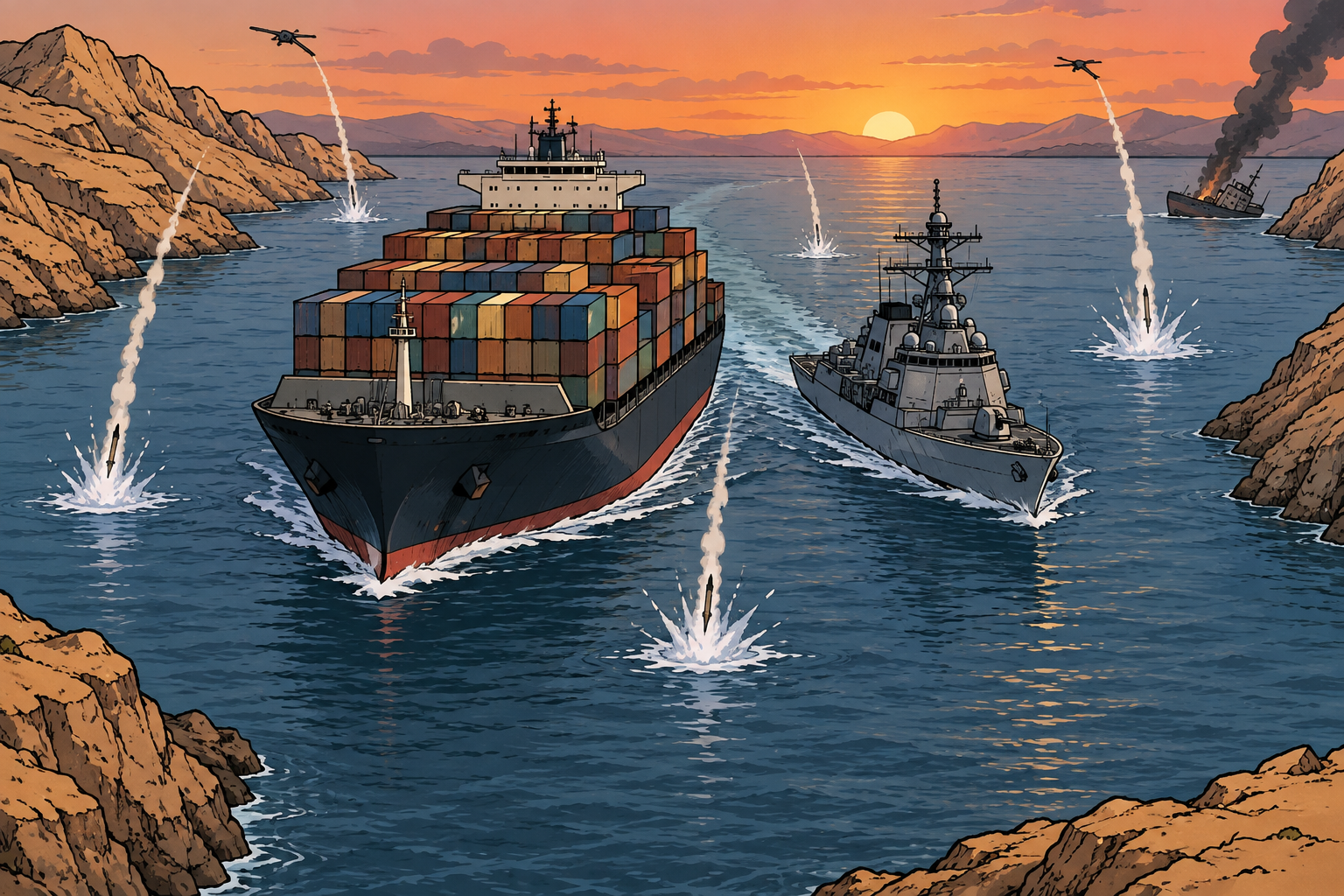
- 9 redirected, 1 disabled — commercial vessels CENTCOM has blocked from Iranian ports under the reinstated blockade
Axios independently corroborated the Jerusalem Post’s reporting, citing U.S. officials who said the B-1B took part in strikes targeting “Iranian command centers, maritime infrastructure, drone facilities, aircraft hangars, and military logistics” supporting threats to shipping in the Strait of Hormuz — the same target categories CENTCOM has cited for weeks. Neither outlet could confirm the bomber’s precise target. What both agree on: it departed from a base in the United Kingdom, independently identified by flight-tracking accounts as RAF Fairford, where B-1s have staged since the war’s earlier phase.
Bomber Run 63 - Ops Beginning Again? Overnight, B-1B 'Lancer' bombers flying from RAF Fairford (EGVA) conducted strikes in Iran as the US ramps up operations again. Although 2 bombers launched, it appears it was pre-planned that only 1 of them would actually fly the combat mission into Iran, with the second airframe returning to RAF Fairford as scheduled around 6hrs after departure.
DefenceGeek’s account later flagged an unresolved wrinkle: the lead aircraft may have developed a technical fault after air-to-air refueling and turned back toward Fairford without reaching Iranian airspace, leaving the second, spare aircraft’s role uncertain. The U.S. Air Force has not confirmed or denied that account, and neither this piece nor the outlets above treat it as settled.

The B-1B Lancer — crews call it “the Bone” — is not a stealth aircraft and, since a 2011 conversion verified under the New START treaty, is no longer certified to carry nuclear weapons at all. What it still does better than almost anything else in the Air Force inventory is haul mass: up to 75,000 pounds of ordnance, configurable as two dozen 2,000-pound JDAMs or two dozen AGM-158 JASSM-ER cruise missiles, flown supersonic at low altitude if the mission calls for it. It is built for volume against a wide target set once air defenses are already degraded — not for precision penetration of one deeply buried site.
That distinction matters because both The Week and Israel Hayom raised the same question this week: did the B-1 strike Pickaxe Mountain, the underground facility Trump has twice named as a target? The honest answer, per the aircraft’s own specifications, is almost certainly not. Only the B-2 Spirit carries the GBU-57 Massive Ordnance Penetrator — the weapon used against Fordow, Natanz, and Isfahan in June 2025’s Operation Midnight Hammer, and the one a strike on Pickaxe Mountain would require. A B-1’s payload, however large, cannot reach a chamber buried under 100-plus meters of rock.
The B-1 news landed the same week Trump laid out a new rule for Iran in a Truth Social post: retaliate for every attack on shipping, one piece of infrastructure at a time.
From this point forward, any time the Islamic Republic of Iran shoots at a ship in the Strait of Hormuz, whether it be by Missile, Rocket, Drone, or any other device or weapon, the United States will bomb and destroy ONE BRIDGE OR POWER PLANT, including those located next to, or in, the Capital City of Tehran.
Defense Secretary Pete Hegseth has separately said the campaign is broadening its available toolkit as a matter of course — describing a mix of “B-2s, B-52s, B-1s, Predator drones,” and fighter jets controlling the skies and selecting targets as something that could become routine for Iran going forward. Reintroducing the B-1 twelve days into the resumed fighting fits that description: not a one-off, but an expansion of the rotation.

As this site has reported, the war’s cumulative American death toll stood at 17 as of July 21. Separately, Chief Pentagon Spokesman Sean Parnell pushed back this week on a New York Times report alleging the Pentagon had withheld injury figures, publishing a fuller accounting of troops hurt rather than killed.
While nearly 100 service members were deemed to have some degree of injury since July 7, 2026, 96% have returned to duty. They are determined to get back in the fight. The vast majority of injuries experienced were minor concussions. Further updates will be posted on the Defense Department's casualty resource page.
The money keeps pace with the casualties. Hegseth told the Senate Appropriations Committee on July 21 that the war has cost $37,500,000,000 to date, with $67,100,000,000 of a new emergency request earmarked specifically for Pentagon Iran-war expenses through September — both figures this site reported in detail the day before the B-1 news broke.
President Trump (R) — commander in chief; ordered the reinstated blockade and posted the bridge-and-power-plant retaliation policy.
Defense Secretary Pete Hegseth — testified to the war's cost and described an expanding aircraft rotation, B-1 included, as the likely new normal.
Adm. Brad Cooper — CENTCOM Commander; has ordered each nightly round of strikes, including the naval blockade tally cited above.
The aircraft — a B-1B Lancer of Air Force Global Strike Command, operating forward from RAF Fairford, United Kingdom.
Congressional Democrats have kept pressing the same procedural argument through every escalation this summer, B-1 included. Sen. Adam Schiff (D-CA) has been making that case since the Senate’s rare rebuke vote in June, when four Republicans joined Democrats to pass a resolution directing withdrawal from the conflict — a measure the House later adopted on a 214–208 vote.
“We were promised the war would be over for months. And now in a matter of days, we've gone from a bad U.S.-Iran deal to more strikes, another blockade, and added turmoil that will only drive prices higher. ... the lives of 13 servicemembers lost with thousands more put in harm's way.”
Sen. Adam Schiff (D-CA) · X post, June 23, 2026 — the toll has climbed since
Schiff filed a fresh War Powers Resolution after the ceasefire collapsed in early July, co-sponsored by Sens. Tim Kaine (D-VA), Andy Kim (D-NJ), Jeff Merkley (D-OR), and Chris Van Hollen (D-MD), arguing the administration has no legal basis to treat the resumed campaign as separately authorized. The White House’s position, consistent since the war began, is that existing Article II authority covers the ongoing operations. Neither the B-1’s reintroduction nor the escalating cost figures have moved that legal standoff in either direction this week.
Iran just stated that they are going to hit very hard today, harder than they have ever hit before. They better not do that, however, because if they do, we will hit them with a force that has never been seen before!
A B-1 Lancer flew its first combat sortie of the resumed Iran war on July 21 — sourced reporting CENTCOM has not confirmed on the record — putting one of the Air Force’s largest conventional payloads back into a campaign now on its 12th consecutive night. It is not the aircraft that reaches Pickaxe Mountain; that threat, and that weapon, remain the B-2’s alone. What the B-1’s return does confirm is a widening rotation, a rising bill — $37,500,000,000 so far — and a Congress still arguing, as it has for months, over who gets to decide how much further this goes.