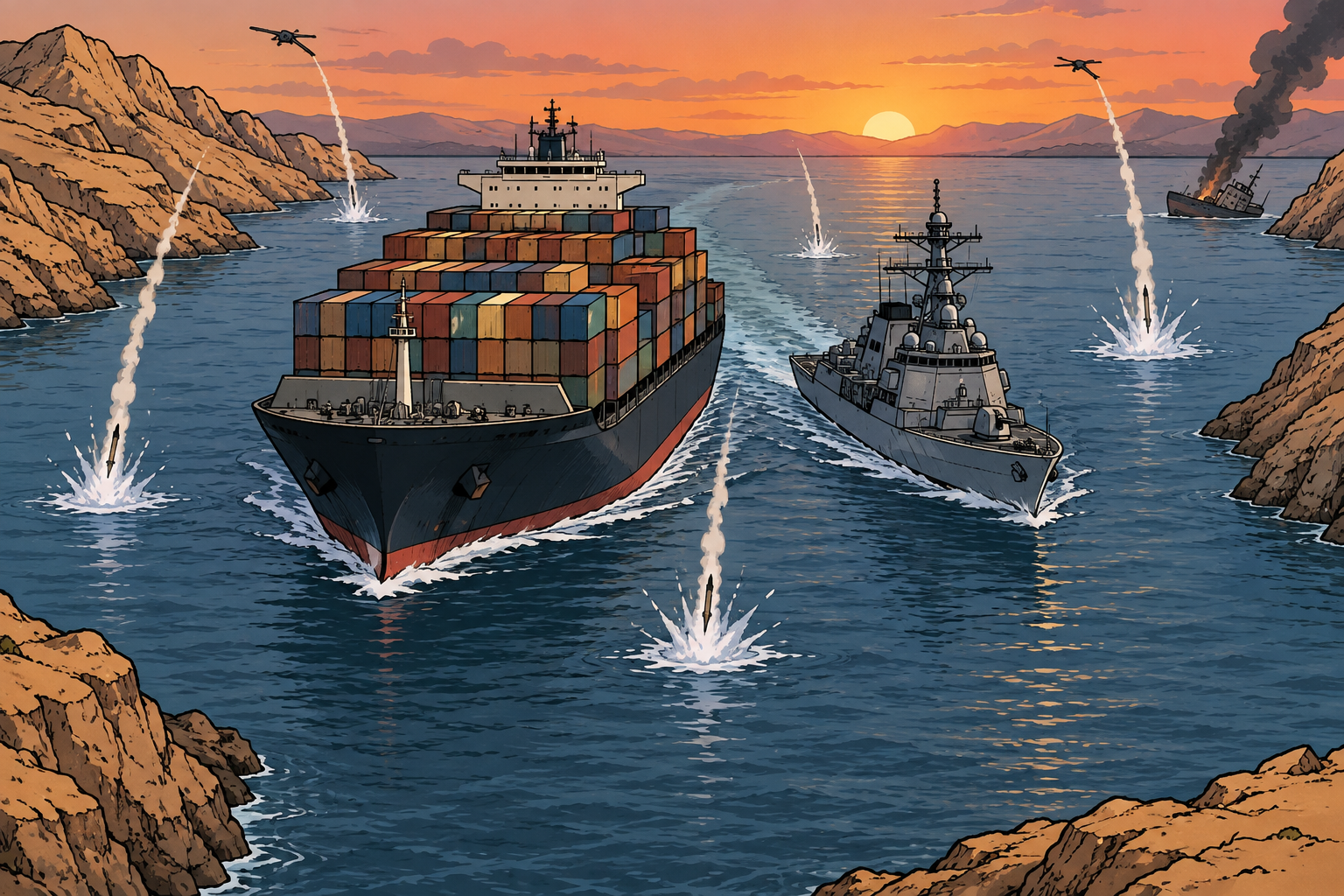
Taiwan’s Own Defense Ministry Told Its Legislature: China Is Rehearsing a Full Blockade. Taipei’s Answer Is a Record $35 Billion Budget.
In the week of September 1, 2026, Taiwan’s Ministry of National Defense told its own Legislative Yuan — in a filing called the “2026 China Military Power Report” — that mainland China is intensifying rehearsals for a full air-and-sea blockade of the island. The ministry submitted it alongside a five-year force-development plan and its proposed 2027 defense budget.
The filing landed in the same window in which outside trackers logged China running its coast guard patrol rotation off Taiwan’s Pacific-facing coast for a third consecutive month, and days after Taipei’s cabinet approved the largest proposed defense budget in the island’s history.
Here is what Taiwan told its own lawmakers, what the PLA drills behind the warning actually show, and how Taipei — and Washington — are answering.
- Sept. 22026date Taiwan's MND submitted its 2026 China Military Power Report to the Legislative Yuan — South China Morning Post
- $35,000,000,000budgetTaiwan's record proposed 2027 defense budget (NT$1.12 trillion), first time above NT$1 trillion and 3% of GDP, up 18.2% year over year — SCMP
- 2cutters/mo.China Coast Guard vessels rotating off Taiwan's Pacific east coast roughly every month since June 2026 — Bloomberg
- 8zonesdesignated exercise zones for rocket fire off Taiwan during “Justice Mission-2025,” the PLA's most extensive blockade-themed drill to date — Taipei Times
- 92%of chipsshare of the world's most advanced logic-chip manufacturing capacity based in Taiwan — Institute for Economics and Peace
Taiwan’s Ministry of National Defense issues a China Military Power Report to the Legislative Yuan every year, but this year’s filing landed with unusual weight: it arrived bundled with the ministry’s five-year force-development plan and its 2027 defense budget proposal, giving lawmakers a single package covering what the ministry says China is building toward and how Taiwan intends to pay for its answer. According to the South China Morning Post’s review of the document, the ministry told legislators that People’s Liberation Army exercises are “increasingly focused on maritime and air blockades or quarantines, joint firepower strikes, seizure of comprehensive battlefield superiority and joint amphibious landing operations.”
“Cut Taiwan's external transportation routes, establish an encirclement, and create conditions favorable to an attack.”
Taiwan Ministry of National Defense, 2026 China Military Power Report, via South China Morning Post
That is the ministry’s own characterization of what its analysts believe the drills are for — not a prediction of when, or whether, Beijing would act on the rehearsal. Taiwan News and the Korea-based outlet Sedaily both carried the same filing days later, with Taiwan News flagging the “joint firepower strikes” language and Sedaily headlining it as Taipei warning that China “is preparing fully for blockade.”

The report is not describing a single drill. It is describing a pattern. On April 2, 2025, “Strait Thunder-2025A” introduced what analysts dubbed a “dual-layer” or “cabbage strategy” blockade concept — concentric rings meant to seal the island layer by layer. Eight months later, “Justice Mission-2025” ran from December 29 to 31, 2025 and became, per the Taipei Times, the most extensive PLA blockade-themed exercise to date, with rocket fire into waters off Taiwan across as many as eight designated exercise zones.
The pattern has moved from episodic drills to a standing presence. Since June 2026, China has kept roughly two coast guard cutters a month rotating through waters off Taiwan’s Pacific east coast, according to Bloomberg — the first time such patrols have been logged there in trackers dating back to January 2025. The ships have held station across a patrol area of about 27,100 square nautical miles, more than twice Taiwan’s own landmass, generally around 30 nautical miles off the coast, and have for the first time questioned foreign commercial vessels passing through, per Bloomberg’s reporting.
Taiwan is not treating the warning as theoretical. Its own annual “Han Kuang” exercise, held August 5-14, 2026, built a maritime-quarantine and blockade-response scenario into its core drill script for the first time — rehearsing how Taiwan itself would keep ports open, protect shipping, and sustain the island if China’s coast guard and navy tried to choke it off.
Taiwan’s cabinet backed the drill with money. On August 20, 2026, it approved a proposed 2027 defense budget of NT$1.12 trillion — roughly $35,000,000,000 — the first time Taiwan’s defense spending has crossed NT$1 trillion or 3 percent of GDP, and an 18.2 percent increase over the prior year, according to the South China Morning Post. President Lai Ching-te has separately set a goal of reaching 5 percent of GDP in defense spending by 2030.
“China's authoritarian expansion and escalating coercion have brought significant uncertainty and risk to regional stability, while also affecting global shipping, trade and peace.”
President Lai Ching-te, Taiwan
Taiwan’s assessment tracks the Pentagon’s own. The U.S. Department of War’s 25th annual China Military Power Report, released December 23, 2025, similarly frames a blockade as one of Beijing’s available coercion and warfighting options, tied to what it calls the PLA’s “2027 Centennial Military Building Goal.” The Trump administration’s public posture toward Beijing on Taiwan, meanwhile, has stayed deliberately steady. Secretary of State Marco Rubio, standing in Beijing in May 2026, told reporters: “U.S. policy on the issue of Taiwan is unchanged as of today… It was raised. They always raise it on their side. We always make clear our position and we move on to the other topics.”
Chairman John Moolenaar (R-MI), House Select Committee on the CCP: “Xi Jinping has ordered his military to be ready to take Taiwan by 2027 if necessary, so 2026 is an urgent year to build deterrence in the Taiwan Strait.”
Ranking Member Raja Krishnamoorthi (D-IL) co-authored the committee’s bipartisan “Ten More for Taiwan” report with Moolenaar on strengthening deterrence against Chinese aggression — a rare instance of both parties on the committee publicly aligned on the same set of recommendations.
The reason a defense-ministry filing to a legislature in Taipei registers as global news is what sits on the island. Taiwan accounts for roughly 92 percent of the world’s most advanced logic-chip manufacturing capacity, per the Institute for Economics and Peace — the chips inside phones, cars, data centers, and weapons systems worldwide. A 2023 IEP model, still widely cited, estimated that a Chinese blockade of Taiwan would cut global economic output by roughly $2,700,000,000,000 in its first year, a modeled estimate rather than a certainty, and one we flag as such.
Beijing has not directly rebutted Taiwan’s report. PRC foreign ministry spokespeople have offered only general language about peace and stability in the surrounding news cycle — no statement specifically addressing the 2026 China Military Power Report was found. What is documented is the pattern both militaries are pointing to: drills that have grown larger and more specific since April 2025, a coast guard presence that has gone from episodic to monthly since June 2026, and a Taiwanese government now budgeting, drilling, and legislating as though the rehearsal is the point.
Taiwan’s own defense ministry told its own lawmakers, on the record, that Chinese military exercises are increasingly built around blockading the island — and pointed to a specific, escalating pattern of drills and patrols as the evidence.
Taipei is not just warning; it is spending. A record $35,000,000,000 proposed defense budget and a war game rebuilt around blockade response are Taiwan’s answer on the ground. Washington’s public position has stayed steady through it all — and on Capitol Hill, the warning is one of the few things both parties on the China committee agree on.