Trump Says the U.S. “May Hit” Pickaxe Mountain “Very Soon.” New Pipelines Mean Iran Can’t Hold Hormuz Hostage Anymore.
President Trump said on September 4, 2026 that the United States “may hit” Iran’s Pickaxe Mountain nuclear enrichment site “very soon,” telling reporters, “We know everybody that’s moving at Pickaxe, we know everybody that’s moving everywhere, all over Iran, and if anything goes bad, we hit them. We hit them hard.”
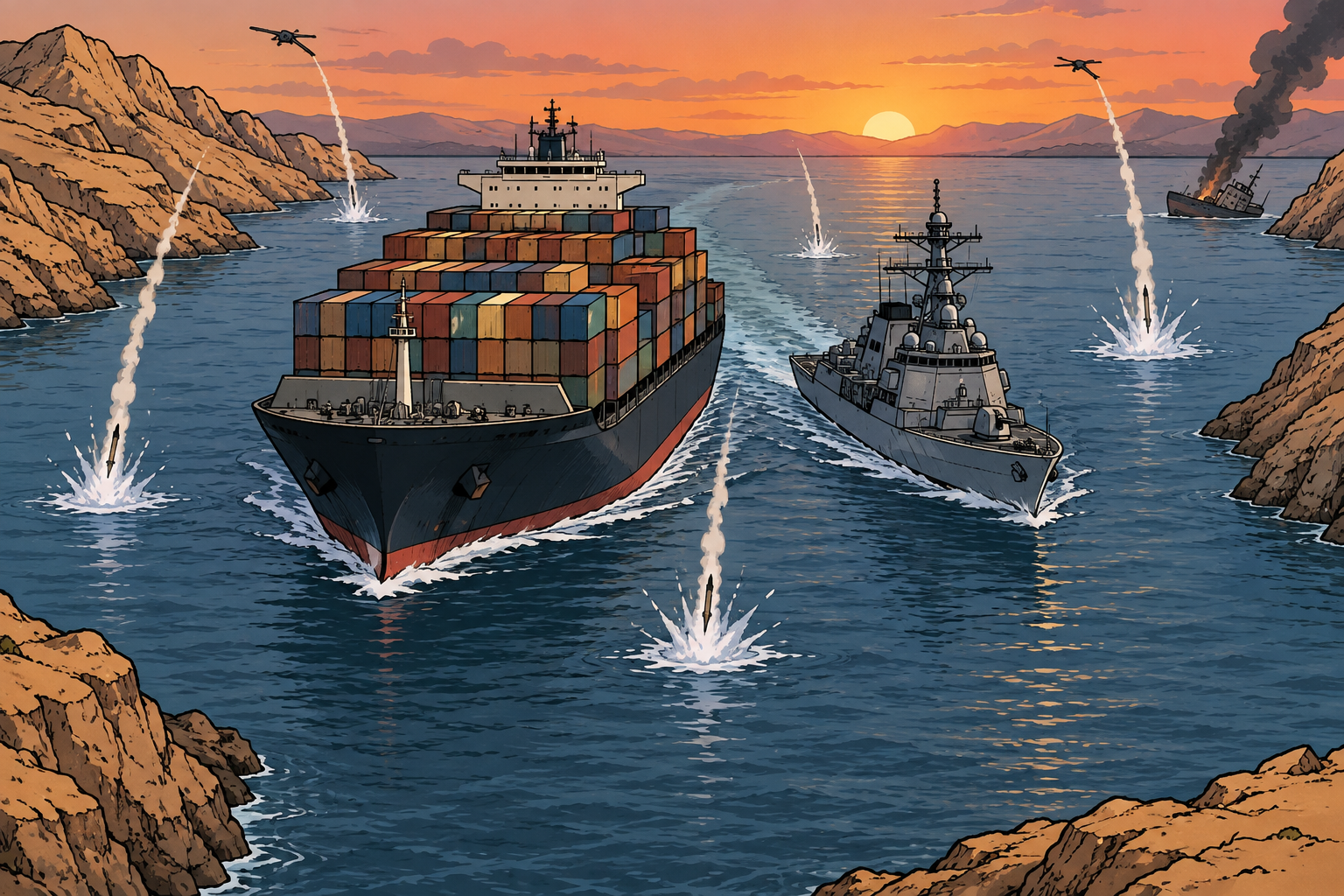
In the same remarks, he made a separate and arguably more consequential point: new oil pipelines under construction across the Middle East mean the Strait of Hormuz — the chokepoint Iran has repeatedly mined and threatened to close — is “not very necessary anymore,” even if Iran controlled it outright. He called the broader conflict “small potatoes” for the United States.
The statement lands seven months into a grinding escalation cycle that has already sent oil prices spiking and shut down shipping lanes once this year. It also lands the same week American drivers paid record prices at the pump.
- 80-100m+ — estimated depth of the Pickaxe Mountain enrichment facility beneath solid rock near Natanz · Source: PBS NewsHour
- $126/bbl — peak Brent crude price reached in March 2026 after Iran mined and closed the Strait of Hormuz · Source: Wikipedia, 2026 Strait of Hormuz crisis
- $5.85/gal — record U.S. diesel price recorded September 4, 2026, the same day as Trump's Pickaxe Mountain remarks · Source: CBS News
- $4.15/gal — national average gasoline price on Labor Day 2026 — the first time gas has topped $4 on that holiday · Source: CBS News
- ~$3B — UAE investment in a new Habshan-Fujairah pipeline expansion designed to route oil around the Strait of Hormuz entirely · Source: The National
Speaking to reporters on September 4, President Donald Trump (R) said the U.S. is tracking movement at Pickaxe Mountain in real time and is prepared to strike if Iran resumes work there. “We’re leading in space,” he said, referencing Space Force satellite monitoring of the site. “We know everybody that’s moving at Pickaxe, we know everybody that’s moving everywhere, all over Iran, and if anything goes bad, we hit them. We hit them hard.”
The warning is not new in substance — Trump has referenced Pickaxe Mountain as a target repeatedly since mid-July — but it is the most direct restatement since a Truth Social post in late August confirmed the U.S. Navy had cleared Iranian mines from the strait and that the site remained under active surveillance.
“It's small potatoes for us. It's not a big thing.”
President Donald Trump, September 4, 2026, on the broader Iran conflict
Trump said that the U.S. would take out Pickaxe Mountain in Iran... 'We're going to take out Pickaxe Mountain. Tell the Iranians to be ready.'

Pickaxe Mountain is the U.S. military’s codename for a nuclear enrichment complex Iran has built into a mountainside near Natanz, distinct from the three above-ground and shallower Iranian nuclear sites already struck earlier in the conflict. Analysts cited by PBS NewsHour estimate the facility sits somewhere between 80 and more than 100 meters beneath solid rock — deep enough that even repeated strikes with GBU-57 “bunker-buster” munitions, the largest non-nuclear bombs in the U.S. arsenal, raise real engineering questions about whether the facility could be fully collapsed rather than merely damaged.
Trump says the US will take out Pickaxe Mountain in Iran
On August 25, President Trump posted directly on Truth Social that the Navy had finished clearing mines from the strait and that the U.S. was watching the site continuously.
I have just been informed by the United States Navy that all mines have been removed and/or detonated from within the International Waters of the Strait of Hormuz. Iran has been notified that any ship or boat placing new mines will be immediately and systematically destroyed. Through Space Force, we are watching every square inch of the Strait, as we are, also, with Pickaxe Mountain and the already destroyed three other Nuclear sites.
President Trump's Truth Social post confirming the Navy's minesweeping operation and continuous satellite monitoring of Pickaxe Mountain.
The more strategically significant part of Trump’s September 4 remarks was his framing of the Strait of Hormuz itself. “Pipelines are being built all over the Middle East now,” he said, “that’s not very necessary anymore” — a direct reference to the network of overland routes Gulf producers have accelerated specifically to reduce their exposure to a chokepoint Iran has now mined or threatened to close multiple times in 2026.
Roughly 20 million barrels a day historically transited Hormuz before this year’s crisis. Saudi Arabia’s existing East-West Petroline already carries up to 7 million barrels a day overland to the Red Sea, and the kingdom is in preliminary talks to expand capacity by as much as 2 million more barrels a day. The UAE’s existing ADCOP line carries about 1.5 million barrels a day with roughly 440,000 barrels a day of spare capacity, and Abu Dhabi National Oil Company is investing an estimated $3 billion to build a Habshan-Fujairah expansion targeted for 2027 that would more than double the line’s throughput to about 3.3 million barrels a day.
Even fully built out, those pipelines could only offset a fraction of a total Hormuz shutdown, and the largest expansions are one to two years from completion. But the strategic logic behind Trump’s comment is real: every barrel that can move overland is a barrel Iran cannot hold hostage by mining a 21-mile-wide waterway, which is precisely why Gulf producers began building around Hormuz in the first place.

Whatever the long-term strategic picture, the immediate cost is showing up at the pump. U.S. diesel hit a record $5.85 a gallon and regular gasoline averaged $4.15 a gallon on September 4, 2026 — the first Labor Day on record with gas above $4 nationally — a direct downstream effect of the mining, strikes, and shipping disruptions that have punctuated the conflict since February.
Sen. Adam Schiff (D-CA): “We’ve gone from a bad U.S.-Iran deal to more strikes, another blockade, and added turmoil that will only drive prices higher.”
Rep. Teresa Leger Fernández (D-NM): the administration “cannot end a war on paper to dodge the law, then restart the clock when it suits him.”
Sen. Tim Kaine (D-VA) has joined Senate Democrats in pushing War Powers Resolution votes over the conflict’s human and fiscal cost; Senate Republicans blocked an earlier version in March 2026.
The escalation cycle driving those prices traces back to a February 28, 2026 U.S.-Israeli strike operation that killed Iran’s Supreme Leader, Ayatollah Ali Khamenei. Iran responded by mining and closing the Strait of Hormuz, sending Brent crude to a peak near $126 a barrel. A June 17 ceasefire memo collapsed by July 8 after Iran struck commercial vessels, and strikes on both sides have continued through the summer.
No new U.S. strike on Pickaxe Mountain has occurred as of publication — Trump’s remarks describe a stated readiness, not a completed operation.
The pipeline expansions cited above are under construction or in preliminary talks, not yet operational at their stated target capacity.
The Strait of Hormuz remains open to shipping following the Navy’s mine-clearing operation, per Trump’s August 25 Truth Social statement.
President Trump says the U.S. may strike Pickaxe Mountain “very soon” if Iran resumes work there, and that new Gulf pipelines have already reduced how much leverage Iran gets from threatening the Strait of Hormuz. Neither claim has fully played out: no strike has happened, and the pipeline capacity that would blunt a future closure is still one to two years from full completion. What has already happened is the price at the pump — a record $5.85-a-gallon diesel and $4.15-a-gallon gas on Labor Day, the receipt for seven months of an unresolved conflict.