Iran’s Own President Just Admitted the Sanctions Are Working. “The Route Is Now Blocked, and Goods Are Not Coming In,” He Told State TV.
- 2.02 Million Rial/Dollar Iran's record-low open-market exchange rate as of August 24, 2026 — up from 1.53 million in early March, before this economic phase of the war began — Time / Iran International
- 68.9% Inflation the IMF's 2026 forecast for Iran's annual inflation rate — the highest since the 1979 revolution — IMF, via IranWire
- 128.1% Food Inflation year-over-year increase in food and beverage prices reported by Iran's own Statistical Center in July 2026, with meat up as much as 178% — Statistical Center of Iran, via IranWire
- 14 Million Liters/Day the gap between Iran's daily gasoline consumption and its refinery output — the shortage President Pezeshkian pointed to directly — Breitbart
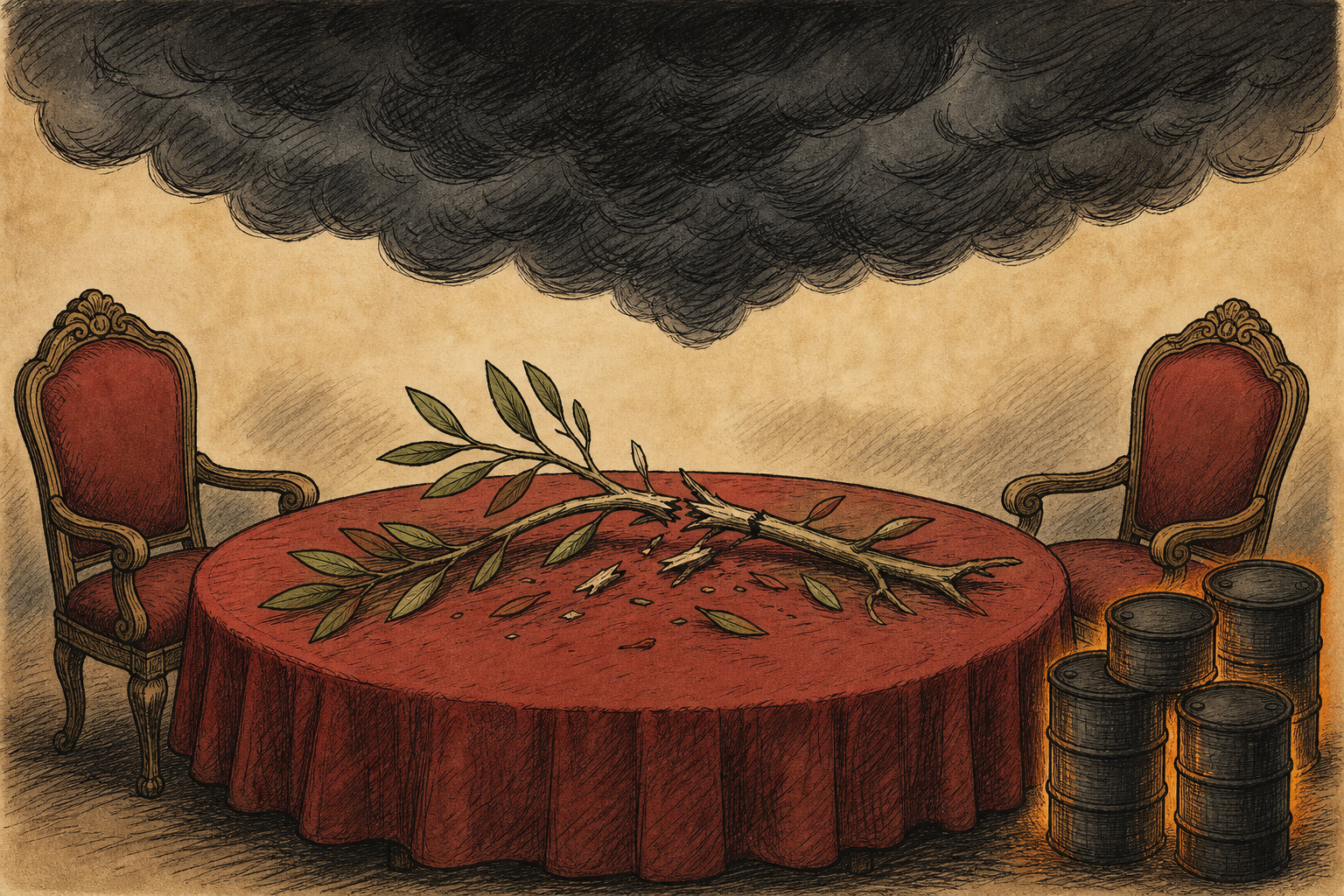
Six months into the war that began when a joint U.S.-Israel strike killed Iran’s Supreme Leader, President Masoud Pezeshkian went on state television on August 28 and said something no senior Iranian official had said so plainly since the fighting started. “We are in a war and first we must accept that we are in wartime conditions,” Pezeshkian said. “The route is now blocked, and goods are not coming in. One of those goods is gasoline.”
It was not a slip. Pezeshkian also disclosed that Iran’s own imports and exports have fallen 25 to 35 percent under the combined weight of the naval blockade and Treasury’s sanctions campaign — the same day Treasury sanctioned an Egyptian bank’s Dubai unit for laundering close to $2 billion in Iranian money.
The economic phase of this war is not a sideshow to the military one. Six months in, it is where the war is now mostly being fought — and Iran’s own president just conceded, on camera, that it is landing.
The war began on February 28, 2026, when joint U.S.-Israel strikes killed then–Supreme Leader Ali Khamenei, opening a conflict that is now roughly six months old. Iran responded by closing the Strait of Hormuz. Iran’s Assembly of Experts named his son, Ayatollah Mojtaba Khamenei, as the new Supreme Leader on March 8, 2026, and he has held the post since. By mid-July, a combination of the U.S. naval blockade and repeated strikes on Iranian energy infrastructure had pushed Iran’s oil exports to effectively zero.
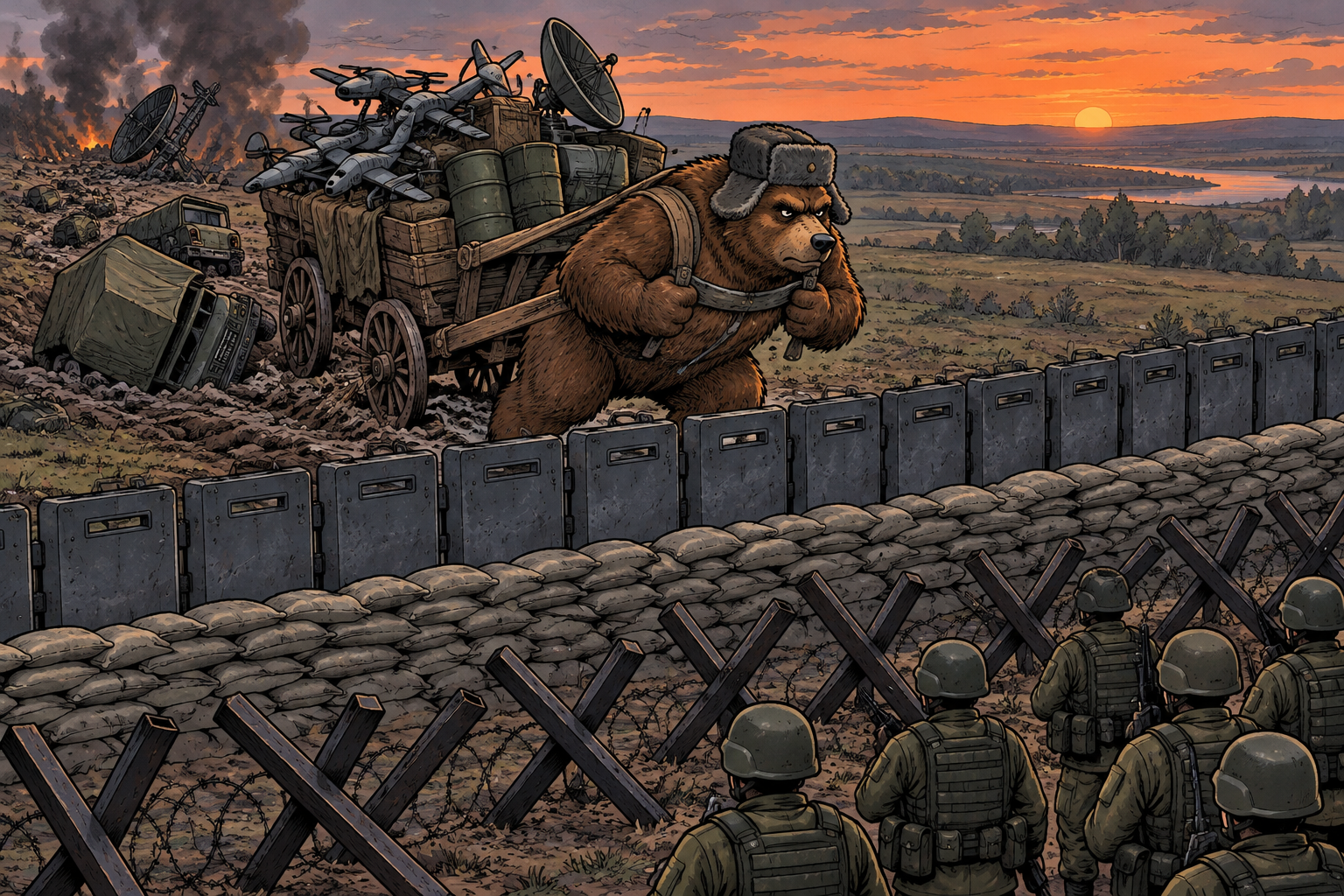
That is the backdrop for a shift Secretary of State Marco Rubio (R) has been describing to allied foreign ministers: for now, no new U.S. strikes on Iran, in favor of deepening financial pressure through the blockade and Treasury’s sanctions campaign while maximizing oil now moving through a Strait of Hormuz largely cleared of mines. The war’s front line has moved from the strait to the ledger.
Treasury Secretary Scott Bessent (R) previewed the escalation first. Then, on August 19, President Donald Trump (R) named it himself on Truth Social.
MOST CRUSHING ECONOMIC OPERATION EVER TAKEN AGAINST ANY COUNTRY!... ANY country that allows its financial institutions, businesses, airports, or government entities to provide any type of lifeline to Iran will itself face TREMENDOUS Economic Consequences... IRAN WILL NEVER HAVE A NUCLEAR WEAPON.
Via Truth Social, @realDonaldTrump
Five days later, at an August 24 press conference, Bessent made it official. “Today, at President Trump’s direction, the United States Treasury has begun Operation Economic Outcast, an unprecedented campaign against the Islamic Republic of Iran and its enablers,” he said, casting it in explicitly military terms: “In the Second World War, D-Day marked the historic beginning of a campaign with our allies to target and drive the enemy from its positions… today, in that same spirit, we are launching an economic onslaught against Iran’s financial connections around the globe.” He put a blunter label on the goal elsewhere: “economic asphyxiation of this regime.”
The operation sanctioned more than 60 entities, individuals, and vessels, and opened five newly designated sectors — digital assets, technology, gold, aviation, and shipping — to enforcement, while suspending five Iran-related general licenses that had previously carved out exceptions. “Our objective is to sever every economic lifeline that sustains this tyrannical regime until Tehran stands alone,” Bessent said.
Four days later, Treasury escalated again. On August 28, it moved to cut the United Arab Emirates branch of Egypt’s Banque Misr off from the U.S. financial system, saying the branch had processed roughly $1.8 billion over two and a half years for 103 companies tied to Iran’s shadow banking network. The same day, Treasury sanctioned the general manager of Bank Melli’s Dubai branch. “They decided to find out the hard way,” Bessent said of Banque Misr’s UAE unit. “This is the first step in holding it accountable.”
Set next to Pezeshkian’s admission, the economic data reads less like rhetoric and more like a diagnosis. Iran’s rial hit a record-low 2.02 million to the dollar on the open market on August 24 — down from about 1.53 million in early March, and far below the Central Bank of Iran’s official rate of roughly 1.5 million. The IMF projects 68.9 percent inflation for Iran in 2026, the country’s highest rate since the 1979 revolution, alongside a 5.4 percent contraction in GDP.
Food prices show the sharpest edge of that squeeze. Iran’s own Statistical Center reported food and beverage inflation of 128.1 percent for the year ending in late July 2026, with meat prices up as much as 178 percent. And the specific shortage Pezeshkian named — gasoline — has a hard number behind it: Iran is consuming roughly 135 million liters of fuel a day against refinery output of about 121 million, a 14-million-liter daily gap that state rationing and price hikes have not closed.
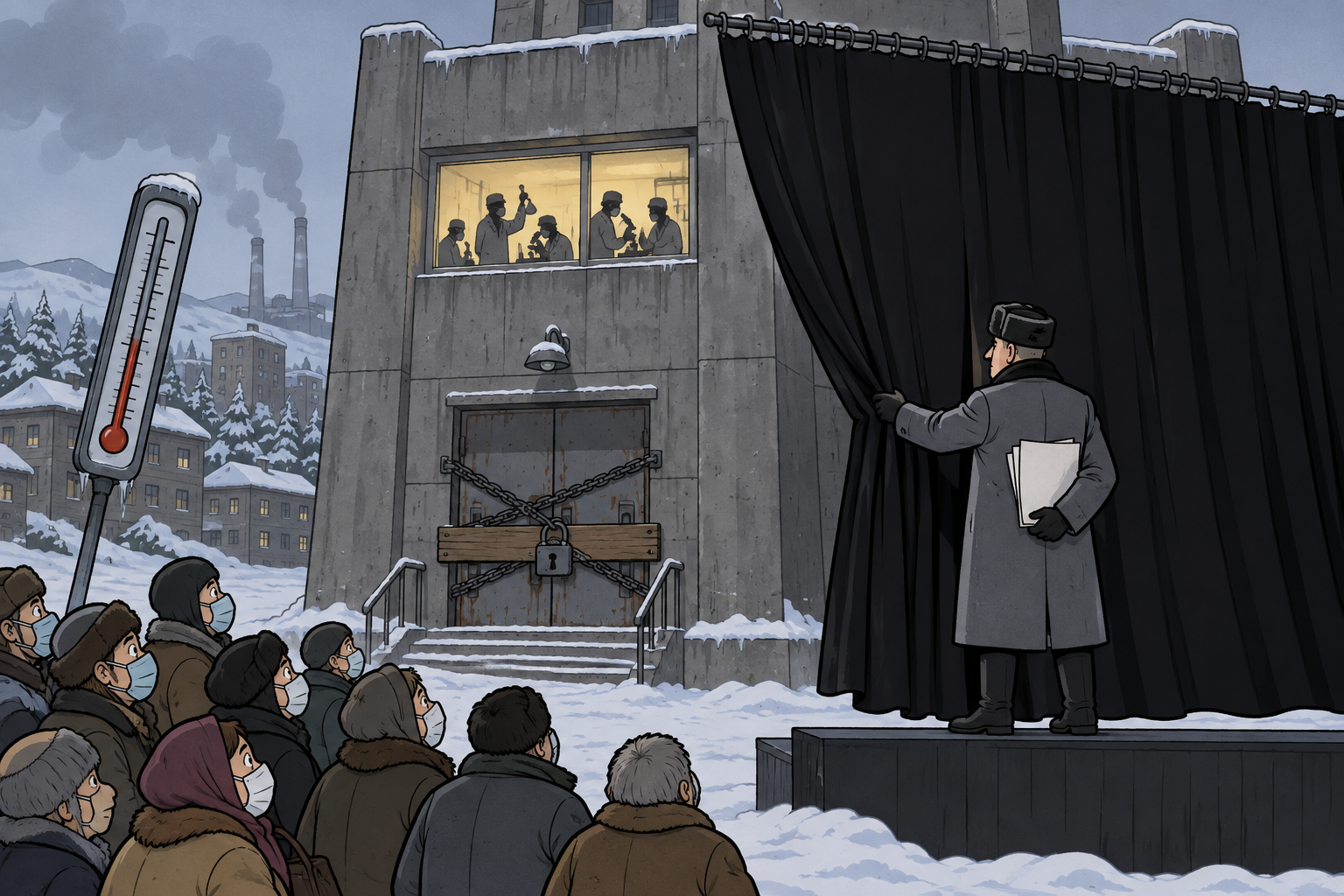
Even inside Iran’s own government, the warnings are no longer abstract. Parliament Speaker Mohammad Bagher Ghalibaf told lawmakers plainly: “No matter how much military power we have, if people are hungry and we do not have financial circulation and economic growth, we will not endure.” Two days later, Ghalibaf turned to mockery instead, posting on X after a reporter asked Bessent why the sanctions hadn’t all landed the moment he declared “Economic D-Day”: “Sir this ain’t Normandy, this is improv night and you forgot your own script.”
The failing Islamic Republic of Iran is not paying large segments of their military, while at the same time killing protesters... It is a humanitarian crisis of epic proportions, and must be stopped, NOW.
Via Truth Social, @realDonaldTrump
Trump’s point — that the regime is failing to pay its own military while cracking down on protesters — underscores that ordinary Iranians’ strain traces to the regime’s choices as much as to outside pressure. Israeli Prime Minister Benjamin Netanyahu made a similar case, writing that Washington was right to “exact a steep price from that cruel dictatorship and from those who assist its continued aggression.”
The clearest evidence of that self-inflicted damage came from inside the government itself. Executive Vice President Mohammad Ja’far Qaempanah acknowledged that Iran’s black market for VPNs — software ordinary Iranians buy to get around the regime’s own internet censorship — generates an estimated 7 to 12 trillion tomans a year, and admitted regulators “do not know whose pockets it goes into.” It is a corruption admission, not a sanctions complaint: money that never reaches Iran’s telecom ministry or its treasury, vanishing instead into networks tied to well-connected insiders. Independent estimates put the Islamic Revolutionary Guard Corps’ footprint at roughly 35 percent of Iran’s formal economy, with even greater reach into the black market that has ballooned as sanctions tighten.
That is the accountability gap this story is really about. Sanctions squeeze a national economy from the outside; a state that lets 35 percent of that economy sit inside an opaque, unaccountable security apparatus squeezes it again from within. Ordinary Iranians facing 128.1 percent food inflation and gas lines are absorbing both.
Rubio’s message to allies describes a war entering a new phase rather than ending one: no new American strikes “for the time being,” though not ruled out if Iran attacks first, while the blockade and sanctions campaign do the work strikes once did.
Six months after the strikes that killed Ali Khamenei and installed his son as Supreme Leader, the numbers Pezeshkian’s own government has now confirmed — the rial, the inflation rate, the fuel gap, the falling trade volumes — are no longer disputed by Tehran. What remains unresolved is who inside Iran’s government answers for the other half of the ledger: the VPN money nobody can trace, and the roughly one-third of the economy an unaccountable security apparatus already controlled before a single new sanction was signed.
Six months into the war that began when U.S.-Israel strikes killed Ali Khamenei and installed his son, Ayatollah Mojtaba Khamenei, as Supreme Leader, President Masoud Pezeshkian himself confirmed on state TV that wartime blockades and Treasury's "Operation Economic Outcast" sanctions campaign have cut off gasoline imports and shrunk Iran's trade by 25 to 35 percent. The numbers back him up: a record-low rial, 68.9% IMF-projected inflation, 128.1% food inflation, and a 14-million-liter daily fuel shortfall. Treasury escalated further on August 28, sanctioning an Egyptian bank's UAE unit and an Iranian bank manager. But Iran's own officials — from a parliament speaker warning "we will not endure" to a vice president who admits regulators "do not know whose pockets" a multibillion-toman VPN black market fills — make clear that regime corruption and an opaque security apparatus controlling roughly a third of the formal economy are compounding the pain sanctions inflict on ordinary Iranians.