
A Kenyan Court Told the Health Minister to Stop Building a US Ebola Camp. He Kept Building. Now He’s in Contempt.
On June 22, 2026, a Kenyan High Court judge did something governments rarely tolerate quietly: she found a sitting cabinet minister guilty of contempt for ignoring her own orders. The minister is Health Cabinet Secretary Aden Duale. The order he defied told him to stop building a US-funded Ebola quarantine camp at a Kenyan air base. He kept building anyway.
The facility — a 50-bed isolation unit at Laikipia Air Base near the town of Nanyuki, in central Kenya — was never meant for Kenyans. It was built to hold American nationals exposed to an Ebola outbreak across the border in the Democratic Republic of the Congo and Uganda, paid for with a $13.5 million US contribution and slated to be run by US health staff. Kenya itself has recorded zero Ebola cases.
That combination — a foreign biohazard facility, fast-tracked with little public consultation, on Kenyan soil, for foreigners — set off weeks of protests in which at least one and by some counts three people were killed. When the courts ordered work stopped, the government built on. This is a governance story about what happens when an official decides a court order does not apply to him.
- Found in contempt — Health CS Aden Duale, found guilty of contempt of court on June 22, 2026 for continuing construction in defiance of suspension orders · Source: Al Jazeera; Daily Nation
- May 28 & June 2 — the dates the High Court issued conservatory orders halting all work at the site — both ignored · Source: The Star; Capital FM Kenya
- 50 beds — capacity of the US-run isolation unit at Laikipia Air Base, built for American nationals exposed to Ebola in DRC and Uganda — not for Kenyans · Source: Al Jazeera; NPR
- $13.5 million — the US contribution to Kenya's Ebola preparedness that critics called a payment to host a risk Americans did not want at home · Source: Al Jazeera; Foreign Policy
- Zero cases — confirmed Ebola infections in Kenya, even as the DRC outbreak grew to hundreds of cases and over 230 deaths · Source: Al Jazeera; WHO
- "Will not stop it" — Duale's statement to Parliament that the government would proceed with the facility regardless of the court · Source: Al Jazeera
On Monday, June 22, 2026, Justice Patricia Nyaundi Mande of Kenya’s High Court ruled that Health Cabinet Secretary Aden Duale was in continuing contempt of court. The court had issued conservatory orders on May 28 and confirmed them on June 2 directing the government to suspend all construction and operations at the Laikipia Ebola facility while a legal challenge was heard. Duale, the judge found, commissioned and allowed construction to continue anyway. He was summoned to appear in person on Tuesday, June 23, at 11 a.m. for mitigation and sentencing. Contempt of a court order in Kenya carries a maximum penalty of a fine of roughly 200,000 shillings (about $1,500) and up to six months’ imprisonment.

The evidence against him was largely his own words. According to the Katiba Institute, Duale publicly acknowledged that he understood the court orders — in interviews on Citizen TV on May 30 and June 3, and on the floor of the National Assembly — yet pressed on. The court rejected his central defense: that construction could lawfully continue if the work was done by the Kenyan government alone rather than through the US partnership. Justice Nyaundi held that changing the identity of who held the shovel did not change the substance of the activity her orders had barred.
“Changing the identity of the actors involved in the project did not alter the substance of the activities prohibited by the court.”
The High Court's finding on Duale's defense, as reported by the Daily Nation, June 22, 2026
The plan, announced after the World Health Organization declared an international public-health emergency over the Ebola outbreak on May 17, 2026, was for a 50-bed isolation unit at Laikipia Air Base. It was designed not to treat Kenyans but to quarantine and observe American nationals who had high-risk exposure to Ebola in the DRC, Uganda, and South Sudan and were still asymptomatic. US officials said anyone who developed symptoms would be moved elsewhere for care. The unit was to be staffed by roughly 30 US Public Health Service officers after about three weeks of training, and the United States pledged $13.5 million toward Kenya’s Ebola preparedness, with a larger $112 million regional response package alongside it.
To critics, the arithmetic was the problem. The Kenya Medical Practitioners’ union put it bluntly: “If it is too dangerous for America, it is too dangerous for Kenya.” The facility would import a hemorrhagic-fever risk into a country with no recorded cases, into a region that depends on tourism, and into a health system that opponents argued was already stretched thin. The strain of Ebola circulating — the rare Bundibugyo variant — has no approved vaccine or treatment.
At least one person has been killed after Kenyan police opened fire on hundreds protesting a quarantine centre for US citizens exposed to Ebola in the central town of Nanyuki.
A protester has died after being shot in the head by Kenyan police, who used water cannon and tear gas to disperse crowds opposing the US Ebola quarantine facility in Nanyuki. We demand accountability.
The legal challenge came from two of Kenya’s most established watchdogs: the Law Society of Kenya and the Katiba Institute, a constitutional-rights group whose name means “constitution” in Swahili. Their core complaint was process: the facility, they argued, was developed in secret, without the public participation Kenya’s constitution requires for decisions of this kind. They demanded the government disclose the health assessments, biosafety evaluations, regulatory approvals, and operational protocols behind a project that would site a deadly-pathogen facility next to a town of more than half a million people.
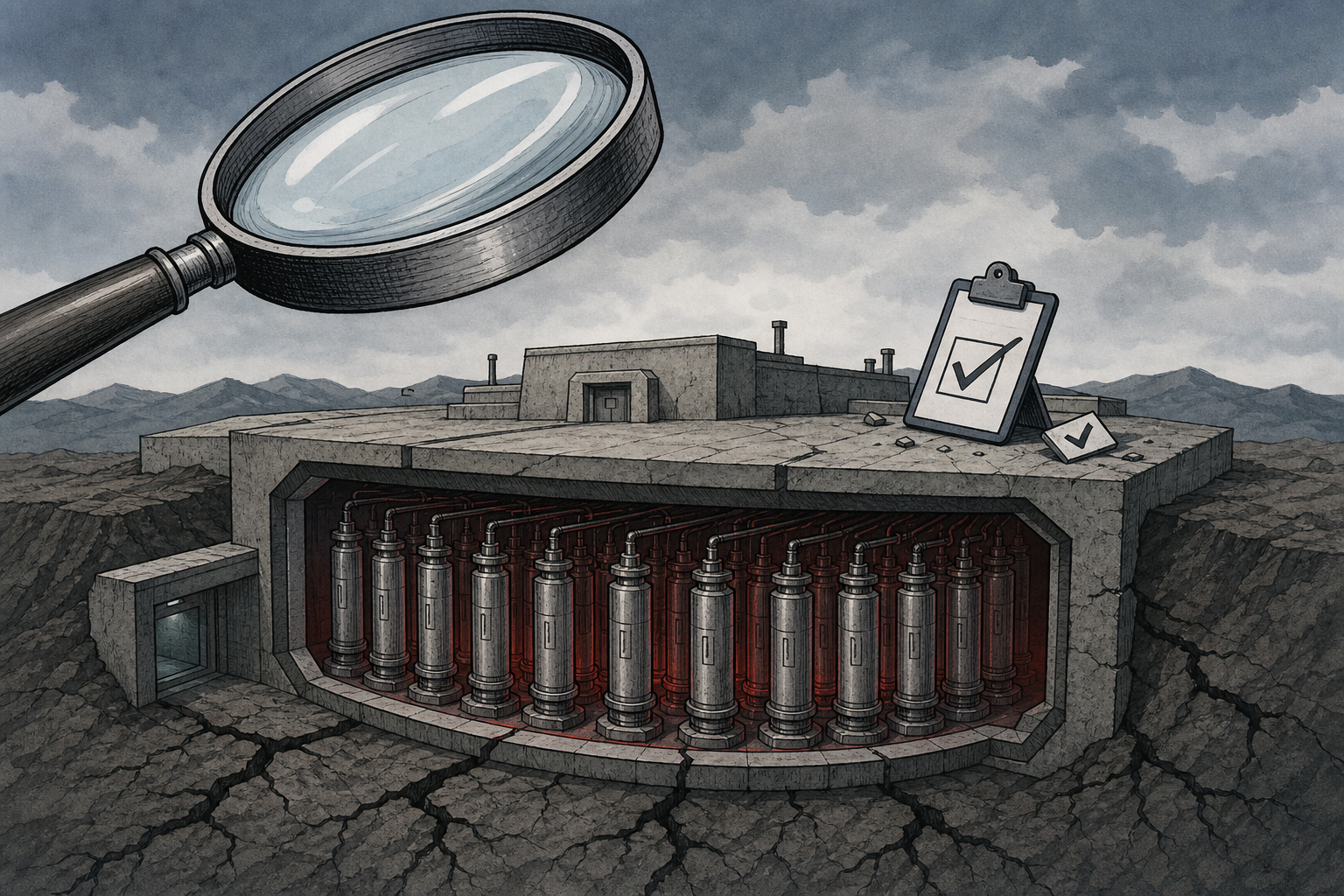
The High Court agreed there were serious questions to answer. Justice Nyaundi suspended construction and patient arrivals, extended the suspension, and ordered the government to disclose all agreements and operational protocols before the next hearing. Laikipia County’s own government formally opposed the project, citing risks to schoolchildren, to the area’s tourism economy, and to the health of its more than 518,000 residents. None of that stopped the bulldozers.
Health Cabinet Secretary Aden Duale — found in contempt for commissioning and continuing construction after the court ordered it stopped; told Parliament the government “will not stop it.”
President William Ruto — publicly approved the facility, saying he “gave the okay” after a request from President Trump because it was a partnership with “friends who have walked with Kenya for 30, 40 years,” and urged Kenyans to “relax.”
The petitioners — the Law Society of Kenya and the Katiba Institute, who argued the deal was struck without the public consultation the constitution requires.
The opposition did not stay in the courtroom. Beginning June 1, hundreds of demonstrators filled the streets of Nanyuki. Police responded with tear gas, water cannon, and live fire; protesters lit fires and threw stones. The NGO Vocal Africa reported that one demonstrator died after being shot in the head by police, and by later tallies at least three people were killed across the protest wave. Protesters at one rally carried a mock “Ebola coffin” to dramatize their fear of what they believed the government was inviting into their town.
The anger had layers. There was the public-health fear of importing a virus with no cure. There was the sovereignty question — why a foreign government’s health risk was being housed on Kenyan land at a Kenyan air base. And, as reporting from Al Jazeera and Foreign Policy noted, there was the long colonial memory attached to Laikipia, a region whose land history makes any foreign-controlled installation politically combustible. President Ruto’s framing of the project as a favor to American “friends” landed badly with a public that felt it had never been asked.
If it is too dangerous for America, it is too dangerous for Kenya. Our health workers and our communities should not be made to carry a hemorrhagic-fever risk that the United States is unwilling to keep on its own soil.
What turns this from a public-health dispute into a rule-of-law story is Duale’s response to losing in court. Rather than comply and litigate, the minister told the National Assembly that the government “will not stop it.” He argued the facility would benefit “both Kenyans and international partners,” and his workaround — continuing construction under purely Kenyan-government auspices — was an attempt to drive a truck through the court’s order on a technicality. The judge was not persuaded that swapping the contractor changed what the order forbade.

By the time the contempt finding landed on June 22, the government had reportedly halted work — the climb-down the court had demanded weeks earlier. A cabinet secretary publicly declaring a court order will be ignored, then being held in contempt for ignoring it, is a serious test of whether Kenya’s judiciary can bind its own executive. The presumption of innocence does not apply here in the criminal sense — this is a civil contempt finding by the court that issued the orders — but the sentencing, set for June 23, will show how far the court is willing to go against a sitting minister.
The American angle is the part that should travel. The United States designed this facility because it did not want to repatriate its own exposed nationals onto US soil — it chose instead to quarantine them abroad, in a country with no Ebola cases, over local objection. US public-health experts and former officials warned the plan raised “profound clinical, ethical, operational, and legal concerns.” However the Kenyan court case resolves, it is a documented instance of an American biosecurity preference being exported to a poorer ally and then being pushed through that ally’s own legal system over the objections of its courts, its county governments, and its citizens.
For the reader, the durable lesson is narrower and older than Ebola: a government that decides court orders are optional when they are inconvenient is a government testing the limits of its own constitution. Kenya’s did. A judge said no. The next hearing will tell us whether “no” still means anything when the defendant sits in the cabinet.


- 1.Al Jazeera — 'Kenyan court finds minister in contempt over US Ebola site,' June 22, 2026
- 2.PBS NewsHour (AP wire) — 'Kenya's health minister found in contempt of court over U.S.-backed Ebola facility,' June 22, 2026
- 3.Daily Nation (Nation Media Group, Kenya) — 'US Ebola facility: Court finds Duale in contempt, summoned for sentencing,' June 22, 2026
- 4.Capital FM Kenya — 'Court summons Duale for sentencing over contempt on Laikipia Ebola facility orders,' June 22, 2026
- 5.The Star (Kenya) — 'CS Duale found guilty of contempt, ordered to appear in court on Tuesday,' June 22, 2026
- 6.Al Jazeera — 'Why is a US Ebola facility in Kenya sparking protests?' June 4, 2026
- 7.Al Jazeera — 'One killed as hundreds protest in Kenya against US Ebola quarantine centre,' June 9, 2026
- 8.NPR — 'Why there's a debate over the new quarantine center for Americans at risk of Ebola,' June 9, 2026
- 9.NBC News — 'U.S. plan to open Ebola quarantine center in Kenya faces growing backlash and protests,' June 2026
- 10.ABC News — 'Kenyan president defends US Ebola quarantine center amid protests,' June 2026
- 11.The Standard (Kenya) — 'Laikipia county opposes Ebola facility, cites school children risk, tourism collapse,' June 2026
- 12.Foreign Policy — 'Kenya Protests Planned as Public Anger Rises Over U.S. Ebola Facility,' June 17, 2026
- 13.Citizen Digital (Royal Media, Kenya) — 'Protests erupt in Nanyuki over Ebola quarantine facility,' June 2026
- 14.Al Jazeera — 'One killed as hundreds protest in Kenya against US Ebola quarantine centre' (video, Al Jazeera English / YouTube), June 2026
- 15.World Health Organization — Ebola disease outbreak, Democratic Republic of the Congo and Uganda (situation reports, 2026)
Last updated June 23, 2026