
“I Think We’ll Keep It”: Trump Says US Has Total Control of Hormuz, IDF Calls Blockade “Highly Effective”
- 20% of global petroleum liquids that normally transit the Strait of Hormuz — the chokepoint the US Navy blockade now controls — EIA-tracked flow data, via CBS News / Bloomberg
- 90%+ of Iran's roughly 8,000-mine naval inventory the US Navy has destroyed clearing the strait — Adm. Brad Cooper, Senate Armed Services Committee, May 14, 2026
- 88.6% year-on-year inflation in Iran as of May-June 2026 — the highest rate since World War II — Washington Times / multiple outlets
- 6-8 ships/day current daily transits through Hormuz, down from a pre-war baseline of 130-140 ships a day — CNBC, Aug. 13, 2026
The Strait of Hormuz has been the pressure point of the 2026 Iran war since the first strikes on February 28. Washington imposed a naval blockade on Iranian ports April 13; when talks with Tehran collapsed in July, President Donald Trump (R) ordered CENTCOM to resume it in full. Five months and one aborted round of diplomacy later, the administration is done hedging about who controls the waterway that moves roughly a fifth of the world’s petroleum liquids.
Late on August 11, speaking to reporters at Joint Base Andrews, Trump put it plainly: the United States owns the strait, Iran does not, and any Iranian move against the blockade will be met with force. Less than 24 hours later he said it again, in writing, on Truth Social — and this time Israel’s military chief backed him up in the same news cycle.
What follows is the case as the administration and its allies are making it: a blockade that has physically cleared the strait of mines, an Iranian economy buckling under inflation not seen since World War II, and a shipping picture that looks less like proof the blockade has failed and more like proof it is working exactly as designed.
“We own it,” Trump told reporters at Joint Base Andrews on the night of August 11. “They don’t have control. We have total control. We own it, and at some point, maybe they’ll do something, and then they get blown away.”
The next morning, at roughly 11:07 a.m. Eastern on August 12, Trump made it official in a Truth Social post that read like a closing argument — part strategic assessment, part economic scorecard, part taunt aimed squarely at Tehran:
The U.S.A. has total control over the Strait of Hormuz. I THINK WE WILL KEEP IT! Our Naval Blockade is being called, by everyone, 'A WALL OF STEEL,' and there is nothing Iran can do about it. They have no Navy, they have no Air Force, their remaining soldiers are unpaid, the IRGC is decimated and fleeing, and their 'Leadership' is uncertain, at best! They have No Money – Their country is 'shot.' All they have is FAKE NEWS and 300% INFLATION, and getting worse! Iran is all talk and no action, the Bully of the Middle East No Longer. Praise be to Allah!
Posted August 12, 2026
Within hours, the assessment got an echo from an unexpected register: Israel’s own military brass. IDF Chief of Staff Lt.-Gen. Eyal Zamir told Israel’s Security Cabinet the same day that the blockade was working. “The blockade of Iran is highly effective,” Zamir said. “The economic crisis there is getting worse.”
“The blockade of Iran is highly effective. The economic crisis there is getting worse.”
Lt.-Gen. Eyal Zamir, IDF Chief of Staff, to Israel's Security Cabinet, August 12, 2026
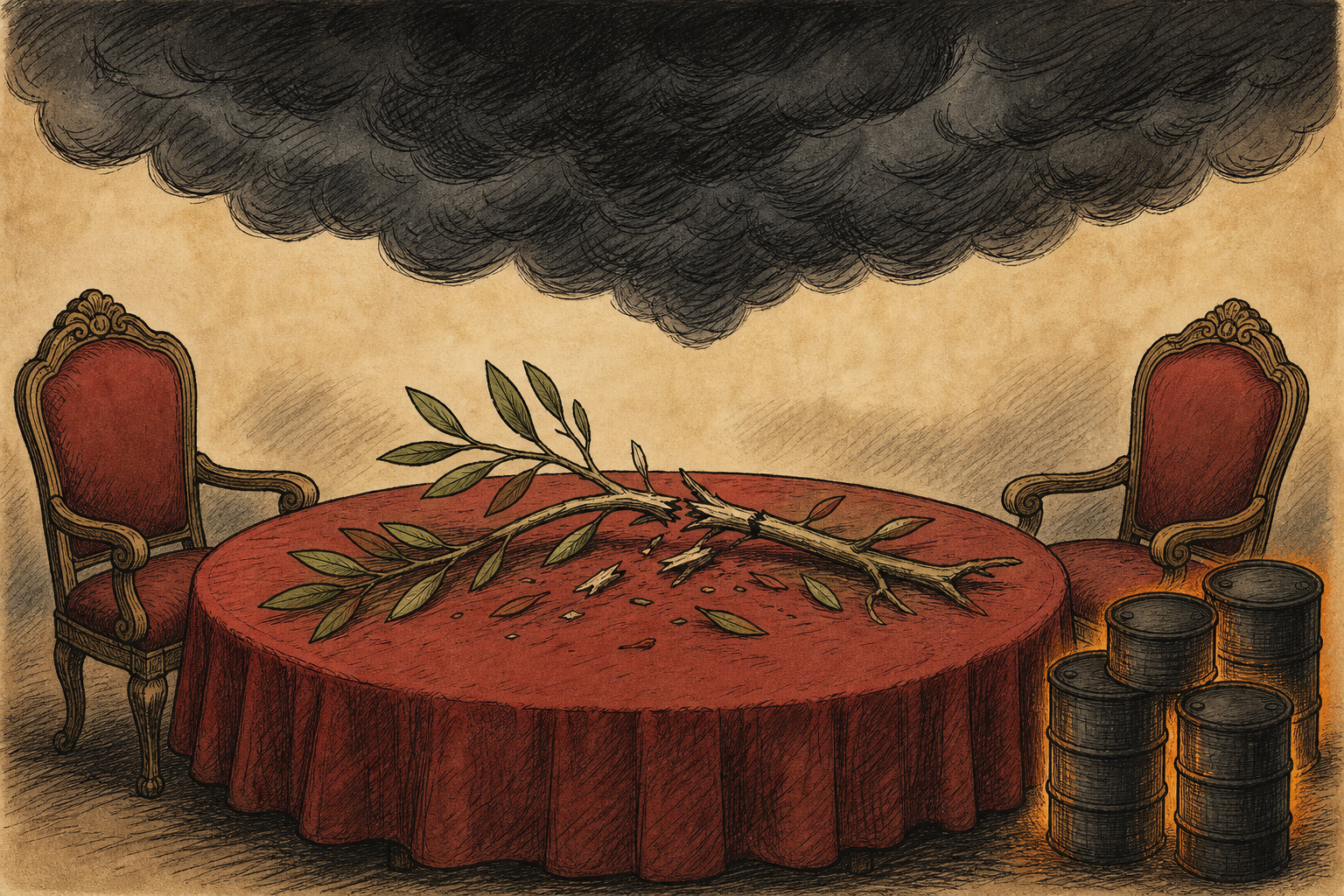
Trump’s “total control” claim isn’t just rhetoric layered on top of a blockade order — it traces back to a specific engineering fact. Mines are what make a chokepoint like Hormuz dangerous to transit even when no warship is in sight; clear them, and the physical basis for Iran’s threat to shipping goes with them. In Oval Office remarks preceding the August 12 post, Trump said: “The only one that has control of the Strait of Hormuz right now is the United States Navy. We’ve mine-swept the entire strait.”
That claim has a paper trail. CENTCOM Commander Adm. Brad Cooper told the Senate Armed Services Committee on May 14, 2026, that US forces had destroyed more than 90% of Iran’s roughly 8,000-mine naval inventory. “The Iranian ability to stop commerce has been dramatically degraded through the straits,” Cooper testified, “but their voice is very loud, and those threats are clearly heard by the merchant industry and the insurance industry.”
Cooper told the committee the Navy was also building infrastructure to back the claim up, not just clearing hazards: “Today, we began the process of establishing a new passage, and we will share this safe pathway with the maritime industry soon to encourage the free flow of commerce.” The blockade is being enforced, not just declared. In one recent example, CENTCOM forces disabled the Panama-flagged tanker M/V Vela Nova in the Gulf of Oman after it tried to evade the blockade — an MH-60 helicopter fired on the ship’s engine room and steering gear to stop it in the water.
Trump has framed the blockade as leverage, not just a military position. “We are only semi-negotiating with them,” he said of Iran in the same round of Oval Office remarks. “We are just watching Iran with its huge inflation and the fact they have no money.” The numbers back the description. Iran’s year-on-year inflation reached roughly 88.6% by May-June 2026 — the highest rate since World War II. Food inflation alone hit roughly 110%.
The IMF’s independent read is nearly as grim: it estimates Iran’s economy contracted 6.1% in 2026, alongside roughly 68.9% inflation on the Fund’s own measure. The squeeze shows up on the other side of the ledger too. Brent crude spiked to $105 a barrel on July 23, 2026, as the blockade tightened supply out of the region — a price shock that has hit Iran’s own export revenue as hard as anyone’s. Zamir’s assessment to the Security Cabinet — “the economic crisis there is getting worse” — lines up with every independent data point on the board.
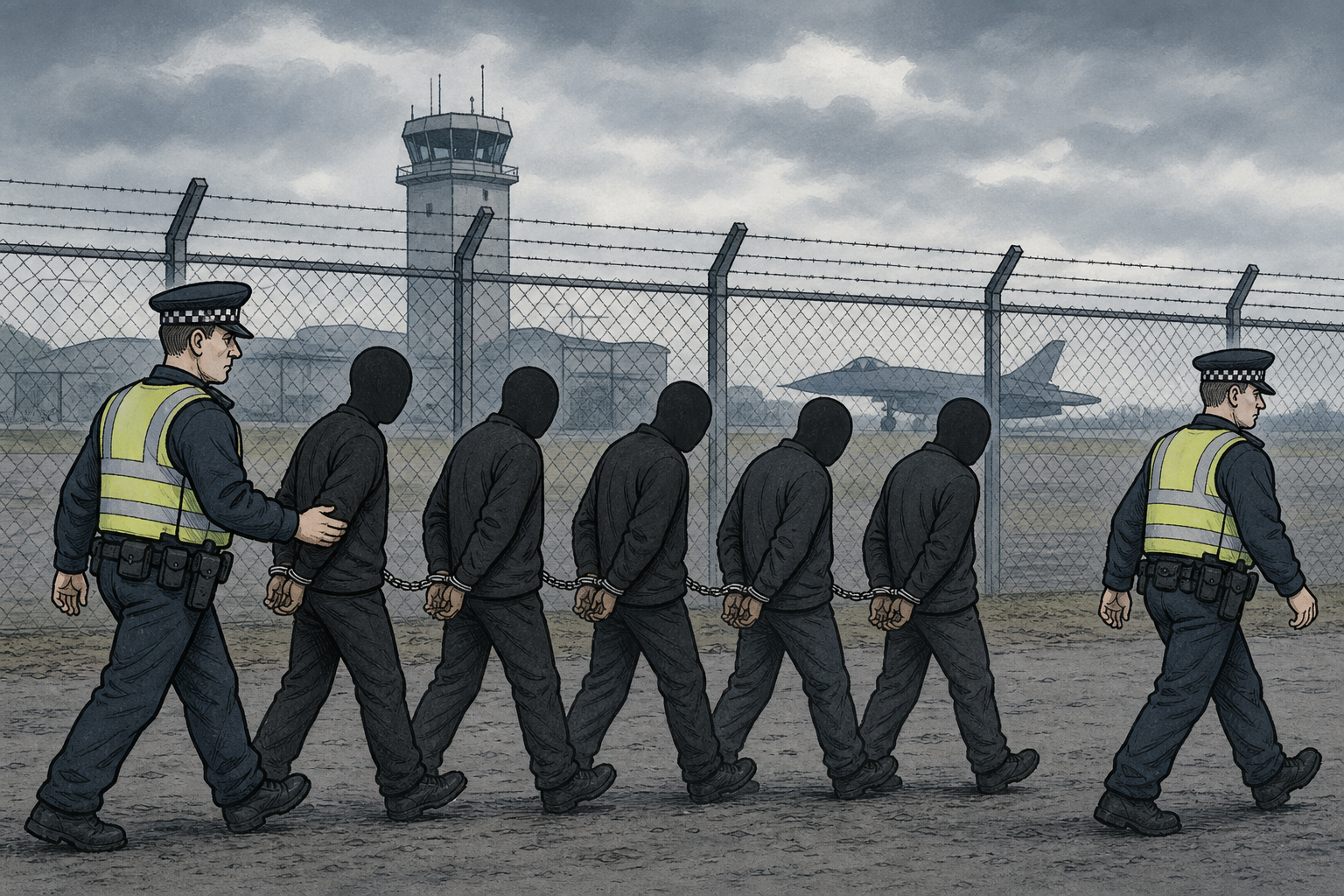
Iran isn’t conceding the point. Its Persian Gulf Strait Authority disputes the American claim outright, saying “the Strait of Hormuz remains blocked and will not be reopened until Iran’s conditions are accepted.” Mohsen Rezaei, the Supreme Leader’s national security representative, put the same position in blunter terms: Hormuz “will remain closed unless the US meets conditions” — namely, ending regional wars and releasing Iran’s frozen assets.
The traffic numbers are real, and they cut toward the American case rather than against it. Daily ship transits through Hormuz have fallen to roughly 6-8 vessels a day around August 12, against a pre-war baseline of 130-140 ships daily; the volume of oil moving through the strait has dropped from about 21.6 million barrels a day in the fourth quarter of 2025 to roughly 4.9 million barrels a day by the second quarter of 2026. That is precisely the outcome a “wall of steel” is supposed to produce — and it is exactly what Adm. Cooper told the Senate to expect back in May, when he said Iran’s threats were “clearly heard by the merchant industry and the insurance industry” even as the mines themselves came up. Shippers aren’t staying away because the blockade failed. They are staying away because it is holding, and because CENTCOM’s new safe passage is still being stood up for the merchant fleet to use with confidence.
President Trump says the United States has total control of the Strait of Hormuz and intends to keep it. That claim is backed by more than a boast: CENTCOM has cleared over 90% of Iran’s naval mine inventory, is standing up a new safe passage for commercial shipping, and enforced the blockade against at least one tanker trying to run it. Israel’s own military chief, Lt.-Gen. Eyal Zamir, independently called the blockade “highly effective” the same day Trump made his claim public. Iran disputes the framing and says the strait stays shut until its own conditions are met — but Iran’s 88.6% inflation, its shrinking GDP, and a collapse in Hormuz ship traffic from roughly 130-140 vessels a day to single digits all point the same direction: the pressure is real, and it is Tehran absorbing it.
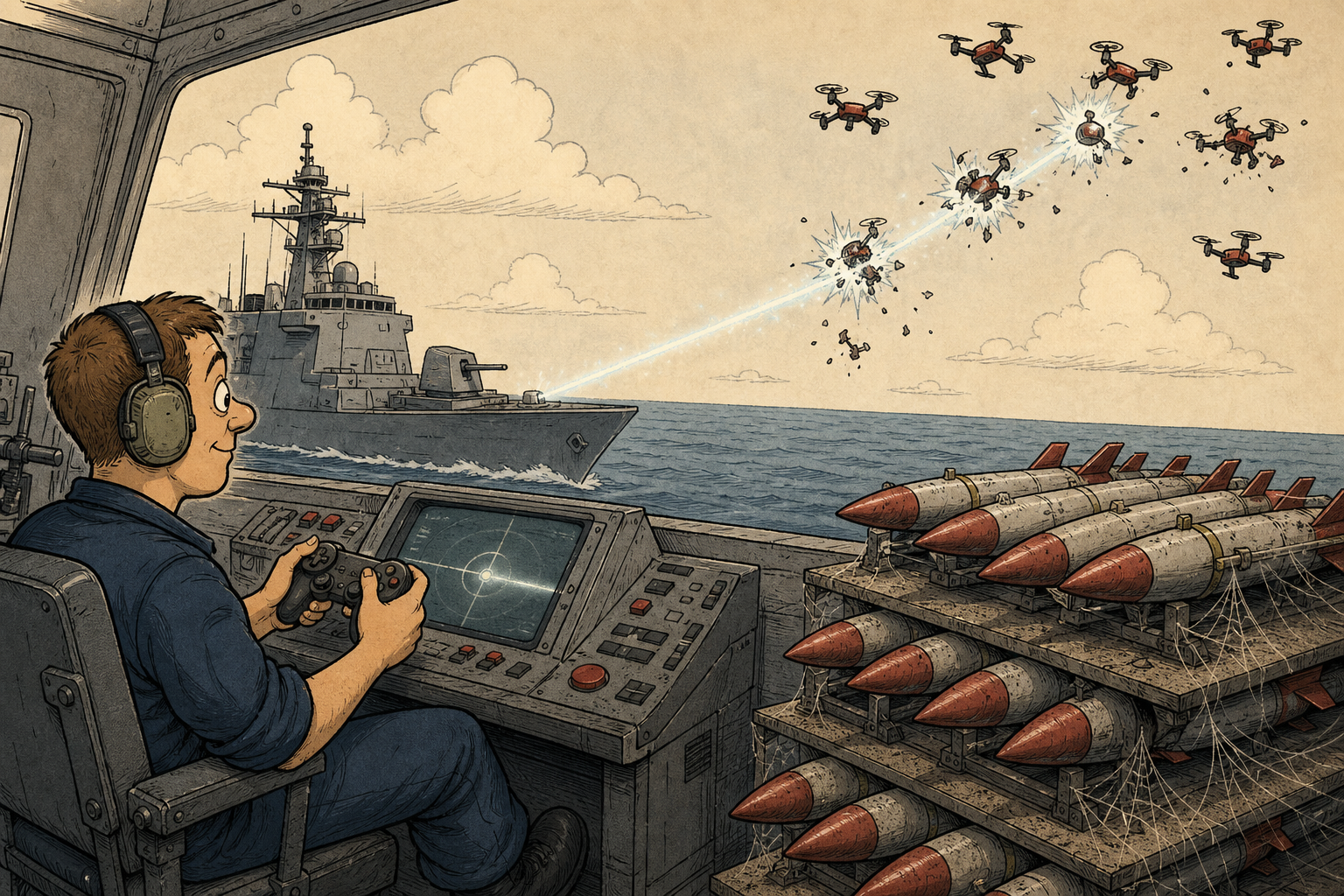
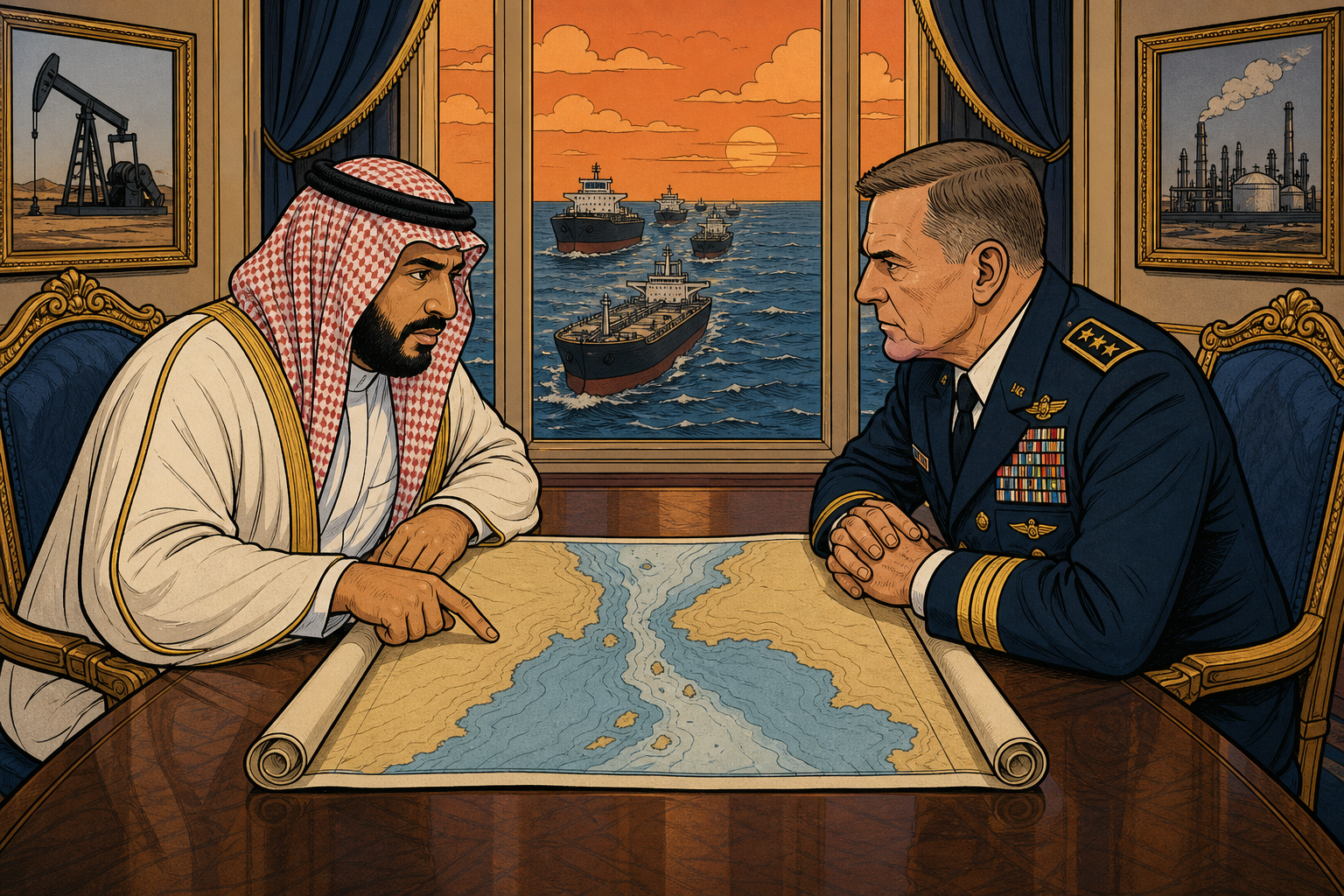
- 1.
- 2.
- 3.
- 4.
- 5.
- 6.
- 7.
- 8.
- 9.
- 10.
- 11.
- 12.