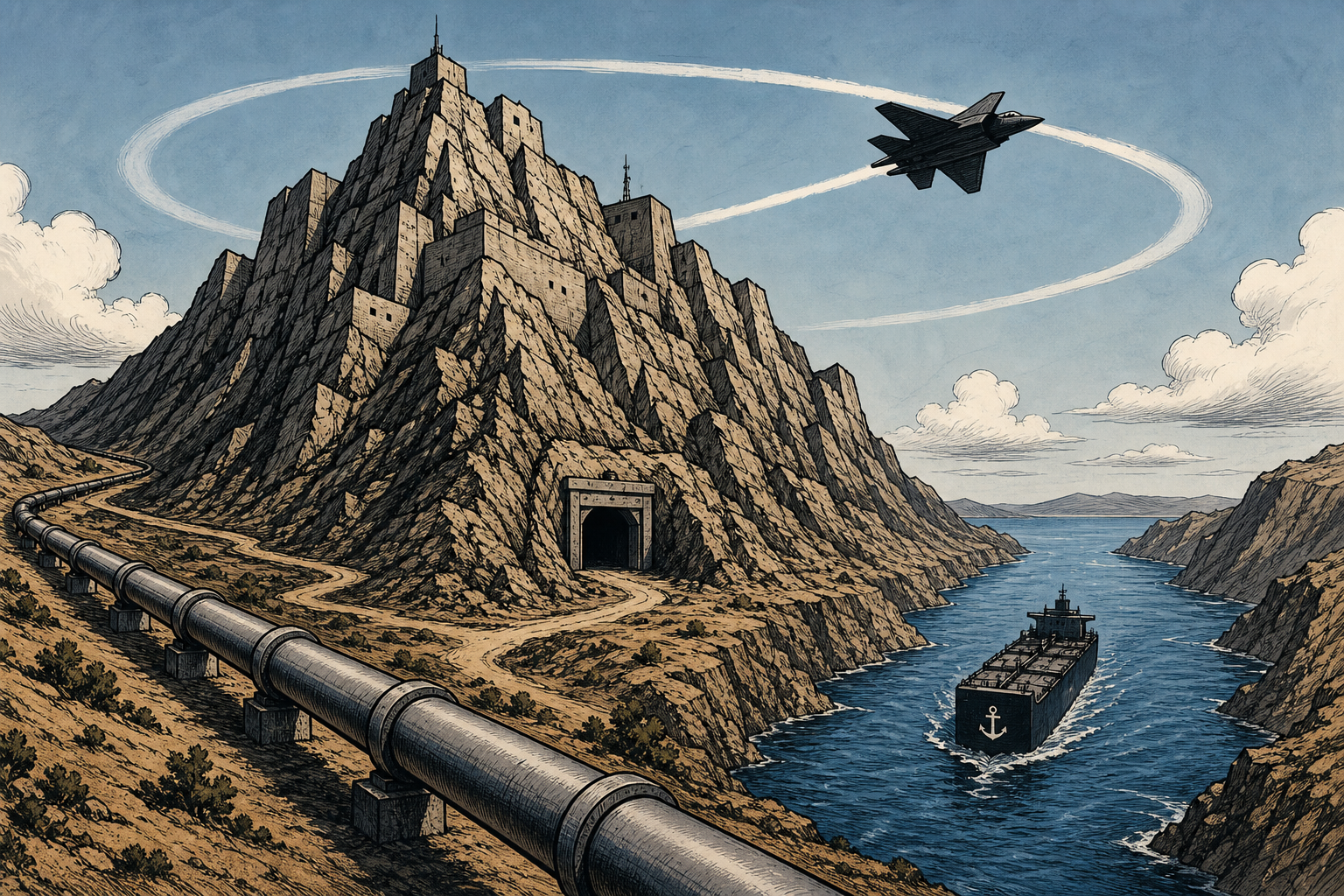
Saudi Crown Prince Meets CENTCOM Chief as Hormuz Oil Futures Spike Past $100.
Monday, September 14, 2026. Saudi Crown Prince Mohammed bin Salman sat down in Jeddah with Adm. Brad Cooper, commander of U.S. Central Command, and Saudi National Security Adviser Dr. Musaed bin Mohammed Al-Aiban. The meeting followed a blunter conversation four days earlier: MBS called President Trump (R) directly on September 10, asking for direct U.S. military strikes on Yemen’s Houthi rebels. Trump said no.
What Trump agreed to instead was narrower: intelligence-sharing, targeting assistance, and air-defense advising — not American bombs. Cooper flew to Saudi Arabia overnight after the call for preliminary talks, then returned for Monday’s sit-down with the Crown Prince himself. The urgency is straightforward. Houthi forces have been advancing on a second oil chokepoint even as U.S. forces keep pressing Iran’s own tanker fleet on the Gulf side of the map.
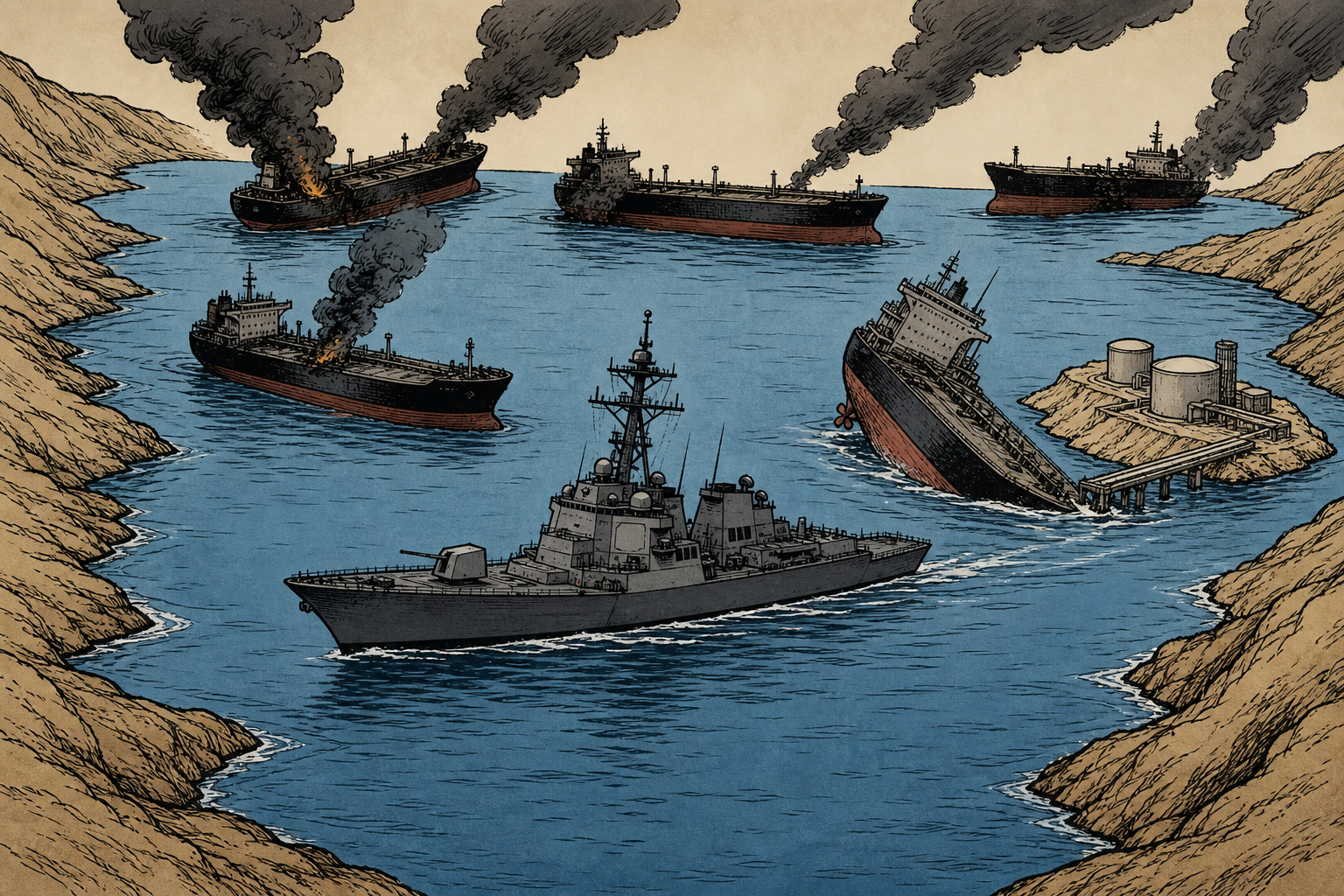
That combination — Iran-aligned pressure squeezing crude from two directions at once — is why oil futures are moving even though the Trump administration insists the Strait of Hormuz itself remains open. It is a continuation of the same fight Civic Intelligence covered on September 8, when CENTCOM destroyed five Iranian oil tankers in the Gulf of Oman. Now a second, separate front has opened hundreds of miles south, at the mouth of the Red Sea.
- $107.82Brent crude, per barrelup $3.21 on the day — highest in more than six weeks — Al Jazeera.
- $103.22WTI crude, per barrelup $3.17 on the day, tracking the same six-week high — Al Jazeera.
- $4.22–$4.30US average gas price, per gallonhighest since June 2026 — AAA, week of Sept. 9–11.
- +3.4%August 2026 CPI, year over yeargasoline alone rose 3.9% for the month, over a third of the total increase — BLS.
- 6–7vessels transiting Hormuz on some daysversus an ≈85-vessel-a-day pre-crisis baseline — IMF PortWatch.
- 3%–10%war-risk insurance, hull valueup from roughly 0.25% before the war — gCaptain.
On the Thursday call, MBS sought direct U.S. military strikes on the Houthis as the group closed in on Saudi Arabia’s main pipeline. Trump declined to authorize direct American strikes on Houthi positions but agreed to share intelligence, help with targeting, and advise on air defense — a middle path between ignoring an ally’s request and opening a new American front in Yemen. Cooper flew to the kingdom overnight September 10–11 for preliminary talks, then returned to sit down with MBS and Al-Aiban in Jeddah four days later.
Neither government described the meeting’s substance in detail, but the timing lines up with Saudi Arabia’s worst week of Houthi advances since the group’s founding. MBS is asking for something the U.S. has not given any Gulf partner outright in this war: American firepower turned against a third party, not just Iran. What he got was a support role, not a strike package.
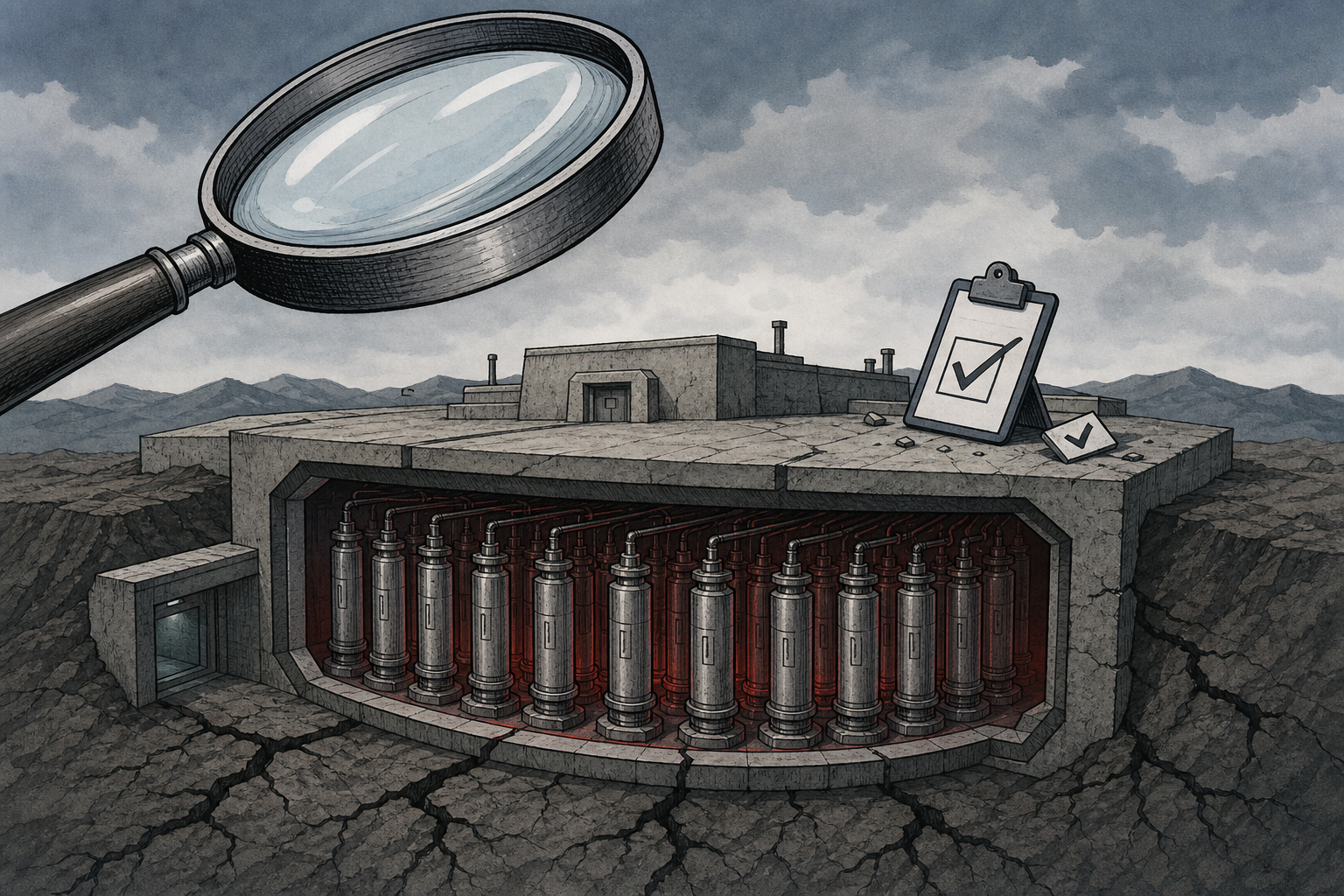
Houthi forces have swept south from their stronghold at Hodeidah, seizing the port of Mokha on September 10 and Perim Island — which sits at the narrow mouth of the Bab el-Mandeb strait — on September 11 and 12. Saudi Arabia’s East-West pipeline, the kingdom’s main workaround for the Strait of Hormuz and historically capable of carrying up to 7 million barrels a day, sits in the path of that advance. Drone strikes launched from Iraq’s Maysan Governorate hit the pipeline September 10–11; Saudi Arabia shut it down as a precaution. Three days earlier, Houthi forces had launched a broader drone-and-missile operation against Saudi cities and Aramco energy facilities in Abha, Khamis Mushait, Jizan, and Najran, wounding more than 73 people.
Secretary of State Marco Rubio (Trump administration) called the Houthis “agents and proxies of the Iranians.” Iranian Foreign Ministry spokesperson Esmaeil Baghaei disputed that characterization. The argument over who is directing the Houthis doesn’t change the math on the ground: the same week the group closed off Saudi Arabia’s Hormuz bypass, CENTCOM was still working the Gulf side, having destroyed five Iranian tankers in the Gulf of Oman on September 8.
President Trump says the U.S. is in “total control” of the Strait of Hormuz, with American ships escorting tanker traffic through it. Energy Secretary Chris Wright (Trump administration) puts a number on it, saying flows are running at “two-thirds or north of two-thirds” of pre-conflict levels — roughly 10 million barrels a day through the strait itself, plus another 4 to 5 million barrels a day moving by pipeline. Independent ship-tracking tells a different story. The IMF’s PortWatch service has recorded daily transits as low as 6 to 7 vessels on some days, against a roughly 85-vessel-a-day baseline before the crisis (the pre-war norm across the full strait ran 120 to 140 vessels a day, carrying about 20 million barrels). Iran disputes the “clearing” claim outright, asserting it still controls who moves through Hormuz.
The gap between the official figures and the tracked reality shows up in what shippers are actually paying. War-risk insurance premiums have jumped from roughly 0.25% of a tanker’s hull value before the war to somewhere between 3% and 10% now — an added $3 million to $10 million on a single transit for a $100 million tanker, and as much as $21 million for a large crude carrier. That premium is a market judgment on how open Hormuz really is, independent of what either government says.
The administration says: Hormuz is open, U.S. ships are escorting traffic, and flows are at two-thirds-plus of pre-war volume (Trump, Energy Secretary Chris Wright).
Ship-tracking says: Daily transits have fallen as low as 6–7 vessels on some days versus an ~85-vessel baseline (IMF PortWatch), and insurers are pricing risk 12–40 times higher than before the war.
Iran says: It disputes the U.S. “clearing” claim and asserts it still controls access to the strait. This piece does not resolve the dispute — it reports what each side claims and what futures markets are actually pricing.
The consumer number lags the futures number but is catching up. The national average for gas is $4.22 to $4.30 a gallon, per AAA for the week of September 9–11 — the highest since June — and diesel is close to a record $5.88 to $5.94 a gallon. Gas prices are up roughly 40% since the U.S.-Iran war began on February 28, 2026, according to a Joint Economic Committee Democratic-staff estimate cited by Sen. Jack Reed (D-RI) — a partisan-committee figure, not a neutral government audit. August’s Consumer Price Index rose 0.4% for the month and 3.4% year over year, with the gasoline index alone climbing 3.9% in August — accounting for more than a third of the total monthly CPI increase, per the Bureau of Labor Statistics.
Sen. Reed tied the numbers directly to the war: “we’re seeing the effects very dramatically right here in Cranston, in Rhode Island, and that’s surging gasoline prices.” President Trump has offered a different timeline.
Oil prices will drop precipitously, like everything else is dropping (but more!), when we WIN the war with Iran. Three Dollars a gallon, but ultimately, below Two Dollars a gallon. It will all happen quickly, and Iran will never have a Nuclear Weapon.
Iran-aligned forces are squeezing oil supply from two directions at once — the IRGC in the Gulf, the Houthis at the Red Sea’s mouth — and Saudi Arabia’s own Hormuz bypass pipeline is offline because of it. MBS asked Trump for direct strikes and got intelligence-sharing instead. Brent and WTI are both at six-week highs, ship-tracking shows Hormuz traffic well below the administration’s stated numbers, and American drivers are paying record diesel prices while Trump promises gas under two dollars once the war ends. None of those things are in tension in the data — they are the same story, told from four different vantage points.