The U.S. Just Completed Its 13th Consecutive Night of Strikes on Iran. Iran Is Rebuilding Its Missile Sites Faster Than Anyone Expected.
U.S. Central Command, under Adm. Brad Cooper, launched another wave of strikes against Iranian military targets at 6:45 p.m. ET on July 23, 2026 — the 13th consecutive night of bombing since the ceasefire collapsed on July 7. Targets included command centers, drone-storage facilities, communications networks, coastal-surveillance sites, and Iranian naval capability.
A strike near Ahvaz killed four people and injured five, according to Iranian officials. Strait of Hormuz traffic collapsed to a single vessel on July 23 — the lowest since May 7 — and Brent crude surged past $100 a barrel, its highest price since May. President Donald Trump told Axios he is “considering a massive attack, bigger than ever before.”
And yet satellite imagery reviewed by the Wall Street Journal and the Times of Israel shows Iran re-excavating tunnel entrances and repaving roads at multiple bombed missile sites — evidence, Israeli and U.S. officials say, that Tehran’s reconstruction capacity is outpacing the campaign meant to grind it down.
- 13 — consecutive nights of U.S. strikes on Iranian military targets since the July 7 ceasefire collapse, per CENTCOM
- $37.5B — cost of the war to date, per Secretary of War Pete Hegseth's July 21, 2026 testimony to Congress
- 1,450+ — strikes on Iranian weapons-manufacturing facilities, degrading over 85% of Iran's missile/drone/naval industrial base, per Adm. Brad Cooper's May 2026 testimony
- 1 — vessel transited the Strait of Hormuz on July 23 — the lowest since May 7 — as Brent crude topped $100/barrel
CENTCOM’s July 23 wave hit Iranian military command centers, drone-storage facilities, communications networks, coastal-surveillance installations, and maritime assets, according to the command’s own statement. It was the 13th straight night of bombing since a prior interim ceasefire — reached in June — collapsed on July 7. Iranian officials, including Khuzestan province Deputy Governor Valiollah Hayati, said a strike near Ahvaz killed four people and injured five. Separate explosions were reported at Bandar Abbas, Iran’s main naval base.
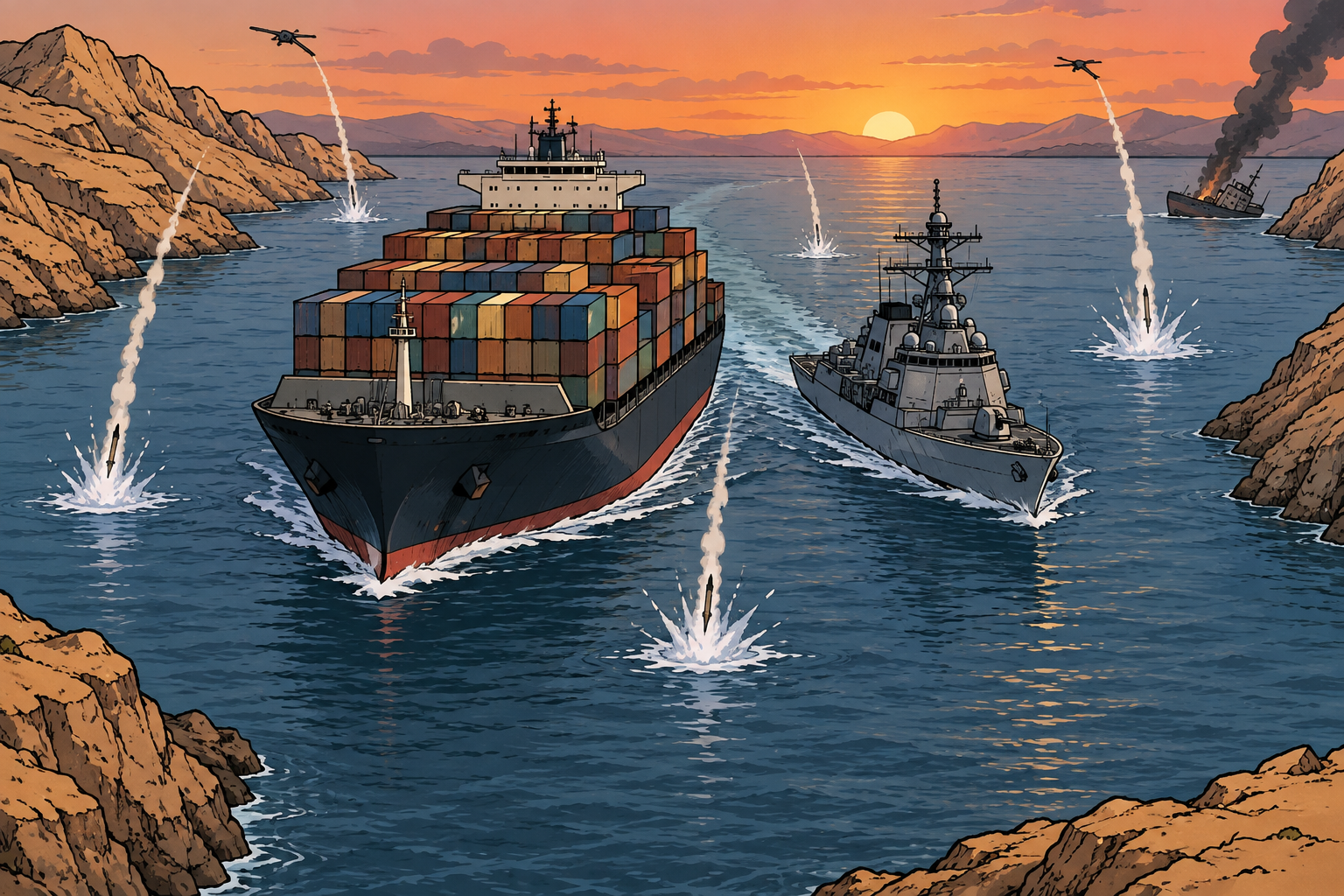
The Strait of Hormuz — which normally carries roughly a fifth of the world’s seaborne oil and gas — saw traffic collapse to a single transiting vessel on July 23, the lowest count since May 7. CENTCOM’s naval blockade, resumed around July 14 after an earlier pause, has redirected 12 commercial vessels and disabled one in the nine days since it restarted. Brent crude surged past $100 a barrel around July 23, its highest level since May, driven partly by Houthi strikes on the Saudi-flagged vessels Encelia and Layla in the Red Sea — a separate front layering onto the Hormuz standoff.
U.S. forces started another night of strikes against Iranian military targets at 6:45 p.m. ET today. This is the 13th consecutive night of strikes aimed to hold Iran accountable and diminish threats from the Islamic Revolutionary Guard Corps to commercial shipping.
Summary of the 13th night: strikes hit Iranian command centers, drone storage, communications, and coastal-surveillance sites; a strike near Ahvaz reportedly killed four and wounded five; additional blasts reported at Bandar Abbas.

In a July 23 interview with Axios, President Trump said he is weighing a strike far larger than anything the 13-night campaign has produced so far. “I am considering a massive attack. Bigger than ever before,” he said. “I am close to making a decision. We are all set for it.” Asked why more force was needed after nearly two weeks of nightly bombing, he said the Iranians “haven’t received enough pain yet.”
The comments followed a separate warning tied to the Houthi attacks on Saudi tankers in the Red Sea, which the administration treats as an extension of the same Iranian threat network.
if they do this again, the U.S. will hold Iran responsible, in that the Houthis are a Surrogate and/or Proxy of Iran, and major military punishment will be inflicted upon Iran and, of course, the Houthis, themselves
The escalation rhetoric echoes an earlier moment in the war, when Trump used blunt personal language about Iran’s leadership that drew commentary across cable news.
Trump has also opened a second front in the dispute: using Iranian money the U.S. already controls to pay for damage the Houthis and Iran have caused to shipping. “Any and all damages done to Ships, Cargo, or anything related thereto, will be paid for by Iranian Money that the United States has in its possession, and controls,” he wrote on Truth Social.
any and all damages done to Ships, Cargo, or anything related thereto, will be paid for by Iranian Money that the United States has in its possession, and controls
How much frozen Iranian money the U.S. actually holds is disputed — estimates across outlets range from roughly $100 billion to $124–167 billion, and this piece treats that as a range rather than a settled figure. Iranian Foreign Minister Abbas Araghchi rejected the idea outright on X, warning that confiscating a nation’s assets to cover unrelated claims sets a precedent no government would want turned against it.
Seizing another nation's assets to pay for unrelated future claims is an incendiary precedent... once governments normalise confiscation, no one's assets are safe. Ensuing chaos will not be pretty or peaceful.

Even as the nightly strikes continue, Israeli and U.S. officials are increasingly worried about a parallel fact on the ground: Iran is reconstructing missile-production and storage sites — some built deep inside mountains — faster than expected. Imagery from spring and early summer 2026, reviewed by the Wall Street Journal and corroborated by the Times of Israel using Planet Labs, Airbus, and Vantor satellite data, shows freshly re-excavated tunnel entrances and newly paved roads at Kangavar in western Iran, with similar restoration visible at Dezful, Kermanshah, the Bandar Anzali IRGC-linked shipyard, and a missile-component plant near Tehran.
Retired Israeli Brig.-Gen. Ran Kochav, the former IDF air-defense chief, told the Journal Iran’s recovery has surprised planners on both sides. “They refilled their stockpiles,” he said. “They have very impressive industrialization and reconstruction capabilities.”
“They refilled their stockpiles. They have very impressive industrialization and reconstruction capabilities.”
Ran Kochav · Retired Brig.-Gen., former IDF air-defense chief
Not every analyst reads the imagery the same way. Jim Lamson, a visiting fellow at King’s College London and former CIA analyst, offered a counterpoint: some destroyed missile-parts facilities “could take Iran months or years to rebuild.” Part of the discrepancy, analysts say, is that some strikes only collapsed tunnel entrances rather than destroying what was inside them — leaving equipment intact and making the roads-and-entrances reconstruction visible from orbit look more advanced than the industrial capacity actually recovered underground.
The scale of the campaign trying to prevent that reconstruction is enormous by any measure. Secretary of War Pete Hegseth told Congress on July 21 that the war has cost $37.5 billion to date. CENTCOM Commander Adm. Brad Cooper testified in May that the campaign has conducted more than 1,450 strikes specifically on weapons-manufacturing facilities, destroying or degrading over 85% of Iran’s ballistic-missile, drone, and naval industrial base. Chairman of the Joint Chiefs Gen. Dan Caine has overseen the targeting alongside Cooper throughout.
The interim ceasefire reached in June collapsed around July 7. Iraqi Prime Minister Ali al-Zaidi reportedly carried a 15-point U.S. ceasefire proposal to Tehran, which Iran reportedly rejected over unresolved control of the Strait of Hormuz — though both Iranian state media and the Iraqi government have publicly pushed back on that characterization, so it is treated here as contested rather than confirmed.
U.N. Secretary-General Antonio Guterres told the Security Council the situation is “teetering on the edge of the unimaginable,” adding that “diplomacy is the only way forward.” Iran’s chief negotiator, Parliament Speaker Mohammad-Bagher Ghalibaf, described the war in stark, zero-sum terms: “The equation of this war is clear: either everyone or no one.” Secretary of State Marco Rubio characterized the American posture more bluntly still, calling it “a head for an eye.”
Israeli Defense Minister Israel Katz has separately warned Iran would face a “crushing blow” if it strikes Israel directly. Iran’s government — President Masoud Pezeshkian, Supreme Leader Mojtaba Khamenei (who took the role after his father, Ali Khamenei, was killed earlier in the war), and Foreign Ministry spokesman Esmail Baghaei — has shown no public sign of accepting terms that leave Hormuz under anything but Iranian control.
Thirteen straight nights of U.S. strikes have degraded a large share of Iran’s declared missile and drone industrial base, by CENTCOM’s own accounting. They have not produced a ceasefire, a diplomatic breakthrough, or — per the satellite imagery — a permanent halt to Iran’s ability to rebuild. Trump is now publicly weighing an attack “bigger than ever before” while Iran’s negotiators describe the war as all-or-nothing.
The U.S. has now struck Iran for 13 consecutive nights, at a cost of $37.5 billion and counting, while Brent crude tops $100 a barrel and Hormuz traffic all but stops. Trump says a bigger attack may be coming and is threatening to pay for Houthi damage with frozen Iranian money — a plan Tehran calls an “incendiary precedent.” Yet satellite imagery shows Iran already rebuilding some of the same missile sites the campaign was built to destroy, and neither Guterres’s warning nor a reported Iraqi ceasefire proposal has moved either side off its position.