Nvidia Taps Wall Street for $500,000,000,000 in AI Infrastructure Financing
- $500,000,000,000+ in third-party capital the six new financing platforms are targeting — Nvidia Newsroom, Aug. 10, 2026
- 25% the cap on Nvidia's own guarantee of the residual value of GPUs financed this way — Jensen Huang, CNBC, Aug. 10, 2026
- 6 Wall Street firms involved — Apollo, BlackRock, Blackstone, Brookfield, Goldman Sachs, KKR — Nvidia Newsroom
- $130,000,000,000 in Nvidia market value wiped out on the day the deal was announced — Forbes, Aug. 10, 2026
On August 10, 2026, Nvidia announced it had signed non-binding memorandums of understanding with six of the largest names in finance — Apollo Global Management, BlackRock, Blackstone, Brookfield Asset Management, Goldman Sachs, and KKR & Co. — to build independent “AI compute infrastructure financing platforms” aimed at mobilizing more than $500,000,000,000 in third-party capital. Nothing here is finalized: these are preliminary agreements to build a structure, not signed loans, and none of the six firms has disclosed how much it intends to commit.
The pitch, delivered by Nvidia CEO Jensen Huang in an exclusive CNBC interview flanked by all six firms’ chief executives, was that graphics processors have become “an investable asset class” — something Wall Street can finance the way it finances toll roads or power plants, rather than write off as depreciating IT equipment.
Investors were not immediately convinced. Nvidia shares fell roughly 2.4 to 3.2 percent the same day, erasing an estimated $130,000,000,000 in market value — a strange reaction to what the company framed as good news, and an early sign of how closely the market was reading the fine print on who actually bears the risk.
The six firms named in Nvidia’s release span private credit, alternative asset management, and traditional investment banking: Apollo Global Management, BlackRock, Blackstone, Brookfield Asset Management, Goldman Sachs, and KKR & Co. Each will help stand up its own financing platform, independent of the others, rather than pool into a single joint vehicle. Nvidia says deals are expected to start reaching the market “within months,” though as of this writing no full deployment schedule, individual firm commitment sizes, or final terms have been disclosed.
Huang made the ambition explicit on CNBC: “This is really the first time that technology chips have become an investable asset class.” The firms’ own executives echoed the framing. Jim Zelter, President of Apollo Global Management, called modern compute “a scarce, mission-critical asset class.” Larry Fink, Chairman and CEO of BlackRock, said the arrangement “deepens our relationship with NVIDIA.” David Solomon, Chairman and CEO of Goldman Sachs, put it in market terms: “It’s a big infrastructure build, and the capital markets are signaling that there’s lots of capital available to support it.”
Nvidia taps Wall Street for $500 billion financing. CEO Jensen Huang tells CNBC AI chips now 'investable asset'

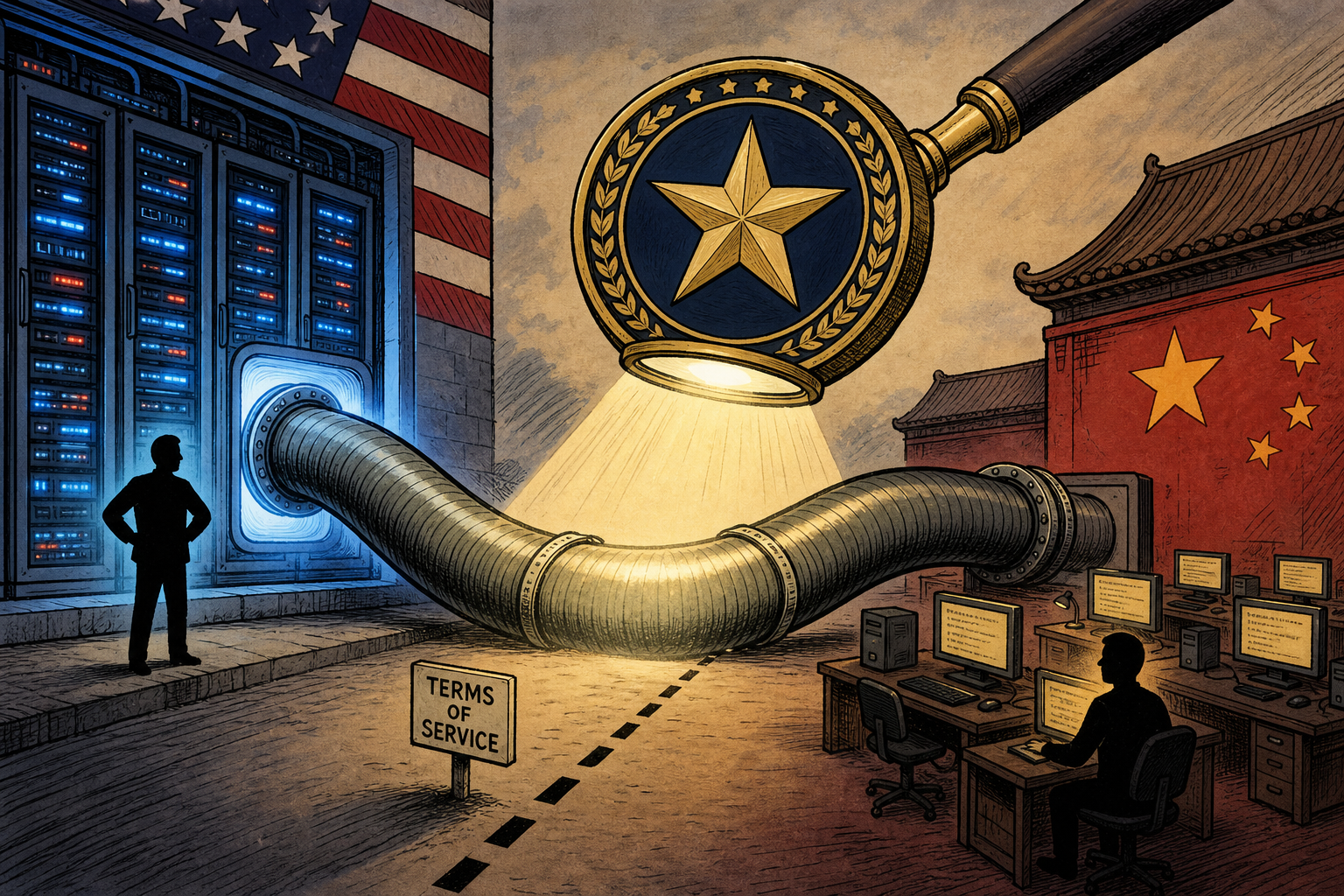
The mechanism is the core of the story, and it is more complicated than a simple loan. Nvidia itself is not putting up the $500,000,000,000. Instead, each of the six firms will set up special-purpose vehicles — standalone legal entities built to hold a single pool of assets and the debt raised against them. Those SPVs raise money from investors through private placements and bonds, using Nvidia GPU compute power itself as the collateral backing the debt. The SPVs then lease that compute capacity to hyperscalers, frontier AI labs, and large enterprises. The lease payments those customers pay are what services the debt — the same basic structure used to finance aircraft fleets or data-center real estate, applied to racks of chips instead.
Nvidia’s own exposure in the arrangement is a backstop, not a capital contribution. The company will guarantee up to 25 percent of the residual value of the chips financed through the platforms — effectively promising that if the GPUs are worth less than expected when the leases end, Nvidia will cover part of the gap. Huang said on CNBC that this equates to an option to backstop up to $125,000,000,000 in total exposure, a fraction of the $500,000,000,000 target.
“These are revenue-generating assets now. They're productive, they're long-lived, they're fungible, they're flexible.”
Jensen Huang, Founder & CEO, Nvidia — CNBC, August 10, 2026
The structure is not new — it builds directly on deals Nvidia and its partners already tested. In June 2026, Apollo and Blackstone anchored a $35,000,000,000 chip-collateralized SPV loan that leased hardware to Anthropic. Around the same time, Nvidia invested in a separate SPV tied to xAI, whose proceeds were used to buy Nvidia GPUs that were then leased back to xAI’s Colossus 2 data center. And in late July 2026, CNBC reported — citing the Wall Street Journal — that Nvidia was in talks to guarantee up to $250,000,000,000 in financing tied to an OpenAI data-center buildout. The August 10 announcement scales that same playbook up to six platforms and a $500 billion target rather than introducing a new financial instrument.
The stock market’s first reaction cut against Nvidia’s framing. Shares fell roughly 2.4 to 3.2 percent on announcement day, wiping out an estimated $130,000,000,000 in market value even as the company described the deal as a vote of confidence from six of the world’s largest financial institutions. By August 11, the picture had partly stabilized: Nvidia’s five-year credit default swap spread narrowed roughly 5 basis points to 72.11bps after Huang publicly clarified the 25-percent, $125,000,000,000-cap structure — a sign that credit markets, at least, were reassured once the risk-sharing terms were spelled out.
Not everyone was reassured. Investor Michael Burry of Scion Asset Management, known for his early bet against the 2008 mortgage bubble, was openly skeptical of the structure on X.
That $500 billion $NVDA Wall Street stunt involves Nvidia taking 25% stakes & providing residual value guarantees on purchase of its chips. All filtered through Private Equity's Private Credit schemes. I have an idea how that will look. Meet the new Boss. Same as the old Boss.
Analyst Ben Thompson of Stratechery raised a related but more technical concern: that the residual-value guarantee is “in a certain sense, a price cut” on Nvidia’s own chips, and warned it introduces “a completely new nerve-racking thing to bring safety-seeking assets to bear.” Not every analyst read the structure the same way. Joseph Moore of Morgan Stanley offered a more reassuring take, arguing the arrangement actually reduces circular-financing worries — the fear that Nvidia is effectively funding its own customers’ chip purchases — because “third-party investors would provide most of the capital” while Nvidia’s own participation stays capped and limited.

The scale here is hard to overstate. Nvidia’s own market capitalization sits at roughly $5,400,000,000,000 as of August 2026, making it the world’s most valuable company. The five largest hyperscalers — Microsoft, Alphabet, Amazon, Meta, and Oracle — are projected to spend a combined $660,000,000,000 to $690,000,000,000 on capital expenditure in 2026, much of it AI data-center buildout. Roughly a quarter of all U.S. investment-grade debt issuance this year is now tied to AI infrastructure in some form — meaning the Nvidia platforms are not a novelty so much as the largest, most visible instance of a financing pattern already reshaping corporate credit markets.
The Motley Fool offered a historical caveat worth sitting with: at roughly $500 billion, Nvidia’s financing target is about 20 times the $25,600,000,000 in vendor financing that 1990s telecom equipment suppliers extended to their customers before the telecom bust — a boom that ended with 24 of the 30 largest telecom carriers filing for bankruptcy. That comparison is an analyst’s caution about scale and vendor-financing risk, not a prediction; the structures, collateral, and lease-payer base are different this time, and no one involved in the current deal has suggested the comparison is a direct parallel. Whether the AI compute boom follows a similar trajectory, or proves durable enough to service half a trillion dollars in new debt, will not be answered by this announcement. It will be answered by whether hyperscalers, frontier labs, and enterprises keep paying to lease the chips once the SPVs start writing checks.
Nvidia has signed non-binding agreements with six Wall Street firms to build financing platforms targeting more than $500,000,000,000 in third-party capital, structured as chip-collateralized debt raised by special-purpose vehicles that lease Nvidia GPUs to hyperscalers and AI labs. Nvidia’s own exposure is capped at a guarantee of up to 25 percent of residual chip value, or roughly $125,000,000,000. The market’s first reaction was to sell the stock, erasing $130,000,000,000 in value; credit markets calmed once the exposure cap was clarified the next day. Skeptics like Michael Burry and Ben Thompson see a residual-value guarantee dressed up as good news; Morgan Stanley’s Joseph Moore sees a structure that limits Nvidia’s own risk while unlocking outside capital. No firm has disclosed its individual commitment, and deals are not expected to start reaching the market for months.