
California Is Suing to Force Back the Offshore Wind a Company Was Paid to Walk Away From — and the costs beneath the waves go unmentioned.
On June 23, 2026, California Attorney General Rob Bonta (D-CA) and California Energy Commission Chair David Hochschild sent the U.S. Department of the Interior a formal Notice of Intent to Sue. Their target: a federal deal that pays a private developer to abandon a 2-gigawatt floating offshore wind lease off the state’s Central Coast — a lease the company itself agreed to give up.
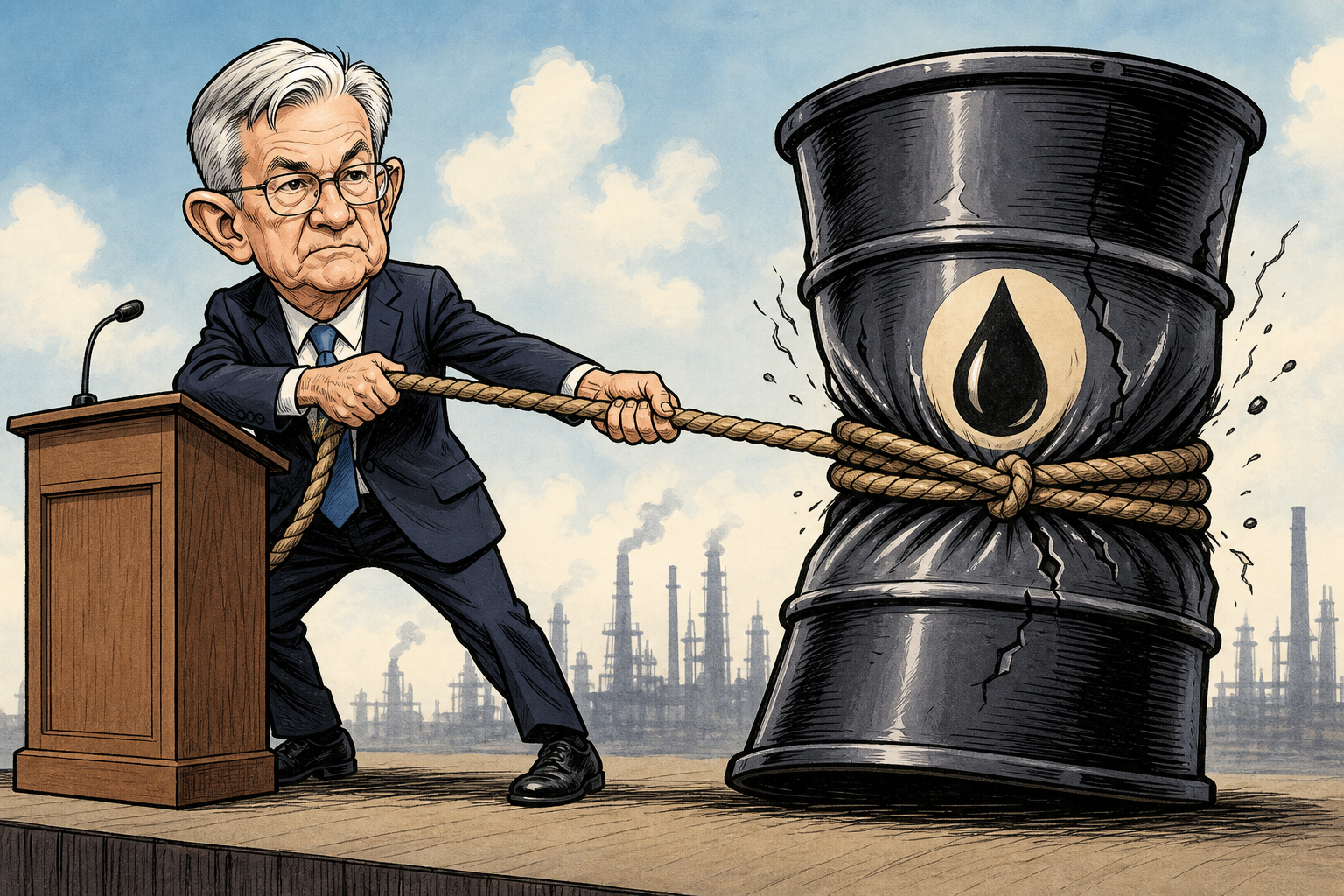
The state casts the buyout as an illegal “backroom deal” that hands $120,000,000 in taxpayer money to Golden State Wind LLC and redirects an equal sum into out-of-state fossil-fuel projects, in violation of the Outer Continental Shelf Lands Act. Interior Secretary Doug Burgum (R) counters that the projects are “expensive, unreliable, heavily subsidized” and pose national-security risks near U.S. coastlines.
Lost in the courtroom framing is the question California’s own filing never answers: what the project would have cost the people who pay the bills. This page lays out the lawsuit, the dollars, and the costs beneath the waves — the ratepayer math, the marine tradeoffs, and the state plan to lock in 7.6 gigawatts of the most expensive electricity in the country — source by source.
- $120,000,000 — in federal taxpayer dollars the Interior deal lets Golden State Wind recover to walk away from its Morro Bay lease — the same sum it paid at the 2022 auction · Source: CA AG; BOEM; Engineering News-Record
- $2,600,000,000 — the running national total the Trump administration has committed to offshore-wind buyouts, per the state — money spent to get companies NOT to build · Source: CA AG; ENR
- 7.6 gigawatts — the offshore wind California's CPUC voted to procure through ratepayer-backed contracts by 2037, with solicitations beginning 2027 · Source: Utility Dive; Renewable Energy World
- $7,349 / kW — the NREL-cited installed cost of floating offshore wind — before overruns, operations, transmission, and retail markup · Source: California Policy Center (citing NREL)
- 60 days — the cure window California's notice gives Interior and Golden State Wind to undo the deal before a suit is filed · Source: CA AG
The dispute begins with a lease nobody is fighting over — except the state. In 2022, after a competitive Bureau of Ocean Energy Management auction, Golden State Wind LLC paid the federal government $120,000,000 for the right to develop a 2-gigawatt floating wind farm in the Morro Bay Wind Energy Area off the Central Coast. On April 27, 2026, Interior announced it would terminate that lease in an agreement that, in the state’s telling, “settles” litigation Golden State Wind never brought, over an action Interior never took — letting the company recover its $120,000,000 after an equal amount is invested in Gulf Coast oil, gas, and infrastructure.

Attorney General Rob Bonta (D-CA) and CEC Chair David Hochschild argue the buyout violates the Outer Continental Shelf Lands Act, the federal statute that gives a coastal state a say in offshore leasing and, they say, was meant to “prevent corrupt backroom deals.” Their Notice of Intent to Sue gives Interior and the company a 60-day window to unwind the agreement before California files suit. It is a notable inversion of the usual posture: the state is suing not to stop a project, but to force one back to life that the leaseholder and the federal government both agreed to abandon.
“California won't stand idly by as the Trump Administration illegally strikes deals to kill offshore wind projects and replace them with more windfalls for his fossil fuel friends.”
Attorney General Rob Bonta (D-CA), June 23, 2026
The Golden State Wind buyout is one of a series. Days earlier, Interior reached a similar deal with Chicago-based Invenergy, under which the company would relinquish four offshore leases — including a Central Coast project and leases off Maine and New York — in exchange for a $765,000,000 taxpayer-funded payout and a matching investment in U.S. natural-gas and geothermal projects. By California’s accounting, the buyouts nationwide now total nearly $2,600,000,000 — public money spent, as the state frames it, to get power companies not to produce electricity.
That is the figure the state leads with. The figure it does not feature is the one on the other side of the ledger: what building the farm would have cost the Californians who would ultimately pay for the power. The National Renewable Energy Laboratory puts the installed cost of floating offshore wind at roughly $7,349 per kilowatt of capacity — a figure that, as the California Policy Center notes, lands before construction overruns, decades of operations and maintenance, the transmission needed to bring the power ashore, and the retail markup that shows up on a utility bill. Floating turbines, anchored in deep Pacific water, are the costliest form of offshore wind there is.
Gov. Gavin Newsom (D-CA) — whose administration set California’s offshore wind goals and whose appointees sit on the energy and utilities commissions driving procurement.
AG Rob Bonta (D-CA) — filed the Notice of Intent to Sue to block the federal buyout and keep the Morro Bay lease in play.
Interior Secretary Doug Burgum (R) — signed the buyout deals and paused large-scale offshore wind, calling the projects “expensive, unreliable, heavily subsidized.”
The Morro Bay lease is not a one-off. It is one piece of a far larger commitment. The California Public Utilities Commission has unanimously adopted a plan to procure 7.6 gigawatts of offshore wind by 2037, with solicitations beginning as early as 2027. Under AB 1373, the state created a centralized procurement framework that lets a single state entity sign long-term contracts with developers on behalf of the utilities — contracts whose cost ultimately flows to ratepayers. The CPUC itself acknowledges those costs will land on electricity bills, “in the future,” and says it will make “all possible efforts” to contain them.

That is the heart of the “costs beneath the waves” the lawsuit does not engage. A state suing to preserve a single 2-gigawatt lease is, in effect, defending the first installment of a multi-decade, multi-billion-dollar ratepayer commitment to the most expensive electricity on the menu — in a state that already carries some of the highest power rates in the nation. California’s defenders note, fairly, that recent rate increases have been driven more by grid hardening and wildfire mitigation than by clean-power generation, and that centralized procurement is designed to push prices down over successive bidding rounds. Both can be true; neither makes floating offshore wind cheap.
Due to national security concerns identified by the Department of War, Interior is PAUSING leases for 5 expensive, unreliable, heavily subsidized offshore wind farms. ONE natural gas pipeline supplies as much energy as these 5 projects COMBINED.
We're putting the Trump Administration on notice. Its backroom deal to pay Golden State Wind to abandon its Morro Bay lease — and pour an equal amount into out-of-state fossil fuels — violates the Outer Continental Shelf Lands Act. California will sue if it isn't cured.
Below the cost line sits the environmental one. Floating turbines off the Central Coast would be tethered to the seabed by mooring lines and export cables running through some of the most productive fishing grounds in California. NOAA Fisheries and the California Coastal Commission have both flagged the open questions: how anchoring hundreds of platforms affects coastal upwelling — the cold, nutrient-rich currents that feed the marine food chain — and how low-frequency operational noise, concentrated in the same band fish use to communicate and spawn, affects fisheries. The state’s own coexistence strategy concedes fishing communities face disruption.
None of this means the science is settled against offshore wind — the industry argues, with support, that impacts can be monitored and mitigated, and that a warming Pacific is itself a threat to the same ecosystems. But it is precisely the cost-benefit accounting a serious accountability case demands, and it is absent from a lawsuit framed almost entirely around taxpayer dollars and clean-energy jobs. When the jurisdiction pressing the case is the one that stands to mandate, subsidize, and bill for the result, the missing half of the ledger is not a footnote.
An honest account names the strong points on each side. California has a real legal argument: the Outer Continental Shelf Lands Act does give coastal states a procedural role, and a buyout that pays a developer to quit a federal lease and reinvest the money in out-of-state fossil fuels is, at minimum, an unusual use of public funds that a court may well scrutinize. The buyout’s defenders, in turn, have a point that paying $2,600,000,000 to retire leases is itself a striking expenditure — one that cuts against the “cheap and clean” story on both ends.
The load-bearing facts are not in dispute. The lease exists; the company agreed to walk away; Interior agreed to pay; and California — through its Democratic attorney general and its governor’s energy commissioners — is suing to compel a project that the market participants closest to it chose to abandon. The state is entitled to make that fight. Readers are entitled to the part the filing leaves out: the $7,349-per-kilowatt price tag, the 7.6-gigawatt ratepayer commitment behind it, and the marine tradeoffs the press release skips. Compulsion through the courts is a choice, not a free one.
California is suing the federal government to undo a deal that pays a developer to abandon a Central Coast offshore-wind lease the developer wanted to give up. The state’s case — led by AG Rob Bonta (D-CA) under Gov. Gavin Newsom (D-CA) — rests on the Outer Continental Shelf Lands Act and the $120,000,000 at stake. What it leaves unsaid is the bill behind the principle: a $7,349-per-kilowatt technology, a 7.6-gigawatt ratepayer-funded procurement plan, and unresolved questions about whales, fisheries, and upwelling off Morro Bay. We’ll track whether the 60-day notice ripens into a filed suit, how Interior responds, and what the next CPUC solicitation reveals about the price.
- 1.California Department of Justice, Office of the Attorney General — 'California Sends Notice of Intent to File Suit Challenging Trump Administration's Unlawful Offshore Wind Deal,' June 23, 2026 (AG Rob Bonta + CEC Chair David Hochschild; OCSLA, $120M Golden State Wind, $2.6B total)
- 2.California Energy Commission — 'California Sends Notice of Intent to File Suit Challenging Trump Administration's Unlawful Offshore Wind Deal,' June 2026 (Hochschild statement)
- 3.U.S. Department of the Interior — 'The Trump Administration Protects U.S. National Security by Pausing Offshore Wind Leases' (Secretary Doug Burgum statement; radar-clutter rationale)
- 4.The Washington Times / Associated Press — 'California intends to sue Trump administration over deal to end offshore wind project,' June 23, 2026
- 5.Bloomberg Law — 'California Threatens to Sue Interior Over Offshore Wind Deal,' June 2026
- 6.The Maritime Executive — 'California to Sue Trump Administration for Canceled Offshore Wind Leases,' June 2026
- 7.Engineering News-Record — 'UPDATED Trump Offshore Wind Energy Buyout Deals Grow to Nearly $2.6B, With More Tumult' (Golden State Wind, Invenergy $765M, buyout total)
- 8.Utility Dive — 'CPUC proposes procuring 7.6 GW of offshore wind by 2037' (California ratepayer-funded procurement target)
- 9.Renewable Energy World — 'CPUC unanimously adopts plan advancing 7.6 GW of offshore wind' (centralized procurement, AB 1373)
- 10.Bureau of Ocean Energy Management — Morro Bay Wind Energy Area (2022 lease auction; $120M+ winning bids)
- 11.California Policy Center — 'Floating Offshore Wind: A Financial and Environmental Catastrophe' (NREL $7,349/kW cost figure; environmental tradeoffs)
- 12.CalCoastNews — 'Gone with the offshore wind farms,' Aug. 2025 (Central Coast / Morro Bay project impacts)
- 13.Power Technology — 'California warns of lawsuit over US offshore wind lease deal,' June 2026
- 14.PJ Media (opinion) — David Manney, 'California's Offshore Wind Lawsuit Ignores the Costs Beneath the Waves,' June 23, 2026
Last updated June 24, 2026