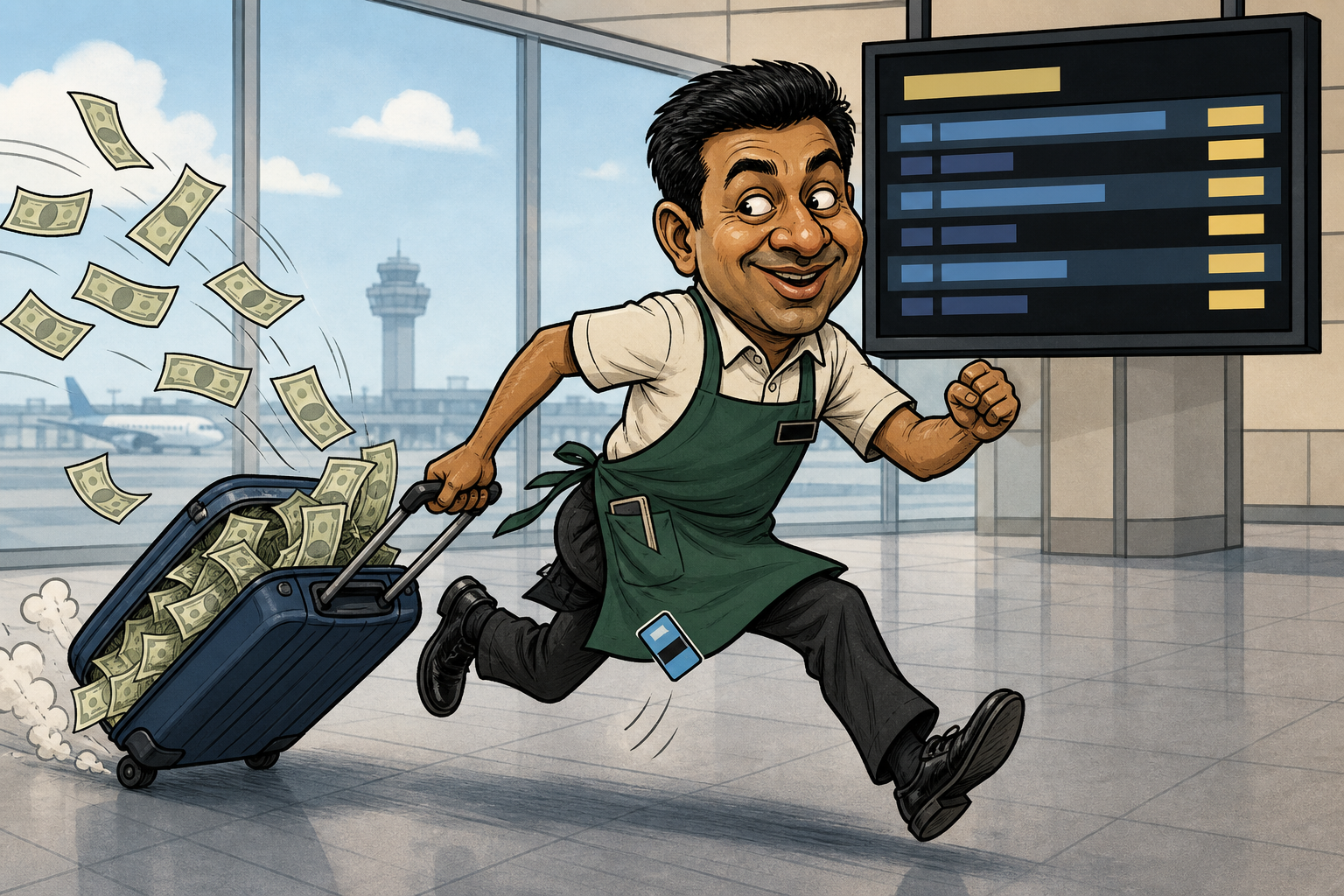
LA Neighborhoods Paid $200,000 for Crime Cameras.
LAPD Just Switched Them Off.
Just after midnight on Saturday, July 11, 2026, roughly 138 license-plate-reading cameras mounted on poles across Los Angeles kept photographing traffic — but the Los Angeles Police Department could no longer see what they captured. The department’s three-year memorandum of understanding with Flock Safety, the Atlanta-based company whose 100,000-plus cameras serve more than 5,000 law-enforcement agencies, expired that day unsigned. LAPD let it lapse on purpose.
The sticking point was not price. Dean Gialamas, the LAPD’s chief information officer and the decision-maker on record, said the department wanted contract language spelling out who owns the plate data collected on LA streets, how long Flock may keep it, and civil penalties if it is ever shared with agencies that do not comply with California law — explicitly including ICE. Flock called the lapse a “disappointing pause” built on “misconceptions.”
Underneath the privacy fight sits a structural fact that makes this a governance story as much as a surveillance story: LAPD never owned these cameras. Private neighborhood groups and homeowners associations bought the hardware — one of them spent more than $200,000 — and handed police the feed. The 2023 agreement delivered the data “at no cost to the department.” Free, it turns out, was the most expensive term in the contract.
- 138 — privately funded Flock pole cameras that went dark to LAPD queries when the contract expired July 11 · Source: LA Times (via mirror); FOX 11
- $200,000+ — what Cheviot Hills residents raised for their own Flock camera network, donated to LAPD through the LA Police Foundation · Source: GovTech / LA Times
- 22 → 45 — the jump in Cheviot Hills burglaries in 2023 that drove residents to buy the cameras in the first place · Source: GovTech / LA Times
- $0 — what LAPD paid for three years of plate data it never owned — the 2023 MOU provided it “at no cost to the department” · Source: Knock LA; 2023 MOU
- 53 cities — that had canceled or wound down Flock contracts nationally by late June 2026 · Source: national press tallies, June 29, 2026
The expiration was a choice, not an accident. Talks between the department and Flock continue, and the city attorney’s office is drafting a new contract, but LAPD declined to renew the existing terms when the deadline arrived. The department’s own license-plate-reader fleet — per the Los Angeles Times, 248 pole-mounted cameras, 140 vehicle roof-mounted units, roughly 1,500 in-car readers, and 7 trailers — keeps operating. What went dark is the separate, privately funded Flock network that neighborhood groups had wired into detectives’ investigative workflow.
“This contract is not being renewed because of serious concerns around civil liberties and civil rights issues…”
Dean Gialamas, LAPD Chief Information Officer, to ABC7
Flock, for its part, insists the platform already has “strong privacy protections, strict auditability, and clear oversight,” and framed the lapse as a misunderstanding it expects to resolve. Neither side has declared the relationship dead — which makes the interval in between a live experiment in what a major city loses and protects when it unplugs a surveillance network it never controlled.

In most cities, the police department buys its surveillance tools and answers for them in budget hearings. In Los Angeles, the money ran the other way. The Stop LAPD Spying Coalition dates the department’s first memorandum of agreement with Flock to early 2019 — a seven-year relationship by the activists’ count — while LAPD counts three years from the operative memorandum of understanding signed July 23, 2023. Both are right: the 2023 MOU is the document that just expired, and it formalized an arrangement in which private parties bought cameras and the department got the data.
The clearest example is Cheviot Hills, a west-side neighborhood where burglaries rose from 22 to 45 in 2023. Residents responded by raising more than $200,000 for their own Flock camera network and donating access to LAPD through the Los Angeles Police Foundation — a gift the Police Commission and City Council approved between October 2024 and April 2025. Multiply that pattern across homeowners associations citywide and you get the roughly 138-camera private network that detectives came to rely on.
The 2023 MOU’s headline term, first surfaced by Knock LA, was that Flock would provide the data “at no cost to the department.” But free was the price of something else: the agreement gave LAPD no ownership of the data its detectives relied on, no retention guarantees, and no penalty clause if the vendor shared access beyond what California law allows. The department built three years of investigative dependence on a database it did not own and could not audit.
The city never owned the cameras. HOAs and neighborhood groups bought the hardware; Flock owned the network.
No ownership clause. The 2023 MOU never established that plate data collected on LA streets belongs to Los Angeles.
No penalty clause. Nothing in the agreement fined the vendor for sharing access with outside agencies — the exact failure an Illinois state audit later documented on Flock’s network.
Dependence built anyway. Detectives wired 138 privately funded cameras into daily investigative work — then lost them overnight when the unpriced contract came due.
What LAPD demanded in renewal talks, per Gialamas, was a contract with teeth: clear data-ownership terms, retention limits, and civil penalties if plate data reaches agencies that do not comply with local and state law — a category that, department officials made explicit, includes federal immigration enforcement. “The use is strictly for law enforcement purposes, and it is inherently not for any immigration purposes,” Gialamas said.
“The sticking point is around having very clear terms about who owns the data, what happens with the data once they collect it.”
Dean Gialamas, LAPD Chief Information Officer, to the LA Times
The legal backdrop is a decade old. California’s SB 34, passed in 2015, bars sharing license-plate-reader data with out-of-state and federal agencies. In February 2020, the California State Auditor found LAPD was holding 320 million plate images — with hot-list matches on roughly 0.1% of them — and had no formal usage policy. In October 2023, Attorney General Rob Bonta (D-CA) issued a bulletin telling every California department that SB 34 means what it says, and his office has since sued the city of El Cajon for sharing plate data out of state.
The trust collapse around Flock itself is national. In August 2025, Illinois Secretary of State Alexi Giannoulias (D) released an audit finding Flock had allowed U.S. Customs and Border Protection to access Illinois cameras in violation of state law; 47 out-of-state agencies were cut off. Austin ended its program June 30, 2025. South Pasadena pulled its 14 cameras. Amazon’s Ring canceled its Flock partnership in February 2026. By late June, press tallies counted 53 cities that had canceled or wound down Flock contracts.
In Los Angeles the pressure was organized and local: the Stop LAPD Spying Coalition sued the department on May 6, 2026 over public records on the Flock relationship, and when the contract lapsed, City Controller Kenneth Mejia took a public victory lap.
LAPD is ending their agreement with Flock due to community concerns and pressure.

None of this means the cameras did nothing. The Los Angeles County Sheriff’s Department station in Santa Clarita credited Flock cameras with 12 arrests and 15 recovered vehicles since March 1, 2025. Austin’s pilot — the one the city still walked away from — logged roughly 117 million scans and more than 16,000 alerts, and contributed to 228 arrests. The tool works as advertised; the fight is over what happens to everything it captures about drivers who are suspected of nothing.
Flock’s own numbers are bigger, and they should be read as what they are: company claims. The firm says its network has aided more than 1 million investigations and that its cameras figure in roughly 20% of cleared cases in the jurisdictions it serves — figures published on Flock’s corporate blog and not independently audited.
The honest context cuts the other way too. Los Angeles recorded 230 homicides in 2025, the lowest total since 1966 — this is not a crime-wave story, and nobody serious claims it is. The case for the cameras was always narrower: neighborhood property crime, like the Cheviot Hills burglary doubling, and stolen-vehicle recovery. Which is exactly why homeowners, not the department, paid for them.
“We are confident that through ongoing discussions with the LAPD, we can clear up the current misconceptions that led to today's disappointing pause.”
Flock Safety spokesperson, July 11, 2026
The switch-off lands at an awkward moment for the department’s own asks. An LAPD memo projects $1.15 billion in security costs and roughly 6,700 officers for the 2028 Olympics — a force the city does not currently have. A department telling City Hall it needs a billion-dollar security buildout is simultaneously unplugging a force multiplier that private citizens bought for it, because of contract terms the department itself accepted in 2023 when the data was “free.”
What a new contract needs is not a mystery; it is the mirror image of what the old one lacked. Ownership of data collected on Los Angeles streets vested in Los Angeles. Retention limits with dates, not intentions. Civil penalties — the clause LAPD is now demanding — so that the next Illinois-style audit finding costs the vendor money instead of just headlines. And audit rights the city can exercise itself, rather than learning what its vendor did from another state’s secretary of state. Both sides say talks continue. The 138 cameras, meanwhile, keep photographing plates for a database the city cannot query and never owned.
Karen Bass (D) — Mayor of Los Angeles. Not on record about the Flock lapse as of publication.
Rob Bonta (D-CA) — California Attorney General. His SB 34 bulletin and El Cajon lawsuit define the sharing limits behind LAPD’s penalty-clause demand.
Jim McDonnell — LAPD Chief since November 2024; not on record about Flock as of publication. Dean Gialamas — LAPD Chief Information Officer, the decision-maker on record. Kenneth Mejia — City Controller, who publicly celebrated the lapse.
Los Angeles neighborhoods paid more than $200,000 for cameras their police department just stopped being able to use. The 2023 deal that made the data “free” skipped the three clauses that mattered — ownership, retention, penalties — and when the bill for that omission came due on July 11, the cost was 138 cameras going dark while LAPD asks for $1.15 billion to secure an Olympics. The dispute is written up as privacy versus policing. The contract file reads simpler: the city spent three years running evidence through a database it never owned.