
An Obama-Appointed Judge Just Put Soda and Candy Back on the Food-Stamp Menu — and called it a win for the rule of law.
On June 22, 2026, U.S. District Judge Amy Berman Jackson — a 2011 nominee of President Barack Obama (D) — struck down a signature piece of the Trump administration’s “Make America Healthy Again” agenda: the USDA waivers that let states bar SNAP recipients from using food-stamp benefits to buy soda, candy, and other sugary products.
In Aragon v. Rollins, Jackson held that the Department of Agriculture lacked the legal authority to approve the restrictions and skipped a public-comment step the law requires. Her ruling vacated the waivers in five states — Colorado, Iowa, Nebraska, Tennessee, and West Virginia — and threw the future of the roughly two dozen state waivers USDA had granted into doubt.
Agriculture Secretary Brooke Rollins (R) called Jackson an “activist judge” and the White House vowed it “will not be the final say.” This page lays out the exact ruling, what the waivers did, who sued, and what the injunction actually changes — source by source.
- Aragon v. Rollins — the D.C. federal case in which Judge Amy Berman Jackson (Obama, 2011) vacated USDA's SNAP food-restriction waivers on June 22, 2026 · Source: court memorandum opinion; AP
- 5 states — Colorado, Iowa, Nebraska, Tennessee, and West Virginia — the waivers directly vacated; roughly two dozen more were left in legal limbo · Source: AP; CBS News; CNN
- $101,700,000,000 — total federal SNAP spending in fiscal year 2025, about 1.4% of all federal spending; roughly $95 billion of it went to benefits · Source: USAFacts
- 42 million — Americans who receive SNAP benefits — about one in eight — the population these rules govern · Source: CBS News
- ~1.4 million — people covered by the first batch of state bans that took effect January 1, 2026, before the ruling unwound them · Source: PBS News / AP
- “activist judge” — how Secretary Brooke Rollins (R) described the ruling on X, vowing USDA would 'keep fighting to Make America Healthy Again' · Source: Fox News; The Hill
The decision is narrower than the headlines suggest, and Jackson said so herself. She was not ruling on whether barring soda and candy from food stamps is a good idea — only on whether the USDA followed the law to get there. The federal statute that governs SNAP says benefits may be spent on “any food or food product for home consumption” except alcohol, tobacco, hot foods, and a short list of other items. Limiting purchases to improve nutrition, Jackson found, is not one of the reasons Congress allows the agency to waive that definition.
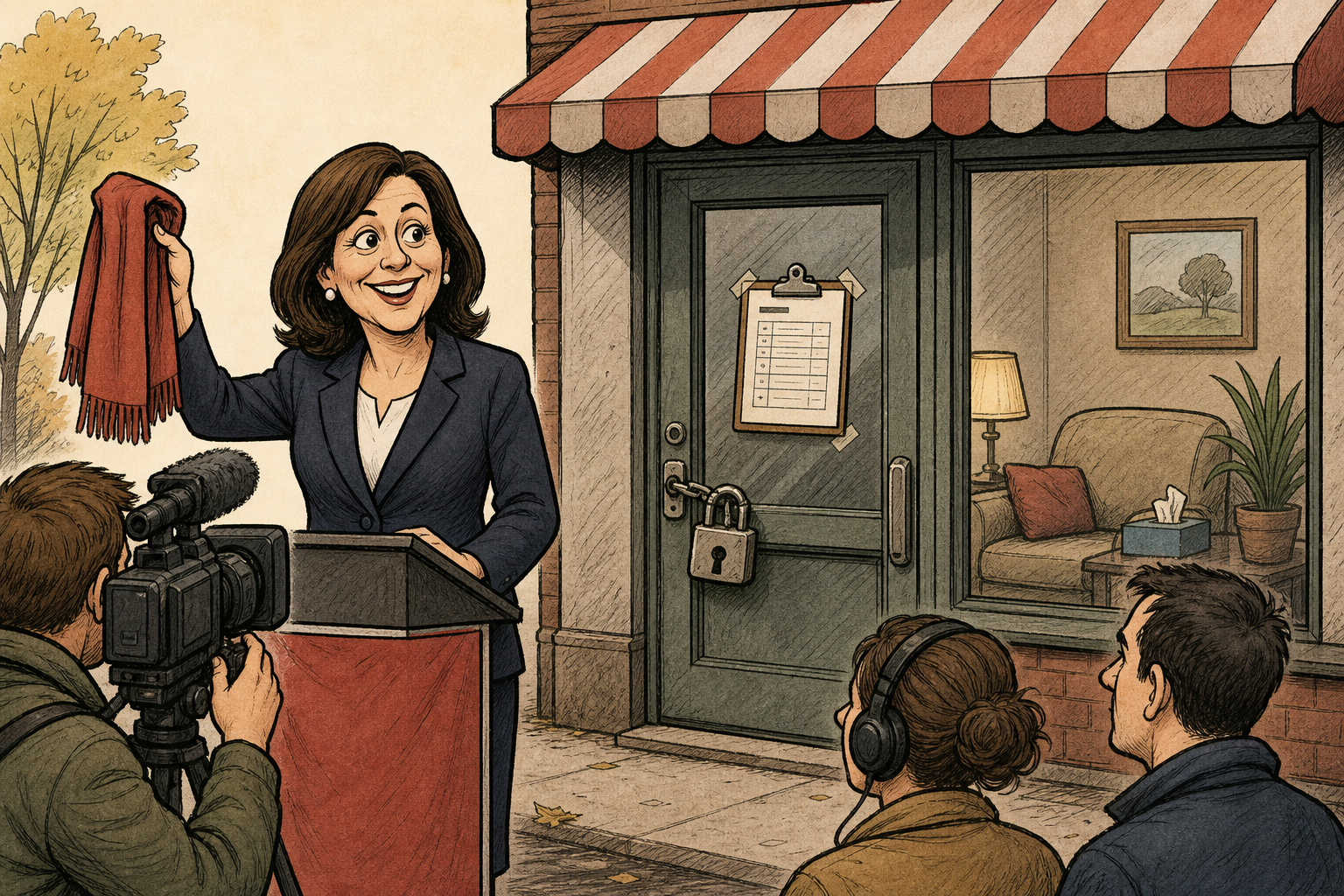
On the second prong, the judge held that USDA violated the Administrative Procedure Act by approving the waivers without the public notice-and-comment period the rules require. In her words, the agency “purports to waive not just a mere administrative or technical obstacle, but the very definition of ‘food’ as it was laid down by Congress.” The remedy: the five challenged waivers are vacated, and the administration cannot enforce them.
“What they cannot do is violate the law and their own regulations along the way.”
Judge Amy Berman Jackson (Obama, 2011), Aragon v. Rollins, June 22, 2026
The program the court unwound began in 2025. Agriculture Secretary Brooke Rollins (R), working alongside Health and Human Services Secretary Robert F. Kennedy Jr. and his “Make America Healthy Again” push, granted a wave of state requests to strip soda, candy, and other items deemed unhealthy from what SNAP dollars could buy. USDA signed its first six waivers — Arkansas, Idaho, Indiana, Iowa, Nebraska, and Utah — on June 10, 2025, and added more through the summer, with roughly two dozen states ultimately approved or in line.
The bans were not identical. Every approved state limited sugary drinks such as soda and energy beverages; at least eight also restricted candy, and Arkansas went further, barring fruit and vegetable drinks with less than 50% natural juice. The first batch of restrictions took effect January 1, 2026, covering about 1.4 million SNAP recipients. With FY2025 federal SNAP spending at $101,700,000,000 for roughly 42 million Americans, the administration argued it was simply refusing to subsidize junk food on the taxpayer’s dime.
An activist judge just blocked our commonsense restriction on using SNAP benefits for soda and junk. Taxpayers shouldn't subsidize junk food. We will keep fighting to Make America Healthy Again.
Judge overturns Trump administration's SNAP soda ban: a federal judge in D.C. ruled the USDA lacked authority to let states bar food-stamp purchases of soda and candy, dealing a blow to the 'Make America Healthy Again' agenda.
The plaintiffs were not advocacy groups or Democratic attorneys general — they were SNAP recipients in the five affected states. Among the named plaintiffs was Nathan Fleming, a Nebraska resident who, according to the filing, has insomnia and allergies to tea and coffee, and whose dietician recommended energy drinks that the state’s waiver would have made off-limits to SNAP purchases. Their argument was procedural and statutory, not a debate about nutrition: Congress defined what counts as food, and USDA cannot rewrite that definition through a demonstration waiver.

That framing is why the ruling landed as a clean statutory loss rather than a culture-war verdict. The court did not say states may never restrict junk food; it said this particular path — USDA approving waivers that redefine “food” without notice-and-comment — was not authorized by the SNAP statute. Whether the administration appeals to the D.C. Circuit, asks Congress to change the statute, or reissues the waivers through proper rulemaking is the open question the decision leaves behind.
Judge Amy Berman Jackson — U.S. District Court for the District of Columbia, nominated by President Obama (D) in 2011; authored the opinion vacating the waivers.
Secretary Brooke Rollins (R) — USDA chief who signed the waivers and is the named defendant; called the ruling the work of an “activist judge.”
The plaintiffs — SNAP recipients in Colorado, Iowa, Nebraska, Tennessee, and West Virginia, who argued USDA exceeded its statutory authority and skipped required public comment.
The administration’s response was immediate and pointed. White House spokeswoman Anna Kelly said the decision “will not be the final say on the matter,” and a USDA spokesperson said the department “will not be backing down from the fight to Make America Healthy Again.” Rollins, on X, framed it as an activist judge overriding a commonsense rule and insisted taxpayers should not subsidize junk food. Iowa Governor Kim Reynolds (R), whose state was among the five, called the ruling “short-sighted.”
It is worth being precise about what changed and what did not. The ruling does not hand SNAP recipients new benefits or more money; average monthly benefits ran about $188 per person in FY2025. It restores what was already legal before the waivers — the ability to buy any non-excluded grocery item, soda and candy included — in the five states whose waivers were vacated. And because the legal defect was about agency authority and process, the same policy could in theory return through a different door if the administration wins on appeal or moves it through formal rulemaking or Congress.
An activist judge just blocked our commonsense restriction on using SNAP benefits for soda and junk. Taxpayers should not be forced to subsidize junk food. USDA will not back down — we will keep fighting to Make America Healthy Again.
Paraphrased commentary · not a verbatim post
Secretary Rollins's posture on the ruling — paraphrased from her on-record X statement and USDA's response, labeled as commentary, not a verbatim Truth Social post.
A radical judge just RULED that your tax dollars must keep buying soda and candy on food stamps — overruling our effort to Make America Healthy Again. We will appeal and we will WIN. Common sense will prevail!
Paraphrased commentary · not a verbatim post
A paraphrase of the administration's framing of the ruling, consistent with the White House vow that it 'will not be the final say.' Labeled as commentary, not a verbatim post.
An honest account cuts both ways. The administration has a real argument that a program spending more than $95,000,000,000 a year on benefits should be allowed to steer those dollars toward nutrition, and that voters across parties find it odd that food stamps can buy two-liter bottles of soda. That is a legitimate policy view. But it is a policy view, not a legal authority — and the judge’s point was that the USDA reached for a waiver power Congress did not grant and skipped the public process the law demands.
The “Obama judge” framing, while accurate as to who appointed her, is also incomplete: Jackson was explicit that she was not blessing soda and candy on food stamps as good policy, only ruling that the agency broke the rules getting there. Whether you cheer the outcome or resent it, the durable lesson is the same one that governs every executive-branch initiative — even a popular goal has to clear the statute and the rulebook, and an agency that skips those steps loses in court regardless of which party signed the paperwork.
A federal judge vacated the Trump administration’s SNAP soda-and-candy restrictions in five states, ruling that USDA had no statutory authority to redefine “food” through demonstration waivers and had bypassed required public comment. The decision restores the pre-waiver status quo for those recipients, casts doubt on roughly two dozen other state waivers, and deals a clear blow to the “Make America Healthy Again” agenda. The administration has signaled it will fight on — through appeal, new rulemaking, or Congress. We’ll track the appeal, any reissued rule, and what happens to the remaining state waivers.
- 1.Aragon v. Rollins, No. 1:26-cv-00861 (U.S. District Court for the District of Columbia) — memorandum opinion of Judge Amy Berman Jackson vacating USDA approval of SNAP food-restriction waivers, June 22, 2026
- 2.USDA — 'Secretary Rollins Signs State Waivers to Make America Healthy Again by Removing Unhealthy Foods from SNAP in Arkansas, Idaho, and Utah in Addition to Indiana, Iowa, and Nebraska' (official press release), June 10, 2025
- 3.USDA — 'During the Great American Farmers Market, Secretary Rollins Removes Unhealthy Food from SNAP' (official press release), August 4, 2025
- 4.USAFacts — 'How much does the federal government spend on SNAP every year?' (FY2025: $101.7B total, ~$95B in benefits)
- 5.Hot Air (Tree Hugging Sister) — 'SNAP and SAVE Sounds Like a Grocery Chain, But They're Programs Fed Judges Just Spiked,' June 23, 2026
- 6.The Daily Caller — 'People On Food Stamps Can Keep Buying Junk With Your Tax Dollars, Obama Judge Rules,' June 23, 2026
- 7.Fox News (Ashley J. DiMella) — 'Obama-appointed judge torpedoes Trump's bid to fight obesity as White House warns it won't be "final say,"' June 23, 2026
- 8.CBS News — 'Trump administration can't block SNAP recipients in 5 states from buying soda and candy, judge rules,' June 23, 2026
- 9.The Associated Press (via The Press Democrat) — 'Judge rules government can't stop SNAP dollars from buying candy and sugary drinks,' June 23, 2026
- 10.The Hill — 'Judge overturns Trump administration's SNAP soda ban,' June 23, 2026
- 11.Reuters (via TradingView) — 'US judge blocks Trump administration SNAP restrictions on soda, candy,' June 23, 2026
- 12.PBS News (AP) — 'Bans on using SNAP funds for soda, candy and other foods take effect in some states Jan. 1' (background on the waivers and the ~1.4 million people first affected)
- 13.Nebraska Public Media — 'Federal judge rules USDA SNAP restrictions, including Nebraska's, are illegal,' June 23, 2026 (plaintiff Nathan Fleming; Nebraska DHHS response)
Last updated June 24, 2026