Fake ICE Agents Are Robbing,
Kidnapping,
and Raping Immigrants
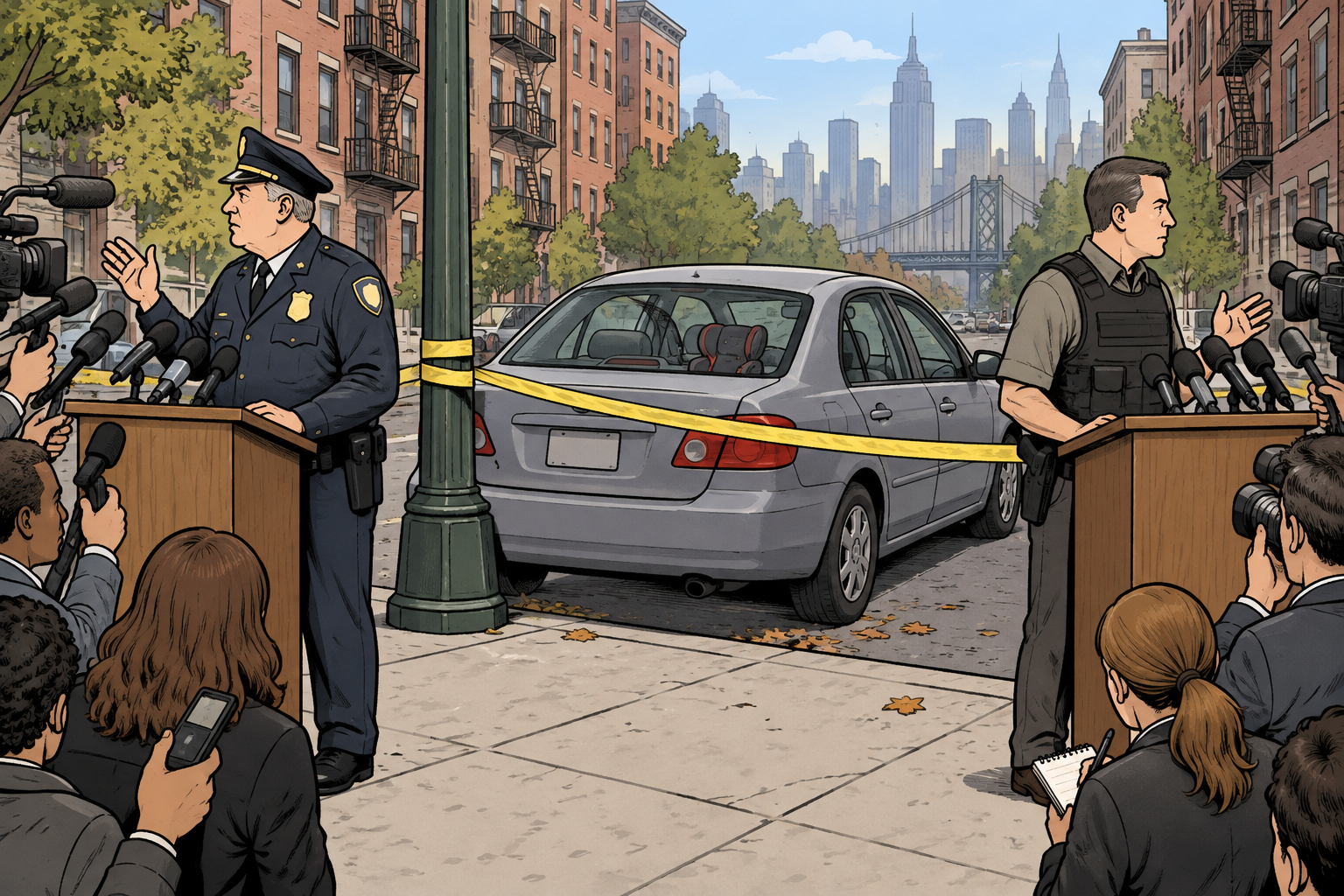
A wave of criminals is exploiting one of the most consequential regulatory gaps in federal immigration law: real U.S. Immigration and Customs Enforcement agents are not legally required to display a badge or show identification. Under Title 8 of the Code of Federal Regulations, ICE agents need only announce their purpose and authority. That gap — obscure during normal enforcement cycles — became a predator’s handbook the moment Biden-era policies made real ICE nearly invisible in many communities.
In 2025 alone, federal and local authorities documented 31 ICE impersonation cases— nearly six times the decade-long annual average of 5.3 per year. The FBI issued an internal bulletin on October 17, 2025, warning that “criminal actors are using ICE’s enhanced public profile and media coverage to their advantage.” Eighty-four percent of 2025 impersonators specifically claimed to be ICE. Thirty-eight percent of incidents involved physical violence.
The victims are overwhelmingly undocumented or recently arrived immigrants — people with strong incentives never to call 911. The predators know it. The policy architects who built that vulnerability have names and party affiliations.
- 31casesdocumented ICE impersonations in 2025 alone — 5.8× the decade-long annual average of 5.3
- 84%of 2025 impersonators claimed specifically to be ICE agents, not generic law enforcement
- 38%of 2025 incidents involved physical violence — robbery, assault, rape, or kidnapping
- 1,474NYC arrestsfor impersonating a cop or public servant in 2025 — a 50% year-over-year spike
- Oct. 17, 2025FBI bulletin"Criminal actors are using ICE's enhanced public profile and media coverage to their advantage"
The legal basis for the scam is hiding in plain sight. Title 8 of the Code of Federal Regulations governs ICE and border enforcement agents. It does not require agents to display a badge to a person being apprehended. Agents must identify themselves as federal officers and state their purpose — but nothing obligates them to hand over a credential for inspection. In practice, many agents do show identification. But the absence of a legal requirement means there is no universal behavior pattern that a community can learn to expect and verify.
That regulatory gap had limited real-world consequences when ICE maintained a consistent, high-visibility presence in communities. People who interacted regularly with federal immigration enforcement developed some frame of reference for what a real encounter looked like. Under the Biden administration, that frame of reference was deliberately eroded.
Real ICE agents are not required by law to show a badge. Under Title 8 CFR, an agent must announce their purpose and authority — but there is no provision requiring agents to display credentials on demand during an enforcement action. This is distinct from the FBI (Title 28) and DEA (Title 21) frameworks, which have more explicit credentialing obligations baked into their operational regulations.
The DHS Office of Inspector General issued a fraud alert in May 2024 specifically warning the public about DHS impersonation schemes and providing guidance on how to verify whether someone is a real federal agent — in part because the legal framework creates ambiguity. The alert recommends calling ICE directly at 1-866-347-2423 to verify an enforcement action.
Rep. Nydia Velázquez (D-NY) introduced the “No Masks for ICE Act” in 2025 to require agents to visibly display badge numbers during enforcement actions. The bill went nowhere in the Republican House.
“Criminal actors are using ICE's enhanced public profile and media coverage to their advantage.”
FBI internal bulletin · October 17, 2025 · as reported by Newsweek and Fox News
Two Biden-era memos turned what had been a minor structural vulnerability into an operational playbook for criminals. Together, they narrowed ICE’s enforcement footprint so dramatically that millions of immigrants in Democratic-run cities and states had virtually no regular contact with actual ICE agents — making it impossible to distinguish a real agent from a fake one.
Secretary Alejandro Mayorkas (D), Biden DHS, issued a memo in October 2021 expanding the list of “sensitive locations” where ICE agents were prohibited or strongly discouraged from conducting enforcement operations. The original sensitive-locations guidance (2011) covered schools, churches, and hospitals. Mayorkas expanded the concept to include broad swaths of neighborhood life.
The practical effect: in many urban neighborhoods where large immigrant populations live, real ICE agents became rare. An immigrant who had never seen a real ICE operation had no frame of reference. A criminal in a vest and badge faced a community with no baseline to compare against.
Mayorkas’s enforcement priority memo directed ICE to focus resources on three narrow categories: national security threats, recent border crossers, and public safety threats with serious recent criminal convictions. Everyone else — including people with long-standing removal orders — was de-prioritized.
The result was a dramatic reduction in interior enforcement actions. ICE removals dropped to historic lows. The immigrant communities predators target were simultaneously larger (Biden’s mass-entry period added millions of undocumented individuals) and less familiar with what a legitimate ICE contact even looked like.
House Oversight Committee, in its 2025 wrap-up of Biden border policy, documented that these memos collectively produced the worst border and enforcement collapse in U.S. history. The Heritage Foundation analysis described the combined effect as a systematic dismantling of deterrence that left vulnerable communities unprotected from both enforcement failures and the criminal exploitation that followed.
California Attorney General Rob Bonta (D) issued a public warning advisory about fake ICE officers. The advisory acknowledged the surge in impersonation incidents. What it did not acknowledge: the policy environment that Bonta’s own party built, which maximized the incentive and opportunity for exactly these crimes.
ICE will never call you to demand money, gift cards, or wire transfers. Real ICE agents carry official credentials. If you receive a suspicious call or encounter, do not comply — report it to your local field office or call 1-866-347-2423 to verify.
DHS is warning the public about impersonation scams. Criminals are posing as DHS and ICE officers to extort money and commit crimes. Verify any enforcement contact by calling 1-866-347-2423. See the DHS OIG fraud alert for red flags.
The 31-case surge in 2025 didn’t come out of nowhere. It was the predictable output of a three-variable problem that the Biden administration assembled over four years: a massive increase in the undocumented population through border non-enforcement, a systematic reduction in real ICE visibility that eliminated the community baseline, and a target population with near-zero incentive to call 911.
The undocumented population has a structural fear of law enforcement contact that makes them ideal robbery and extortion targets. A fake ICE agent doesn’t need a convincing disguise — they need a vest, a confident demeanor, and a victim who will not call the police. Biden’s mass-entry period created millions of new potential victims. Mayorkas’s enforcement pullback ensured those victims had no frame of reference for what a real ICE encounter looked like.
When Trump took office and ICE operations resumed at scale, the FBI bulletin noted something counterintuitive: the increased media coverage of real enforcement operations actually helped criminals. Headlines about ICE raids raised awareness of ICE as a threat — and criminals exploited that heightened awareness. The vulnerability that Democrats created did not resolve when enforcement priorities shifted; it had already been baked into communities that had spent four years being told real agents weren’t coming.

The following individuals have been charged or convicted in documented ICE impersonation cases. Each case illustrates a different exploitation pattern: robbery, fraud, kidnapping, rape, and intimidation. All defendants in pending criminal cases are presumed innocent until verdict.
Convicted 5× prior robberies. Posed as ICE agent, zip-tied a Dominican immigrant cashier at gunpoint, stole $1,000 from a convenience store register.
Charged 25 victims $10,000–$20,000 each for fraudulent green cards and work permits. Restitution ordered: $152,476.
Allegedly impersonated an ICE officer to gain access to a woman at a motel, then sexually assaulted her.
Allegedly pulled over Latino men, claimed to be an ICE officer, threatened deportation, and seized their car keys and phone.
Allegedly showed up at a home at 3 a.m. claiming to be ICE, told the occupants they "looked like people who didn't have papers."
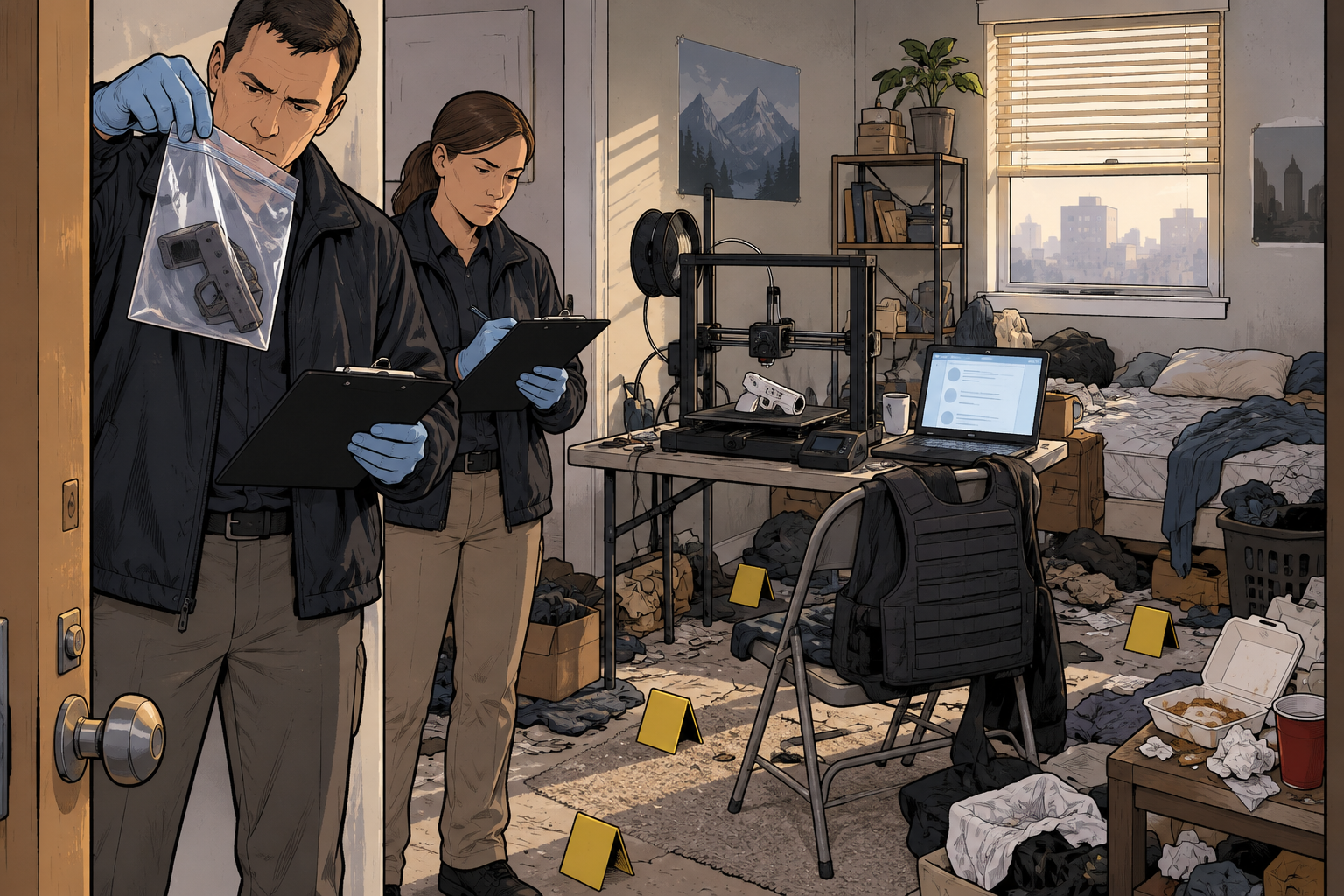
Robert Rosado’s case is the most straightforward: a repeat felon who identified a vulnerability and used it. Rosado, 54, of Philadelphia, had five prior robbery convictions when he put on an improvised ICE costume, zip-tied a Dominican immigrant cashier, and robbed the register. He is facing up to 23 years in federal custody. His victim, like most victims in these cases, had every reason not to resist a man claiming to be a federal officer — and no framework to identify the fraud before it was too late.
Davyd George Brand Jimenez ran a more sophisticated operation. Working out of San Ysidro, California — directly on the southern border — Jimenez charged 25 victims between $10,000 and $20,000 each for fraudulent green cards and work permits, pleading guilty in April 2026 to 10 counts of false impersonation of a federal officer. Total restitution: $152,476. His sentencing is scheduled for July 16, 2026. His operation worked because his targets had no reliable way to verify whether someone presenting as an ICE officer with paperwork was legitimate.
Carl Bennett Jr., 37, of Raleigh, North Carolina, is accused of the most egregious case in the 2025 record. According to the WBTV reporting on the January 2025 charges, Bennett allegedly impersonated an ICE officer to access a woman at a motel and then sexually assaulted her. He faces 9 charges including kidnapping and second-degree rape. He is presumed innocent.
“He told the victims they 'looked like people who didn't have papers.'”
Police description of José Juan Lopez, 23 · Indiantown, Florida · 2025
The policy environment that created this vulnerability was built by specific people holding specific offices. Their names and affiliations belong in this story.
Alejandro Mayorkas (D), Biden DHS Secretary — signed the sensitive-locations memo (2021) and the enforcement-priority memo (September 2021) that together drastically reduced ICE’s operational footprint. Mayorkas was impeached by the House in February 2024 on charges of willful failure to enforce immigration law. The Senate held a trial and acquitted along party lines. The policies remained in effect until January 2025.
Rob Bonta (D), California Attorney General — issued an advisory warning immigrants about fake ICE officers, citing a “rise in reports of individuals impersonating ICE officers.” The advisory is a valid public-safety response. The California policy framework Bonta enforces — including the TRUST Act and state-level sanctuary provisions — is part of the same policy architecture that keeps real ICE at low visibility in California communities.
Nydia Velázquez (D-NY), U.S. Representative — introduced the No Masks for ICE Act, which would require ICE agents to display visible badge numbers during enforcement actions. The legislation would narrow the regulatory gap. It has not advanced.
The radical left spent four years telling illegal immigrants that ICE would never come for them. They were wrong — and they left communities completely defenseless against criminals who knew exactly how to exploit that. We are restoring order. Real agents are back. The predators who posed as ICE agents will be prosecuted to the fullest extent of the law.
Paraphrased commentary · not a verbatim post
Paraphrased from documented Trump border-enforcement statements · not a verbatim post
A legal gap in Title 8 CFR, combined with four years of Biden-era enforcement pullback that made real ICE invisible in immigrant communities, created a perfect storm for predators. The result: 31 documented cases in a single year, a 38% violence rate, and victims who — by design — had no framework to identify a fake agent from a real one. The same policies sold to immigrant communities as protection left those communities unable to distinguish law enforcement from robbery. The FBI noticed. The OIG issued a fraud alert. The predators are being prosecuted. But the policy architects who built the vulnerability have not been held to account.