
A Federal Judge Just Tossed Trump’s Lawsuit Against L.A.’s Sanctuary Law — and the Reason Has Nothing to Do With Whether the Policy Is Wise.
On June 20, 2026, a federal judge in Los Angeles threw out the Trump administration’s lawsuit against the city’s sanctuary ordinance — the law that bars city employees and city property from being used to help federal immigration enforcement. The Justice Department had argued the policy illegally obstructed deportations and discriminated against the federal government. The court did not buy it, at least not on the complaint as written.
But the ruling is narrower than either side’s press release suggests. The judge did not declare sanctuary policy good government, and he did not declare it constitutional in the sweeping sense. He held that Los Angeles is allowed to tell its own employees what they may and may not do — and that the federal government has no power to commandeer a city’s personnel into the deportation business. The DOJ was even given a second chance: it may file an amended complaint by July 3.
This is a court-outcome story, and we cover it the way we cover any other: the document, the legal reasoning, the names, and the stakes — including the public-safety stakes that made the policy a fight in the first place. The facts cut in more than one direction, and we lay them all out.
- June 20, 2026 — the date U.S. District Judge Fernando M. Olguin (Obama appointee) granted L.A.'s motion to dismiss the DOJ's sanctuary-city suit · Source: Courthouse News; L.A. Times
- Ordinance 188441 — L.A.'s 2024 'Prohibition of the Use of City Resources for Federal Immigration Enforcement,' the law the DOJ tried to strike down · Source: ABC News; DOJ complaint
- Dismissed with prejudice — claims against Mayor Karen Bass (D), Council President Marqueece Harris-Dawson (D) and the City Council — they cannot be re-sued on this complaint · Source: Courthouse News; Patch
- July 3, 2026 — the deadline the court gave DOJ to file an amended complaint against the city (the case is not over) · Source: L.A. Times; Courthouse News
- ~1,600+ arrests · 4,700 troops — Southern California immigration arrests since early June 2025, and the roughly 4,000 National Guard plus 700 Marines Trump deployed during the protests that followed · Source: ABC News; PolitiFact; Wikipedia
The ruling came from U.S. District Judge Fernando M. Olguin, of the Central District of California — an appointee of President Barack Obama (D). Olguin granted the city’s motion to dismiss, finding the government’s allegations “insufficient to establish that the Ordinance violates the intergovernmental immunity doctrine.” His core reasoning was structural, not political: The ordinance does not regulate the federal government — it regulates the city’s own workforce. As Olguin put it, the law “does not directly regulate the federal government” but rather “controls the actions of the City’s own agents.”
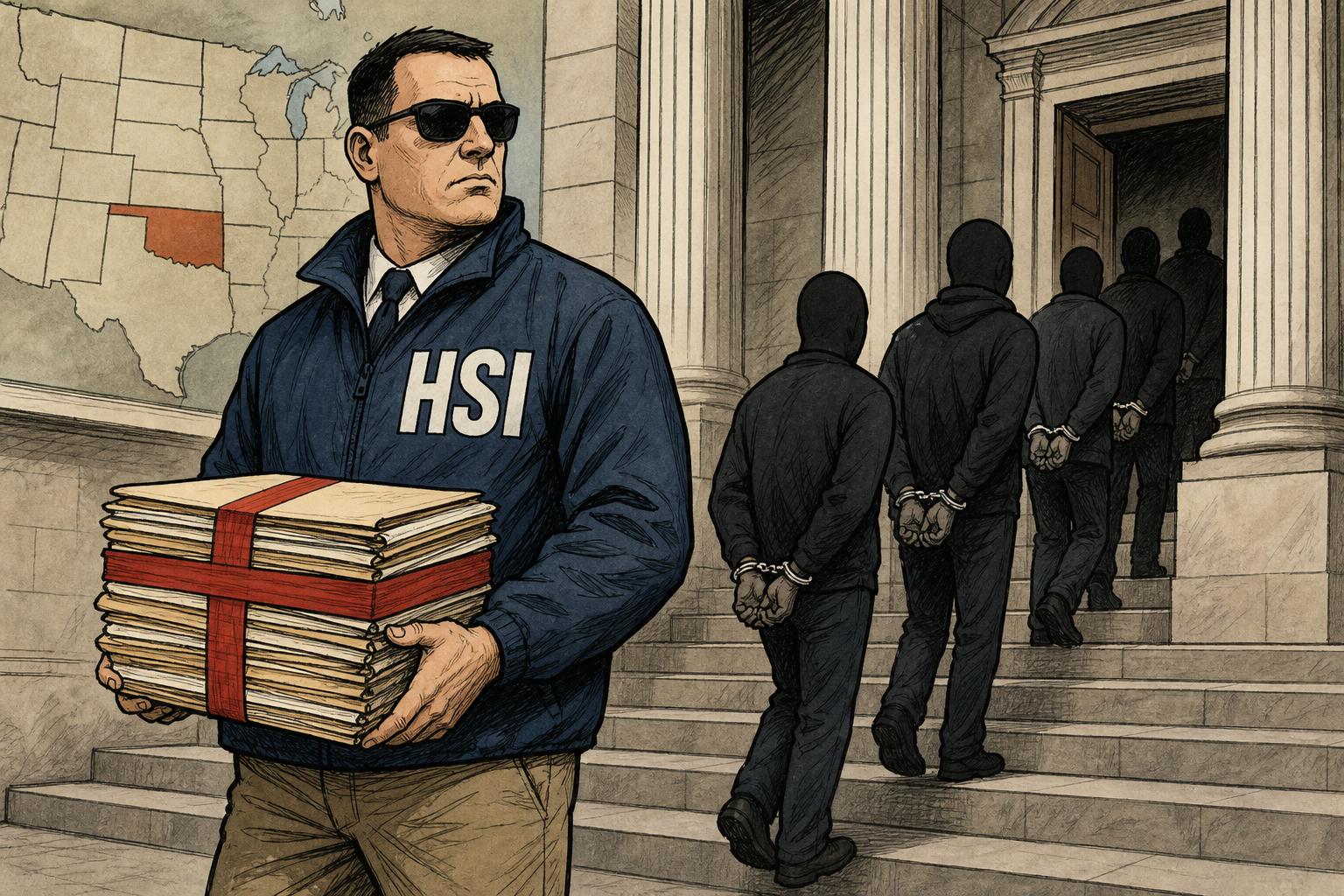
That is the anti-commandeering principle the Supreme Court has long recognized: Washington can enforce its own immigration laws with its own agents, but it cannot conscript state or local employees to do the work for it. The court also rejected the DOJ’s Supremacy Clause and preemption arguments, finding the cited federal statutes did not bar the city from limiting how its personnel and property are used. Importantly, the dismissal was without prejudice as to the city — meaning DOJ can try again with a better-pleaded complaint — but with prejudice as to the named officials.
“The Ordinance does not directly regulate the federal government. Rather, it controls the actions of the City's own agents.”
U.S. District Judge Fernando M. Olguin, order dismissing United States v. City of Los Angeles (June 20, 2026)
The law at the center of the case is Los Angeles Ordinance No. 188441, formally titled the “Prohibition of the Use of City Resources for Federal Immigration Enforcement.” The Los Angeles City Council passed it in late 2024, and it took effect as the city’s codified sanctuary policy. Its core provisions: city employees may not use city resources, property, or personnel to investigate, arrest, detain, or transfer a person for civil immigration enforcement, and they may not collect or share information about a person’s citizenship or immigration status unless it is required to deliver a city service. There are carve-outs — the policy is not a blanket bar where serious criminal offenses are involved — but the default is non-cooperation.
The distinction matters legally and practically. The ordinance does not, and cannot, stop federal agents from making arrests in Los Angeles — ICE has continued to operate across the city throughout 2025 and 2026. What it does is deny the federal government the use of the Los Angeles Police Department, city jails, city databases, and city staff as instruments of immigration enforcement. Supporters call that a constitutional choice about local resources; critics call it deliberate obstruction that pushes ICE into neighborhoods to find people it could otherwise pick up in a county jail.
Today's ruling affirms the righteousness of our commitment to protect immigrants and all Angelenos from this Administration's attacks on every front. We know they could appeal, and we will be ready.
This order reinforces the well-established principle that local governments have the authority to decide how to use their own personnel and resources. We are gratified the court agreed.
The lawsuit did not arrive in a vacuum. The Justice Department filed it on June 30, 2025, days after immigration raids across Southern California — Home Depot lots, day-labor sites, garment factories — touched off protests that, in parts of downtown Los Angeles, turned into riots, with cars burned, federal buildings besieged, and officers assaulted. President Trump federalized the California National Guard and deployed Marines over the objections of Governor Gavin Newsom (D-CA) and Mayor Karen Bass (D). Attorney General Pam Bondi (R) tied the unrest directly to the sanctuary policy.
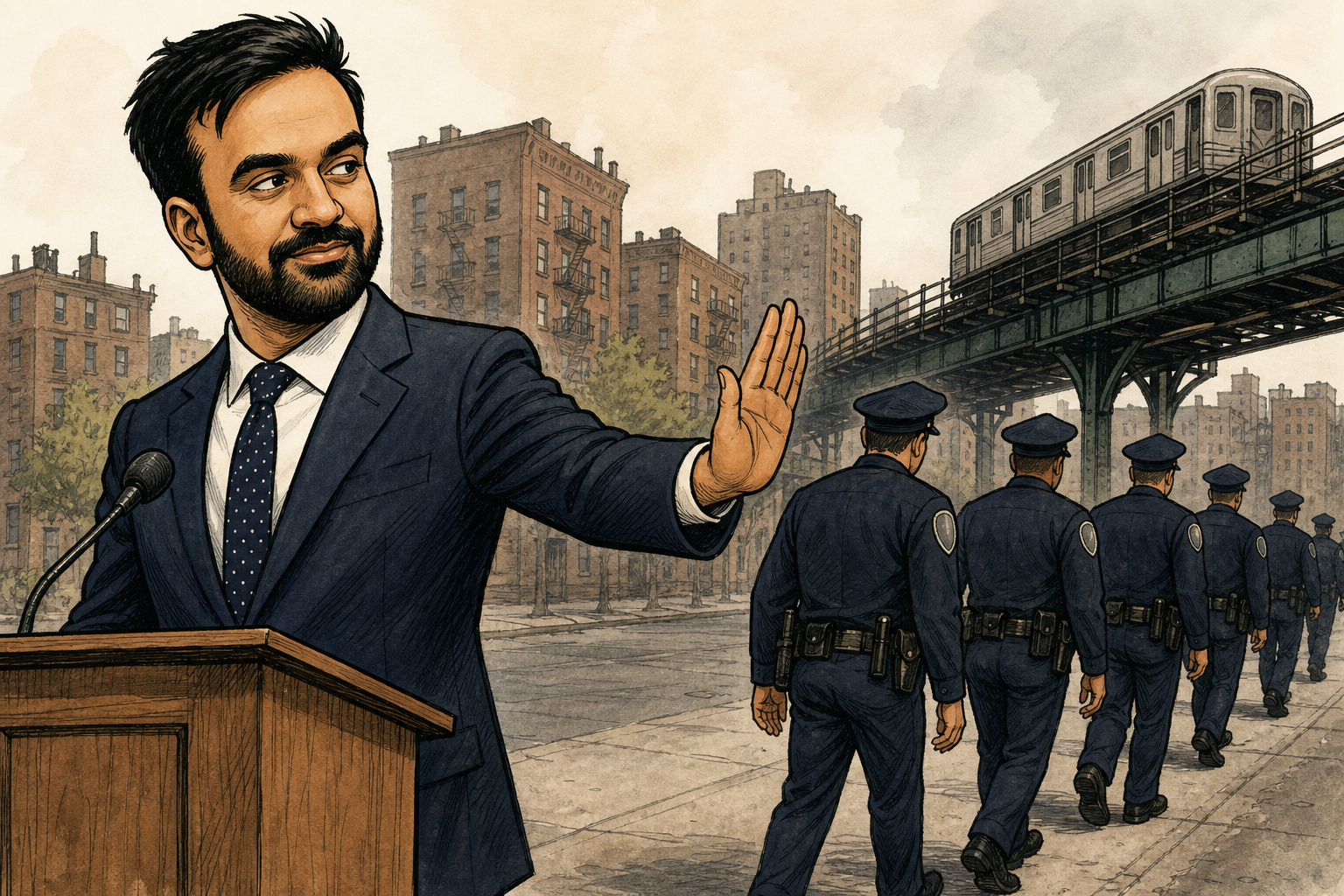
“Sanctuary policies were the driving cause of the violence, chaos, and attacks on law enforcement that Americans recently witnessed in Los Angeles.”
Attorney General Pam Bondi (R), announcing the DOJ suit against Los Angeles (June 30, 2025)
The complaint named not just the city but Mayor Bass, the City Council, and Council President Marqueece Harris-Dawson (D) as defendants. It argued the ordinance violated the Supremacy Clause by “singling out the Federal Government for adverse treatment” and that the policy “interfere[d] with and discriminate[d] against” federal immigration enforcement. The DOJ also leaned on the scale of the disorder, noting in its filing that “the situation became so dire that the Federal Government deployed the California National Guard and United States Marines.” That framing — sanctuary policy as a public-safety hazard, not just a paperwork dispute — is the heart of the administration’s case, and it is the part the court left intact to be re-pleaded.
Mayor Karen Bass (D) — signed onto and defended the sanctuary ordinance; called the ruling a vindication of the city’s “commitment to protect immigrants.”
City Council President Marqueece Harris-Dawson (D) — a named defendant; the council enacted Ordinance 188441 in 2024.
City Attorney Hydee Feldstein Soto (D) — led the city’s defense and announced the dismissal.
Gov. Gavin Newsom (D-CA) — opposed the National Guard and Marine deployment and sued separately over it.
Sanctuary cities like Los Angeles release criminal aliens back onto the streets and won't let ICE into the jails. So we have to go into the neighborhoods to find them. That's not our choice — it's theirs. Sanctuary policies make everyone less safe, including the illegal aliens.
Paraphrased commentary · not a verbatim post
Border czar Tom Homan's recurring public argument that sanctuary non-cooperation pushes enforcement off jailhouse grounds and into communities — paraphrased and labeled as commentary, not a verbatim post.
Strip away the constitutional vocabulary and the real fight is about whether sanctuary policies make communities safer or more dangerous. The administration’s position, voiced repeatedly by border czar Tom Homan, is that non-cooperation forces ICE out of jails — where a deportable offender is already in custody — and into the open, where agents must hunt for the same person in neighborhoods. “We could arrest them in the safety and security of the county jail,” Homan argued, “but they won’t let us in the jail.” On that view, the policy increases street enforcement, not decreases it.
The city’s answer is that turning every cop into an immigration agent destroys the trust police need to solve actual crimes — victims and witnesses stop calling 911 if a traffic stop can become a deportation. Mayor Bass has argued the raids themselves spread fear and disorder, and that the federal surge of troops was a solution in search of a problem. Both claims are contestable, and neither was what Judge Olguin decided. The court ruled on who has the power, not on who is right about safety — a separation worth keeping straight, because the administration’s strongest argument is precisely the one a motion to dismiss does not resolve.
An Obama judge just threw out our lawsuit against Sanctuary City Los Angeles, where the Radical Left Democrats protect criminal illegal aliens and attack our great ICE Officers. We will APPEAL and we will WIN. Sanctuary Cities are DESTROYING our Country!
Paraphrased commentary · not a verbatim post
Trump's recurring framing of sanctuary-city rulings and the L.A. enforcement fight — paraphrased and labeled as commentary, not a verbatim post.
The Los Angeles dismissal fits a pattern. In July 2025, U.S. District Judge Lindsay C. Jenkins, a Biden (D) appointee in Chicago, threw out the DOJ’s parallel suit against Illinois, Cook County, and the City of Chicago, ruling that the government lacked standing and that the states’ choice to limit cooperation was protected by the Tenth Amendment’s anti-commandeering rule. Courts have handed the administration similar setbacks elsewhere as it presses suits against New York City, Denver, Rochester, and a cluster of New Jersey cities. The judges — appointed by presidents of both parties, with the Tenth Amendment logic doing the heavy lifting — keep landing in roughly the same place.
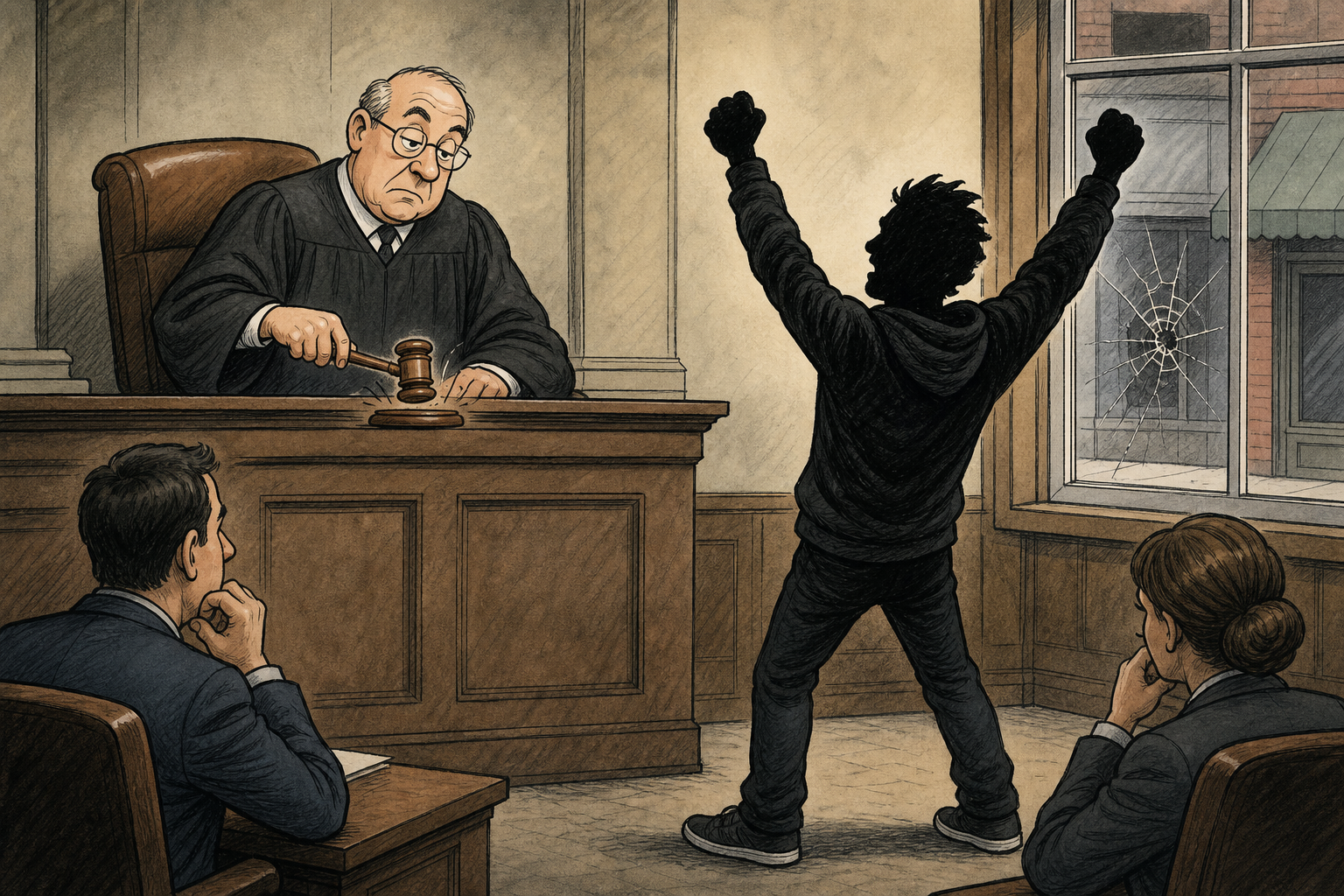
That said, none of this is final. Each dismissal so far has been on the pleadings — on standing or on how the complaint was framed — not a ruling that sanctuary policies are forever beyond challenge. Olguin gave the DOJ until July 3 to file an amended complaint against the city, and the administration has signaled it will keep litigating and, where it loses, appeal. The unresolved questions — how far a city can go before non-cooperation becomes affirmative obstruction, and whether the federal government can ever establish the kind of concrete injury that gives it standing — are exactly the ones the appellate courts, and perhaps the Supreme Court, may eventually have to answer.
Los Angeles (June 20, 2026) — dismissed; ordinance governs the city’s own agents, not the federal government. DOJ may amend by July 3.
Illinois / Chicago / Cook County (July 2025) — dismissed on standing; sanctuary laws held protected by the Tenth Amendment.
Open fronts — suits against New York City, Denver, and several New Jersey jurisdictions remain in litigation; appeals are expected.
An honest account names the limits on both sides. The administration’s loss here is real, but it is procedural: a Democratic-run city won a motion to dismiss, not a trial, and the underlying claim that sanctuary policy fueled the June 2025 violence has not been tested on the merits. The Tenth Amendment anti-commandeering principle is well established and bipartisan — it is the same doctrine conservatives have invoked against federal overreach for decades, and it cuts in the city’s favor here. A ruling can be legally correct and still leave a genuine policy problem unaddressed.
What is not in dispute: Los Angeles enacted a policy of non-cooperation with federal immigration enforcement; the city’s elected leadership defends it; ICE has had to operate without local assistance; and the early enforcement surge coincided with serious disorder downtown. Whether that policy is wise — whether it protects residents or shields offenders, whether it lowers the temperature or raises it — is the argument worth having. The court just told everyone it is an argument for the political branches and, if the DOJ can plead it, a later stage of the case — not one a judge could resolve on a motion to dismiss.
Los Angeles’s sanctuary ordinance survived its first federal challenge because of a structural rule, not a verdict on its merits: a city can govern its own employees, and Washington cannot draft them into deportation duty. Mayor Bass and the city won the round; the Trump DOJ lost it but keeps the right to come back by July 3 and to appeal. For readers, the durable lesson is the one the headlines blur: “the lawsuit was dismissed” is not the same as “the policy is right” or “the policy is legal in every respect.” The public-safety fight that started the litigation is still unsettled. We’ll track the amended complaint, any appeal, and the parallel sanctuary suits working their way through the courts.

- 1.Courthouse News Service — 'Judge dismisses Trump administration's lawsuit against LA over sanctuary city ordinance' (June 22, 2026)
- 2.Los Angeles Times (via Yahoo News) — 'Federal judge dismisses Trump administration lawsuit challenging L.A.'s sanctuary city ordinance' (June 2026)
- 3.Bloomberg Law — 'Trump Administration Loses Los Angeles Sanctuary City Lawsuit'
- 4.Newsmax / AP — 'Court Dismisses Trump Suit Over Los Angeles Sanctuary Policies' (June 22, 2026)
- 5.Patch (Los Angeles) — 'Judge Dismisses Trump Suit Over LA Sanctuary City Law'
- 6.MyNewsLA — 'Federal Judge Dismisses Trump Suit Over LA Sanctuary City Law' (June 22, 2026)
- 7.U.S. Department of Justice, Office of Public Affairs — 'The Justice Department Files Lawsuit Against Sanctuary City Policies in Los Angeles, California' (June 30, 2025)
- 8.Axios — 'Trump admin sues L.A., claiming sanctuary policy fueled ICE protests' (June 30, 2025)
- 9.ABC News — 'Department of Justice suing Los Angeles over sanctuary city policy' (June 30, 2025)
- 10.TIME — 'Trump Administration Sues LA Over Sanctuary City Policies' (June 2025)
- 11.NBC News — 'Federal judge dismisses Trump administration's lawsuit against Chicago over its sanctuary city policies' (July 2025)
- 12.The Washington Post — 'Judge dismisses DOJ lawsuit against Illinois, Chicago over sanctuary city policies' (July 25, 2025)
- 13.Wikipedia — 'June 2025 Los Angeles protests against mass deportation' (timeline and National Guard / Marines deployment)
- 14.PolitiFact — 'What U.S. law says about Trump's deployment of CA National Guard, U.S. Marines' (June 10, 2025)
- 15.FOX 11 Los Angeles — 'Bass addresses Trump lawsuit: All-out assault against Los Angeles'
- 16.Courthouse News Service — 'Legal experts consider future of Trump's challenges to sanctuary city policies'
Last updated June 23, 2026