
Congress Has Spent Billions Turning Schools Into Mental-Health Clinics. Test Scores Kept Falling.
Over the past decade, federal policy has steadily recast American public schools as front-line mental-health providers. The 2022 Bipartisan Safer Communities Act, passed after the Uvalde shooting, poured close to $1 billion into two school mental-health grant programs; pandemic relief bills added more than $1 billion on top of that. The share of federal K-12 funding requested for mental health rose roughly 350% in ten years.
That trajectory is the subject of a Manhattan Institute report by analyst Carolyn Gorman, whose argument — that schools are being miscast as clinics, with thin evidence that it helps and real costs to academics — is the frame for this piece. It is an analytical case, and we label it as such. But the underlying numbers, and the test-score record they sit beside, are facts.
And the test-score record is grim. Across the same years the mental-health spending climbed, national reading and math scores fell to their lowest levels in a generation. The accountability question is straightforward: Congress, on a bipartisan basis, bought a great deal of one thing while the core mission schools exist to serve got measurably worse.
- ~$1 billion — in the Bipartisan Safer Communities Act's two school mental-health grant programs ($300M + $282M, plus related funds) · Source: U.S. Senate summary
- ~350% — rise in mental-health funding as a share of federal K-12 funding requested over roughly a decade · Source: Manhattan Institute
- Largest ever — share of 8th graders below NAEP Basic in reading; nearly 40% below Basic in 8th-grade math (2024) · Source: NAGB
- >50% — false-positive rate that universal mental-health screening can produce — a core caution in Gorman's analysis · Source: Manhattan Institute
- ~$1B cut, ~$2B restored — the Trump administration terminated about $1 billion in BSCA grants in April 2025; a court ruled the cut illegal and roughly $2 billion was restored in early 2026 · Source: Education Week
The pivot was bipartisan and well-intentioned. After Uvalde, the Bipartisan Safer Communities Act — led in the Senate by Chris Murphy (D-CT) and John Cornyn (R-TX), with Kyrsten Sinema (D-AZ) and Thom Tillis (R-NC) — funded a $300 million School-Based Mental Health Services grant, a $282 million professional-pipeline grant, and hundreds of millions more for Project AWARE and Medicaid school services. Pandemic bills layered on additional billions for student “well-being.” The model: put counselors and therapists in the building and screen broadly.

The dollar figures are documented in the Senate’s own BSCA summary and the Department of Education’s program pages — these are not in dispute. What Gorman’s report adds is scale and trend: federal mental-health funding requests grew about 350% as a share of overall K-12 funding over roughly a decade. And the spending is still expanding: active bills in the current Congress, including the Mental Health Services for Students Act sponsored by Rep. Andrea Salinas (D-OR), propose another $300 million.
BSCA (2022): $300M School-Based Mental Health Services grant; $282M professional-pipeline grant; $60M Project AWARE; $200M Medicaid school services.
Pandemic relief (2020–21): $1B+ more for student mental health and well-being.
Still coming: active 2025 bills propose hundreds of millions more.
This is where Gorman’s analysis does its work, compiling the peer-reviewed evidence. A meta-analysis of 56 studies across 38 social-emotional-learning programs found no strong evidence of better academic outcomes, relationships, or reduced problem behaviors. A randomized trial in Minneapolis Public Schools increased therapy use but showed weak-to-no effect on suspensions, attendance, or test scores. A study of school-counselor subsidies reduced behavioral problems but had no effect on standardized test scores. And universal screening — the centerpiece of many programs — can produce false-positive rates above 50%, flagging healthy kids as needing care a system that already lacks providers cannot deliver.
“School-based mental health is a good idea in theory, but bad in practice.”
Carolyn Gorman · Manhattan Institute · summarizing the report's finding
In a new report, I outline the challenges/downsides of providing mental health programs and services through schools, finding inconsistent marginal benefit, poor implementation, and some harm—making these programs a poor trade for academic priorities.
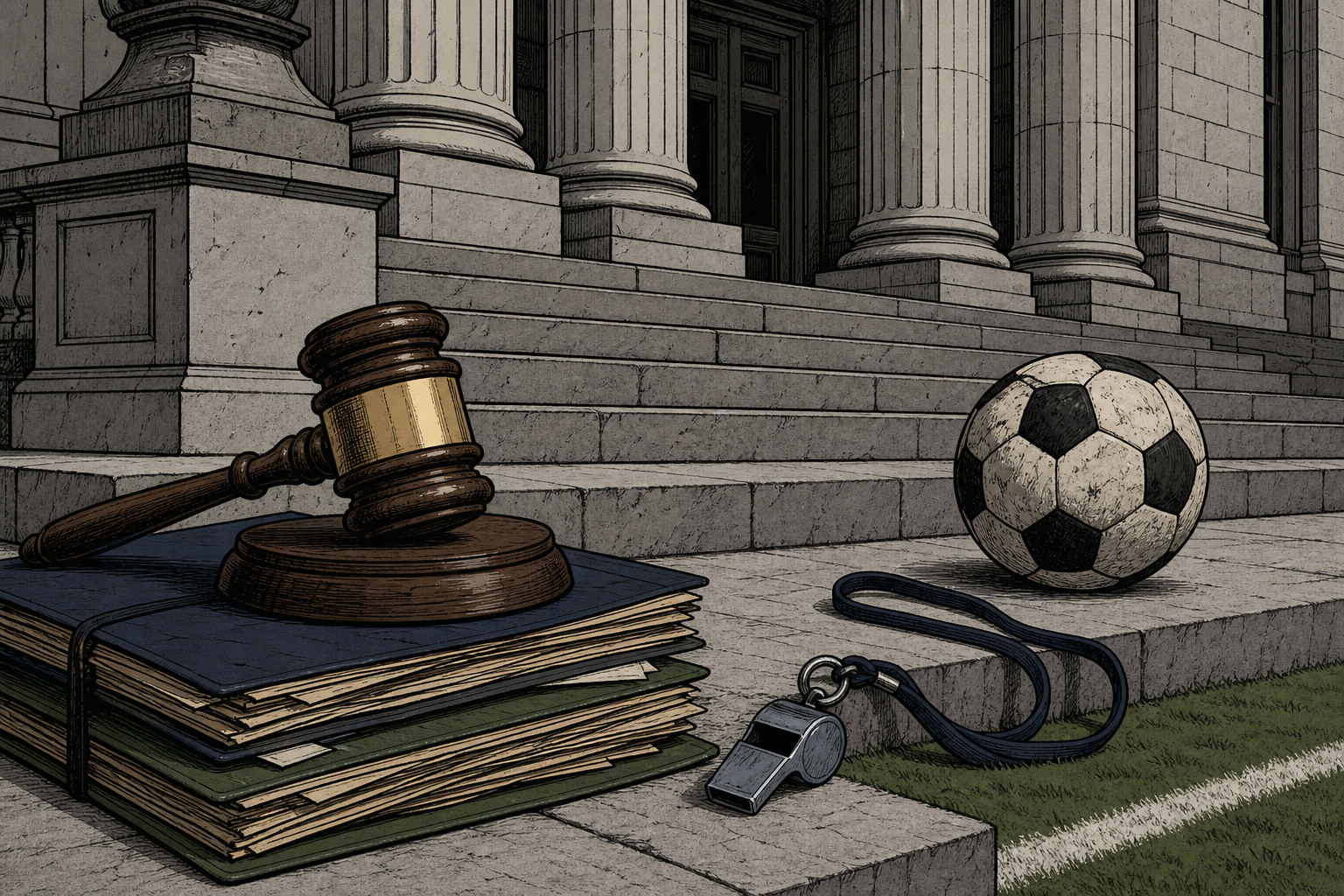
Now the counterweight — and this part is bare fact, from the federal government’s own Nation’s Report Card. The 2024 NAEP showed average reading down 5 points for 4th and 8th graders versus 2019, and 8th-grade math down 8 points. About a third of 8th graders now score below NAEP Basic in reading — the largest share ever recorded — and nearly 40% are below Basic in math. The long-term trend released in June 2026 found 13-year-olds down 7 points in reading and 15 in math since 2012, with reading back to roughly 1971 levels. Some $200 billion in pandemic K-12 relief did not reverse it.
The programs became a political football in 2025. The Trump administration terminated about $1 billion in the two BSCA grant programs in April 2025, affecting roughly 260 recipients across 49 states. A federal judge in Washington State ruled the cut illegal that December; the administration briefly pulled and then restored around $2 billion in January 2026, while proposing a far smaller $120 million for the grants in its FY2026 budget. The whiplash underlined the underlying question nobody in the fight fully answered: is this money buying results?
I considered the strongest arguments for school-based mental health initiatives, and found those arguments didn't hold up. School-based mental health is a good idea in theory, but bad in practice.
This is not a partisan story — the spending was bipartisan, and the case for caution comes from the right while the newest expansion bills come from the left. The accountability point is structural: Congress poured billions into a model the best available research says delivers thin academic benefit, during the exact years American kids posted their worst reading and math scores in decades. Helping struggling children is a real and worthy goal. Whether turning schools into clinics is the way to do it — and whether anyone is measuring the return — is the question the money has not answered.
- 1.Manhattan Institute — Carolyn D. Gorman, 'School-Based Mental Health Initiatives: Challenges and Considerations for Policymakers,' 2026
- 2.Education Week — Carolyn Gorman, 'Trump Cut—Then Restored—$2B for K-12 Mental Health. Is It Money Well Spent?' January 2026
- 3.U.S. Senate (Sen. Warner) — Bipartisan Safer Communities Act Summary (program dollar splits)
- 4.Congressional Research Service — Report R48740, 'School-Based Mental Health: Introduction and Considerations for Congress'
- 5.U.S. Department of Education — School-Based Mental Health Services Grant Program
- 6.National Assessment Governing Board — 'The 2024 Nation's Report Card' (NAEP reading/math declines)
- 7.NAGB — '10 Takeaways From the 2024 NAEP Results' (largest-ever below-Basic share in reading)
- 8.NCES — Fast Facts: NAEP Long-Term Trend (13-year-old reading/math declines since 2012)
- 9.Education Week — 'Trump Ends $1 Billion in Mental Health Grants for Schools,' April 2025
- 10.Congress.gov — H.R.5557, Mental Health Services for Students Act of 2025 (Rep. Andrea Salinas)
- 11.Sen. John Cornyn — Bipartisan Safer Communities Act (sponsorship and program categories)
- 12.NPR — 'Trump Administration Cuts $1 Billion in School Mental Health Grants,' May 2025
Last updated June 15, 2026