How California Decriminalized Street Prostitution
And Handed Los Angeles an Open-Air Child Sex-Trafficking Market.
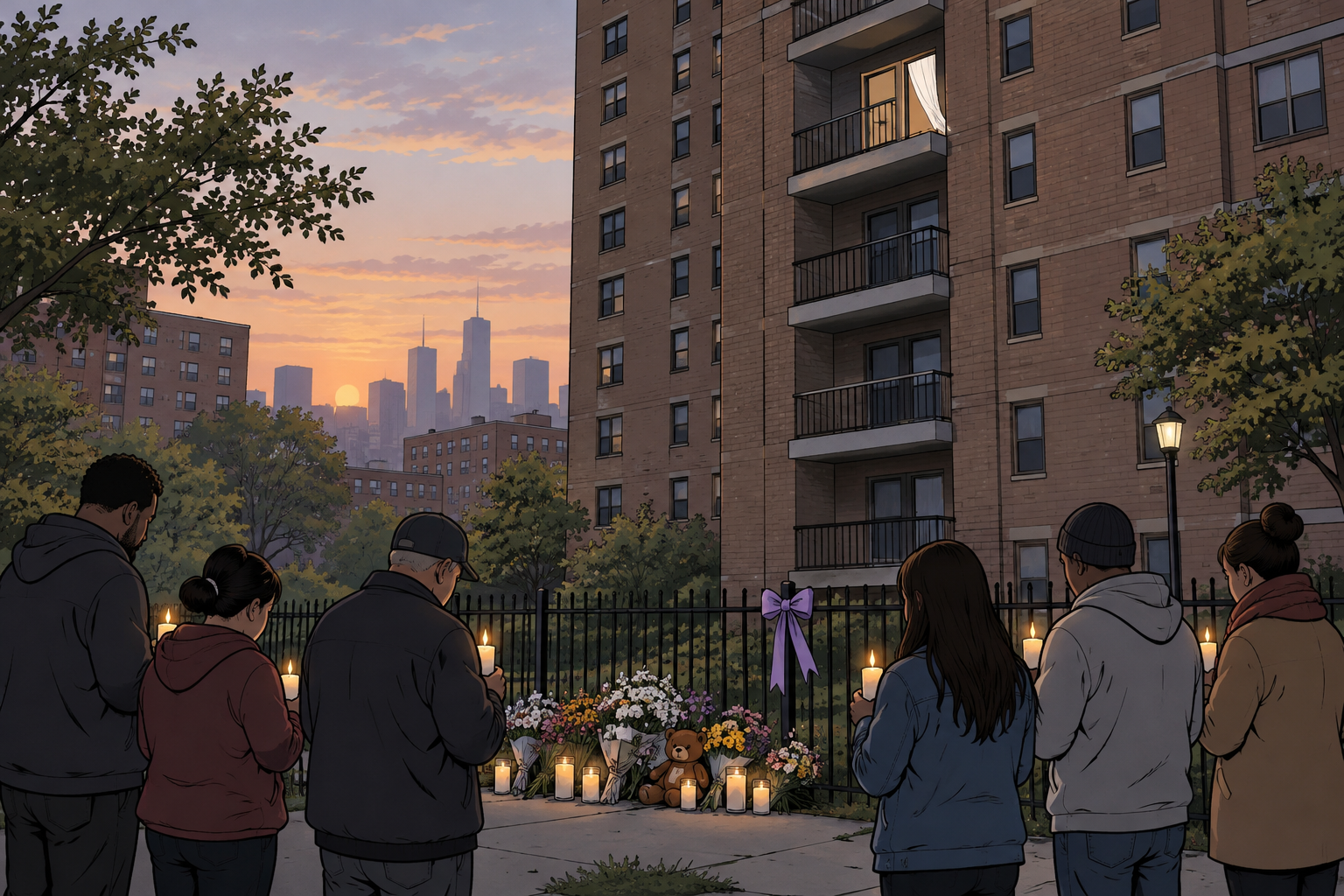
South Figueroa Street, a few miles of pavement running through South Los Angeles, has a nickname among the people who work it and the police who patrol it: “the Blade.” A grimmer nickname has followed — “the Kiddie Stroll” — because so many of the girls sold for sex there are minors. City Journal’s July 8, 2026 investigation, drawing on interviews with a school security guard, a former LAPD vice sergeant, and the federal indictments now working through court, lays out how the corridor got this way and who wrote the law that helped it happen.
In July 2022, Gov. Gavin Newsom (D) signed Senate Bill 357, authored by State Sen. Scott Wiener (D-San Francisco), fully decriminalizing loitering with intent to commit prostitution — the loitering-with-intent statute vice officers had used for decades to intervene on the street before a trafficked minor could be identified and pulled out. Within six months of the law taking effect on January 1, 2023, the visible number of girls on the corridor roughly doubled, according to City Journal’s reporting. LAPD-reported child-trafficking rescues rose from a handful in 2022 to 123 children in 2024.
Federal prosecutors have since brought racketeering and sex-trafficking charges against the Hoover Criminal Gang for allegedly controlling the corridor — an August 2025 indictment that grew to 18 defendants, and a July 1, 2026 follow-on sweep, “Operation Broken Blade,” charging 10 more people in a 65-count superseding indictment naming 51 victims, some as young as 14. Every official who wrote, signed, or presided over the policy this page documents is a Democrat; the accountability now underway is coming from federal prosecutors and civil nuisance suits, not from the officials who built the legal architecture in the first place.
- $25 — the price a sex act on the corridor reportedly commanded, according to a former LAPD vice sergeant · Source: City Journal
- ~$1,000/night — the quota trafficking victims were reportedly required to earn for the people controlling them · Source: City Journal
- ~2x — the roughly doubling in the visible number of girls on the corridor within six months of SB 357 taking effect Jan. 1, 2023 · Source: City Journal
- 123 children — LAPD-reported child-trafficking rescues in 2024, up roughly eightfold from a handful in 2022 · Source: City Journal; LAPD
- 51 victims — identified in the July 2026 “Operation Broken Blade” superseding indictment, some as young as 14, according to the indictment · Source: DOJ/USAO Central District of California
- 750%+ — increase in LA County trafficking convictions since 2022, per DA Nathan Hochman's office · Source: LA County District Attorney
2016: Gov. Jerry Brown (D) signs SB 1322, barring minors from being charged with prostitution-related loitering.
July 2022: Gov. Gavin Newsom (D) signs SB 357, authored by State Sen. Scott Wiener (D-SF), fully decriminalizing adult loitering with intent to commit prostitution.
Jan. 1, 2023: SB 357 takes effect. Within six months, the visible number of girls on the Figueroa corridor roughly doubles.
2022–2024: LAPD-reported child-trafficking rescues rise from a handful to 123 in a single year.
Aug. 2025 & July 2026: federal RICO indictments target the Hoover Criminal Gang's alleged control of the corridor.
The stretch of South Figueroa Street at the center of City Journal’s reporting runs roughly from Gage Avenue to Imperial Highway — a corridor that spans Los Angeles City Council Districts 8 and 9 and passes near two Los Angeles Unified School District campuses. It has operated as an open-air sex market for years, but according to the people who work near it, what has changed since 2023 is how visible — and how young — it has become.
“We'll see some police officers roll by and some young women out here just prostituting... It's normal.”
School security guard near the Figueroa Corridor, quoted in City Journal, July 8, 2026
That word — normal — is the one City Journal’s reporting returns to again and again. Girls working the corridor in broad daylight, within view of school security staff and passing patrol cars, is no longer an anomaly residents describe reporting once and moving on from; it is simply a condition of the block. The nickname “the Kiddie Stroll” is not a media invention — it is the term Los Angeles City Attorney Hydee Feldstein Soto (D)’s office itself began using by 2023, in the same period the visible number of girls on the corridor was doubling.
Where: South Figueroa Street, roughly Gage Avenue to Imperial Highway, South Los Angeles.
Jurisdiction: spans Los Angeles City Council Districts 8 and 9.
Proximity: within view of two LAUSD school campuses.
Names on the street: “the Blade,” a term used across multiple American trafficking corridors, and “the Kiddie Stroll,” a name specific to Figueroa's high share of minor victims.
None of this happened in a vacuum. The corridor’s transformation into one of California’s most visible child-trafficking markets tracks almost exactly with a sequence of state decisions made in Sacramento — decisions this page traces next.
California criminalized loitering with intent to commit prostitution in 1995, giving vice officers a specific legal tool: the ability to stop and question someone displaying the behavior patterns of street prostitution — repeated flagging of cars, lingering at a known corner, signaling to drivers — before any sex act had occurred. For decades, that tool was also how officers first encountered underage trafficking victims, often before the victim or anyone around her had said a word about who was controlling her.
In 2016, Gov. Jerry Brown (D) signed SB 1322, barring minors from being charged with prostitution-related loitering — a change aimed at treating trafficked children as victims rather than criminals, which drew broad support. Six years later, the legislature went further. State Sen. Scott Wiener (D-San Francisco) authored SB 357, which fully repealed the loitering-with-intent statute for adults as well — framed publicly as protecting LGBTQ people, and particularly transgender women of color, from discriminatory policing that critics said swept up people for simply standing on a corner. Gov. Gavin Newsom (D) signed it in July 2022, and it took effect January 1, 2023.
Former LAPD Sgt. Stephany Powell, who spent years working vice enforcement before the law changed, described in plain terms what the statute had actually been used for on corridors like Figueroa — and what its repeal took away.
“Before S.B. 357... what would happen if we were working vice and we'd see somebody out there like that, we could arrest them.”
Stephany Powell, former LAPD Sergeant, quoted in City Journal
Before: officers could stop and arrest someone displaying loitering-with-intent-to-commit-prostitution behavior, without waiting for evidence of an actual transaction — the mechanism used to intercept trafficked minors before a sex act occurred.
After Jan. 1, 2023: that stop-and-arrest authority no longer exists for adults. Officers must instead witness or otherwise establish evidence of the underlying sex-trafficking or prostitution offense itself, a higher and slower evidentiary bar.
The stated rationale: protecting LGBTQ people, especially transgender women of color, from discriminatory policing under the old loitering statute.
The disputed result: according to City Journal's reporting and former vice officers like Powell, the same repeal removed the earliest practical off-ramp for identifying trafficked minors on the street.
Former LA County Sheriff Alex Villanueva, who led the department from 2018 to 2022 and has been an on-record critic of the change, put the consequence bluntly: “SB 357 removed a key enforcement tool that kept communities free from red light blight.” The Los Angeles County Sheriff is a nonpartisan elected office under California law, so no party affiliation is asserted for Villanueva here; his criticism is included as that of a former top law-enforcement official with direct operational experience on the statute's repeal, not as a partisan rebuttal.
The numbers City Journal compiled track the timeline almost exactly. Within six months of SB 357 taking effect, the visible number of girls working the Figueroa corridor had roughly doubled. LAPD’s own reporting shows child-trafficking rescues climbing from a handful of cases in 2022 to 123 children in 2024 — roughly an eightfold increase in two years. Neither figure proves the law caused the entire increase on its own, but the timing is not something either the department or the City Attorney’s office has disputed.
Powell also spoke to how young trafficking victims typically are when they first enter the life — a detail that explains why City Journal’s reporting and DOJ’s own indictments repeatedly cite ages in the young teens rather than adulthood.
“Statistically, the average age of entry for human sex trafficking is between the ages of 12 and 14 years old.”
Stephany Powell, former LAPD Sergeant, quoted in City Journal
City Journal’s reporting describes sex acts on the corridor reportedly priced as low as $25 — a figure a former LAPD vice sergeant attributed to the sheer volume of competition and coercion on the street — while victims were reportedly required to earn quotas of roughly $1,000 a night for the people controlling them. Those two figures together sketch the economics driving the corridor: a high-volume, low-price street market that generates substantial nightly revenue for traffickers precisely because so many girls are working it at once.

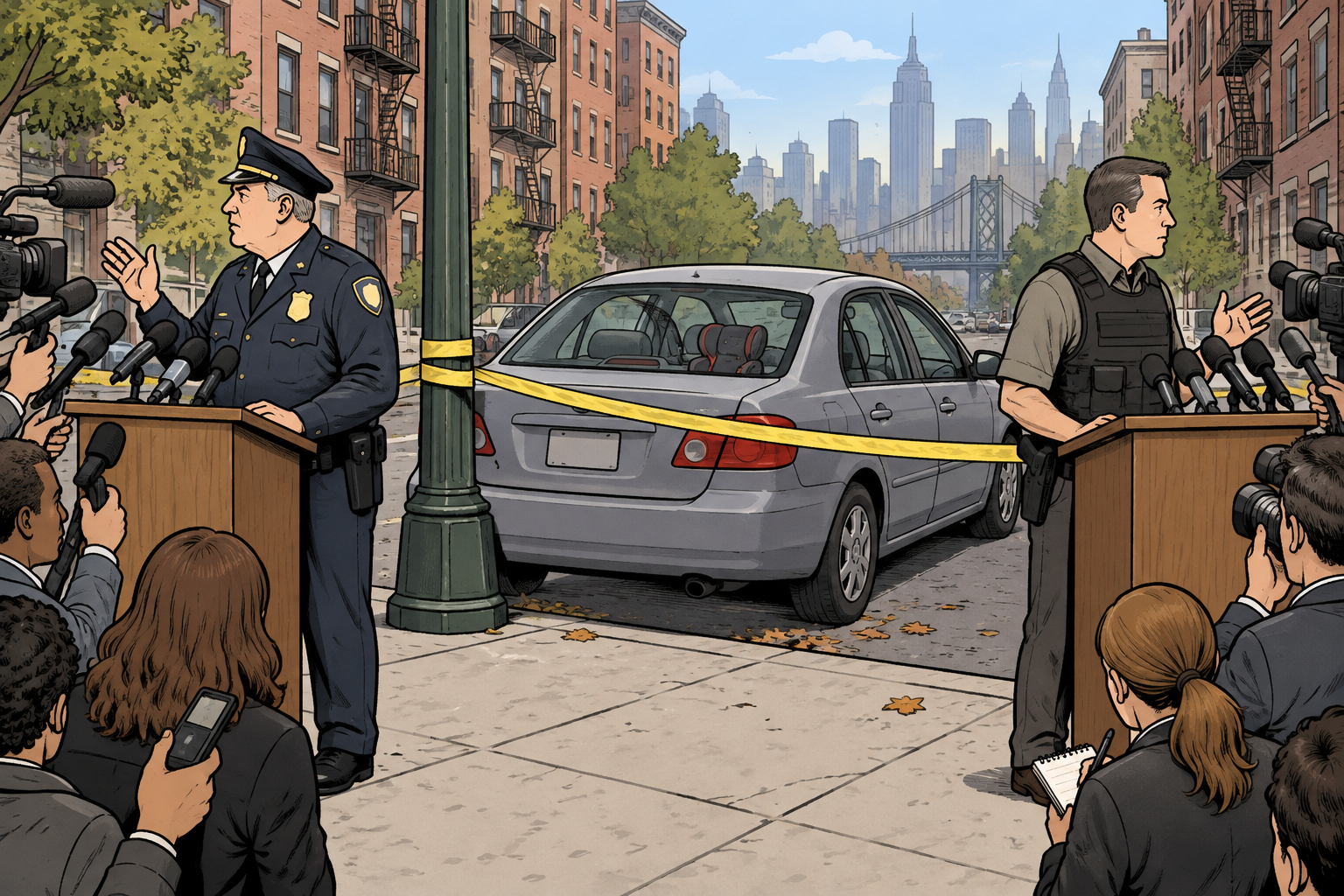
Federal prosecutors say the Figueroa corridor did not run itself. An original indictment unsealed in August 2025 charged 11 defendants, later expanded to 18, accusing members and associates of the Hoover Criminal Gang of racketeering conspiracy and sex trafficking tied to their alleged control of the corridor. All defendants in that case are presumed innocent unless and until convicted.
Nearly a year later, on July 1, 2026, federal prosecutors unsealed a follow-on action dubbed “Operation Broken Blade” — a 65-count superseding indictment charging 10 more defendants, including, according to the Justice Department’s own release, a South LA motel manager. The superseding indictment identifies 51 total victims, some as young as 14 according to the indictment. As with the original case, every individual named in the July 2026 indictment is presumed innocent unless and until convicted; this page uses “alleged” and “according to the indictment” throughout because both matters remain pending.
Who: 10 additional defendants, including a South LA motel manager, added to the federal case against the Hoover Criminal Gang.
When: indictment unsealed July 1, 2026, building on an original August 2025 indictment that grew to 18 defendants.
What's alleged: a 65-count superseding indictment covering racketeering conspiracy and sex trafficking tied to control of the Figueroa Corridor.
Victims identified: 51 total, some as young as 14, according to the indictment.
Investigated by: Homeland Security Investigations Los Angeles and the LAPD, prosecuted by the U.S. Attorney's Office for the Central District of California.
Status: pending. All defendants are presumed innocent.
Bill Essayli, First Assistant and Acting U.S. Attorney for the Central District of California under the Trump administration’s Department of Justice, led the announcement of the July 2026 sweep and did not soften the language.
“Sex trafficking of young women and children ranks among the worst criminal offenses our office prosecutes — truly the lowest of the low.”
Bill Essayli, First Assistant and Acting U.S. Attorney, Central District of California
Conducting a large operation this morning with @HSILosAngeles and @LAPDHQ targeting human trafficking in the Figueroa corridor, where girls as young as 14 are being sold for sex.
This morning's operation on the Figueroa corridor resulted in the arrest of 10 defendants, including a South LA motel manager accused of providing rooms used to exploit trafficking victims — all now charged in a 65-count superseding indictment.
Our office, together with HSI and LAPD, has indicted members and associates of the Hoover Criminal Gang on federal racketeering and sex-trafficking charges tied to their alleged control of the Figueroa corridor.
Every state and city official who wrote, authored, or signed the laws that reshaped enforcement on the Figueroa corridor is a Democrat. The federal racketeering prosecutions now working through the courts, and the local district attorney who has driven the sharpest recent increase in trafficking convictions, sit outside that chain of state policy decisions.
Gavin Newsom (D) — Governor of California. Signed SB 357 in July 2022, decriminalizing loitering with intent to commit prostitution.
Jerry Brown (D) — Governor of California at the time. Signed SB 1322 in 2016, barring minors from being charged with prostitution-related loitering.
Scott Wiener (D) — State Senator, San Francisco. Authored SB 357, framed publicly as protecting LGBTQ people from discriminatory policing.
Karen Bass (D) — Mayor of Los Angeles.
Hydee Feldstein Soto (D) — Los Angeles City Attorney. Filed nuisance-abatement suits against corridor motels.
George Gascón (D) — LA County District Attorney, 2020 through December 2024. Presided over the county's prosecutorial posture during the corridor's sharpest 2021–2024 expansion; voted out of office in November 2024.
Nathan Hochman (No Party Preference) — LA County District Attorney since December 2024. Launched a three-pronged enforcement strategy in January 2026; his office reports trafficking convictions up more than 750% since 2022.
Jim McDonnell — LAPD Chief, appointed in 2024 by Mayor Bass (an appointed, non-elected position). Bill Essayli — First Assistant and Acting U.S. Attorney, Central District of California, a federal DOJ appointee under the Trump administration; no personal party registration is asserted. Alex Villanueva — former LA County Sheriff (2018–2022), a nonpartisan elected office under California law.
Naming officials by office and party is not a rhetorical flourish here; it is the political geography of how the corridor's legal environment changed. The officials who wrote and signed SB 1322 and SB 357 hold or held statewide office. The accountability that followed — RICO indictments, nuisance-abatement suits, a district attorney who campaigned on faster trafficking prosecutions — has come from a federal U.S. Attorney's Office, a city attorney using an old public-nuisance statute, and a county prosecutor who unseated his own party's incumbent.

LA County District Attorney Nathan Hochman, who unseated incumbent George Gascón in November 2024, announced a three-pronged enforcement strategy in January 2026 aimed specifically at sex exploiters and buyers rather than only the trafficked women and girls themselves. His office says the approach has driven trafficking convictions up more than 750% since 2022.
“Human trafficking is essentially modern-day slavery, and Los Angeles County for far too long has been one of its epicenters.”
Nathan Hochman, Los Angeles County District Attorney
City Attorney Hydee Feldstein Soto has taken a parallel civil track, filing nuisance-abatement suits against corridor motels under California's Red Light Abatement Act — a decades-old statute that lets the city sue to shut down properties used to facilitate prostitution and trafficking, independent of any criminal case. That effort forced the permanent closure of the New Gage Motel, one of the corridor's identified hotspots.
LAPD Chief Jim McDonnell, appointed by Mayor Bass in 2024, framed the department's role in the federal cases as part of the same enforcement push.
“We are dismantling the criminal enterprises that profit from human trafficking, rescuing victims, and reclaiming the Figueroa Corridor for the community that has always deserved better.”
Jim McDonnell, LAPD Chief
Hochman's office has separately pursued public-corruption charges against a sitting Los Angeles city councilmember, a matter unrelated to the Figueroa Corridor case but cited here as further context on the district attorney's broader enforcement posture since taking office.
Mayor Karen Bass has acknowledged the scale of the problem in terms unusually direct for a sitting big-city mayor, while also describing the limits of what enforcement alone can accomplish against a market with this much economic pull.
“Often, people think of human trafficking as something that happens only in other countries, but it happens in our own City.”
Karen Bass, Mayor of Los Angeles
“It is difficult because it is like Whac-A-Mole. You can crack down on Figueroa and now we have a problem in another part of the city.”
Karen Bass, Mayor of Los Angeles
Bass's own framing cuts both ways. It is an honest acknowledgment that enforcement sweeps displace rather than eliminate a market this large. It is also, read alongside the timeline in this piece, an admission that increased arrests, camera installations, and civil nuisance suits are treating symptoms of a legal environment the state itself created in 2022 — one that removed the tool police say let them intervene earliest, before a minor was fully absorbed into the corridor's economy.
No state legislator has introduced a bill to restore the loitering-with-intent statute SB 357 repealed. Both federal RICO tracks against the Hoover Criminal Gang remain pending, with all named defendants presumed innocent until a jury says otherwise. What is not in dispute is the trajectory the corridor's own numbers describe: a roughly doubling of visible trafficking within six months of decriminalization, an eightfold rise in LAPD child rescues over two years, and a federal indictment that grew from 18 to 28 defendants in under a year.
California decriminalized the street-level tool vice officers used to intervene before a trafficked minor was fully absorbed into the market. Within six months, the visible trafficking on one South LA corridor roughly doubled; within two years, LAPD's child-rescue numbers rose eightfold to 123. Federal prosecutors have now charged 28 people across two RICO indictments for allegedly running that corridor for the Hoover Criminal Gang — all presumed innocent until proven otherwise — while LA's city attorney sues motels closed under a century-old nuisance statute and the county's district attorney reports convictions up more than 750% since 2022. Every official who wrote or signed the underlying law is a Democrat. Mayor Bass calls the result “Whac-A-Mole.” The federal courts, not Sacramento, are the ones currently trying to put the moles back in the ground.