
The DEA Watched 1.8 Million Fentanyl Pills Hit the Street — and Did Nothing.
On June 22, 2026, the Associated Press published an investigation built on government records and the accounts of three current and former Drug Enforcement Administration agents. Its finding is blunt: between 2023 and 2025, the DEA repeatedly tracked shipments of fentanyl pills moving through New Mexico — and let them go. Agents watched the deliveries, logged them, and did not seize them, because federal prosecutors wanted to roll the surveillance into a bigger case against the traffickers higher up the chain.
The man who blew the whistle is a 19-year DEA veteran and former Navy man named Special Agent David Howell. His disclosures put the number of pills the agency permitted to flow on a single multistate probe at no fewer than 1.8 million. His verdict on the strategy is the kind of sentence that does not soften with time: “We poisoned our community to make cases.”
This is a federal-agency-accountability story, and the receipts are unusually concrete: a whistleblower complaint, an Office of Special Counsel finding of a “substantial likelihood of wrongdoing,” an internal rule that the Justice Department quietly loosened in 2024, and a state overdose curve that ran the wrong way while the rest of the country’s fell. The rest of this page lays it out, source by source.
- 1.8 million pills — the minimum the DEA permitted to be delivered on one multistate probe, per whistleblower Special Agent David Howell · Source: AP via PBS NewsHour
- 74,000 pills — a single June 2023 delivery to an Albuquerque mobile-home park that agents watched and never seized · Source: AP via PBS NewsHour
- 3 million+ pills — the May 2025 'largest fentanyl bust in DEA history' the wait-and-watch strategy was built to produce, announced by AG Pam Bondi · Source: AP; Washington Times
- +21% in New Mexico — the state's overdose-death rise last year — while the national rate fell about 14% · Source: AP via PBS NewsHour; CDC
- “We 100% got people killed” — Special Agent David Howell on what the agency's own surveillance cost, including a 15-month-old who died of fentanyl exposure in Española · Source: AP; Daily Caller
The AP investigation, reported by Jim Mustian and Joshua Goodman, rests on government records and on three current and former DEA agents. The central allegation is that DEA agents in New Mexico repeatedly monitored fentanyl shipments — in real time, on wiretaps and surveillance — but chose not to seize them. In one case, agents tracked a June 2023 deal in which traffickers delivered 74,000 pills to an Albuquerque mobile-home park. The pills were never seized. In early 2024, Howell told the Justice Department’s Office of Professional Responsibility that agents had separately observed — and let pass — deliveries of 150,000 and 50,000 pills.
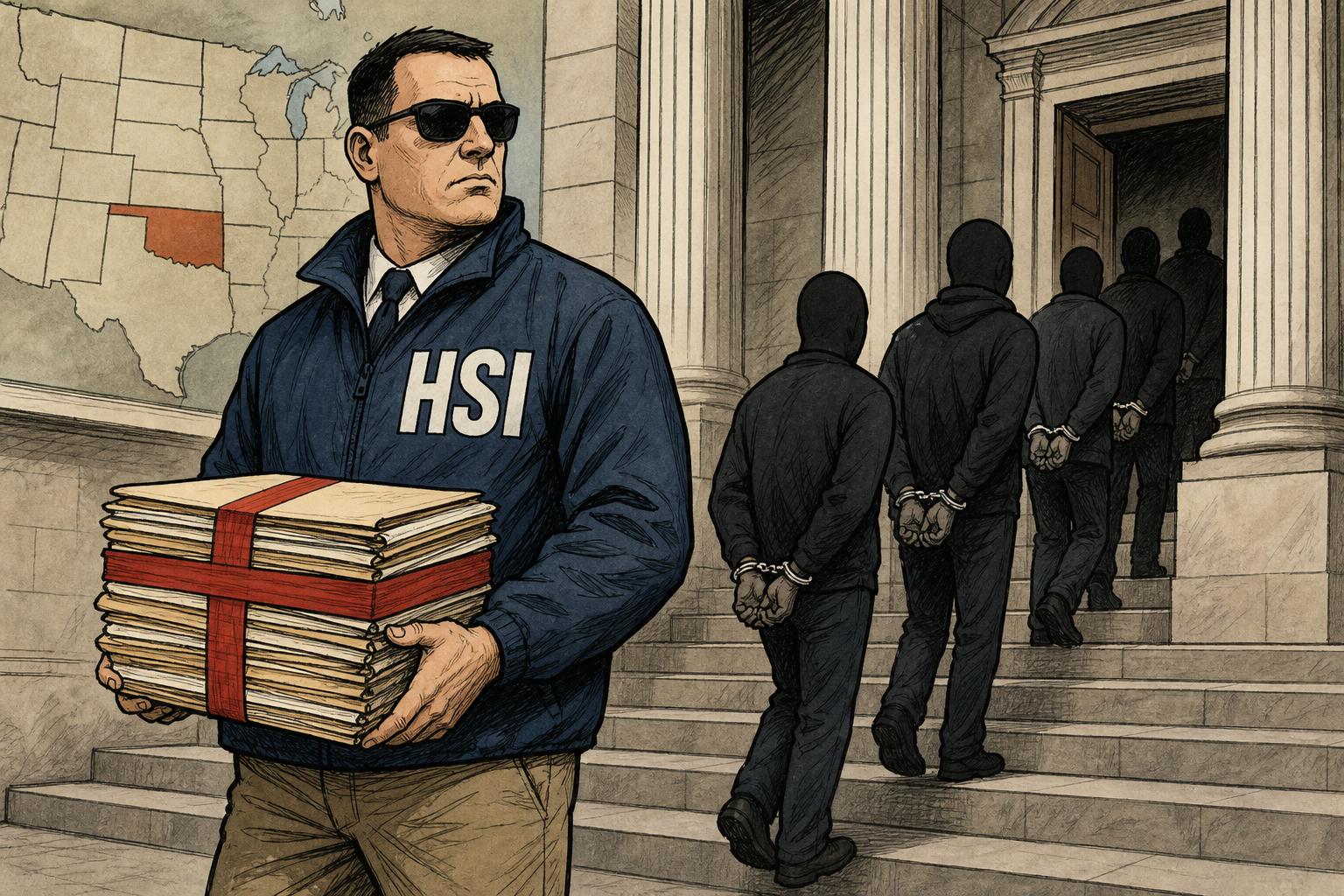
The logic was prosecutorial. Then–U.S. Attorney for New Mexico Alex Uballez (Biden appointee, 2022–2025) told the AP that authorities at times allowed shipments to go unseized to gather intelligence and build cases against major trafficking organizations — a function, he said, of limited resources and his belief that prosecuting the larger network has a bigger impact than grabbing one courier. That is a real and longstanding law-enforcement tradeoff. The question the investigation raises is whether, with a drug this lethal, the tradeoff was ever the agency’s to make silently.
“We poisoned our community to make cases. Through our own willful blindness, we get to say, 'We don't really know what happened to the drugs.' But we 100% got people killed.”
DEA Special Agent David Howell, to the Associated Press (June 2026)
David Howell joined the DEA 19 years ago, after a decade in the Navy. By his account, he grew so unnerved by the agency’s refusal to seize fentanyl that he began doing something no internal protocol asked of him: cross-referencing the unseized shipments against local overdose deaths, looking for the bodies that might trace back to pills the DEA had watched walk out the door. He filed a formal whistleblower complaint in 2023.
The human toll the AP foregrounds is a 15-month-old toddler who died last year after ingesting burned fentanyl residue in Española, a small New Mexico town hollowed out by poverty and addiction. The macro number points the same direction: while overdose deaths nationwide fell about 14% last year, New Mexico recorded a 21% increase. Howell’s argument is not that the DEA caused every one of those deaths — it is that an agency whose own 2017 protocols told it to protect public safety “as soon as practicable” instead chose, repeatedly, to wait.
AP investigation: The DEA permitted hundreds of thousands of fentanyl pills to hit the streets of New Mexico between 2023 and 2025 — repeatedly watching shipments without seizing them — as prosecutors sought to build bigger cases against traffickers.
Public descriptions suggesting that DEA knowingly permitted fentanyl to reach communities are false and fundamentally mischaracterize the facts. The investigation relied on court-authorized wiretaps and real-time surveillance, and our investigative decisions were lawful and reasonable.
The most damning piece of the record is not a quote — it is a policy edit. The DEA’s 2017 “Fentanyl Protocols” instructed agents to “seize or otherwise prevent the distribution” of fentanyl “as soon as practicable,” and stated flatly that “protecting public safety is paramount.” Those were the rules in place when these shipments started moving. Then, in 2024, the Justice Department rewrote them, giving investigators discretion to “exercise discretion in determining whether to take action to prevent the trafficking of fentanyl” — balancing public-safety risk against the “benefits to be achieved through preserving the investigation.”

That is the swamp in miniature: a public-safety mandate softened into a discretionary judgment call, on paper, in the middle of the deadliest drug crisis in American history. The whistleblower process tracked the rewrite’s effect. The U.S. Office of Special Counsel — the independent agency charged with protecting federal whistleblowers — initially found a “substantial likelihood of wrongdoing” and referred the matter to the Justice Department. DOJ’s own Office of Professional Responsibility then closed the loop in the agency’s favor, concluding the decisions were reasonable and identifying no “specific danger to public health.” Whether an independent referral can be reasonably resolved by the department it was referred to is its own question.
DEA New Mexico field agents — tracked and, per the AP, declined to seize fentanyl deliveries totaling at least 1.8 million pills across one multistate probe.
U.S. Attorney Alex Uballez (D.N.M., 2022–2025) — defended letting some shipments pass to build larger cases against trafficking organizations, citing limited resources.
The U.S. Department of Justice — rewrote the 2017 fentanyl “seize as soon as practicable” protocol into a 2024 discretion standard; its Office of Professional Responsibility later cleared the conduct.
The U.S. Office of Special Counsel — found a “substantial likelihood of wrongdoing” on Howell’s disclosures and referred the matter to DOJ to investigate.
The wait-and-watch approach did end in a headline. In May 2025, then–Attorney General Pam Bondi announced what the DEA called the largest fentanyl bust in its history — a takedown in the Albuquerque area that seized more than 3 million pills. On paper, that is the payoff the strategy promised: forgo the small seizures, follow the network, and bring down a bigger fish at the end.
Howell’s objection is the arithmetic underneath the trophy. If agents permitted at least 1.8 million pills to flow in order to stage a 3-million-pill finale, the “record bust” and the unseized poison are the same operation. The DEA, for its part, rejects the framing entirely. Spokesperson Amanda Wozniak said descriptions suggesting the DEA “knowingly permitted fentanyl to reach communities are false and fundamentally mischaracterize the facts,” emphasizing that the case relied on court-authorized wiretaps and surveillance and that every decision was lawful. Readers can weigh the agency’s account against its own internal rule change — both are on this page.
The DEA, under the previous administration's rules, SAT BACK and watched MILLIONS of deadly Fentanyl pills flood our streets to 'build a bigger case.' People DIED. This is why I designated Fentanyl a Weapon of Mass Destruction. No more watching. We SEIZE it now!
Paraphrased commentary · not a verbatim post
Trump's framing of the DEA wait-and-watch revelations alongside his December 2025 fentanyl-as-WMD designation — paraphrased and labeled as commentary, not a verbatim post.
The story lands against a genuinely improving national picture, which makes New Mexico’s divergence sharper. The CDC reported in February 2025 that U.S. drug-overdose deaths had fallen nearly 24% over a 12-month period — roughly 87,000 deaths, down from about 114,000 — the largest decline on record, driven mostly by a drop in fentanyl-involved deaths. By the 12 months ending December 2025, provisional CDC data put the figure near 69,973, down about 13.9% again. The tide was going out nationally.
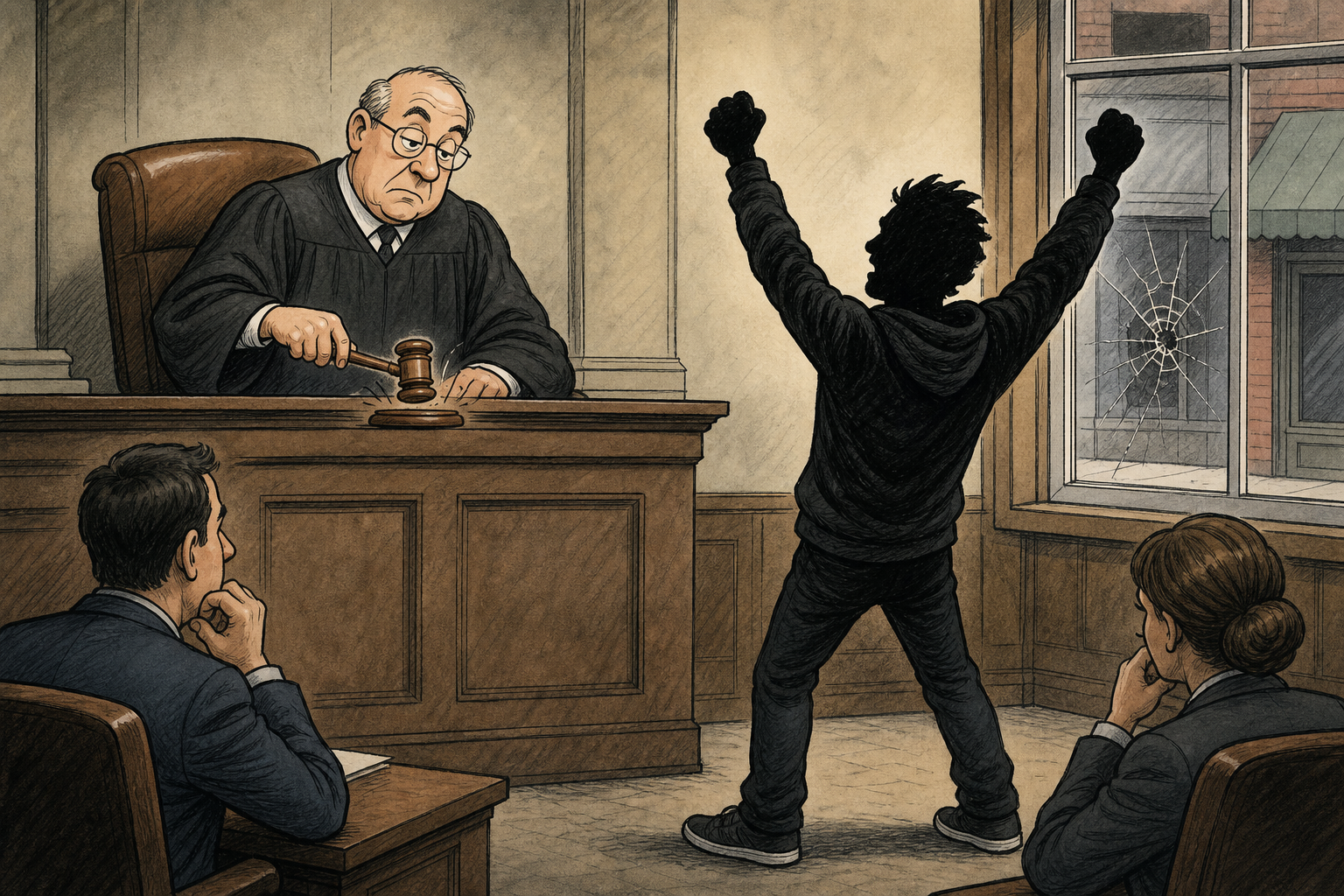
New Mexico went the other way, with a 21% rise the same year — and Albuquerque, home to a neighborhood so drug-ravaged locals call it the “War Zone,” sits at the epicenter. The policy environment around it hardened too: in December 2025, President Donald Trump (R) designated illicit fentanyl a “weapon of mass destruction,” and the DEA — under new Administrator Terrance Cole (Trump appointee), sworn in July 2025 — launched a “Fentanyl Free America” enforcement push. Against that escalation, an agency caught on the record choosing not to seize the very drug now classed as a WMD is not a small embarrassment.
Our agents work tirelessly to dismantle the trafficking networks poisoning American communities. Court-authorized investigations require difficult judgment calls, and our decisions in New Mexico were lawful and reviewed. Under the Fentanyl Free America initiative, we are seizing more of this poison than ever before.
Paraphrased commentary · not a verbatim post
A paraphrase of the DEA's public posture on the New Mexico case and its current enforcement push — labeled as commentary, not a verbatim post.
Honesty requires the caveats. Controlled-delivery and wait-and-build tactics are a legitimate, decades-old tool, and prosecutors are right that grabbing one courier rarely dents a network. The DEA insists the case ran on court-authorized wiretaps, that no decision was unlawful, and that the “knowingly let it reach communities” framing distorts the record — and DOJ’s internal review backed the agents. No court has found wrongdoing. Howell is one agent with a point of view, and reasonable people inside the DEA disagree with him.
But the load-bearing facts are not in dispute. The agency’s own protocol once said seize fentanyl “as soon as practicable” and called public safety “paramount”; that language was loosened in 2024. An independent oversight body found a “substantial likelihood of wrongdoing.” The pill counts — 74,000 here, 1.8 million across the probe — are in the records the AP reviewed. And New Mexico’s overdose curve rose while the nation’s fell. The argument over how to weigh those facts is legitimate; their existence is not.
Strip away the framing and the durable lesson is procedural, which is exactly why it belongs in a Drain-the-Swamp file. A federal agency held a written rule that prioritized public safety. In the worst stretch of the deadliest drug epidemic the country has seen, that rule was quietly softened, agents repeatedly chose the bigger case over the immediate seizure, a 19-year veteran said so out loud, an independent watchdog flagged it — and the department investigated itself and moved on. Whether you credit the DEA’s defense or the whistleblower’s indictment, the public never got to make that call, because the decisions were made in the dark. We’ll keep tracking the litigation, any congressional inquiry, and whether New Mexico’s overdose numbers come back down to meet the rest of the country’s.

- 1.Associated Press (Jim Mustian & Joshua Goodman) via PBS NewsHour — 'Staggering amounts of fentanyl hit streets as DEA watched and took no action, records show,' June 22, 2026
- 2.The Washington Times (AP) — 'Staggering amounts of fentanyl hit streets as the DEA watched and took no action, records show,' June 22, 2026
- 3.The Daily Caller — '‘We 100% Got People Killed’: DEA Reportedly Let Fentanyl Flood Border States,' June 22, 2026
- 4.AP via Yahoo News — 'What a reporter found when uncovering why federal agents allowed a deadly drug to hit the streets' (reporter Q&A), June 2026
- 5.Newser — 'DEA Reportedly Let Fentanyl Pills Flow While Building Cases,' June 22, 2026
- 6.RT (AP wire summary) — 'DEA ‘sat back and watched’ as fentanyl flooded New Mexico – AP,' June 22, 2026
- 7.U.S. Office of Special Counsel — whistleblower disclosure process (5 U.S.C. § 1213); the office that found a 'substantial likelihood of wrongdoing' and referred the matter to DOJ
- 8.U.S. Drug Enforcement Administration — official agency homepage (DEA spokesperson Amanda Wozniak's response to the AP investigation)
- 9.U.S. Attorney's Office, District of New Mexico (then-U.S. Attorney Alex Uballez, 2022–2025) — office of the prosecutors who built the cases
- 10.CDC Newsroom — 'CDC Reports Nearly 24% Decline in U.S. Drug Overdose Deaths,' Feb. 25, 2025 (12-month total ~87,000, down from ~114,000)
- 11.CDC / NCHS — Provisional Drug Overdose Death Counts (Vital Statistics Rapid Release), the underlying national overdose data series
- 12.STAT News — 'U.S. overdose deaths fell through most of 2025, CDC data says,' Jan. 14, 2026 (~69,973 projected for 12 months ending Dec. 2025, down ~13.9%)
- 13.The White House — 'Fact Sheet: President Donald J. Trump Designates Fentanyl as a Weapon of Mass Destruction,' Dec. 2025
- 14.NPR — 'Trump designates street fentanyl as a WMD, escalating militarization of the drug war,' Dec. 15, 2025
- 15.DEA.gov — 'Terrance C. Cole Sworn in as Administrator of the U.S. Drug Enforcement Administration,' July 25, 2025
- 16.KOB 4 (Albuquerque) — 'More drugs than just fentanyl fuel crime crisis in Albuquerque'
- 17.PBS NewsHour (YouTube) — 'WATCH LIVE: DEA, White House officials testify on countering fentanyl trafficking in Senate hearing'
- 18.House Committee on the Judiciary (YouTube) — 'The Fentanyl Crisis in America: Inaction is No Longer an Option'
Last updated June 23, 2026