
After Five Years of Dead NIL Bills, a Cantwell-Cruz Deal Finally Cleared Committee — with Nick Saban as its star witness.
On Wednesday, June 3, 2026, the Senate Commerce Committee did something Congress had failed to do for half a decade: it held a serious, headline hearing on a bipartisan bill that could actually become law. The bill is the Protect College Sports Act of 2026 (S. 4668), written by committee chairman Sen. Ted Cruz (R-TX) and ranking member Sen. Maria Cantwell (D-WA), with Sen. Eric Schmitt (R-MO) and Sen. Chris Coons (D-DE). Its star witness was former Alabama head coach Nick Saban.
The bill tries to settle the questions that the $2.78 billion House v. NCAA antitrust settlement opened and never closed: a single national NIL standard to replace 30-plus conflicting state laws, a federal antitrust safe harbor letting the NCAA enforce a payment cap, transfer and eligibility rules, classification of athletes as independent contractors rather than employees, and a mechanism to pool college media rights the way the NFL and NBA do.
Two weeks later, on June 18, the committee advanced it 19-9 — the first college-sports reform bill ever to clear a Senate committee. It is not law. The Big Ten and SEC oppose it, a 60-vote Senate floor still looms, and one Republican former coach — Sen. Tommy Tuberville (R-AL) — says he will fight it. This page lays out what the bill does, who is for and against it, and what it would actually change — source by source.
- 19-9 — the bipartisan Senate Commerce Committee vote advancing the Protect College Sports Act on June 18, 2026 — the first college-sports bill ever to clear a Senate committee · Source: Senate Commerce; ESPN; Texas Tribune
- $20.5M — the per-school revenue-sharing cap from the House v. NCAA settlement that the bill codifies and makes enforceable in federal law · Source: CBS Sports; ESPN
- $2.78B — the House v. NCAA antitrust settlement (approved June 6, 2025) that opened the pay-for-play era the bill is trying to govern · Source: ESPN
- $60M / year — the post-eligibility athlete medical trust fund (including CTE coverage) the bill would create, alongside a 10-year scholarship guarantee · Source: Senate Commerce; KOMO
- 30+ state laws — the patchwork of conflicting state NIL statutes the bill would preempt with one national standard · Source: CBS Sports; Morgan Lewis
- 60 votes — what the bill needs on the Senate floor in a 53-Republican chamber — so it cannot pass without Democratic support · Source: CBS Sports
The June 3 hearing was titled “Protecting College Sports: Supporting Student Athletes, Restoring Fair Competition, and Saving the Games Fans Love.” It ran nearly three hours and featured five witnesses: former Alabama coach Nick Saban; Notre Dame athletic director Pete Bevacqua; West Virginia University president emeritus Gordon Gee; Pac-12 commissioner Teresa Gould; and University of Utah football player Lance Holtzclaw. Saban — who has spent years warning Congress about the post-NIL landscape — delivered an 11-minute opening statement. He said he loves that players can finally profit off their name, image, and likeness, but hates that it has slid into “pay for play.”
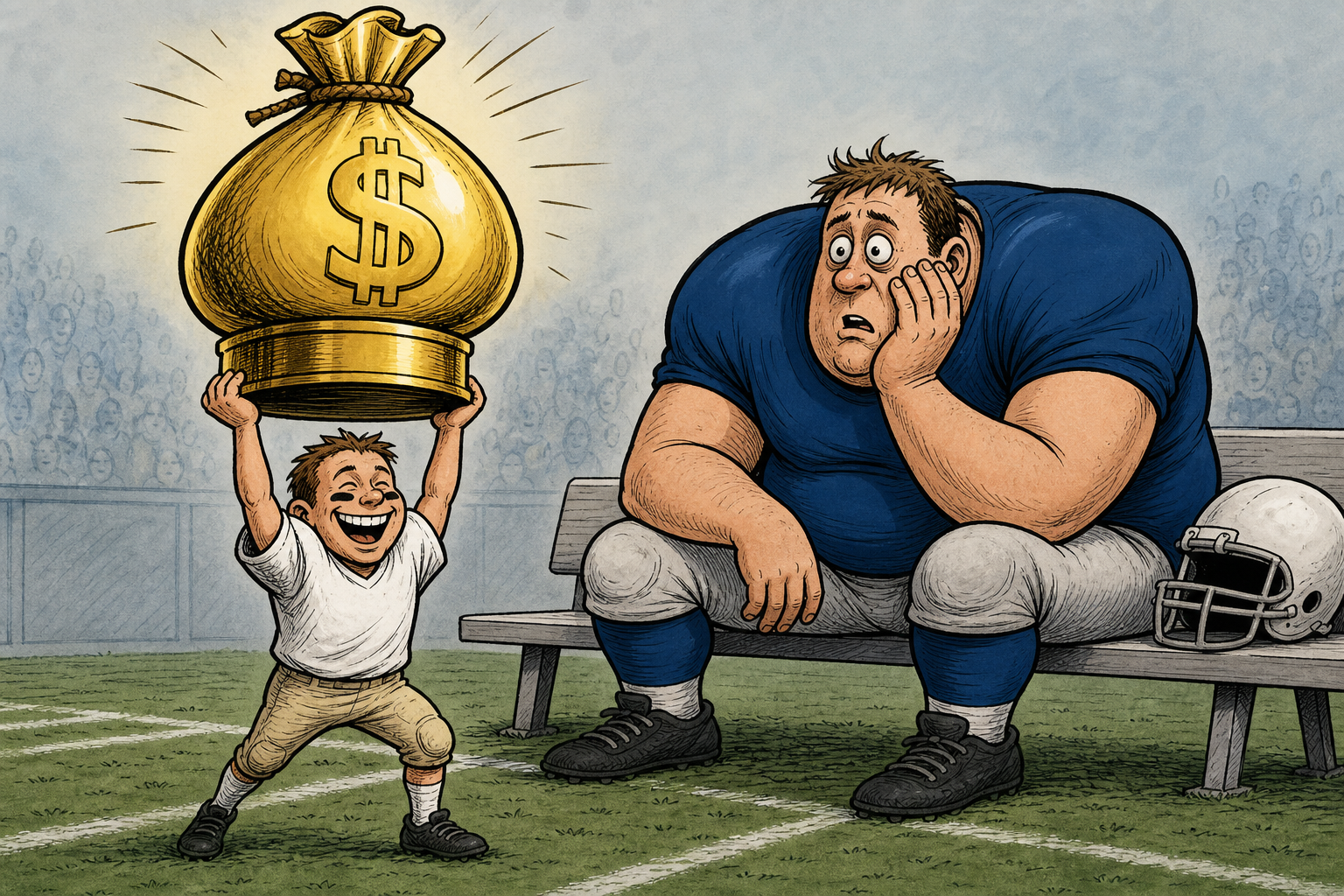
Saban put numbers on the spiral. He told senators that Alabama’s NIL fund was $2.7 million in his first year under the new rules, climbed to roughly $24 million by 2025, and that some programs now field $40 million rosters. His central plea was not for Congress to micromanage athletics — it was for legal certainty. Without a federal framework, he argued, “every rule becomes another lawsuit,” and the system keeps drifting toward an unregulated professional model with no enforceable rules at all.
“If you had the biggest, baddest Ferrari that you could ever have and it was going 150 miles per hour toward the Grand Canyon, somebody needs to tap the brakes.”
Nick Saban · former Alabama head coach · Senate Commerce Committee testimony, June 3, 2026
Introduced May 27, 2026, the Protect College Sports Act is the most comprehensive federal college-sports bill ever to get this far. Its core trade is the one the NCAA has chased for years: athletes get codified rights and protections; the NCAA and its enforcement arm get a limited antitrust safe harbor so their rules survive court challenges. The bill builds directly on the $20.5 million per-school revenue-sharing cap established by the House v. NCAA settlement — codifying it and adding enforcement teeth meant to stop schools from routing money around the cap through booster collectives and multimedia-rights deals.
The major provisions, per the Senate Commerce releases, CBS Sports, and the Morgan Lewis legal analysis:
- A single national NIL standard that preempts the 30-plus conflicting state laws, with a federal right for athletes to earn NIL money.
- A limited antitrust exemption letting the NCAA enforce a payment cap, plus eligibility and transfer rules, without each one triggering a lawsuit.
- Athletes classified as independent contractors, not employees — blocking the collective-bargaining/union pathway while granting NIL rights and protections.
- Media-rights pooling via an amendment to the Sports Broadcasting Act, letting schools sell rights collectively the way pro leagues do.
- Athlete protections: a 10-year scholarship guarantee, protection against losing a scholarship for injury, mandatory medical coverage, and a $60 million annual trust fund for post-eligibility care.
- Agent rules: registration requirements and a 5% cap on agent fees.
- The “Lane Kiffin Rule”: limits on poaching head coaches while their teams are still playing the season.
A lot of people in Washington think bipartisanship is dead. But on behalf of 500,000 athletes who are seeing their future opportunities dimmed, we decided to work together. We're not going to let the most powerful, richest conferences dictate to the rest of America what happens to college sports.
College sports are at a breaking point. The Protect College Sports Act is a bipartisan plan to restore order. No more punting — we're in fourth-down territory, and it's time to go for it.
The economic core is the cap. Under the House settlement, schools can already share up to $20.5 million a year directly with athletes. The bill makes that cap federal law and hard to evade: legitimate NIL deals struck at fair market value face no restriction, but arrangements that look like disguised pay-for-play — the booster-collective and associated-entity workarounds — can be policed. Cantwell’s framing is that the bill exists to keep the richest conferences from writing the rules for everyone else, and to protect the women’s and Olympic-sport scholarships that get squeezed when football and basketball costs explode.
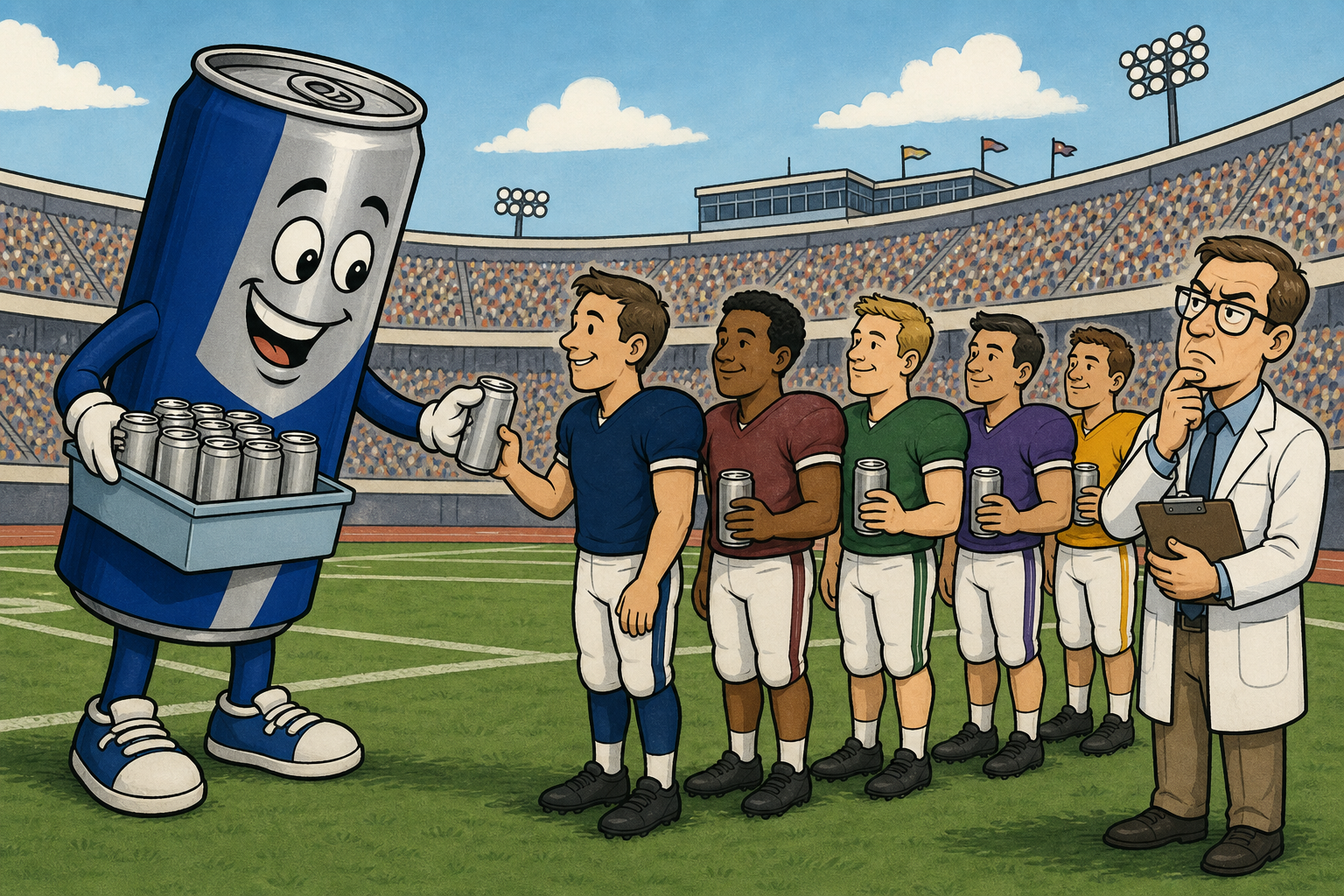
For athletes, the upside is concrete: a federal NIL right that does not flicker between state lines, a 10-year window to finish a degree, guaranteed scholarships that survive injury, mandatory medical coverage during competition, and a $60 million-a-year trust for long-term health needs like CTE. The trade-off is the independent-contractor classification, which forecloses — at least under this bill — the path to being employees with the right to unionize and collectively bargain. That is precisely the line that athlete-advocacy groups and some Senate Democrats have long refused to cross, and it is one reason the floor fight is not over.
“We agree that college sports is in crisis, and the system is unsustainable. We're not going to let the most powerful, richest conferences dictate to the rest of America what's going to happen to 500,000 athletes.”
Sen. Maria Cantwell (D-WA) · ranking member, Senate Commerce Committee · June 2026
The opposition is the surprise. The two most powerful leagues in college sports — the Big Ten and the SEC — came out against the bill. In a joint statement, they said that despite “sustained engagement and good faith efforts,” the revisions they consider critical were not accepted. SEC commissioner Greg Sankey’s sharpest worry is the media-pooling provision, which he warned could expose the conference to fresh lawsuits and even risk exclusion from the College Football Playoff. Both conferences also call the bill’s broad private right of action too expansive — the very litigation door the antitrust safe harbor was supposed to close.
The second source of resistance comes from inside the chamber. Sen. Tommy Tuberville (R-AL), the former Auburn coach who has pushed his own narrower college-sports bills, announced he would oppose this one on the floor. His objection cuts the opposite way from the conferences: he argues the bill “gets too deep into the businesses of universities” while doing “far too little” to give student-athletes the stability and clarity they actually need. Athlete-advocacy groups, meanwhile, oppose the independent-contractor classification on the grounds that it freezes athletes out of employee rights just as they were starting to win them.
Sponsors: Sen. Ted Cruz (R-TX), Sen. Maria Cantwell (D-WA), Sen. Eric Schmitt (R-MO), Sen. Chris Coons (D-DE).
Backing it: the NCAA (President Charlie Baker); Nick Saban; Pac-12 commissioner Teresa Gould; University of Washington President Robert J. Jones; women’s and Olympic-sport advocates.
Against it: the Big Ten and SEC (media-pooling and litigation concerns); Sen. Tommy Tuberville (R-AL) (too much business intrusion, too little athlete clarity); athlete-advocacy groups (opposes non-employee classification).
The math: cleared committee 19-9 (June 18); needs 60 votes on the floor in a 53-Republican Senate; Majority Leader John Thune (R-SD) intends a July floor vote before the August recess.
An honest account names the soft spots. This is a hard antitrust exemption for an industry — college athletics — that has spent a generation losing in court precisely because its rules looked like illegal restraints on athlete earnings. Locking athletes in as independent contractors, rather than employees, is a contested policy choice, not a neutral technicality; reasonable people read the same labor law and disagree. And the bill has not passed. It cleared one committee. The 60-vote Senate floor is a real obstacle, and the two conferences that generate most of the sport’s money are lobbying against it.
But the load-bearing facts are not in dispute. A bipartisan bill, co-authored by the chair and ranking member of the same committee, cleared that committee 19-9 — a first. The witnesses, including the most decorated active-era coach in the sport, testified that the status quo is unsustainable. The dollar figures — the $2.78 billion settlement, the $20.5 million cap, the $40 million rosters — are real and documented. Whatever one thinks of the employee question or the antitrust carve-out, Congress is closer to a federal college-sports law than it has been in the entire NIL era.
After five years of dead bills — Booker-Blumenthal, Manchin-Tuberville, the House SCORE Act — a Cantwell-Cruz compromise got a major Senate hearing on June 3, drew Nick Saban as its headline witness, and cleared the Commerce Committee 19-9 on June 18. The Protect College Sports Act would set one national NIL standard, hand the NCAA a limited antitrust shield, codify the $20.5 million revenue-share cap, classify athletes as independent contractors, and pool college media rights. The Big Ten, SEC, Sen. Tuberville, and athlete-advocacy groups all object — for opposite reasons — and the bill still needs 60 votes on a floor that may not vote until July. We’ll track the floor schedule, the conference lobbying, and whether bipartisanship survives contact with a salary cap.
- 1.U.S. Senate Commerce Committee — 'Cantwell, Cruz, Schmitt & Coons Release Bipartisan Bill to Stabilize College Sports, Protect Athletes and Expand Revenue Sharing' (bill introduced May 27, 2026)
- 2.U.S. Senate Commerce Committee — 'Chairman Cruz Announces Hearing on Landmark College Sports Legislation' (hearing set for Wednesday, June 3, 2026, 9:00 a.m. ET; full witness list)
- 3.U.S. Senate Commerce Committee — 'Bipartisan Protect College Sports Act Advances to Full Senate' (committee vote 19-9, June 18, 2026; Cantwell statement)
- 4.U.S. Senate Commerce Committee — 'Committee Hears Powerful Testimony Bolstering the Need to Fix College Sports Crisis' (June 3, 2026 hearing recap; women's & Olympic sports)
- 5.Sen. Ted Cruz (R-TX) — 'Sen. Cruz Remarks on Senate Commerce Committee Advancing the Protect College Sports Act' (official statement)
- 6.Sen. Chris Coons (D-DE) — 'Senators Coons, Cruz, Cantwell, Schmitt Strike Agreement to Save College Sports' (sponsor release)
- 7.U.S. Senate Commerce Committee — Testimony of Coach Nick Saban, Hearing on June 3, 2026 (witness statement, PDF)
- 8.ESPN — 'Protect College Sports Act headed to Senate for full vote' (committee 19-9; antitrust exemption; Cruz 'fourth-down territory'; Big Ten/SEC opposition)
- 9.ESPN — 'Nick Saban asks Congress to bring order via college sports bill' (June 3, 2026 hearing)
- 10.CBS Sports — 'Protect College Sports Act passes Senate committee amid Big Ten, SEC opposition' (Sankey CFP-exclusion warning; Tuberville floor opposition; Thune July floor plan; 60-vote math)
- 11.CBS Sports — 'Bipartisan Protect College Sports Act proposes salary cap for players, antitrust protection, NIL regulation' ($20.5M revenue-share base; hard cap; Lane Kiffin Rule; fair-market-value NIL test)
- 12.Sportico — 'Protect College Sports Act Hearing Testifies to Misplaced Priorities' (June 3 hearing analysis; Gordon Gee on coaching contracts; conference pushback)
- 13.PBS NewsHour — 'Key Sens. Cruz, Cantwell look to break college sports logjam in Congress with a bipartisan bill'
- 14.Texas Tribune — 'Ted Cruz bill to regulate college sports in NIL era advances' (June 18, 2026)
- 15.Roll Call — 'Senate panel sets markup on college sports bill' (June 12, 2026)
- 16.Morgan Lewis — 'Protect College Sports Act Reshapes NIL and Athlete Rights' (law-firm provision analysis: independent-contractor status, agent rules, antitrust safe harbor)
- 17.On3 — 'Big Ten, SEC release new statement on Protect College Sports Act after Sen. Ted Cruz meeting'
- 18.KOMO News — 'Cantwell-Cruz bipartisan college sports reform bill gets major Senate hearing on Wednesday' (Washington-state angle; UW President Robert J. Jones)
- 19.ESPN — 'Judge grants final approval to House v. NCAA settlement' ($2.78B settlement; revenue-sharing era; June 6, 2025)
- 20.Fortune — 'Nick Saban to Congress: college sports is the biggest, baddest Ferrari going 150 mph toward the Grand Canyon' (June 3, 2026)
Last updated June 24, 2026