
Congress Tries to Referee College Sports — and a Bipartisan NIL Bill Just Cleared the First Down.
For five years, college sports has run on chaos — a patchwork of conflicting state laws, a swelling transfer portal, booster collectives writing seven-figure checks, and a multibillion-dollar court settlement that reshaped the whole enterprise. On June 18, 2026, the U.S. Senate Commerce Committee did something Congress had failed to do in three prior attempts: it actually advanced a bill to govern it.
The vehicle is the Protect College Sports Act of 2026, a bipartisan package from Commerce Chairman Ted Cruz (R-TX), Ranking Member Maria Cantwell (D-WA), and Senators Eric Schmitt (R-MO) and Chris Coons (D-DE). It would set a national NIL standard, hand the NCAA a limited antitrust shield, cap transfers, and lock in scholarship and health protections for athletes.
The committee approved it 19–9 and sent it to the full Senate, which plans to debate it in July. But “across the goal line” is generous: the SEC and Big Ten are wary, an odd-couple bloc of Republicans and Democrats opposes federal involvement at all, and a crowded Senate calendar could run out the clock before any floor vote. Here is what the bill actually does — and who is blocking it.
- 19–9 — the Senate Commerce Committee vote advancing the Protect College Sports Act on June 18, 2026 — 12 Republicans and 7 Democrats in favor · Source: The Hill; Texas Tribune
- 4 sponsors — Sens. Ted Cruz (R-TX), Maria Cantwell (D-WA), Eric Schmitt (R-MO) and Chris Coons (D-DE) — a rare bipartisan foursome · Source: Senate Commerce Committee
- ~$20.5M — the per-school revenue-sharing cap set by the House v. NCAA settlement the bill is built around · Source: Congress.gov CRS; ESPN
- $2.8B — the back-pay the House settlement awards athletes who competed from 2016 through June 2025, spread over a decade · Source: ESPN
- 1 transfer — the number of penalty-free transfers the bill guarantees; a second transfer means sitting out a year, with exceptions · Source: ESPN; Senate Commerce Committee
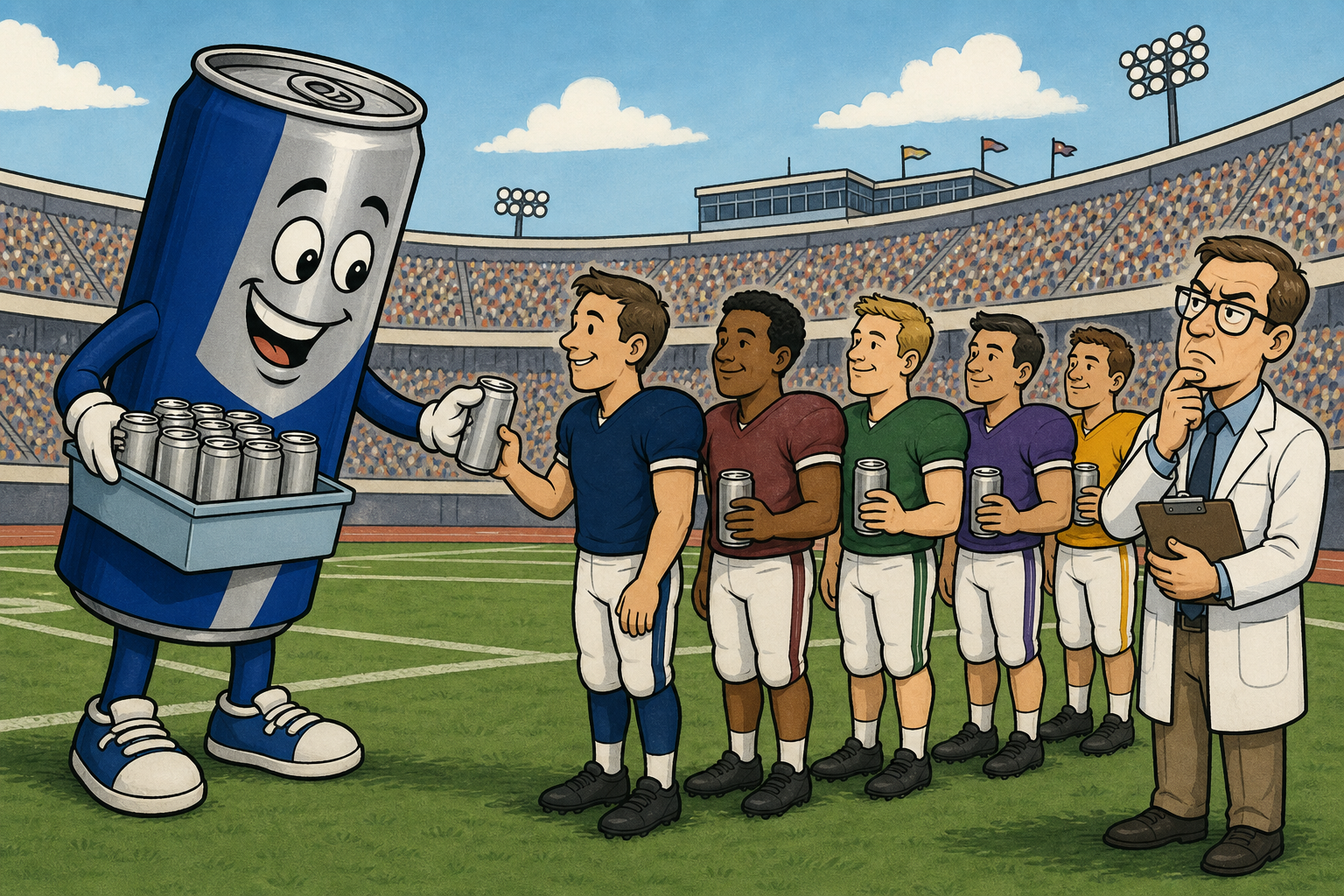
To understand the bill, start with the wreckage it is trying to clean up. A 2021 Supreme Court ruling stripped the NCAA of its assumed antitrust shield, opening the door to athlete compensation. States raced to pass their own NIL laws — dozens of them, all different — so a recruit’s rights depended on his ZIP code. Then came House v. NCAA: a $2.8 billion settlement, approved by a federal judge in June 2025, that for the first time lets schools pay athletes directly, up to a cap of roughly $20.5 million per school. Booster “collectives” promptly began routing NIL money around that cap, pushing real spending at the richest programs into the tens of millions. The result is exactly the “Wild West” Cruz keeps describing.

The Protect College Sports Act is sweeping. It creates a single national NIL standard that preempts the state patchwork, giving athletes a federal right to be paid for their name, image, and likeness — while requiring contracts to spell out what the athlete must do and how much they will earn. It sets up an agent registry capping fees at 5 percent and giving athletes a private right of action against fraud. It guarantees one penalty-free transfer and five years of eligibility, and it locks in scholarships for up to ten years after eligibility ends — protections that survive injury or a benching.
The most contested piece is the limited antitrust exemption. The bill amends the Sports Broadcasting Act to let conferences voluntarily pool their media rights — the way the NFL, NBA, and NHL do — with antitrust protection, and it lets the NCAA enforce its own transfer, eligibility, and compensation rules without being sued out of existence. Notably, it does not declare athletes employees, sidestepping the question that has haunted every prior reform attempt.
College sports are at a breaking point. The Protect College Sports Act is a bipartisan plan to restore order — a national NIL standard, real rules for transfers and agents, and protections for women's and Olympic sports. If the alternative is more chaos, that's unacceptable.
What makes this attempt different is the company Cruz keeps. Maria Cantwell (D-WA), the panel’s top Democrat, co-wrote the bill and framed it as protecting athletes from exploitation rather than shielding the NCAA: “Let’s not ruin it with out-of-control chaos.” She left room to negotiate the cap upward — to as much as 50 percent of revenue — if schools come back to the table. Chris Coons (D-DE) and Eric Schmitt (R-MO) round out the foursome. The committee’s 19–9 tally drew 12 Republicans and 7 Democrats — genuine cross-aisle support that earlier bills never mustered.
“This is the only train leaving the station. If the alternative is to do nothing and allow chaos to continue and college sports to be destroyed, that alternative is unacceptable.”
Sen. Ted Cruz (R-TX), Senate Commerce Committee Chairman
The opposition does not fall along normal party lines. The two richest conferences — the SEC and Big Ten, each generating over $1 billion in 2025 — have floated writing their own rules rather than submitting to a federal framework that forces revenue-sharing with smaller schools. On the Hill, the resistance is an odd couple: Senator Cory Booker (D-NJ) and Senator Tommy Tuberville (R-AL) — the former Auburn coach — both object to Congress wading in, from opposite directions. The nine committee no-votes spanned both parties — some Republicans wary of federal overreach into college sports, and several Democrats who wanted stronger athlete protections before signing on.
College sports are a national treasure. Let's not ruin them with out-of-control chaos. This bill puts new tools and rules on the table — guaranteed scholarships, healthcare protections, an agent registry, and a real future for women's and Olympic sports.
The bill arrived with star power. At a June 3 Commerce hearing, former Alabama coach Nick Saban told senators that “Congress does not need to micromanage college athletics” but does need to “fix the mess in the courts and create a national framework so the people inside college sports can enforce fair rules.” Notre Dame athletic director Pete Bevacqua, West Virginia president emeritus Gordon Gee, a power-conference commissioner, and a Utah student-athlete also testified. And in a twist that scrambled the politics further, the NFL, MLB, NFLPA, and NBPA — the pro leagues and their players’ unions — told Congress they back the effort to bring order to the college pipeline that feeds them.
The bipartisan Senate college sports bill proposes a salary-cap framework around the ~$20M House settlement number, a one-transfer limit, five years of eligibility, an agent registry, and limited antitrust protection for the NCAA. Full Senate debate expected in July.
Three prior college-sports bills died quietly; this one is the first to reach the full Senate, and it does so with real bipartisan backing, pro-league endorsements, and a Hall of Fame coach vouching for it. That is the case for optimism. The case against: the SEC and Big Ten would rather self-govern, a left-right bloc wants Congress to stay out, and the Senate’s July calendar is already crowded with national-security and nominations fights. The bill is built atop the House settlement’s $20.5 million cap — a number the richest programs are already routing around — so even passage would not end the arms race overnight. For now, the ball is on the move and the clock is running. We’ll track the floor vote and update when the Senate acts.
- 1.U.S. Senate Commerce Committee — 'Cantwell, Cruz, Coons & Schmitt Release Bipartisan Bill to Stabilize College Sports, Protect Athletes and Expand Revenue Sharing,' May 2026
- 2.U.S. Senate Commerce Committee — 'Bipartisan Protect College Sports Act Advances to Full Senate,' June 2026
- 3.Fox News — 'College sports sees pivotal moment as Senate looks to move legislation on NIL, transfers across goal line,' June 2026
- 4.ESPN — 'Bipartisan college sports bill proposes salary cap, transfer limit,' 2026
- 5.ESPN — 'Nick Saban asks Congress to ‘bring order’ via college sports bill,' June 2026
- 6.ESPN — 'NFL, MLB, NFLPA, NBPA tell Congress they back college sports bill,' 2026
- 7.The Hill — 'Senate panel advances bill to regulate college sports,' June 2026
- 8.Roll Call — 'Senate panel sets markup on college sports bill,' June 2026
- 9.The Texas Tribune — 'Ted Cruz bill to regulate college sports in NIL era advances,' June 2026
- 10.Congress.gov — H.R.4312, the SCORE Act, 119th Congress (full text)
- 11.Congress.gov / CRS — 'College Athlete Compensation: Impacts of the House Settlement' (LSB11349)
- 12.ESPN — 'Judge OK’s $2.8B settlement, paving way for colleges to pay athletes,' June 2025
- 13.PBS NewsHour — 'Key Sens. Cruz, Cantwell look to break college sports logjam in Congress with a bipartisan bill,' June 2026
Last updated June 22, 2026